You’ve finally found a beautiful wig that matches your style. The color is stunning, the length is perfect, and you feel a renewed spark of confidence. But after a few weeks of wearing it in the relentless Arizona heat, you might notice the nape is tangling, the lace feels a bit too loose, or the overall fit just isn’t as flawless as day one. If this sounds familiar, you aren’t alone—and more importantly, you don’t need to throw your wig away.
Many first-time wearers assume that the way a hairpiece looks and fits right out of the box is as good as it gets. In reality, a “stock” wig is just a starting canvas. To get that seamless, custom-made feel, you need specialized craftsmanship. When you are looking for the best wig stores in Phoenix AZ, it’s crucial to find a shop that doesn’t just sell products, but also offers the technical expertise to personalize, resize, and restore your hairpiece so it perfectly suits you.
Why a “Stock” Wig is Just the Starting Point
When you buy a high-quality dress off the rack, you often take it to a tailor so it hugs your unique curves perfectly. Wigs are no different. Everyone’s head shape, hairline, and density preferences are beautifully unique.
One of the biggest “aha!” moments for beginners is learning the 4-Finger Rule for proper placement. Place four fingers flat against your forehead, with your index finger resting just above your brow bone. Your pinky finger marks exactly where your wig’s front hairline should sit. If your wig shifts back from this point, or if the ear tabs overlap your actual ears, the wig is likely too large.
Rather than settling for discomfort or an unnatural look, professional customization can tailor the cap specifically to your measurements, entirely transforming your experience.
The Arizona Factor: Protecting Your Investment in the Desert
Phoenix’s environment poses unique challenges for alternative hair. The combination of 110°F+ summers, incredibly low humidity, and hard water can dramatically reduce a wig’s lifespan if not properly managed.
- Human Hair Wigs: Human hair requires moisture retention to stay smooth and vibrant. The dry desert air aggressively pulls moisture from the hair cuticles, leading to brittleness and frizz. Professional deep-conditioning treatments are vital here.
- Synthetic Wigs: Synthetic fibers have “fiber memory,” meaning they hold their style until exposed to heat. Extreme environmental heat—like leaving a wig in a hot car or standing in direct summer sun—can warp this memory, causing the ends to “fry” or kink.
- Climate Customization: A heavy, high-density wig can be uncomfortably warm in the Valley. A skilled stylist can thin out the density of your wig, increasing airflow and comfort without sacrificing volume or style.
The Science of Wig Restoration: Fix vs. Replace
When a beloved wig starts showing signs of wear, it’s tempting to search YouTube for a quick fix. However, the internet is filled with risky DIY methods—like using laundry fabric softener on synthetic hair, which actually leaves a dulling film, or cutting excess lace, which can lead to irreversible unraveling.
Understanding professional restoration terms can help you make informed decisions about when to seek an expert.
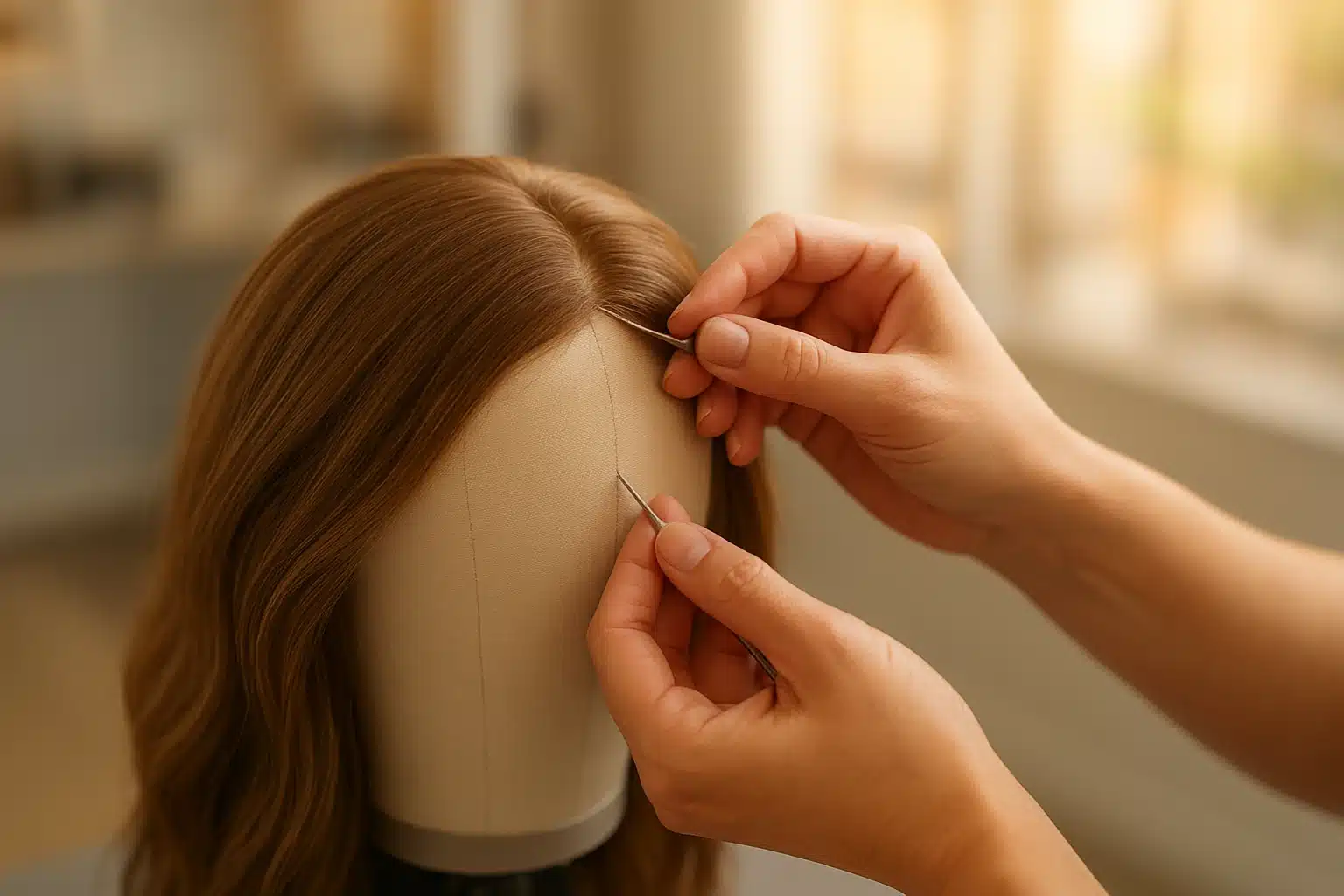
- Ventilating: The intricate art of tying individual strands of hair by hand into a sheer lace base. If your wig is thinning at the part or crown, a professional can ventilate new hair into the bald spots, saving you from having to replace the entire unit.
- Wefting: Sewing tracks of hair onto the stretchy fabric part of the cap. This is used to add overall volume or length.
- Steaming: Using controlled, professional-grade steam to reset synthetic fiber memory, effectively smoothing out frizz and “fried” ends.
The Repair Matrix: Should You Fix It or Replace It?
| Common Wig Issue | The DIY Risk | The Professional Solution | Verdict |
|---|---|---|---|
| Frizzy/Fried Ends (Synthetic) | Using a flat iron can instantly melt the fibers. | Professional Steaming. Experts use exact temperatures to reset fiber memory safely. | Fix It |
| Thinning at the Part/Crown | Sewing store-bought tracks looks bulky and unnatural. | Lace Ventilating. A craftsman will hand-tie matching hair directly into the lace. | Fix It |
| Cap is Too Loose | Cutting the cap can ruin the structural integrity. | Non-Destructive Resizing. Strategic folding and sewing to shrink the cap safely. | Fix It |
| Large Tear in the Lace | Superglue or thick thread causes skin irritation and visible lines. | Lace Replacement. If the tear is under an inch, it can be mended. Larger tears may require a new unit. | Consult a Pro |
Navigating Local Specialists in Phoenix
Not every shop offers the same level of technical expertise. When searching for a wig store phoenix locals trust, you want to match your specific problem with a specialized professional.
For instance, some locations excel at sourcing premium european wigs in phoenix, providing incredibly high-quality human hair that behaves just like your own. Others, like Cohen Beauty, are renowned for their intricate repair work. Salons like Wigs Amor specialize in steam cleaning and synthetic restoration, while places like GHLAM Hairline are experts in custom cap fittings.
Browsing a directory of wig stores phoenix is helpful, but calling ahead to ask if they have an on-site ventilator or restyling specialist is the key to extending the life of your investment.
The “Perfect Fit” Checklist: Preparing for Your Consultation
If you are taking your wig in for resizing or repair, the specialist will need accurate measurements. Here is what they will look at (and what you should know):
- Circumference: Measuring all the way around the hairline, passing over the ear and around the nape of the neck.
- Front-to-Back: Measuring from the center of the front hairline, over the crown, down to the nape.
- Ear-to-Ear: Measuring from the front of one ear, over the top of the head, to the front of the other ear.
Bring your wig to the consultation unwashed and exactly as you normally wear it. This allows the professional to see exactly where the piece is stretching or sitting incorrectly on your unique head shape.
Frequently Asked Questions (FAQ)
Can I make my wig smaller without cutting the lace?
Absolutely. Professional wig makers use non-destructive resizing techniques. By creating small, strategic tucks and sewing them securely into the elastic or wefted sections of the cap, they can reduce the circumference without ever taking scissors to the delicate lace.
How much does it cost to add hair to a thinning wig?
The cost varies based on whether the wig is synthetic or human hair, and whether the hair needs to be wefted (sewn in tracks) or ventilated (hand-tied individually). Ventilating is a highly specialized, labor-intensive art form, so expect to pay more for crown repairs, but it is still far more cost-effective than buying a brand-new, high-end human hair wig.
Why shouldn’t I use my clothes steamer to fix a synthetic wig at home?
Household clothing steamers often spit boiling water droplets and have uneven temperature controls. Professional wig steamers deliver a consistent, fine mist at precise temperatures. One wrong move with a household steamer can permanently melt synthetic fibers.
Is a torn lace front a total loss?
Not always! If the tear is minor (under an inch) and located near an edge, a professional can often mend it using invisible thread, or carefully trim and re-seal the hairline. Extensive tearing down the middle of a part, however, may mean it’s time to retire the piece.
Taking the Next Step
Experiencing hair loss is deeply personal, and your wig should be a source of comfort and confidence, not a daily frustration. By understanding that professional customization, resizing, and repair services exist right here in the Phoenix area, you are empowering yourself to demand more from your hairpieces.
Whether you need a minor adjustment to survive the desert summer, or a major restoration to bring a beloved wig back to life, the right expertise is out there waiting to help you look and feel beautiful.