Investing in a Cesare Ragazzi CNC (Capello Naturale a Contatto) hair system is a transformative experience. As the zenith of non-surgical hair restoration, it offers a level of realism and comfort that can truly give you your life back. But once you have this beautiful, natural-looking hair, a common and perfectly understandable question arises: Can I customize it? You want to know if you can add sun-kissed highlights for the summer, cover emerging grays, or add a subtle wave without ruining your investment.
If you are currently researching your hair restoration options, reviewing a complete guide to Cesare Ragazzi CNC systems is an essential starting point to understand the engineering and design of this custom prosthetic. Once you have chosen the right hair solution, understanding how to safely style, color, or perm your system is key to maintaining its flawless, natural look over its lifespan.
Today, we are looking beneath the surface. We’ll explore the fascinating chemistry of how unprocessed virgin human hair interacts with chemical agents when anchored into a 3D-printed, medical-grade base—and why treating your system requires a different playbook than growing hair.
The Premium Canvas: Why Cesare Ragazzi Hair is Chemically Unique
To understand what you can and cannot do to a CNC system, we first need to look at what makes the hair itself so special.
Most standard hair systems on the market use “processed” human hair. This means the hair has been subjected to aggressive acid baths to strip away the cuticle (the hair’s outer protective layer), followed by a heavy silicone coating to make it artificially shiny. Attempting to color or perm acid-bathed hair is highly unpredictable.
A Cesare Ragazzi system, however, uses raw, ethically sourced virgin human hair. The cuticles are fully intact. This gives the CNC system a massive “Virgin Hair Advantage.” Because the hair has never been chemically compromised, it acts like a premium blank canvas. It is highly receptive to custom, professional-grade low-ammonia dyes and gentle perms.
The Contrast with Synthetic Hair
Beginners often wonder about the chemical limits of hairpieces, frequently asking questions like can you dye outre hair or can you dye freetress hair. Those synthetic or blended hair fibers are made of polyester or acrylic polymers. If you apply standard hair dye to them, the heat and chemical solvents will literally melt the fibers. Contrasting these alternatives with the CNC system highlights just how much freedom raw, virgin human hair gives you.
Sourcing Authentic Gray and White Hair
What about going silver or white? Unlike lower-quality systems that use synthetic silver fibers (which stubbornly refuse to take color), Cesare Ragazzi utilizes authentic human gray and white hair. This meticulous sourcing means even salt-and-pepper systems behave naturally and can be color-toned evenly.
Coloring Your CNC System: Feasibility, Risks, and Reality
The short answer is: Yes, CNC hair can be colored, highlighted, lowlighted, or toned. However, the how and the who are critically important.
The Natural Color Change Phenomenon
People often ask, can your hair color change naturally? Absolutely. Environmental factors like UV rays, air pollution, and chlorine all contribute to natural color oxidation. Because the hair on a CNC system is no longer attached to a living scalp, it doesn’t receive the continuous supply of natural sebum (oils) and nutrients that growing hair does.
Over time, this “Zero-Nutrient Reality” means UV rays will gradually fade the brown pigments in the hair, exposing raw, warm undertones. Sometimes, the hair may even take on a greenish tint due to copper absorption from tap water or swimming pools.
Specialist Color Correction
When oxidation happens, you need color correction. But you can’t simply slap dark dye over the whole system. Certified stylists understand advanced color theory—for example, exactly how to dye over green hair by using a precise, demi-permanent neutralizing gloss with warm red-based counters. They restore the system’s depth without damaging the delicate base.
⚠️ Common Chemical Mistake Callout: The Danger of Box Dye
Why You Must Avoid DIY Coloring: One of the most vital box hair dye tips we can offer is to keep it far away from your hair system. Retail box dyes contain highly concentrated metallic salts and unpredictable developer strengths (often 30 or 40 volume). These chemicals will instantly dry out non-living hair, permanently stain the 3D-printed base, and lead to irreversible shedding.
The Science of the Base: The “Root Injection” Hazard
The most significant difference between coloring the hair on your head and coloring a CNC system is the “scalp” it’s attached to.
Text-Based Visual: System Anatomy
Imagine your hair system divided into two distinct zones:
- The Safe-Chemical Zone (The Hair Shaft): The mid-lengths and ends of the virgin hair, which can safely be toned and colored by a professional.
- The No-Chemical Zone (The Biocompatible Polymer Base): The foundation of the system. This is a custom, medical-grade membrane that mimics a second skin.
Every single hair strand on a CNC system is hand-injected into this polymeric membrane to mimic natural hair growth. Harsh chemicals—especially high-volume developers, ammonia, and the thioglycolates used in perms—can destabilize the polymer chain. If these chemicals seep into the base, they can dissolve the microscopic anchors holding the hair in place. The result? The base loses its elasticity, and the hair permanently sheds.
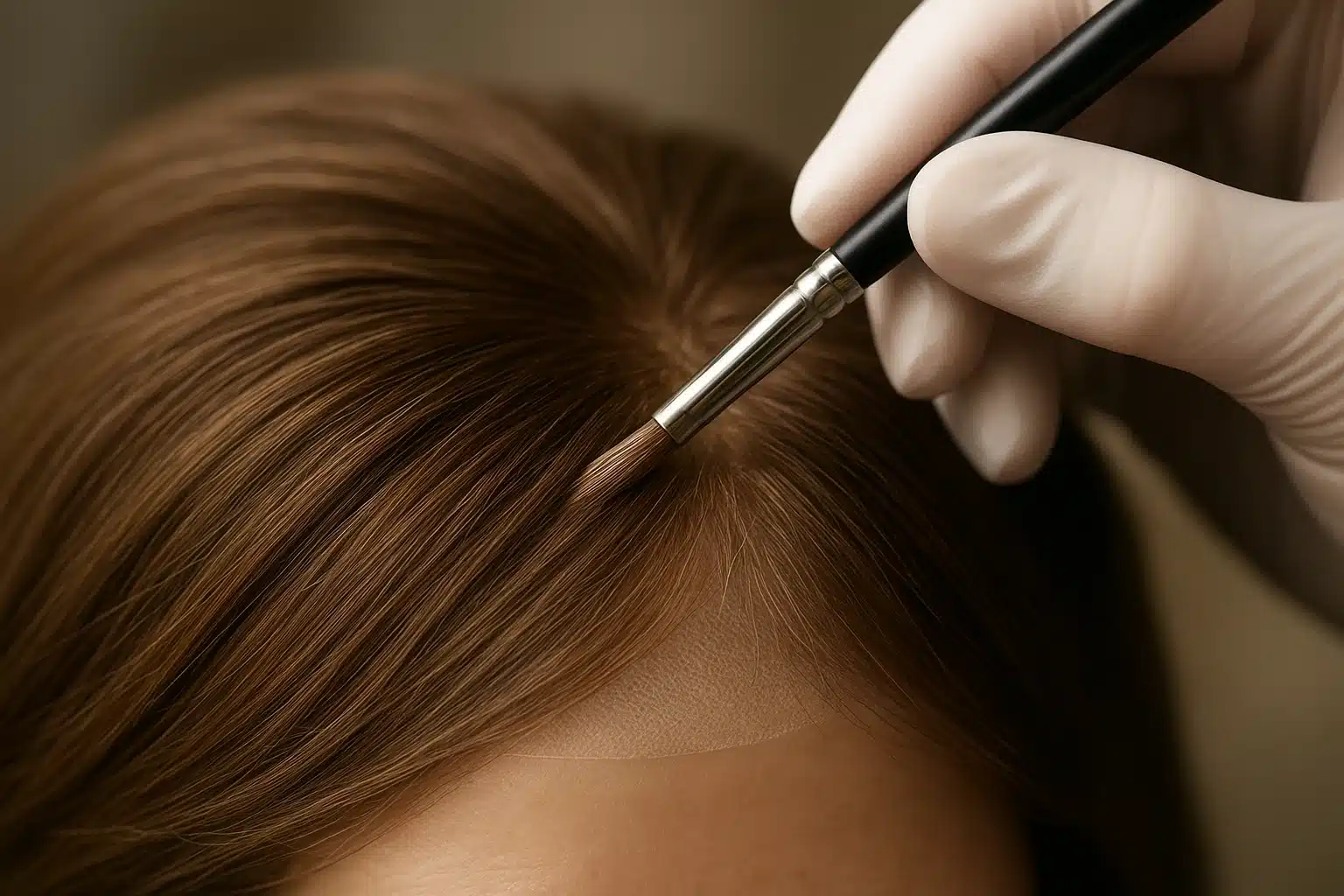
Certified professionals use a meticulous “Root Protection Protocol.” They isolate the chemical solutions from the base to ensure zero contact, preserving the structural integrity of your system.
Perming and Chemical Straightening: Proceed with Caution
Can you perm a CNC system? Technically, yes, but it is highly complex and carries significant structural risk.
Perming requires breaking the disulfide bonds in the hair and reforming them. Because CNC hair has a “Zero-Nutrient Reality,” it cannot self-repair the structural protein (keratin) depleted during a perm.
The Dual-Processing Hazard
A common advanced query is, can you perm colored hair with highlights? When it comes to a hair prosthesis, “dual-processing” (bleaching/highlighting and perming) is a major hazard. Doing both to non-growing hair risks completely destroying the cuticle, leading to severe matting and permanent breakage.
If you desire a different texture, it is generally safer to order your CNC system with the wave or curl pattern already built-in during the manufacturing process, rather than chemically altering straight hair later.
If a chemical service is performed, professionals will utilize advanced bond-builders (like Olaplex) to help mitigate cuticle damage, though these products protect and patch rather than regenerate living tissue.
Progress Checkpoint: True or False?
Let’s test your new knowledge on hair system chemistry:
1. True or False: Because it’s 100% human hair, you can use the same store-bought dye on your CNC system as you would your natural hair.
- False. Box dyes have harsh metallic salts and high developers that can permanently stain and degrade the delicate polymeric base.
2. True or False: A CNC system will naturally lighten or change color over time due to sun exposure.
- True. UV rays cause oxidation, making the hair fade or turn warm/brassy, requiring professional toning to correct.
3. True or False: Perming a heavily highlighted hair system is completely safe.
- False. This is known as dual-processing. On non-growing hair, it can destroy the cuticle and cause severe matting.
Professional Care Protocol: Your Next Steps
At Wig Superstore, with nearly two decades of experience in the hair restoration industry, our philosophy is rooted in compassionate customer care and education. We want your investment to look stunning for as long as possible.
To maintain your customized color or perm:
- Stick to the Schedule: Visit a certified professional every 3 to 4 weeks for maintenance, color-balancing, and base cleaning.
- Use the Right Products: Exclusively use pH-balanced, low-alkaline, sulfate-free shampoos and conditioners designed for medical prostheses.
- Protect from UV: Use leave-in UV protectants to slow down the natural oxidation process.
Comprehensive FAQ
What is the difference between coloring raw virgin hair and treated system hair?
Treated system hair has been acid-bathed to remove the cuticle and coated in silicone, meaning color will slide right off or process patchily. Raw virgin hair (like that used in Cesare Ragazzi systems) has an intact cuticle, allowing professional low-ammonia dyes to penetrate evenly and beautifully.
Will hair dye ruin my CNC base?
It can, if applied incorrectly. The CNC base is a biomedical polymer. If permanent dyes or high-volume developers touch the base, they can stain the membrane and dissolve the root-injection anchors, causing massive hair shedding. This is why coloring must be done professionally by experts trained to protect the base.
Can you dye over green hair system oxidation?
Yes! Greenish tints usually occur when the hair oxidizes and absorbs minerals like copper from water. A professional colorist will use color theory, applying a gentle, warm (red/orange-based) demi-permanent toner to neutralize the green and restore a rich, natural brunette or blonde shade.
How do stylists color-match the CNC system to my growing hair?
Professionals use low-ammonia, acid-toning color lines to carefully adjust the system’s virgin hair. They apply color keeping the chemicals strictly on the “Safe-Chemical Zone” (the hair shafts) and off the polymeric base, blending it seamlessly with your natural bio-hair.
***
Your Cesare Ragazzi CNC system is a masterpiece of hair engineering. By understanding the science behind the hair and the base, you can make informed decisions that protect your investment. When you’re ready to explore custom color or texture, always trust a certified professional who understands the unique chemistry of premium hair replacement.