We’ve all been there. You invest significant time, emotion, and money into finding the perfect hairpiece, only to panic when the ends start looking frizzy, the delicate lace tears, or the cap begins to stretch out of shape. Whether it’s a daily-wear synthetic wig that’s suddenly lost its bounce or a luxury human hair piece suffering from severe dryness, a damaged wig can feel like a major crisis. You might find yourself staring at the tangles, wondering if you should attempt a risky at-home fix or just accept defeat and start shopping for a replacement at one of the top wig stores in Albuquerque.
Before you throw in the towel, take a deep breath. Many common wig issues—from structural cap damage to stubborn balding patches on the lace—are completely reversible when you know what you’re looking at. Living in the high-altitude, dry climate of New Mexico adds its own unique set of challenges to hairpiece maintenance, but the good news is that you don’t have to figure it out alone. This guide is designed to help you diagnose what’s actually happening to your wig’s fibers, decide when a simple DIY fix will do the trick, and know exactly when to call in local Albuquerque professionals for a seamless restoration.
The Wig Triage: Is It Ruined, or Just Ready for a Refresh?
When a wig starts looking a little worse for wear, it’s helpful to do a quick “triage” to figure out exactly what’s wrong. Most damage falls into one of three categories:
- Fiber Damage: Frizzy ends, severe tangling, or dry, brittle hair.
- Lace Damage: Rips, tears, or noticeable “bald spots” where hair has shed.
- Cap Damage: Stretched elastic, broken clips, or a loose fit.
Understanding which of these you are dealing with is the first step toward getting your favorite wig back in rotation.
Understanding Wig Fibers: The Science of “Frizz” and Damage
The way you repair a wig depends entirely on what it’s made of. Human hair behaves like organic keratin, while synthetic hair behaves like plastic. Treating one like the other is a fast track to ruining your investment.
Synthetic Fiber Restoration: The Truth About “Friction Frizz”
If your synthetic wig feels “crunchy” or matted at the nape of the neck, you aren’t dealing with traditional dryness. You are experiencing friction frizz.
Because synthetic fibers are essentially monofilament plastics, rubbing against your collars, scarves, or shoulders creates friction and micro-melting. The plastic molecules literally bend and crinkle. This is why standard hair conditioners will never fix a frizzy synthetic wig—you can’t moisturize plastic.
The only way to repair synthetic ends is through heat-molding. By using controlled steam or hot water (typically under 250°F, depending on the fiber’s heat resistance), you reset the fiber’s “memory” and flatten the plastic molecules back out.
The Reddit Debate: Hacks vs. Professional StandardsIf you browse online forums, you’ll see countless “hacks” for synthetic wigs, like soaking them in fabric softener or washing them with Dawn dish soap.
- When to use Dawn: A tiny drop of dish soap is only appropriate if you need to strip heavy, stubborn adhesive residue or excessive oil buildup from the lace.
- The Danger: Long-term use of harsh detergents or fabric softeners leaves a dull, heavy film on synthetic fibers, accelerating wear. Stick to specialized synthetic wig washes and professional steaming for the best results.
Human Hair Restoration
Because human hair wigs no longer receive natural oils from a scalp, they are incredibly prone to dehydration and split ends.
- Treating Dryness: Deep conditioning treatments and bond-builders (like Olaplex or heavy silicone mixes) are incredibly effective at restoring hydration and slip.
- The Golden Rule of Trimming: Remember, wig hair doesn’t grow back. If the ends are severely fried or split, professional trimming is the only true fix.
- Texture Care: For relaxed damaged hair or textured, curly wigs, gentle moisture restoration is key to ensuring you don’t permanently ruin the delicate curl pattern.
Structural Repairs: Healing the Lace and Cap
Patching Torn Lace
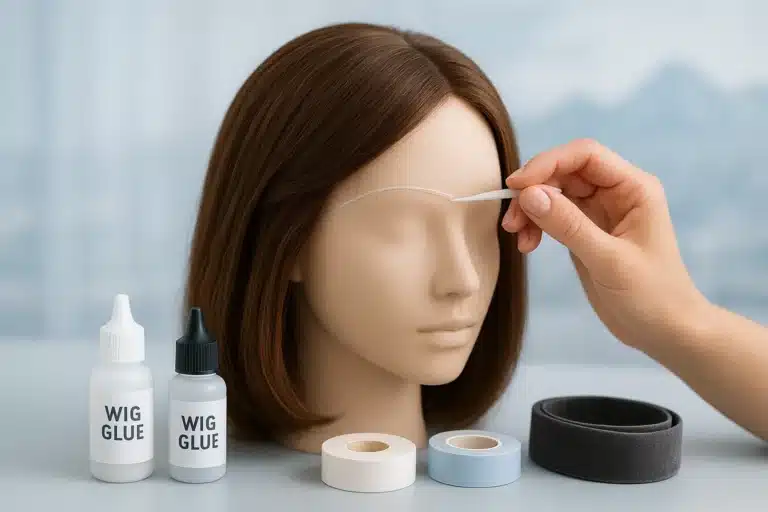
A tear in your lace front can cause a moment of sheer panic, but it doesn’t mean the wig is headed for the trash. To temporarily stabilize a lace tear at home and prevent it from running like a nylon stocking, you can carefully apply no-shine round tape or specialized clear fabric adhesive to the underside. For a permanent fix, a wig maker can precisely whip-stitch the lace back together using invisible thread.
The Magic of Lace Ventilation
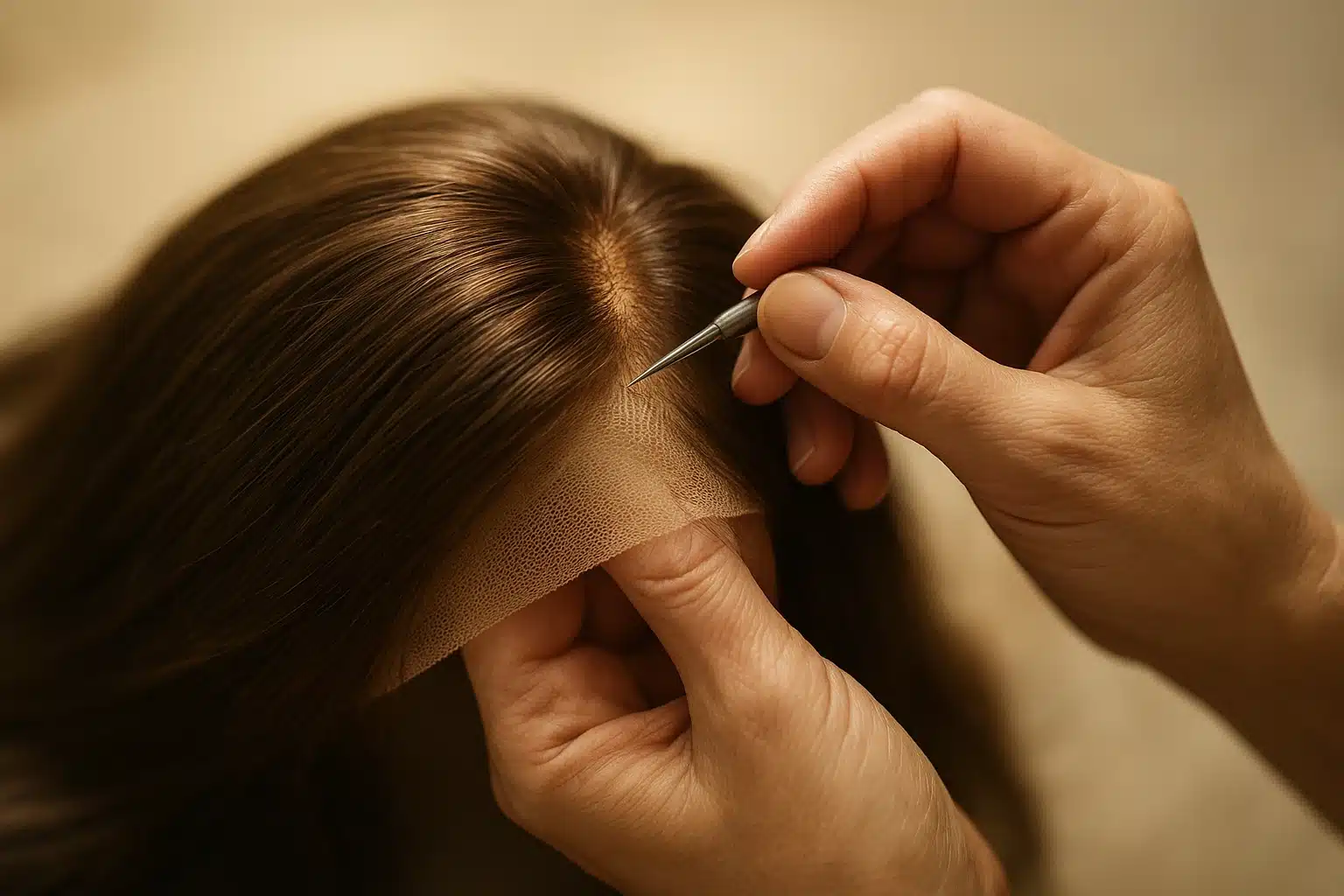
Have you ever noticed a bald spot on your hand-tied wig where you’ve parted it too aggressively? Repairing this requires a fascinating technique called ventilation.
Specialists use a tiny brass latch hook (a ventilating needle) to meticulously loop and tie individual strands of new hair back into the tiny hexagonal holes of the mesh lace. Because it is highly skilled, tedious, and time-consuming handiwork, professional ventilation repair prices typically range from $125 to $495. When you understand the craftsmanship involved, the investment makes perfect sense.
Resizing a Stretched Cap
Over time, the elastic in a wig cap can stretch, leading to a loose, insecure fit. While you can sometimes overlap the adjustment straps in the back for a temporary fix, a professional can remove the old elastic and sew in fresh banding, instantly restoring that secure, custom-fit feel.
The Albuquerque Climate Challenge: Mile-High Maintenance
If you live in Albuquerque, you are dealing with a climate that is uniquely tough on hairpieces. At an elevation of over 5,000 feet, we experience intense UV exposure and notoriously low desert humidity.
- The Sun Factor: Albuquerque’s intense UV rays can bake synthetic fibers, making them brittle and prone to snapping. It also accelerates color oxidation on human hair wigs, turning rich brunettes into brassy oranges. Always use a UV-protectant spray designed specifically for wigs.
- The Dry Air: The complete lack of humidity will suck the moisture right out of human hair pieces. If you live in New Mexico, your human hair wig needs a significantly heavier, more consistent moisture regimen than someone living in a humid coastal city.
Your Vetted Directory of Albuquerque Wig Specialists
When a repair goes beyond a simple wash and condition, Albuquerque has several excellent local resources ready to help you restore your hairpiece.
- Wigs Wigs Wigs LLC (North East Heights): Located on Wyoming Blvd, this trusted shop is an incredible resource for personalized support. They are an American Cancer Society supporter and excel at premium custom styling and necessary cap adjustments.
- Spellbound Wigs (Constitution Ave NE): A highly-rated, by-appointment boutique. They are a fantastic local resource for high-end fiber selection, customized fittings, and in-depth maintenance consultations.
- Healthy Hair Clinic (Albuquerque): A specialized trichological salon offering dedicated, high-end wig repair services. If you need complex structural work—like lace ventilation, re-stranding, or advanced human hair repair—this is your destination. (Advanced repairs typically range from $125 to $495).
- ABQ Hair Studio (Coors Blvd NW): An excellent Westside option. They are a full-service salon noted for expert professional styling, custom washing, and precision cutting of high-end human hair wigs.
- Ulta Beauty Salon (Various Albuquerque Locations): A surprising but fantastic resource. Ulta’s salon services now offer standardized, professional wig styling, installation, and consultations—perfect for accessible, reliable help.
- Trendz Beauty Supply (Menaul Blvd): If you are going the DIY route, Trendz is a vetted local destination for sourcing premium at-home repair products, including quality adhesives, specialized tapes, and silicone treatments.
The Wig Longevity Blueprint: At-Home Care Basics
To keep your wigs looking beautiful and to minimize trips to the repair salon, adopt a proactive maintenance routine:
- Daily: Use a wide-tooth comb or a specialized wig brush to detangle from the bottom up. Never yank a brush through from the roots, as this causes the lace to stretch and the hair to shed.
- Weekly: Depending on how often you wear it, wash your wig every 6 to 8 wears. Always use cool water for synthetics to avoid accidentally melting the fibers.
- Storage: Keep your wigs on a canvas block head or a specialized wig stand, away from direct windows and heating vents, to combat Albuquerque’s dry, dusty climate.
Frequently Asked Questions
Can I use Dawn dish soap to wash my synthetic wig?
While popular on internet forums, Dawn dish soap should only be used as a last resort to remove heavy, stubborn adhesive residue from the lace. Regular use will strip the fiber of its protective coatings, leaving it dull and susceptible to tangling. Always use a shampoo specifically formulated for synthetic hair.
How do I fix damaged hair on a human hair wig versus a synthetic wig?
Damaged human hair needs deep moisture, bond-rebuilding treatments (like Olaplex), and eventually, a physical trim. Damaged synthetic hair cannot absorb moisture; it requires controlled heat (like professional steaming) to smooth out the micro-crinkles in the plastic fibers.
What is the average cost of professional wig repair in Albuquerque?
Costs vary based on the extent of the damage. Simple wash and styling services might range from $40 to $80, while intricate structural repairs—like custom cap resizing or hand-tied lace ventilation—typically range from $125 to $495.
Can a local hair salon cut my human hair wig?
Yes, but you should seek out stylists who specifically advertise wig cutting experience (such as those at ABQ Hair Studio or Ulta). Because wig hair does not grow back, the cutting techniques differ slightly from cutting natural hair, especially around the face framing and lace front.
Moving Forward with Confidence
Experiencing wig damage can feel disheartening, but understanding the mechanics behind the hair is incredibly empowering. Whether you’re gently steaming out friction frizz on a Sunday afternoon or booking a ventilation appointment with a local Albuquerque specialist, you now have the knowledge to protect your investment.
Education is your best defense against bad hair days. By mastering the basics of fiber care, understanding the unique demands of our high-altitude climate, and knowing exactly who to call when things get tough, you can ensure your wig stays beautiful, comfortable, and flawlessly natural for years to come.