If you’ve ever felt a sudden spike of anxiety when a gust of wind sweeps down the Wasatch Front, or hesitated before going in for a tight hug, you understand the universal concern of wig wearers: Will my hair stay put? The learning curve for securing a wig or hairpiece can feel incredibly steep, whether you are managing medical hair loss or simply stepping into the world of alternative hair for the first time.
Navigating the endless sea of liquid bonding formulas, double-sided tapes, and friction bands is enough to make anyone’s head spin. While the internet is full of generic advice, discovering exactly what works for your specific cap style and local climate takes specialized knowledge. Finding a comprehensive selection of these professional-grade supplies in brick-and-mortar storefronts requires distinct local insight. For those exploring regional retail options, consulting a guide to the best wig stores in Salt Lake City, UT reveals that while many salons sell hairpieces, only a select few stock the targeted inventories of medical tapes, adhesives, and accessories you need for a flawless, secure fit.
Let’s decode the science of securement, explore how Utah’s unique climate impacts your choices, and map out exactly where to find the best supplies locally.
The Golden Rule: Mechanics and Fit First, Adhesives Second
Before you reach for a bottle of liquid adhesive, it’s vital to understand a foundational rule of alternative hair: chemical bonding should enhance a good fit, not compensate for a poor one.
For many wearers, especially those with sensitive scalps or those undergoing chemotherapy, chemical adhesives aren’t necessary or recommended. Before exploring tapes and glues, consider non-adhesive mechanical options. Understanding the mechanics behind a wig grip can be transformative. Velvet bands utilize directional pile mechanics—meaning the velvet grain resists backward shear, locking the wig in place purely through friction. For total hair loss, medical-grade silicone friction bands work exceptionally well by utilizing body heat to create a gentle, slip-proof thermodynamic bond against a smooth scalp.
Demystifying Wig Securement: Glue vs. Tape
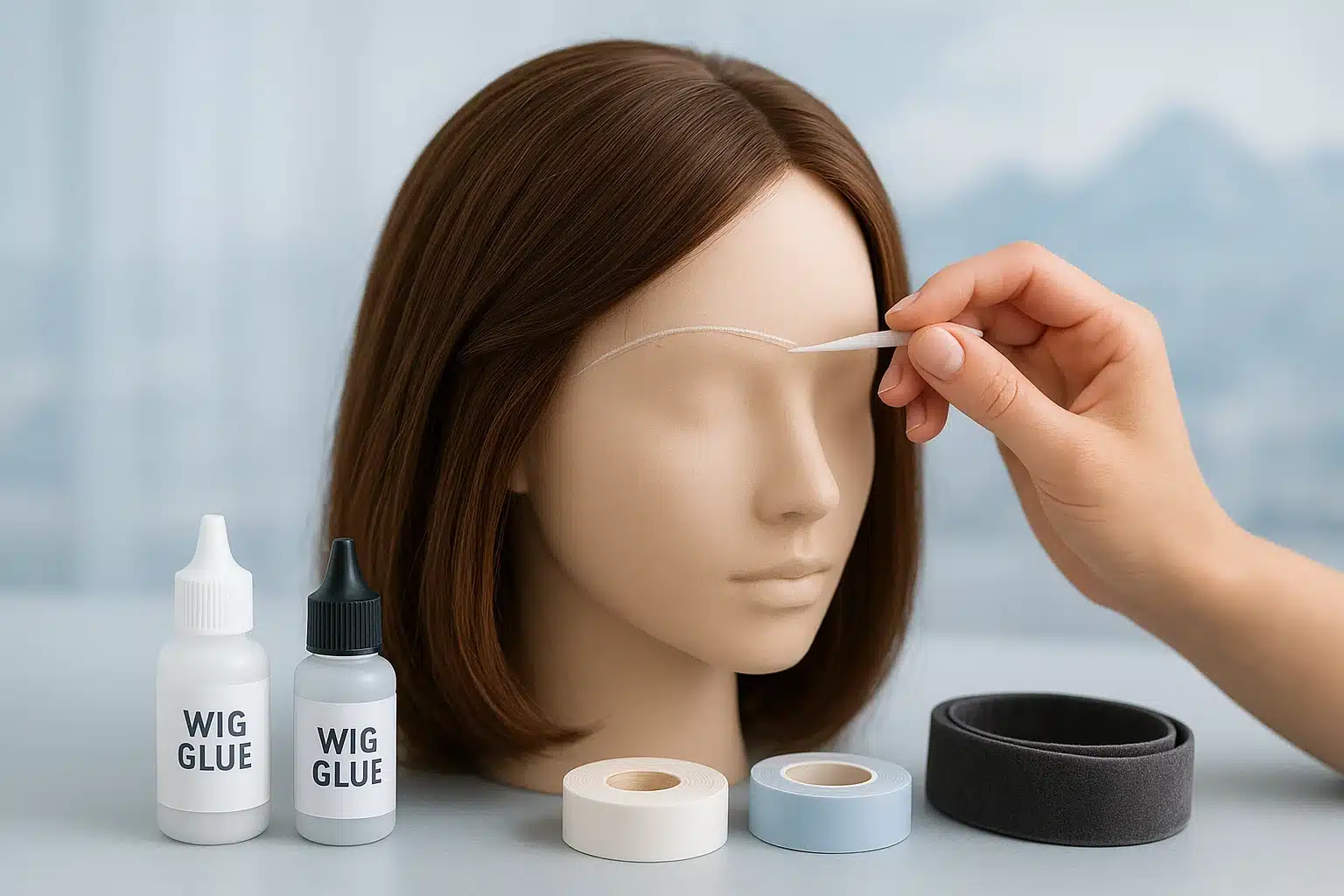
If your lifestyle or cap construction requires a bonded hold, you will generally choose between liquid adhesives and double-sided tapes. Understanding the chemistry behind these hairpiece adhesives prevents edge damage and ensures a long-lasting hold.
Water-Based Acrylic Polymers
Often sold as white liquids that dry clear (like Ghost Bond), water-based adhesives are generally safer for sensitive skin and easier to clean. They offer a reliable daily to weekly hold. However, because they are water-based emulsions, heavy perspiration can cause them to turn white and lose their tackiness.
Solvent-Based Liquid Resins
Products like Walker Tape’s Ultra Hold are clear, solvent-based adhesives. They provide an extended, high-durability wear (sometimes up to 4 weeks). While incredibly strong and truly waterproof, they require highly specialized citrus or alcohol-based solvents for safe removal.
Hair Wig Adhesive Tape
Wig tape comes in pre-cut contours, straight strips, or rolls. Tape is generally less messy to apply than liquid glue and offers a faster curing time. Specialized “no-shine” tapes are designed specifically for lace fronts, providing a matte finish that mimics a natural scalp under harsh lighting.
Matching Your Cap Construction to Your Strategy
One of the most common beginner mistakes is applying adhesive to a part of the wig that wasn’t designed for it. Here is how your cap architecture dictates your securement stack:
Lace Front and Full Lace Wigs
Delicate Swiss lace provides an invisible, natural-looking hairline but is incredibly fragile. You should use specialized lace tapes or water-based liquid adhesives applied in micro-thin layers. Never pull tape from dry lace, as this will tear the mesh and destroy the hairpiece.
Polyurethane (PU) Perimeters
Many high-quality wigs feature smooth polyurethane strips along the ear tabs or nape. This is the optimal surface for heavy-duty double-sided tapes or solvent-based glues. PU offers maximum surface bonding and is the easiest material to clean when it’s time to remove residue.
Monofilament Tops & Hand-Tied Mesh
Do not apply adhesives directly to a monofilament top. Liquid glue will seep through the porous mesh, coating the hand-tied knots and ruining the hairpiece permanently. Stick to applying securement products strictly on the designated PU strips or the extreme front lace edge.
The Salt Lake City Microclimate Factor
If you’re wearing wigs in Utah, you aren’t just fighting gravity—you’re fighting the environment. Salt Lake City’s microclimate significantly impacts how adhesives perform.
- Altitude and Aridity: At an elevation of over 4,300 feet with incredibly low humidity, evaporative drying happens rapidly. If you are applying water-based liquid glues, Utah’s dry air will cause the adhesive to “skin over” prematurely if not applied in very thin, successive layers.
- Summer Thermals and Recreation: Hiking the Wasatch mountains in July means high sweat and heat. Heavy perspiration easily disrupts water-based glues. Active wearers in SLC often find that medical-grade acrylic extended tapes or hybrid installations (tape along the perimeter, light liquid glue just at the front hairline) are far more reliable.
- Dry Winter Scalps: Indoor heating during Utah winters exacerbates dry, flaky scalp conditions. Using heavy alcohol cleansers to prep the skin during winter can cause severe irritation. In these months, utilizing a polymer-based scalp protector is essential to create a barrier between your skin and the adhesive.
Scalp Health and the Golden Rule of Removal
The most critical aspect of wig securement is actually how you remove it. Ripping off a taped wig at the end of the day can lead to traction alopecia—permanent hair loss along the frontal hairline caused by repeated mechanical tension.
The 3-Step Solvent Dwell Method
Most lace tears and hairline damage occur because users pull the cap before the solvent has completed emulsification.
- Spray: Apply a professional remover (like C-22 or Lace Release) generously over the bonded area.
- Dwell: Wait a full 3 to 5 minutes. This “dwell time” is non-negotiable. You must allow the physics of the solvent to liquefy the polymer bond.
- Release: Once the adhesive turns from a tacky state into an oily or liquid consistency, the wig will glide off naturally with zero resistance.
Where to Buy Wig Adhesives Locally in Salt Lake City
While online shopping is convenient, sometimes you need supplies immediately, or you want professional guidance before buying a new chemical product. Fortunately, exploring the wig stores in salt lake city reveals several brick-and-mortar storefronts catering to alternative hair care.
- Creative Wigs & Hair Replacement: Located on 700 East, this local staple is known for stocking a wide variety of salon-grade supplies. They are a great stop for reliable brands, double-sided tapes, and professional removers.
- Wig Warehouse: Situated along the State Street retail corridor, this is a practical destination for emergency or immediate securement needs, offering both tapes and friction bands.
- Bonneville Wigs: Known for personalized consultations, they are highly knowledgeable about matching specific securement products to specialized medical caps and delicate lace fronts.
What to ask the staff: When you visit these shops, ask specifically for “scalp protectors,” “lace release solvents,” and inquire whether they stock extended-wear tapes like “Duo-Tac” or daily glues like “Ghost Bond.”
Frequently Asked Questions About Wig Securement
Can you secure a wig without glue?
Absolutely. Velvet grip bands, silicone friction bands, adjustable elastic tension systems, and standard wig clips (if you have biological hair to clip into) are incredibly effective ways to secure a wig without ever touching chemicals.
What is the difference between “water-resistant” and “waterproof” glue?
Water-resistant glues (usually water-based) can handle light sweat or humidity but will turn white and break down under heavy perspiration or submersion. Waterproof glues (solvent-based acrylics or silicones) repel water entirely and can endure swimming and heavy mountain workouts.
Why is my lace lifting at the ear tabs after 48 hours?
Ear tabs are high-tension areas that move every time you smile, chew, or adjust your glasses. Lifting is usually caused by failing to properly clean the skin of sebaceous oils before application, or skipping a scalp protector layer.
Does wig glue ruin your natural edges?
Wig glue only causes damage if applied directly over biological hair without a protective barrier, or if removed improperly. Practicing the “Dwell Time” removal method ensures your natural edges remain fully intact and healthy.
Continuing Your Alternative Hair Journey
Finding the perfect securement method is an ongoing process of discovery, uniquely tailored to your cap, your lifestyle, and your local climate. By prioritizing mechanical fit over chemical holding power, respecting the dwell time during removal, and utilizing the high-quality local resources available in the Salt Lake valley, you can wear your hairpiece with total confidence.
Ready to dive deeper into finding the perfect wig foundation? Explore our comprehensive educational guides to learn more about cap constructions, synthetic versus human hair differences, and how to protect your investment for years to come.