Losing your hair is an incredibly personal experience, and for many men, it brings a wave of unspoken anxiety. If you’ve been secretly researching your options late at night, you’ve probably realized that the old-school, heavy “toupees” of the past are a distant memory. In their place is a new world of modern, ultra-lightweight, skin-like “hair systems.”
However, making the leap from online research to actually sitting in a barber’s chair is daunting. When navigating the best wig stores in Detroit MI, beginners often feel overwhelmed by the lack of male-specific guidance. Finding general hairpieces is one thing, but men’s hair systems require a specialized understanding of base engineering, secure attachment chemistry, and local styling expertise.
Whether you’re looking for a meticulously blended “man weave” to complement a fresh fade or a European-style system for a receding hairline, this guide will bridge the gap between global material science and the specialized styling available right here in Motor City.
Demystifying Modern Non-Surgical Hair Replacement
The biggest hurdle for most men isn’t the cost—it’s the fear of being “found out.” Will it fall off in the wind? Can I still hit the gym? Will it look like a wig?
Modern non-surgical hair replacement answers these fears through incredible advancements in material science. Today’s hair systems are designed to bond directly to your scalp using medical-grade adhesives, allowing you to shower, sweat, and swim without a second thought. But to get that flawless, undetectable look, you need to understand exactly what you’re putting on your head.
The Anatomy of a Modern Male Hair System
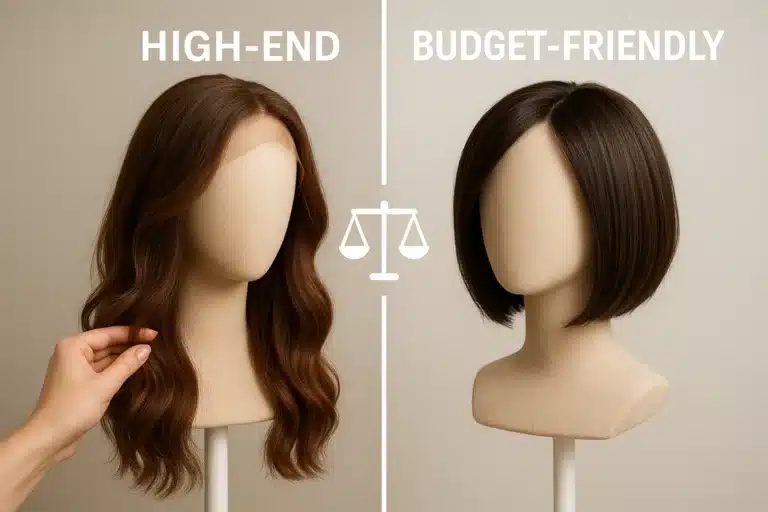
Choosing a hair system is an exercise in the “Trade-Off Principle.” Beginners always want the most natural-looking hairline and the most durable base. In reality, these two attributes exist on opposite ends of a spectrum: the more invisible a system is, the more delicate it tends to be.
Here is how the base materials break down:
1. Lace (French vs. Swiss)
Lace bases offer maximum breathability and a virtually invisible hairline. The hair is individually tied to a delicate mesh.
- Swiss Lace is the most undetectable material on the market, but it is highly fragile and typically needs replacing every few months.
- French Lace is slightly thicker, offering a great middle ground between durability and a natural look. Lace is perfect for highly active men who sweat often.
2. Polyurethane (Skin) Bases
Often referred to simply as “poly” or “skin,” this material mimics the look and feel of the human scalp perfectly. The hair is injected into the thin plastic (a technique called V-looping), meaning there are no knots visible at the root.
- The Trade-off: Ultra-thin poly (0.03mm) looks incredibly natural but only lasts 4–6 weeks. Thicker poly lasts longer but can feel warmer on the head, as it offers zero breathability. It is, however, the easiest to clean during maintenance.
3. Monofilament (Mono)
Monofilament offers industrial-level durability. It can handle heavier hair densities and lasts much longer (up to six months). However, because the material is thicker, the hairline is more visible, meaning mono systems usually require a folded lace front or a hairstyle that covers the hairline.
Density and Knotting: Avoiding the “Wiggy” Look
One of the most common mistakes beginners make is choosing a hair density that is far too thick. Selecting a 120% (medium-heavy) density when you are in your 40s or 50s will instantly look unnatural. An 80% (light) graduated density—where the hair is thinner at the front hairline and gradually thickens toward the crown—mimics natural male hair growth patterns flawlessly.
Custom vs. Stock Systems: Which is Right for You?
When you’re ready to buy, you’ll encounter two main paths:
- Stock Systems: These are pre-made in standard sizes (typically 8″x10″), standard densities, and basic color codes. They are highly affordable and ship immediately. However, they require a local Detroit professional to cut the base down to perfectly match your specific balding area.
- Custom Systems: A professional takes a physical mold or template of your bald area. Hair is color-matched using multi-tonal samples (including your exact percentage of gray), and the density is custom-mapped. This bespoke route provides the best fit but takes 8–12 weeks to manufacture.
Navigating Detroit’s Hyper-Local Hair System Scene
Understanding the technology is only half the battle; execution is everything. You cannot take a hair system to a standard barber. “Cutting-in” a system requires specialized blending techniques so the hair piece seamlessly meets your growing biological hair.
Here is how the Metro Detroit market breaks down based on your specific needs:
Segment A: Specialized Afro-Textured Hair Units (“Man Weaves”)
Detroit has a rich, highly specialized market for urban male hair units, commonly known as man weaves. For Black men looking for curly, coiled, or waved units that blend seamlessly with high fades or temp fades, these local specialists are top-tier:
- Ace Man Weave Units (Detroit): Certified specialists who custom-tailor hair units to match natural African American textures and coils, focusing heavily on secure attachment and precise barber blending.
- Detroit Man Weave: Local pioneers in Afro-textured non-surgical units, known for their exceptional temp fade blends and high-top transformations.
- Man Hair Units by Teko (Detroit): Located on West 7 Mile, this highly respected, barber-style environment offers discrete, personalized hair unit installations.
Segment B: Premium European-Style Systems & Medical-Grade Solutions
If you are looking for fine-hair lace or skin systems, or if privacy is a major concern, these facilities offer full-service private styling rooms:
- Shear Pointe Hair Restoration Center (Birmingham): Considered a gold standard in Metro Detroit for premium men’s hair restoration. They offer medical-grade bonding, custom templates, and private styling rooms—ideal for men seeking utmost discretion and monthly VIP maintenance.
- Project Hair Co (Metro Detroit): A modern facility offering premium hybrid and skin-base systems with a trendy aesthetic, providing both virtual and in-person consultations.
Segment C: Boutique Styling & Local Maintenance Support
For the guy who prefers to buy his systems online (the DIY route) but needs a trusted local professional for the initial cut-in or occasional maintenance:
- The Owl Barber (Ferndale): A trendy shop specializing in alternative hair unit styling, blending, and third-party cut-ins. They are a go-to favorite on local men’s forums.
- Hair 4 U (Warren): A staple local salon providing non-surgical adjustments, maintenance supplies, and quick-fix re-bonding services.
The Beginner’s Maintenance & Cost Blueprint
Once your system is installed, maintenance becomes your new routine.
The First 48 Hours: This is the golden rule. You must avoid water, steam, and heavy sweat for the first two days to allow the liquid acrylic or copolymer adhesive to fully cure. Weekly Routine: Hair systems don’t receive natural scalp oils, meaning they dry out quickly. You will need to transition to sulfate-free shampoos, daily leave-in conditioners, and UV protection sprays to keep the hair soft and prevent color fading.
The Realistic Annual Cost Breakdown in Detroit
Transparency is key. Here is what you can realistically expect to spend annually in Metro Detroit:
- The DIY Track ($1,200 – $2,500/year): You buy stock systems online and handle all the cleaning, re-bonding, and maintenance yourself at home.
- The Hybrid Track ($2,500 – $3,500/year): You purchase systems online but pay a local Ferndale or Detroit barber for the initial cut-ins and occasional professional re-bonds.
- The Full-Service Salon Track ($4,000 – $6,000+/year): You lease exclusive systems through a premier facility like Shear Pointe, enjoying private room maintenance and deep-cleaning services every 3 to 4 weeks.
Frequently Asked Questions (FAQ)
What is a “cut-in” and why can’t my regular barber do it?
A cut-in is the process of trimming the base of the hair system to fit your bald spot, adhering it to your scalp, and then cutting the unstyled hair to blend invisibly with your natural side hair. If a regular barber makes a mistake and cuts the system hair too short, it won’t grow back. It requires highly specialized blending shears and training.
Which adhesive performs best for heavy sweaters?
If you work out frequently, medical-grade acrylic liquid adhesives tend to hold up better against high humidity and sweat compared to water-based copolymer adhesives. Alternatively, pairing a lace system with specialized waterproof Walker tape can offer a strong hold with superior breathability.
Do I have to shave the top of my head?
Yes. To get a secure, flush, and natural bond, the area under the hair system must be shaved completely bare. Applying adhesive over thinning hair will cause the system to lift and can painfully pull on your existing hair.
Next Steps on Your Hair Restoration Journey
Taking the first step toward a hair system is ultimately about reclaiming your confidence. The technology is phenomenal, and right here in Detroit, the local talent for blending and styling is world-class.
Start by deciding what matters most to your lifestyle: the breathability of lace, the realism of poly skin, or the specific textured coils of a custom man weave. Armed with this knowledge, you can walk into any consultation—whether in Birmingham, Ferndale, or downtown Detroit—knowing exactly what to ask for, and what to expect.