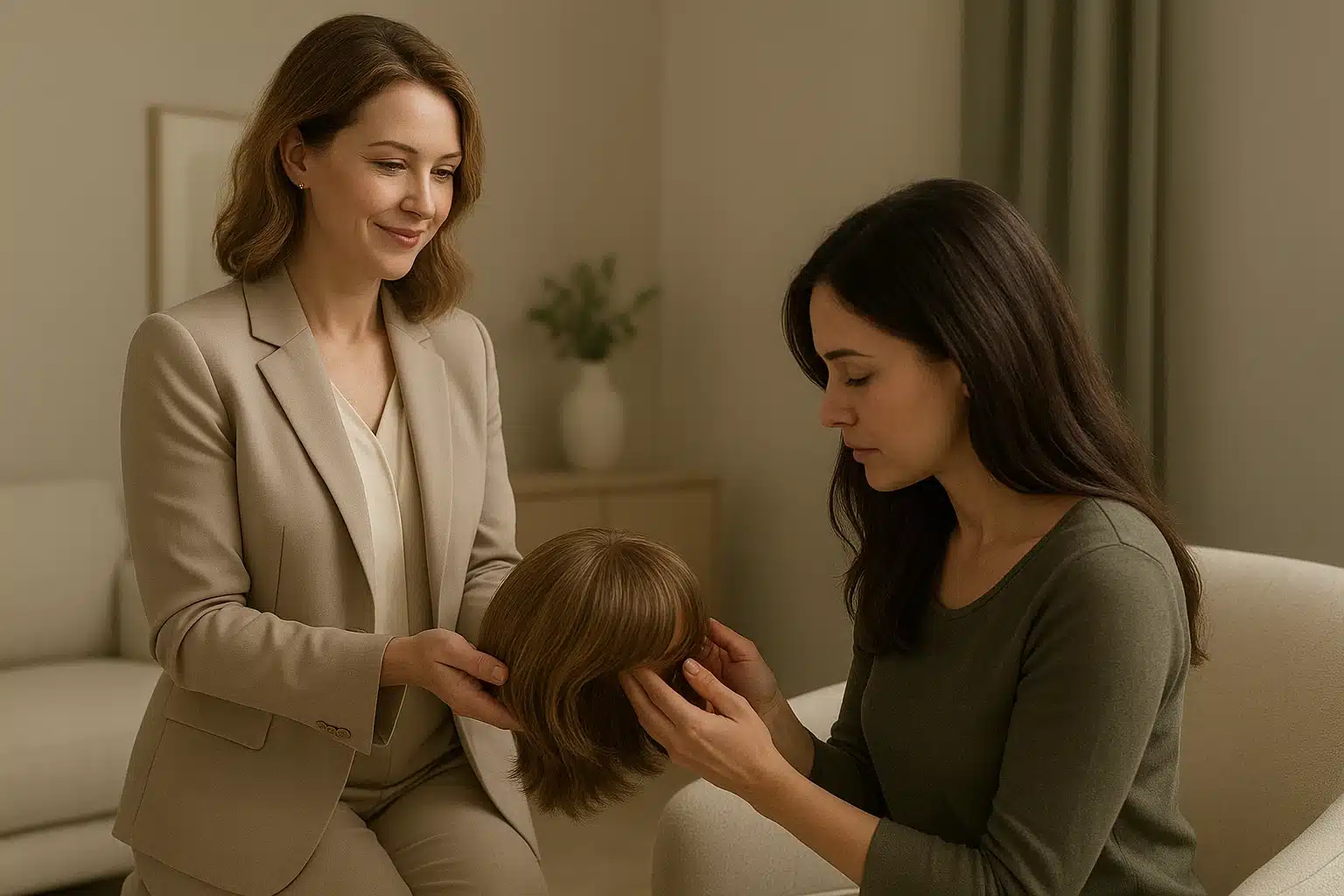
Experiencing hair loss due to chemotherapy, alopecia, or genetic conditions is rarely just a physical change; it is a deeply personal, vulnerable, and often overwhelming emotional journey. When you are standing at the beginning of this transition, the thought of walking into a brightly lit, crowded retail store to try on hairpieces can feel incredibly daunting. You aren’t simply looking for a new hairstyle—you are looking to reclaim your comfort and confidence in a safe, supportive environment.
That is exactly why finding a dedicated specialist who offers absolute discretion is so vital. A private consultation transforms what could be a stressful shopping trip into an empowering, educational act of self-care. While there is a wide variety of beautiful wig shops in Sacramento offering everyday fashion options, those experiencing medical hair loss require a different level of attention. This guide focuses specifically on regional boutiques that prioritize your psychological safety through private fitting suites, locked doors, and compassionate, one-on-one expert guidance.
The Medical Nomenclature Shift: You Aren’t Looking for a “Wig”
One of the most important “aha moments” for individuals dealing with medical hair loss is learning the language of the industry. In the retail world, these items are called wigs. In the medical and insurance world, they are known as cranial prostheses.
Making this simple vocabulary shift is your first step toward self-advocacy. A fashion wig is designed for the average consumer who already has a full head of natural hair. A medical-grade cranial prosthesis is meticulously engineered for a bare, highly sensitive scalp.
Navigating Insurance and California Assembly Bill 2668
Understanding this terminology is also the key to unlocking financial assistance. Many beginners are unaware that their health insurance may cover the cost of their hairpiece. Under California Assembly Bill 2668, many health insurance policies in the state are mandated to cover up to $750 annually for a medical cranial prosthesis.
To successfully navigate this, you need a “Prescription Blueprint.” When you visit your oncologist or dermatologist, ensure they write a prescription specifically for a “Cranial Prosthesis” (not a wig). Your documentation should include:
- HCPCS Code: A9282 (the specific billing code for a cranial prosthesis)
- Diagnosis Codes: Such as L65.1 for chemotherapy-induced alopecia, or L63.9 for alopecia areata.
Additionally, under IRS Publication 502, out-of-pocket costs for a cranial prosthesis may be tax-deductible as a medical expense. Looking globally, countries with systems like the UK’s nhs wigs program use a formalized prescription model for hair loss patients. While the US relies on private insurance, taking a similarly clinical approach to your documentation will give you the highest chance of reimbursement.
Anatomy of a Medical Wig: Protecting a Sensitive Scalp
During a private consultation, a skilled specialist will guide you through the internal architecture of a wig. Instead of just focusing on styling and outward appearance, they will help you choose a cap construction that prioritizes comfort.
If your scalp is sensitive from treatments, friction is your biggest enemy. You will want to look for:
- 100% Hand-Tied Caps: Every single hair is individually tied to a soft mesh base, allowing the cap to mold seamlessly to your head and move naturally.
- Double-Monofilament Tops: This features an extra layer of soft glass-silk at the crown. It hides the hair knots and mimics the look of a natural scalp while protecting your skin from irritation.
- Silicone Anti-Slip Grippers: These medical-grade strips adhere gently to a bald scalp using your natural body heat, eliminating the need for harsh tapes or glues.
Your consultant will also help you navigate hair fibers, comparing the low-maintenance ease of heat-friendly synthetics with the unmatched realism of premium human hair.
Sacramento’s Trusted Private Wig Sanctuaries
The Sacramento metropolitan area is home to several outstanding boutiques that operate as sanctuaries rather than traditional retail shops. These verified spaces offer the discretion and empathy you need.
Tresses by Juless (Folsom, CA)
Operating out of a strictly private, non-retail office suite in Folsom, Tresses by Juless is a haven for those seeking high-end, personalized solutions. The studio emphasizes one-on-one luxury, focusing on premium Virgin Slavic and European human hair. Their educational approach demystifies cap architecture and offers highly specialized services like custom hand-coloring (such as balayage and root shadows) to perfectly replicate your natural hair.
Wigs R You, Inc. (Roseville, CA)
Wigs R You operates on a deeply compassionate “100% by appointment only” model. When you book a consultation, the doors are locked to the public, ensuring your experience is entirely private. Deeply integrated with the local cancer support community—including partnerships with nonprofits like Wellness Within—they provide full-service “A to Z” care that guides you through the emotional and technical aspects of hair loss.
The Wig Shoppe (Sacramento, CA)
With over 30 years of institutional authority under the guidance of owner Ingrid Worley, The Wig Shoppe boasts a massive local inventory. While they operate as a broader retail space, they offer dedicated environments for discreet fittings and excel in full-service post-purchase care, including custom washing, shaping, and styling to make your piece look undeniably yours.
Note: Other trusted regional specialists offering private environments include Elite Hair Loss Solutions and Universal Hair Units, both of which provide dedicated rooms for personalized fittings.
Your First Private Consultation: A Step-by-Step Checklist
Walking into your first appointment is much easier when you know exactly what to expect. Think of your consultation as an educational collaboration.
How to Prepare:
- Bring Photos: Bring recent pictures of yourself on a “good hair day.” This helps your consultant match your natural density, texture, and color.
- Bring a Trusted Advocate: Bring a close friend or family member whose opinion you trust. They can take notes, help you ask questions, and provide emotional support.
- Inquire About Customization: Ask about maintenance costs, adjustment policies, and whether the shop offers custom cutting to frame your face perfectly.
The Science of a Natural Fit and Safe Removal
A great consultant will teach you the mechanics of wearing alternative hair so you can replicate the look at home. One of the most important concepts they will teach you is the “Four-Finger Rule.”
To avoid the unnatural “helmet” look, place four fingers flat against your forehead, resting just above your brow bone. Your natural hairline should start right above your top finger. Placing a wig too far forward is the most common beginner mistake.
Furthermore, if you are wearing a piece that requires adhesive, your consultant should educate you on safe removal. Never pull or tug a glued lace front, as this can cause severe mechanical damage to recovering hair follicles. Always use a professional, skin-safe lace remover for wigs to gently dissolve the adhesive, preserving both the delicate lace of your wig and the health of your scalp.
Frequently Asked Questions (FAQ)
What is the difference between a standard wig shop and a private consultation boutique?
Standard retail shops are typically open to the public for browsing, much like a clothing store. A private consultation boutique often operates by appointment only, providing a closed-door, one-on-one environment. This ensures complete privacy for individuals dealing with medical hair loss and allows the consultant to dedicate uninterrupted time to your specific needs.
How much does a high-quality medical cranial prosthesis cost?
Prices vary widely based on the materials used. High-quality synthetic or heat-friendly synthetic pieces generally range from $250 to $800. Premium medical-grade human hair pieces (such as those using Virgin Slavic or European hair with hand-tied caps) can range from $1,500 to over $4,000.
Can I get diverse hair textures, like straight wigs or ethnic hair types, in a medical cap?
Absolutely. Medical cranial prostheses are available in every conceivable texture, from sleek, straight wigs to deep, voluminous curls. Private consultants have access to specialized catalogs and can often order or custom-texture pieces to match your exact natural hair type.
Does my hair need to be completely gone to wear a medical wig?
No. Many individuals wear alternative hair during the thinning stages or while experiencing patchy hair loss (such as with alopecia areata). Your consultant will measure your head and help you select a cap size and construction that comfortably accommodates your existing natural hair while providing full coverage.
How do I know what cap size I need?
During your private fitting, a specialist will use a soft measuring tape to measure the circumference of your head, as well as the distances from ear to ear and front to nape. Most caps are adjustable, but securing the correct foundational size (Petite, Average, or Large) is critical to ensuring the piece does not slip or cause tension headaches.