Imagine sitting on the edge of your child’s bed, wondering how to explain the sudden changes happening to your body. As parents, our natural instinct is to protect our children from fear. But children are incredibly intuitive—they notice when the patterns of their visual world shift. When a parent experiences hair loss, whether from chemotherapy, alopecia, or postpartum changes, a child’s reaction isn’t about vanity; it’s rooted in their profound need for safety and consistency.
We understand that finding the right words can feel overwhelming. Successfully navigating the emotional landscape of hair loss means recognizing that your child’s unspoken fears are entirely normal. By addressing these physical changes openly, you have a unique opportunity to transform a confusing transformation into a beautiful, grounding lesson in family resilience, emotional safety, and a broader understanding of diverse beauty.
The Psychology of Childhood Hair Loss Questions
Children understand the world through literal interpretations. While adults recognize the deep emotional attachment to hair as a marker of identity, children view their parent’s hair as a fundamental part of the “map” that makes them feel secure. When that map changes, it triggers several common, underlying myths that need to be gently decoded:
- The Pain Myth (“Does Mommy have a boo-boo?”): Children associate physical changes (like scrapes and bruises) with pain. They need explicit reassurance that a bald scalp does not hurt.
- The Contagion Myth (“Will my hair fall out too?”): Because kids frequently share colds and playground bugs, they naturally assume hair loss might be “catching.”
- The Loss of Identity (“Are you still Daddy?”): Dramatic visual variance can make a child wonder if the person inside has changed. Reassuring them that you are exactly the same parent underneath is crucial.
Age-Specific Communication Toolkits: The “What to Say” Matrix
There is no one-size-fits-all script for explaining hair loss. A toddler’s needs are wildly different from a teenager’s. Here is how to tailor your conversation to your child’s developmental stage.
Infants & Toddlers (0–2 years): Sensory & Consistency Focus
The Challenge: Babies and toddlers rely heavily on facial mapping—specifically hairlines and eyebrows—for attachment and safety. Sudden baldness can trigger stranger anxiety even with their own parent.Actionable Strategy: Focus on sensory consistency rather than verbal explanations. Maintain your normal vocal tone and keep wearing your familiar scents, like your everyday lotion or perfume. Pro Tip: Make the visual transition slow. If possible, let them see you wearing hats or scarves frequently before they see your bare scalp, allowing their visual mapping to adjust gradually.
Preschoolers (3–5 years): Literal & Visual Explanations
The Challenge: At this age, children engage in “magical thinking.” They might secretly worry they caused your hair to fall out by misbehaving. They need concrete, vivid analogies.Actionable Scripts:
- For Chemotherapy (The Good Guard Analogy): “Mommy is taking a special superhero medicine. It goes inside my body to vacuum up the bad bugs, but because it’s so strong, it accidentally vacuums up my hair, too! My head is super smooth now—want to feel it?” This separates the hair loss from the illness, showing the medicine is doing its job.
- For Alopecia (The Unique Blueprint): “Our bodies have tiny guards that protect us. Sometimes, my guards get a little confused and think my hair is playing tag, so they put it ‘on pause.’ It doesn’t hurt at all; it just makes my scalp smooth and shiny like a playground slide.”
School-Aged Children (6–11 years): Societal & Logical Integration
The Challenge: School-aged kids are highly aware of peer groups. They worry about social stigma, classmates’ questions, and have more sophisticated, logical anxieties.Actionable Script: “I have a condition called Alopecia. My body is completely healthy and strong, but my hair is just on vacation. If your friends at school ask why I look different, you can just tell them, ‘My mom’s body is just unique, and she rocks her bald head!'” Equipping them with a script gives them social armor.
Teens (12+ Years): Emotional Complexity & Role Reversal
The Challenge: Teenagers may worry about hereditary factors (“Will this happen to me?”), experience social embarrassment, or feel anticipatory grief. Actionable Strategy: Shift to open, adult-to-adult communication. Validate their feelings of embarrassment or worry instead of dismissing them. Say, “I know this is a big change, and it’s okay if it feels weird or uncomfortable for you to talk about. We are learning how to navigate this together.”
Navigating Special Scenarios and Family Dynamics
Postpartum Shedding: The “New Mom” Reality
Postpartum hair loss is often treated as a cosmetic nuisance, but heavy shedding can be startling for both mom and baby. When navigating postpartum effluvium, the focus is twofold. First, protect your infant from “hair tourniquets” (loose hairs wrapping tightly around tiny fingers or toes). Second, gently narrate the process: “Mommy’s body is just adjusting after doing the hard work of bringing you into the world.”
Interpersonal Communication Beyond Children
Hair loss doesn’t just affect the parent-child bond; it ripples outward. Expanding your emotional communication includes knowing how to talk to a spouse, or finding the right words for how to talk to a boyfriend about hair loss in early dating phases when you are still building trust. Honesty and vulnerability in these adult relationships model healthy boundaries for your children.
Masterclass: Wigs, Shaving, and Play Therapy
Abstract fear can easily be dissolved through tangible, physical play.
Reframing Wigs as Empowerment
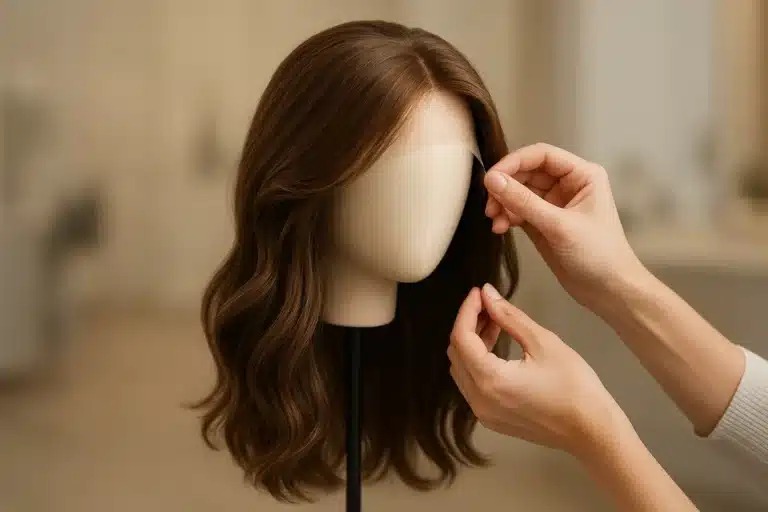
Instead of treating alternative hair like a shameful secret or a mask, turn it into a tool for joyful self-expression. Let your child help you brush your wig, try on a stretchy wig cap, or even pick out a “fun color” for you to wear around the house. When a child can interact with the wig, it transforms from a clinical apparatus into a playful, accessible accessory.
The Shaving Ritual
Should kids be involved in shaving your head? The guidance here is age-dependent. Only involve school-aged children and older, and only if they display genuine curiosity rather than fear. Giving an older child the clippers can be a profoundly empowering way for them to feel active in the process rather than a passive bystander.
Managing Nightmares and Subconscious Anxiety
Sometimes, children won’t voice their fears—they dream them. It is common for children to have dreams about their own hair falling out. If this happens, engage in “Dream Reframing.” During the daytime, ask them to redraw the scary dream on paper, but this time, draw themselves with a silly, magical hat or super-strength cape. This helps them regain a subconscious sense of bodily control.
Frequently Asked Questions (FAQ)
How do I explain to my toddler that my bald head doesn’t hurt?
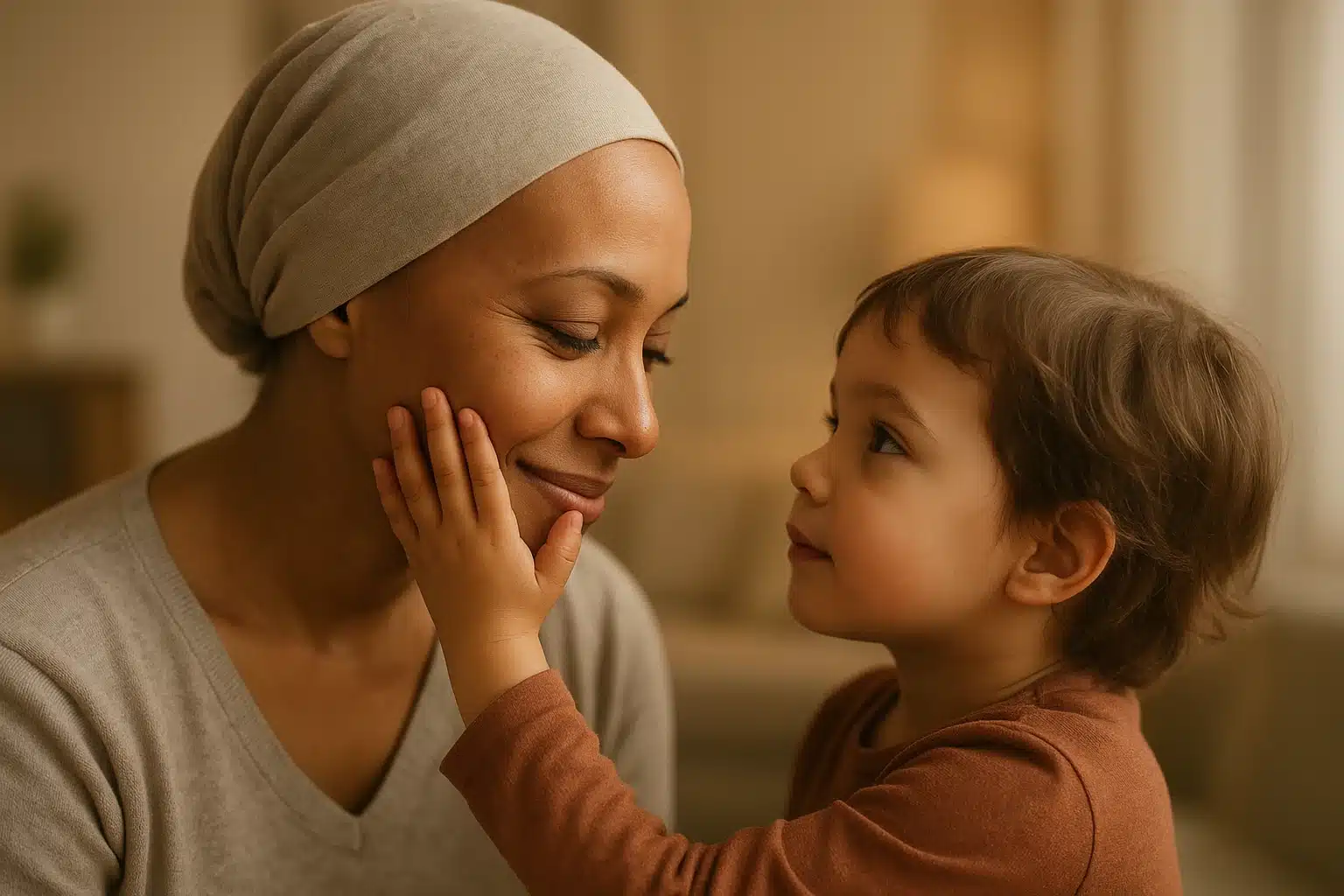
Use tactile reassurance. Let them gently touch your scalp while you smile and laugh. Say, “See? It feels just like your smooth knee. No boo-boos here!” Physical proof is the fastest way to alleviate a toddler’s fear of pain.
Should I hide my bald head from my children?
While you should always do what makes you comfortable, normalizing your natural appearance at home teaches children that visual differences are nothing to be ashamed of. Letting them see you both with and without alternative hair fosters deep acceptance.
How can I prepare my child for questions from their classmates?
Role-play the scenario at home. Give them short, factual, and confident sentences they can use, such as: “That’s just how my mom’s medicine works,” or “My dad has a bald head and it looks cool.” Confidence is contagious.
Giving the Gift of Empathy
Explaining hair loss to your children is undoubtedly challenging, but it is also a profound teaching moment. By leaning into honest, age-appropriate conversations, you aren’t just helping them understand why your appearance has changed. You are teaching them how to regulate their emotions, how to embrace physical differences, and how to approach the world with deep, unwavering empathy.
No matter where you are on this journey, remember that your child’s love for you isn’t rooted in your hair—it’s rooted in your presence. When you are ready to explore solutions that make you feel like your most confident self, take the time to learn about all the supportive resources and beautiful alternative hair options available to you.