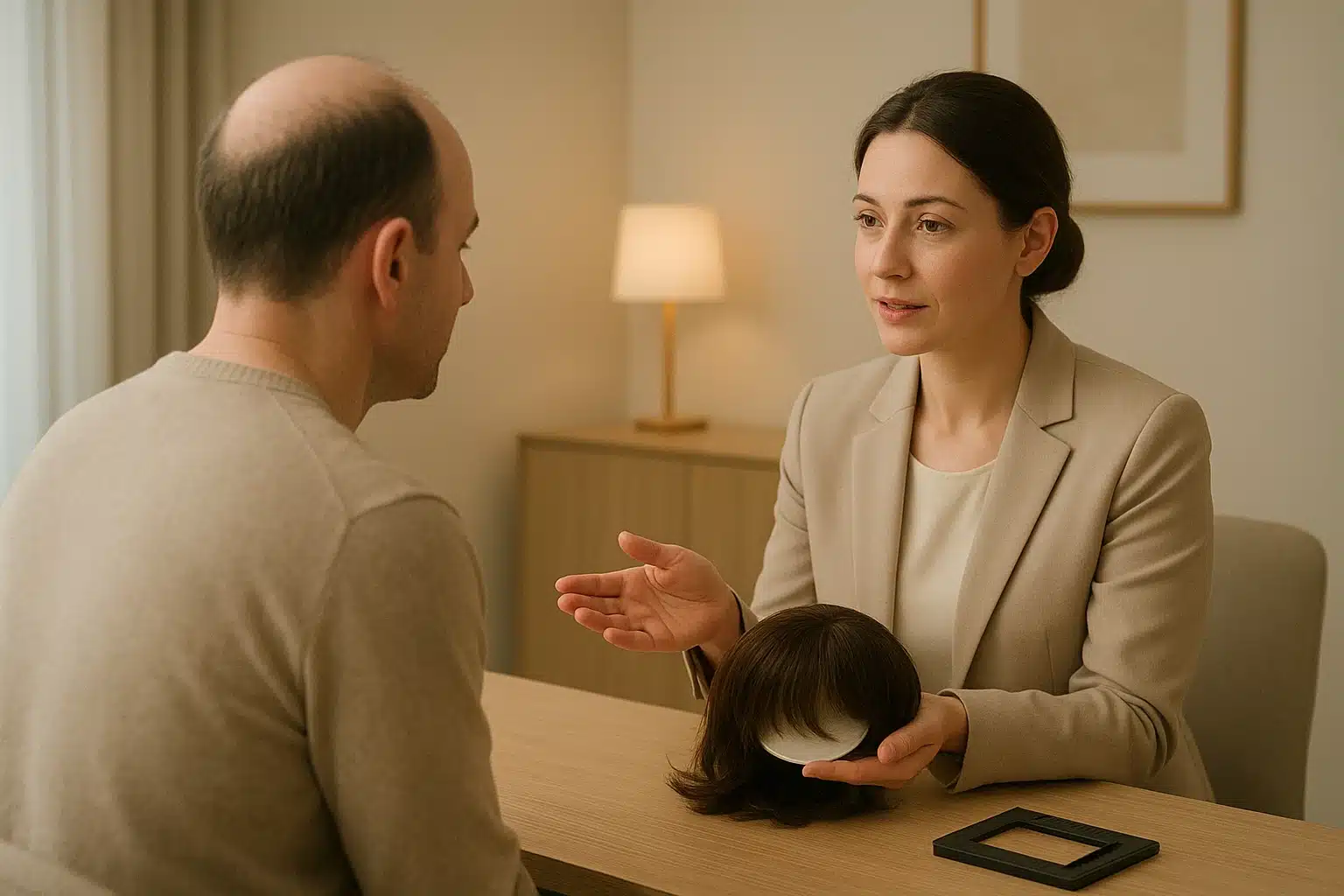
Experiencing medical hair thinning or loss is a deeply personal journey. For many, the prospect of shopping for a hairpiece is not a simple retail transaction—it is a vulnerable, often emotional milestone. Standing in the middle of a brightly lit, crowded salon surrounded by fashion-focused shoppers while navigating a medical condition can feel overwhelming and isolating. What you need in this moment is profound medical literacy, absolute discretion, and a quiet space to explore your options with dignity.
Fortunately, Colorado is home to a dedicated community of specialists who understand this. Finding the right environment makes all the difference in transitioning from a state of confusion to feeling empowered and confident. If you are beginning your search, finding the best wig stores in Denver means looking beyond basic directories and prioritizing boutiques that offer private, empathetic consultation rooms designed specifically for medical hair loss.
The Emotional Compass: Why Privacy Isn’t a Luxury
When you are dealing with hair loss due to alopecia, chemotherapy, or hormonal changes, you aren’t just looking for a new hairstyle. You are seeking a “cranial hair prosthesis”—a medical necessity designed to protect a sensitive scalp and restore your sense of self.
During a consultation for medical wigs, you need the freedom to remove your current head covering, discuss your medical history, and ask candid questions without fear of being overheard. A private room allows a trained specialist to conduct a proper scalp analysis, take precise head measurements with specialized tape, and trial different cap constructions in complete comfort.
Demystifying Your Options: The Hair Piece Spectrum
One of the biggest “aha moments” for those new to hair replacement is realizing that a full wig isn’t always the only—or best—solution. Depending on your stage of hair retention, your options vary widely:
- Full Wigs: Ideal for complete hair loss, such as alopecia totalis or during chemotherapy. Modern full wigs often utilize advanced silicone-based security systems that keep the cap locked to a bare scalp without the need for adhesives.
- Partial Wigs and Half Wigs: Perfect for diffuse thinning where your natural front hairline remains intact. A half wig seamlessly drapes over the crown and back, blending beautifully with your existing front hair.
- Hair Toppers: Designed for localized loss along the parting line or crown. High-quality wig hair toppers clip or integrate smoothly into your biological hair to add volume exactly where you need it.
⚠️ A Crucial Warning on Traction Alopecia: Many beginners rush to buy heavy clip-in pieces to hide thinning areas. However, if your biological hair is weak or brittle, securing heavy clips can pull on the hair shafts, leading to further hair loss known as traction alopecia. Always ask your consultant about weight distribution methods, velvet wig bands, or tape-based alternatives if your roots are fragile.
What Makes a Wig Truly “Discreet”?
If you are worried that a wig might look “bulky” or artificial, you are not alone. The secret to a natural appearance doesn’t just lie in the hair itself—it lies in the architecture of the cap hidden underneath.
- Monofilament Caps: These feature a sheer mesh area where individual hairs are hand-knotted. This allows your natural scalp color to show through and permits you to part the hair in any direction, just like biological hair.
- Lace Fronts: A sheer, nearly invisible lace material runs along the forehead, creating the illusion of a natural hairline. This allows for off-the-face styling without exposing harsh, artificial boundaries.
- 100% Hand-Tied Bases: Every single hair is tied by hand onto a soft, flexible material. This is incredibly gentle on raw, sensitive scalps (especially post-chemotherapy) and allows the hair to move naturally. When paired with the best human hair wigs, a hand-tied cap offers the ultimate in realism and comfort.
Verified Denver Recovery Directory: Where to Find Private Rooms
Generic internet searches often mix up costume shops with medical boutiques, and can sometimes lead you to permanently closed locations (for instance, if you’ve seen recommendations for A Selah Hair & Wig Salon in Westminster, please note they are now permanently closed).
Here are verified operational retailers in the Denver area that specialize in private, compassionate consultations:
- Susie’s Wigs & Hair Replacement (Cherry Creek Area): Known for their quiet showroom experience, Susie’s offers specialized private rooms. They excel in same-day custom sizing, trimming, and “thinning” off-the-shelf wigs so they don’t look artificially thick.
- Kim’s Wig Botik (Tiffany Plaza Mall): Offering dedicated private fitting rooms, Kim’s showcases premium medical systems and boasts an inventory of over 10,000 pieces. They are highly regarded for pediatric hair loss support and administrative help with insurance.
- Hana Designs (Littleton): Run by a cancer survivor, Hana Designs offers an intimate, therapeutic environment. As a holistic Aveda Concept Salon, they provide clean botanical styling and feature a philanthropic arm (“Hana’s Hope”) to assist patients facing financial hardship.
- The Loft Salon of Parker (Parker): Featuring comfortable, sensitive styling suites, The Loft specializes in precise custom measurements and meticulous color-ring matching to perfectly replicate your biological hair.
- Hair Unlimited of Denver (Hampden Ave): A dedicated non-surgical hair replacement studio equipped with private consultation suites, offering advanced solutions and scalp therapies.
Clinical Financing: Navigating Insurance Coverage
Many people assume they have to pay out-of-pocket for medical hair loss, but you may be entitled to reimbursement. If your hair loss is due to a medical condition, your health insurance may cover all or part of the cost of a cranial prosthesis.
Here is your actionable checklist:
- Get the Right Prescription: Ask your dermatologist or oncologist to write a prescription specifically for a “Cranial Hair Prosthesis” (not a “wig”). Ensure they include the correct ICD-10 medical code for alopecia or chemotherapy-induced hair loss.
- Know the Billing Code: When checking your Durable Medical Equipment (DME) coverage with your insurance provider, ask if they cover the HCPCS billing code A9282 (Wig, any type, fitting/customization).
- Insist on Customization: A medical-grade piece shouldn’t be worn straight out of the box. Ensure the boutique you choose includes professional texturing, thinning, and personalized trimming within their pricing.
Frequently Asked Questions (FAQ)
What exactly happens during a private wig consultation?
During a private session, a specialist will discuss your lifestyle and medical needs, measure your head circumference and front-to-back distances, perform a color match using professional rings, and let you try on various cap constructions. If it’s your first time, they will also teach you how to put the piece on and care for it.
Will wearing a wig prevent my natural hair from growing back?
No. Wigs do not stop biological hair from growing. However, wearing a cap that is too tight or lacks proper ventilation can irritate the scalp. A properly fitted, breathable cap (like a 100% hand-tied base) protects the scalp while allowing natural hair to regrow underneath.
I’m overwhelmed. Where do I even start?
Take a deep breath; you don’t have to become an expert overnight. Start by reading up on the fundamentals of buying a wig for the first time. Educating yourself on the terminology will give you confidence before you ever step foot in a salon.
Next Steps for Your Journey
Navigating hair loss is challenging, but finding the right solution shouldn’t be. By arming yourself with the knowledge of cap constructions, understanding how to protect your biological hair, and knowing exactly what to ask a medical billing specialist, you are already taking control of your journey.
When you are ready, reach out to one of Denver’s specialized boutiques to schedule your private consultation. Remember, you deserve an environment that treats your hair loss with the empathy, clinical expertise, and privacy it requires.