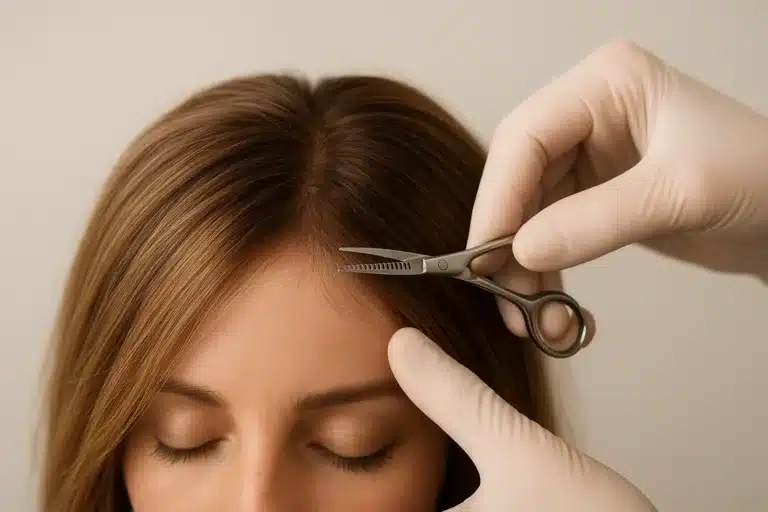
You wake up, walk into the bathroom, and before you even brush your teeth, your eyes dart to your hairline. You lean over the sink, parting your hair under the harsh vanity lights, desperately searching for tiny new sprouts. Some mornings, you think you see progress and your heart soars. Other mornings, you notice more hair in your brush, and a familiar, heavy panic sets in. Because of our deep emotional attachment to hair, this daily ritual isn’t just about vanity—it’s about identity, control, and a profound sense of loss.
For anyone actively navigating the emotional landscape of hair loss, this rollercoaster of hoping, waiting, and mirror-checking is an exhausting source of psychological distress. Traditional advice often focuses heavily on medical triggers or physical treatments, completely neglecting the grueling “in-between” phase. Today, we are going to change that. By bridging the gap between the biological science of your follicles and the emotional reality of your mind, we can help you reclaim your peace and find solid ground during a highly uncertain journey.
The Invisible Trauma of the “Wait”
When you first address hair loss, the focus is entirely on taking action. But once a treatment or new routine begins, you enter the waiting phase—a period characterized by intense emotional whiplash. Clinical research in psychodermatology (the intersection of psychology and skin/hair health) confirms that hair loss fundamentally alters our self-concept.
Feeling exhausted, anxious, or depressed about your hair is not an overreaction; it is a valid physiological and psychological response. When your hair health feels unpredictable, your brain’s threat-detection system stays locked in overdrive. To turn down that internal alarm system, you first need to understand exactly what your scalp is—and isn’t—doing.
The Biological Reality of the Scalp: Why Regrowth Isn’t a Straight Line
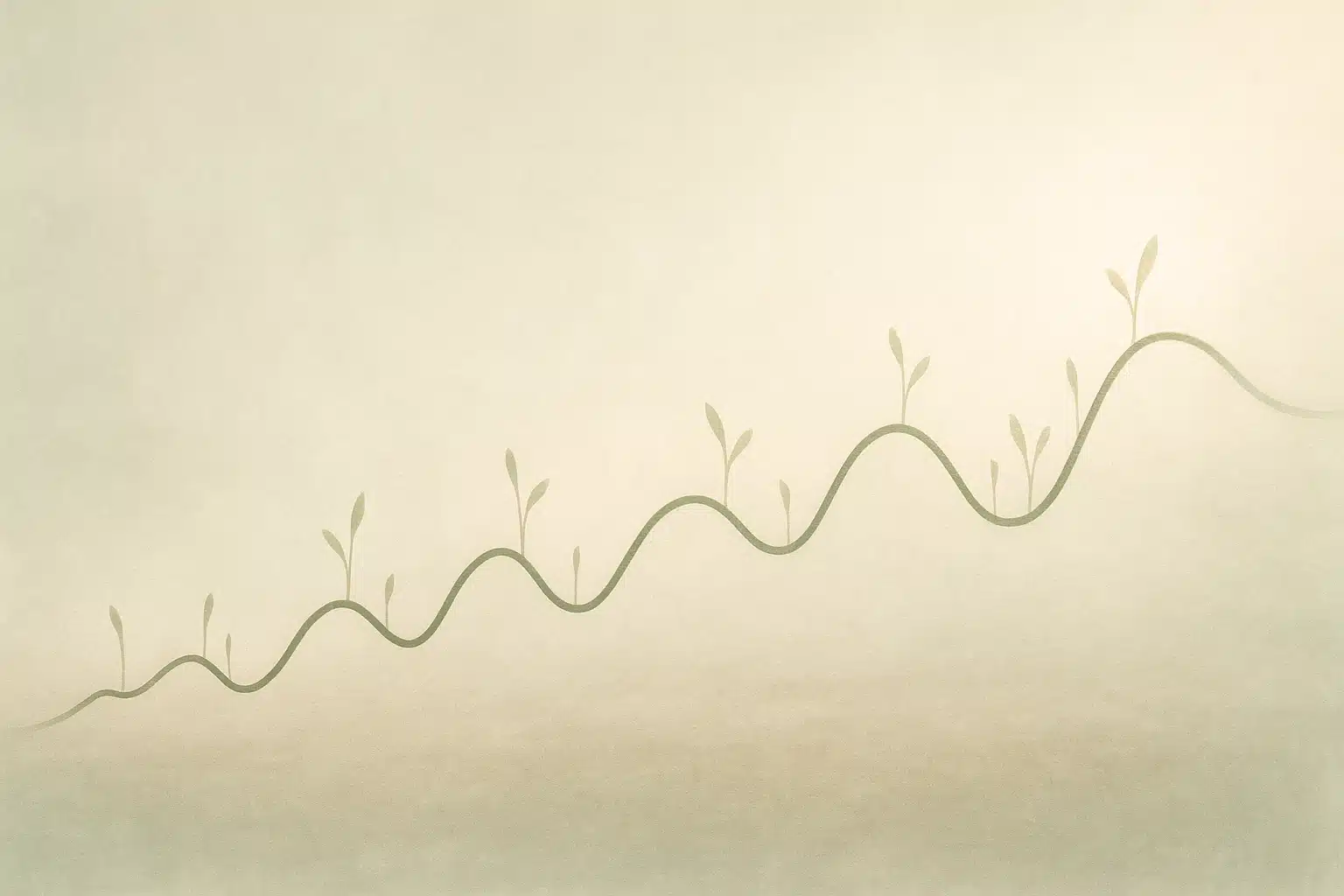
One of the greatest sources of hair-related anxiety is the expectation that regrowth will be a steady, linear progression. In reality, your hair follicles are wildly independent.
The Dormant Garden Analogy
Think of your scalp as a garden. Your hair follicles do not communicate with one another; they all operate on their own individual clocks. This is called Asynchronous Follicular Recovery. Because each follicle wakes up at its own pace, early regrowth almost never looks like a uniform blanket of thick hair. Instead, it appears patchy and uneven.
Furthermore, when follicles finally “wake up,” they often produce vellus hairs—baby-fine, unpigmented strands that are nearly invisible. It can take several hair cycles for these delicate sprouts to mature into the thick, colored terminal hairs you are waiting for.
Demystifying the “Dread Shed”
Perhaps the most terrifying moment in the regrowth journey is the “Synchronized Shedding Phase.” You start a new routine, you feel hopeful, and suddenly, two to six weeks later, you start shedding hair in terrifying handfuls.
Breathe. This is actually a biological sign of success. When a dormant follicle is stimulated back into the active growth phase (Anagen), the very first thing it must do is push out the old, dead hair (Telogen) resting in the pore to make room for the new shaft. Seeing a spike in shedding shortly after starting a new regimen means the new hairs are actively pushing the old ones out.
The 5 Emotional Stages of the Regrowth Rollercoaster
Understanding the biology is only half the battle. Coping with the mental fallout is the other. Most individuals pass through five distinct emotional stages during their regrowth journey:
- Fragile Hope: You’ve started a new routine or committed to a new path. You feel optimistic but incredibly vulnerable, tracking every tingle on your scalp.
- Mirror Hypervigilance: The hope turns into an obsessive need for validation. You begin checking mirrors constantly, counting shed hairs on your pillow, and letting the perceived density of your scalp dictate your mood for the entire day.
- The Shedding Panic: You hit the “dread shed” phase. Hope plummets into despair. You are convinced your approach is failing, leading to intense frustration and grief.
- Relapse Anxiety (Relapse PTSD): Even as hair begins to successfully grow back, a new hypervigilant trauma emerges. You live in constant fear that the hair will fall out again. Advocacy groups acknowledge this as a distinct psychological hurdle where you struggle to trust your own body’s recovery.
- Integration & Radical Acceptance: You finally decouple your self-worth from the hair in your sink. You accept the non-linear nature of your scalp health and find peace, regardless of daily hair counts.
Your Psychodermatology Toolkit: Retraining Your Brain
How do you get to that final stage of acceptance? Cognitive Behavioral Therapy (CBT) and Acceptance and Commitment Therapy (ACT) offer incredible tools for breaking the anxiety loop.
The “Mirror Diet”
Mirror hypervigilance acts like an addiction. Every time you check your scalp, you are feeding your anxiety. To break the cycle, implement the “Mirror Diet.”
- The Rule: You are allowed to check your scalp only once per day, under normal bathroom lighting, for no more than 60 seconds.
- The Reason: Daily checking creates an optical illusion; hair grows too slowly to see day-over-day changes. By restricting your checks, you stop traumatizing yourself with microscopic (and often inaccurate) analyses.
Cognitive Reframing
When you find yourself spiraling into thoughts like, “My hair is shedding again, I’m going to lose it all,” pause and challenge the thought with biological data. Reframe it to: “My hair follicles are cycling naturally. Shedding old hair is a necessary biological step to make room for new growth.” Track your progress using standardized, month-over-month photos rather than daily bathroom selfies.
Navigating the “In-Between” Gracefully
The waiting period for hair regrowth can last anywhere from six months to over a year. You don’t have to put your life—or your confidence—on hold during this time.
Finding safe, gentle ways to style and conceal sparse areas during the “in-between” phase can drastically reduce daily anxiety. Lightweight hair toppers, premium synthetic pieces, or beautifully crafted 100% human hair wigs serve as incredible, empowering bridges. For nearly two decades, Wig Superstore has operated on a foundation of compassionate care, understanding that finding the right temporary or long-term hair solution isn’t just about aesthetics; it’s about giving you your life back while your body heals.
Frequently Asked Questions
Is it normal to feel depressed about losing my hair?
Absolutely. Hair is intimately tied to our self-expression and identity. Grieving the loss of your hair is a deeply normal, scientifically validated emotional response.
Why is my regrowing hair so thin and see-through?
New hair often begins as “vellus hair,” which is naturally fine and lacks pigment. As the follicle strengthens over multiple growth cycles, these hairs will eventually transition into thicker, darker “terminal hairs.”
How do I stop checking my scalp 20 times a day?
Treat mirror-checking as a habit that needs to be broken. Implement the “Mirror Diet” by physically covering certain mirrors in your home if necessary, and limiting your scalp-checks to a single, one-minute session per day.
Why is my hair shedding again after it started growing back?
Hair growth is cyclical, not permanent. It’s perfectly normal for follicles to enter a resting (telogen) phase and shed, even after successful regrowth. This non-linear pattern is a natural part of your scalp’s ecosystem.
Taking the Next Step
You do not have to ride the emotional rollercoaster of hair loss alone, and you certainly don’t have to wait for full regrowth to feel beautiful and confident again. Education is your greatest armor against anxiety. By understanding the erratic, non-linear nature of hair biology, you can replace panic with patience.
If you are currently navigating the challenging “in-between” phase of hair regrowth, give yourself permission to explore transitional solutions that make you feel like you again. Whether you are looking for educational resources, a supportive community, or premium, comfortable wigs to bridge the gap, Wig Superstore is here to guide you with empathy, expertise, and almost 20 years of trusted experience.