Have you ever noticed that the pursuit of the “perfect wig” has fundamentally changed? It’s no longer just about finding the silkiest, most reflective hair on the market. Today, the true mark of a flawless install is undetectable realism—finding a unit that mirrors the authentic geometry, movement, and luster of natural ethnic hair. Whether you are navigating hair loss, protecting your natural curls, or simply want a look that authentically honors your roots, understanding the physical nuances of textured hair is an incredibly empowering first step.
Navigating these incredible texture variations successfully requires a holistic view of wig construction. After all, understanding how a specific fiber behaves and interacts with a wig’s base is just as crucial as mastering hairline density and texture when your goal is to achieve an undetectable, seamless install. Let’s move beyond the basics of “straight versus wavy” and explore the fascinating science, manufacturing, and care of Yaki, Kinky Straight, and Afro Kinky hair textures.
The Science of Texturized Hair: How It’s Made
When you purchase a high-quality, 100% human hair wig with an ethnic texture, you aren’t just buying hair that naturally grew that way. You are actually investing in an intricate feat of chemistry and physics. To create these textures, manufacturers take virgin human hair—which typically has a round cross-section and flat alignment—and permanently alter its disulfide bonds to mimic the flat, elliptical shape of Afro-textured hair.
Here is a look behind the curtain at how these distinct textures are crafted:
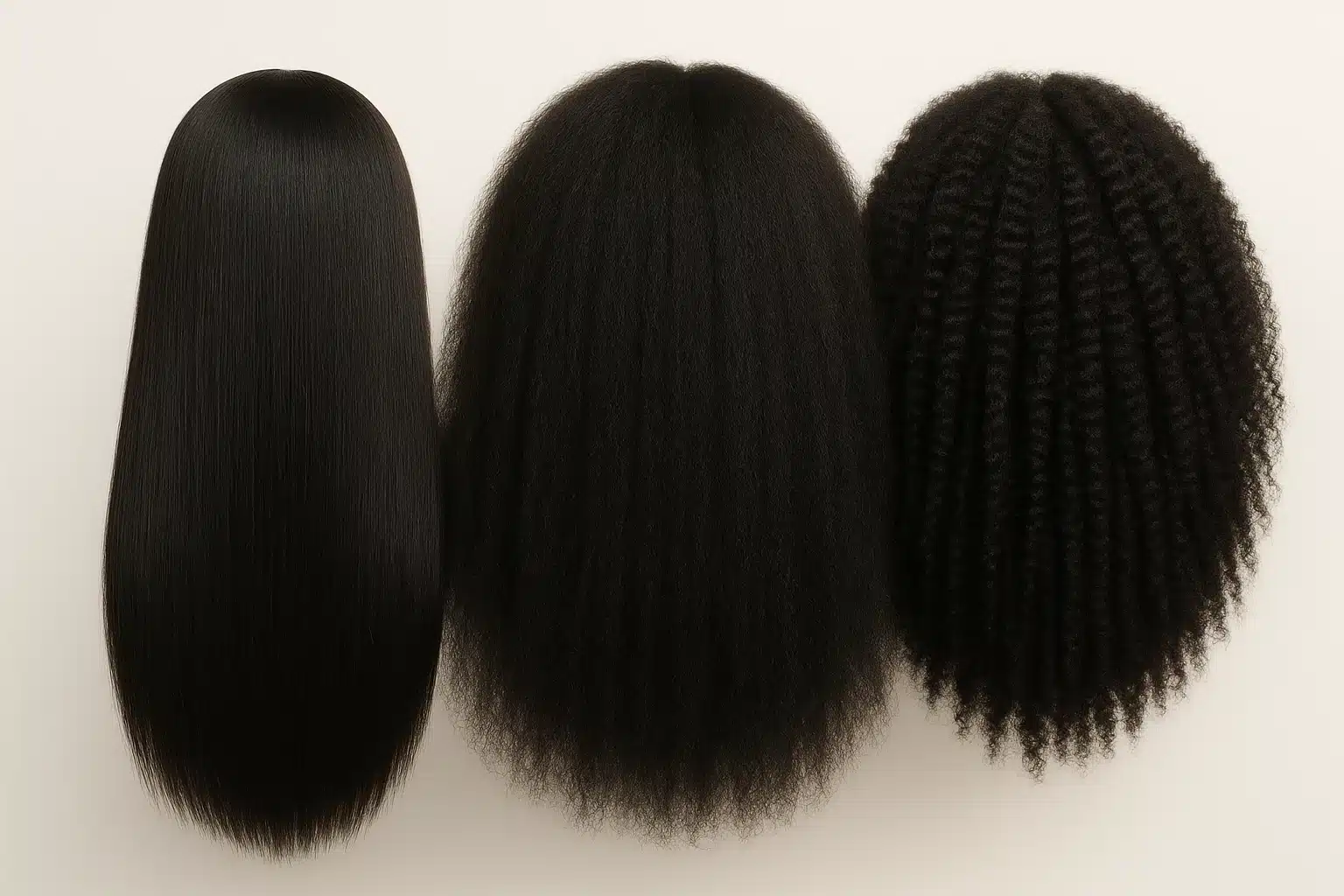
- Yaki Processing: To mimic the look of chemically relaxed Afro hair, manufacturers use mechanical micro-pressing plates and mild alkaline solutions. There is no extreme heat involved. This creates microscopic, flat-angle ripples in the hair shaft, giving it that signature textured-straight appearance.
- Kinky Straight Processing: To replicate the majestic volume of a fresh natural blowout, bundles of hair are tightly braided and subjected to high-heat steam-setting, followed by a chemical setting process. This imparts coarse, high-loft steam crimps into the fibers.
- Afro Kinky Processing: Creating a true 4B/4C texture requires incredible precision. The hair is painstakingly wound around micro-diameter steel rods, followed by high-pressure steam cooking. This locks in the tight, spongey, zig-zag geometries that define Afro Kinky hair.
The Definitive Texture Profiles
Many wig guides group all textured hair into a single category, but understanding the structural distinctions is the secret to finding your perfect match.
Yaki Straight: The Corporate Silk Press
If you love the fluid movement of straight hair but want an authentic thickness that doesn’t look artificially flat, Yaki is your go-to. It possesses smooth movement but carries a subtle, micro-crimped undercurrent.
- Light Yaki: Mimics fine natural hair that has been pressed bone-straight.
- Regular/Medium Yaki: Mimics the typical density and movement of relaxed hair.
- Coarse/Kinky Yaki: Mimics thick, highly textured natural hair that has been silk-pressed.
- The Vibe: Excellent swing, easily holds thermal curls, and is highly resistant to reverting or puffing up in humid weather.
Kinky Straight: The Majestic Blowout
Kinky Straight is for the volume lovers. It looks mathematically identical to freshly blown-out 3C–4C hair.
- The Structure: Because of the high-loft steam crimps, this texture requires less physical hair weight to achieve full density. A 130% density Kinky Straight wig will give you the same visual volume as a 200% density Silky Straight wig, saving you weight and heat discomfort.
- The Vibe: Fluffy, coarse, and highly voluminous. It reacts beautifully to humidity, expanding slightly just like natural hair would.
Afro Kinky: The Authentic 4B/4C Crown
A common mistake is confusing “Kinky Curly” (which features 3C/4A loop curls) with “Afro Kinky” (which features 4B/4C zig-zag crimps).
- The Structure: Afro Kinky has tightly packed, spongey zig-zag folds with almost zero defined loop curls.
- The Luster Concept: Afro Kinky possesses a stunningly realistic matte finish. Because the surface of these fibers contains sharp folds and micro-coils, they scatter light in multiple directions. This creates a natural, low-luster sheen rather than the highly reflective, plastic-like shine seen on heavily processed silky straight wigs.
The Physics of Maintenance: Keeping Textures Alive
Treating a texturized human hair wig exactly like a silky straight wig is a fast track to damaging the unit. Because the cuticle scales of texturized hair have been raised and manipulated during processing, they lose hydration much faster than straight hair. Furthermore, human hair wigs do not have a biological scalp to supply them with natural sebum (oil).
The Hydration Equation (LOC/LCO Method)
To keep Afro Kinky and Kinky Straight wigs from becoming brittle, adapt the natural hair LOC (Liquid, Oil, Cream) or LCO method. Start by misting the hair with water or a water-based leave-in, seal the cuticle with a lightweight, safe oil (like Argan or Jojoba), and finish with a moisturizing cream.
The Detangling Protocol
Never dry-brush Afro Kinky or Kinky Straight hair. Dry-brushing shatters the coil clusters and creates a massive, frizzy, unmanageable cloud. Always detangle these units when they are wet and saturated with a slippery conditioner. Use a wide-tooth comb or a flexible detangling brush, starting from the very ends of the hair and gently working your way up to the lace base to prevent shedding.
The Thermal Boundaries & The Reversion Myth
There is a common myth that you can flat iron a texturized wig as hot as you want, and it will magically revert to its original kinky texture when washed. This is false. Chemically texturized hair relies on “structural memory” set by steam and chemical baths.
- Every time you flat iron Kinky Straight or Afro Kinky hair, you slightly degrade that heat-molded crimp.
- To protect the texture, never exceed 350°F (175°C) with your hot tools. Repeated styling above this threshold will permanently loosen the kinky texture.
Avoiding Common Texture Traps
Even seasoned wig wearers can stumble when transitioning to ethnic textures. Here are the most common pitfalls to avoid:
- Using heavy silicone serums on Yaki hair: Heavy silicones weigh down the micro-crimps, making the wig look stiff, stringy, and greasy. If your Yaki wig gets stiff, restore its swing by stripping the product build-up with a clarifying wash, followed by a deep conditioning steam treatment.
- Ignoring the nape of the neck: Afro Kinky hair is highly prone to friction tangles at the nape where the hair rubs against your clothes. Use silk-lined collar inserts on your winter coats and apply targeted leave-in protective sprays to this area daily.
- Expecting natural growth properties: Remember, once human hair is cut from a donor and processed, it cannot repair itself. Treat your texturized wig with profound gentleness to extend its lifespan.
Frequently Asked Questions About Ethnic Wig Textures
Is Yaki hair synthetic or human?
Yaki refers to the texture of the hair, not the material. You can find Yaki textures in both synthetic fibers and 100% human hair. However, human hair Yaki offers superior longevity, realistic movement, and the ability to safely heat style.
Can I flat iron a Kinky Straight wig, and will the texture return when washed?
Yes, you can flat iron a Kinky Straight human hair wig, and it will largely revert to its fluffy state when washed. However, you must use a heat protectant and keep your flat iron under 350°F. Excessive heat will permanently melt the structural memory of the steam-set fibers, causing the hair to lose its texture over time.
Why does my Yaki wig get stiff, and how do I restore its swing?
Stiffness in Yaki hair is almost always caused by product build-up. Because the hair is micro-crimped, heavy styling creams, hairsprays, and silicone-based serums get trapped in the microscopic ridges. To restore its natural swing, wash the wig with a clarifying shampoo to strip the build-up, apply a lightweight moisturizing conditioner, and allow it to air dry.
How do I wash an Afro Kinky wig without destroying the 4C curl pattern?
Gently submerge the wig in a basin of warm water mixed with sulfate-free shampoo. Do not scrub, bunch, or agitate the hair, as this will cause severe matting. Instead, gently squeeze the soapy water through the lengths. Rinse thoroughly, apply a rich conditioner, and detangle with a wide-tooth comb while the hair is completely submerged and slippery.
Next Steps in Your Hair Journey
Choosing an ethnic hair texture isn’t just a style choice; it’s a celebration of natural beauty and a commitment to high-quality craftsmanship. Whether you resonate with the sleek professionalism of Yaki Straight, the bold volume of Kinky Straight, or the regal authenticity of Afro Kinky, understanding the science behind your wig ensures you can care for it with confidence.
As you explore your options, consider your daily routine, your local climate, and the amount of time you want to spend on maintenance. If you’re ready to discover the perfect texture that aligns with your lifestyle, dive deeper into our educational resources on base construction, cap types, and styling techniques to complete your foundational wig knowledge.