High-quality wigs and hair systems represent a significant emotional and financial investment. When you bring home a beautiful new piece, it feels like discovering a new level of confidence. But over time, even the most exquisitely crafted hairpiece will begin to show signs of wear. Whether you’ve just found the perfect style from one of the best wig stores in Fort Worth or you’ve been wearing your favorite daily piece for a year, the moment you spot a tear in the delicate lace or notice severe shedding, a sense of panic often sets in.
The good news is that a damaged wig rarely means a ruined wig. Many wearers mistakenly throw away expensive hairpieces prematurely because they don’t understand the artisan craft of wig restoration. In the Dallas-Fort Worth area, an entire ecosystem of skilled specialists can revive your favorite pieces.
Let’s demystify the specialized world of wig repair, explore exactly what happens when your wig begins to age, and discover how professional restoration can save you hundreds—if not thousands—of dollars.
The Anatomy of Wig Wear and Tear: What’s Happening to Your Hair?
Before you can decide how to fix a wig, it helps to understand why it’s degrading. Alternative hair pieces generally suffer from three main types of damage:
1. Lace and Structural DamageThe foundation of premium wigs is often made of ultra-fine Swiss lace. Over time, the tension from applying and removing the wig, the use of harsh adhesives, or simply accidental punctures from T-pins on a styling block can cause the lace to fray or tear. You might also notice a “trimmed-to-knots” hairline, where the delicate front edge begins to unravel.
2. Shedding and Bald SpotsHave you noticed thinning patches, especially around the parting or the nape of the neck? Each hair on a hand-tied wig is individually knotted onto the lace. Friction from brushing, repeated washing, or the buildup of styling gels and adhesives can cause these tiny knots to slip and come undone.
3. Fiber Frizz vs. Human Hair DrynessIt’s crucial to understand that human hair and synthetic fibers age differently. Human hair wigs lose moisture and their protective cuticles over time, leading to severe dryness. Synthetic wigs, on the other hand, are made from ultra-fine plastic polymers (like acrylic or polyester). When these fibers brush against your clothing, friction creates static. This static physically twists and deforms the plastic, resulting in stiff, crunchy ends often referred to as “fiber sunburn.”
The Professional Restoration Playbook: Demystifying Wig Surgery
When you hand your piece over for professional wig repair, what exactly are you paying for? Wig restoration is less like typical hairstyling and more like micro-surgery.
What is Re-Ventilating?
If your wig has bald spots, a professional can actually add new hair back into it through a process called re-ventilating. Using a microscopic latch-and-hook tool called a ventilating needle, an artisan meticulously ties individual hair strands back into the lace base.
Technicians use different knots depending on the area of the wig. They use single knots at the front to create an ultra-realistic, invisible hairline, and double split knots at the crown, which are slightly more visible but incredibly durable. Because this process is entirely done by hand, it is labor-intensive, but it completely revives a thinning piece.
Structural Cap Surgery and Lace Patching
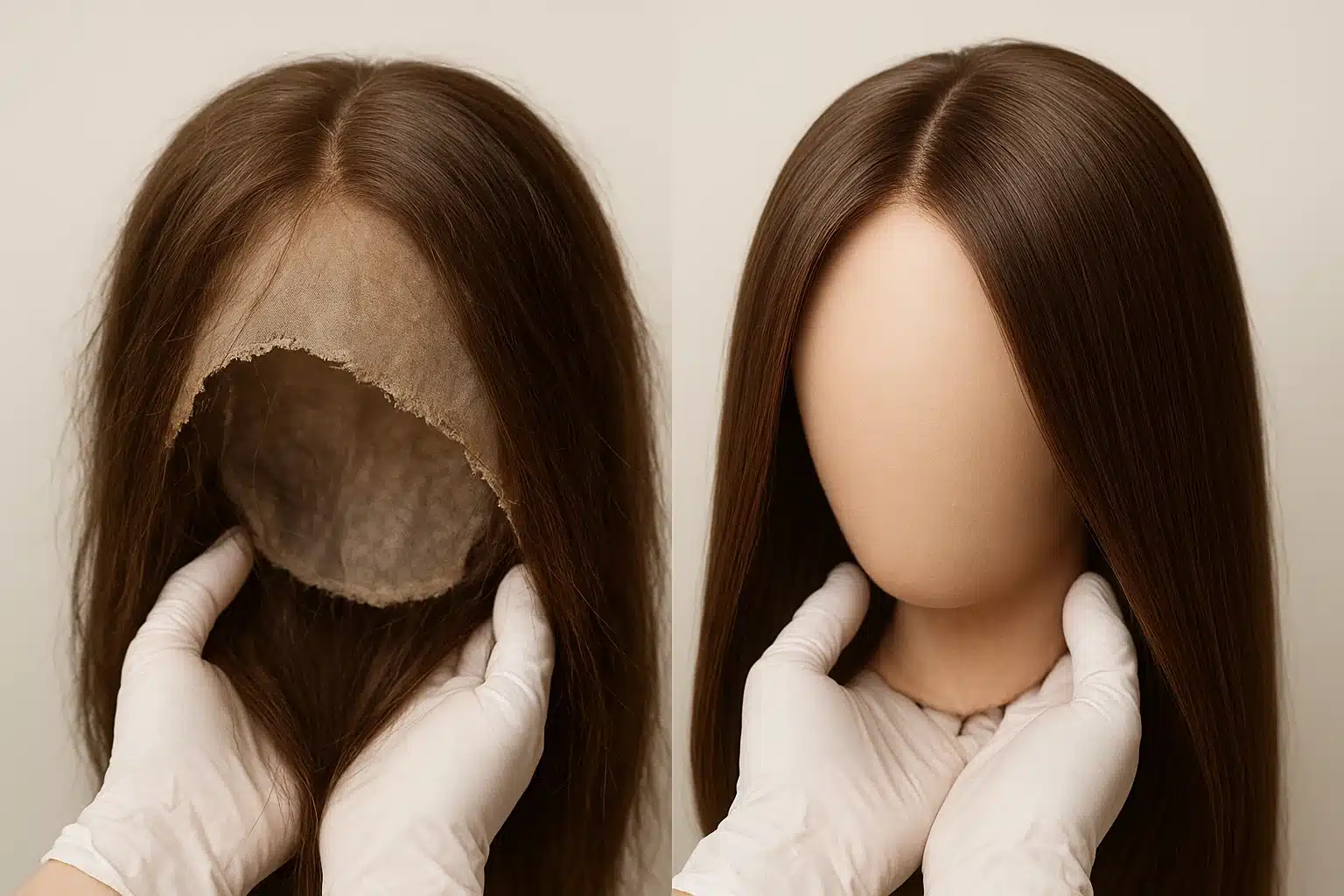
A torn lace front doesn’t mean your wig is doomed. A professional repair technician can bridge a tear using a specialized PURS stabilizer or a fresh patch of Swiss lace. They stitch this patch into place using transparent, micro-fine nylon thread that mimics the exact weave of the wig’s foundation, rendering the repair virtually invisible.
Thermal Fiber Resetting
If your synthetic wig has turned into a frizzy, tangled mess, you might think it’s unwearable. However, professionals use specialized steaming blocks to perform a thermal reset. By applying controlled steam (usually between 140°F and 250°F, depending on the polymer), they can relax the plastic fibers back to their original “shape memory,” eliminating the shaggy frizz and restoring the wig’s smooth bounce.
The DIY vs. Pro Decision Tree: Can You Fix It Yourself?
When disaster strikes, your first instinct might be to fix it yourself. While some maintenance is perfectly safe to do at home, crossing the line into structural repair can permanently ruin your investment.
When to Attempt a DIY Fix
- Unnatural “Wiggy” Shine: If a new synthetic wig looks too glossy due to factory polymer coatings, a light dusting of baby powder or dry shampoo will easily dull the shine.
- Minor Frizz on Heat-Friendly Synthetics: With proper synthetic wig care knowledge, you can use a low-heat steamer and a wide-tooth comb to gently detangle and reset minor friction frizz at home.
When to Call a Fort Worth Professional
- Thinning Hairlines or Bald Parts: Re-ventilating requires specialized needles, matching hair, and hours of training.
- Holes or Tears in the Lace: Never attempt to fix lace tears yourself.
- Loose, Slipping Cap Fit: If the elastic bands are stretched or the wefts are torn, you need professional cap downsizing or reconstruction.
Common DIY Mistakes to Avoid
- The Glue Trap: Never use standard fabric glue or superglue to fix a lace tear. These adhesives dry hard and brittle. When you go to wear the wig, the hardened glue will snap the delicate lace threads, turning a small tear into an unfixable hole.
- The Flat Iron Disaster: Never run a standard flat iron over a non-heat-friendly synthetic wig. Standard irons heat up to 350°F or more, which will instantly melt the polymer fibers into a solid sheet of plastic.
- The Fabric Softener Myth: A popular social media trend suggests soaking synthetic wigs in fabric softener to make them smooth. In reality, fabric softeners leave behind a heavy, waxy chemical coating. This suffocates the synthetic fibers, attracts environmental dust, and eventually rots the delicate lace base.
Trusted Wig Repair and Restoration Specialists in Fort Worth
If you’ve determined that your piece needs professional help, the Dallas-Fort Worth metroplex is home to several highly capable specialists. Here is where you can find localized expertise depending on your specific needs:
- Hair Restoration Institute of DFW (1201 W Lancaster Ave, Fort Worth, TX 76102)Best suited for those with high-end, non-surgical hair systems. They specialize in clinical scalp health integration, structural security, and deep customization for lace hairpieces.
- Hair Solutions by Sharon (4959 S Hulen St, Fort Worth, TX 76132)An excellent choice for premium human hair customization. They offer expert medical wig refitting, deep conditioning treatments to restore moisture, and tailored styling adjustments.
- Wig Studio (6080 S Hulen St, Fort Worth, TX 76132)Ideal for routine maintenance, synthetic fiber refreshing, styling touch-ups, and basic cap adjustments to ensure a secure fit.
Preventative Mastery: Extending the Life of Your Alternative Hair
The best way to handle wig repairs is to prevent them from happening in the first place. Adopting a solid wig maintenance routine is your first line of defense.
The Ten-Wear Wash Rule One of the fastest ways to degrade a wig is over-washing it. Every wash creates friction that loosens the hand-tied knots. A good rule of thumb is to wash your wig only after 8 to 10 full days of wear, unless you have been sweating heavily or in a smoky environment.
Safe Adhesive Removal If you wear lace front wigs, how you remove them dictates how long the lace will last. Never pull or rip the lace away from your skin. Always use a generous amount of an alcohol-based or oil-based adhesive solvent, allowing it to sit for a few minutes to fully break down the glues and gels. This prevents you from inadvertently tearing the Swiss lace or ripping out the delicate hairline knots.
Frequently Asked Questions
Can a torn lace front actually be repaired?
Yes! A torn lace front is one of the most common repairs. Professionals use fine nylon thread and lace stabilizers to meticulously stitch the tear back together. Because the thread is transparent, the repair usually blends seamlessly against your skin.
How much does professional wig repair typically cost?
While prices vary by salon, minor repairs like patching a small lace tear generally start around $150. A major restoration, such as fully re-ventilating a bald hairline, might average $350. When you consider that a premium human hair wig can cost upwards of $2,000, investing $250 into a repair that extends the wig’s lifespan by another 12 to 18 months offers a massive return on investment.
Is my wig too far gone to save?
The golden rule of wig restoration comes down to the health of the hair fibers versus the health of the cap. If the actual hair fibers are still healthy, hydrated, and intact, but the cap is stretched or torn, professional repair is highly economical and highly recommended. If the hair fibers themselves are permanently singed, melted, or irreversibly matted, it may be time to consider replacing the piece.
What is the difference between human hair and synthetic wig repair?
Human hair wig repair largely focuses on hydration, deep cuticle sealing, and color restoration, alongside structural cap fixes. Synthetic wig repair focuses on thermal resetting—using steam to literally reshape the plastic fibers back to their original state to eliminate frizz.
By understanding the mechanics of how your alternative hair ages and knowing exactly when to call in a Fort Worth professional, you can protect your investment and continue wearing your favorite styles with absolute confidence.