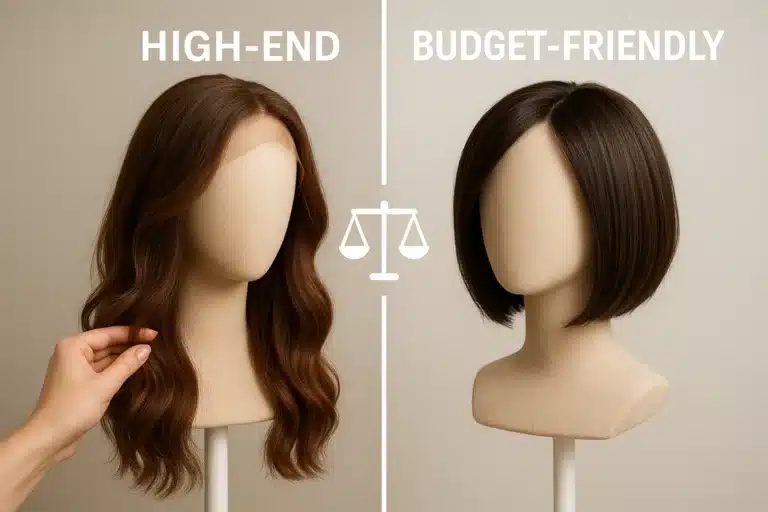
There is a specific, sinking feeling that every wig wearer knows all too well. It’s that moment when you hear a faint rip while adjusting your lace front, or when you hold your favorite piece up to the light and realize the nape has thinned out significantly. In that moment, panic usually sets in, followed by a pressing financial question: Can this be saved, or do I need to buy a new one?
If you view your wig collection as an investment portfolio, this is the moment you have to evaluate your assets. While the initial price tag is what most people focus on, the true financial picture involves the total cost of wig ownership. Understanding repair costs isn’t just about fixing a problem today; it’s about building a long-term strategy that keeps you looking beautiful without blowing your budget.
The Financial Reality of Wig Maintenance
Many first-time buyers assume that once a wig is purchased, the spending stops. However, just like a vehicle requires oil changes and occasional tire rotations to stay road-worthy, a high-quality wig requires structural maintenance.
The industry creates a lot of noise around DIY “hacks”—using superglue on lace or coloring in bald spots with markers. While these might work for a night, they often cause irreversible damage. Professional repair is a specialized trade that bridges the gap between “wearable” and “flawless.” Understanding the costs associated with these services empowers you to make smarter decisions about which wigs to save and which ones to retire.
Anatomy of a Repair Bill: Where the Money Goes
Why does re-knotting a hairline cost $150? To understand the price, you have to understand the labor. “Ventilation” is the industry term for tying individual strands of hair into the lace or monofilament base of a wig.
When you pay for professional repair, you are paying for:
- Precision Labor: A technician often uses a magnifying lens and a hook the size of a needle to tie thousands of individual knots.
- Matching Materials: Sourcing hair that matches the exact denier, texture, and color gradient of your existing wig is difficult, especially for older pieces where the color may have oxidized.
- Structural Integrity: Fixing a tear isn’t just about closing a hole; it’s about reinforcing the area so tension doesn’t immediately rip it open again.
Common Repair Scenarios and Estimated Costs
Let’s break down the most common issues you might face and what you can expect to budget for them. Note: These are estimated market averages and can vary based on hair length and fiber type.
Lace Tears and Cap Mending
Estimated Cost: $125 – $250Lace fronts are designed to be invisible, which means they are inherently fragile. A jagged tear in the delicate Swiss or French lace is the most common emergency.
- The Fix: Professionals use a specialized fine thread and a mending stitch (often hexagonal) that mimics the original lace structure. For larger tears, a patch of new lace may be grafted in.
- The “Aha” Moment: Many wearers think a tear in the middle of the part is fatal. It’s actually often more repairable than a tear on the very edge, as the edge sustains the most tension during wear.
Addressing Hair Loss: Ventilation and Re-knotting
Estimated Cost: $150 – $400Friction is the enemy of density. Over time, the hair at the nape of the neck or the parting line will shed.
- The Fix: This is labor-intensive. The technician must remove the old, broken knots and hand-tie new hair into the existing mesh.
- Cost Factor: The price jumps significantly based on the size of the area. Filling in a dime-sized bald spot is affordable; re-ventilating a full hairline can cost nearly as much as a new mid-range wig.
Structural Fixes: Wefts, Clips, and Resizing
Estimated Cost: $20 – $75Sometimes the hair is fine, but the chassis is broken. Elastic bands lose their stretch, and combs snap off.
- The Fix: Replacing snap on wig clips, sewing in new elastic adjustable straps, or tightening wefts that have come loose.
- Value: This is often the highest ROI (Return on Investment) repair. A small hardware fix can make an uncomfortable wig feel brand new.
Cap Construction and Repairability
Not all wigs are built the same, and their construction dictates how expensive—or impossible—a repair might be.
The Standard Dome vs. The Modern M-Cap
A traditional dome wig cap is generally robust and easier to repair because the materials are thicker and more forgiving. However, modern innovations like the M-Cap wig (often used in glueless units) feature specialized grip zones and contoured ear tabs. repairing these requires a technician who understands the specific tension points of that design. If you try to simply sew a tear in a high-tech cap with standard thread, you may ruin the fit entirely.
Open Weft (Capless) vs. Full Hand-Tied
Capless wigs (open weft) are actually easier to repair structurally. If a weft comes loose, it can be sewn back onto the vertical ribbons. In contrast, a 100% hand-tied cap is one continuous mesh. A tear in a hand-tied cap is like a run in a stocking—it can spread rapidly, making immediate professional attention critical.
The “Point of No Return” Decision Matrix
At what point does a repair stop being a smart maintenance move and start being a money pit? This is where the emotional attachment to a hairpiece often clouds financial judgment.
Use this simple logic flow to decide:
- The 50% Rule: Is the cost of the repair more than 50% of the cost to replace the wig with a brand new one? If yes, consider replacing.
- Fiber Condition: Is the fiber itself still good? If you are repairing a cap on a synthetic wig where the fibers are already heat-damaged and frizzy, you are putting a new engine in a rusted car.
- Age of Unit: If the wig is over a year old (for daily wearers), the internal elasticity of the cap may be shot. No amount of patching can fix a cap that has lost its shape.
For a deeper dive into making this tough call, exploring resources on wig repairs can provide a clearer “stay or go” framework.
DIY vs. Professional Care: Safety Zones
There is a big difference between maintaining your wig and performing surgery on it. Knowing your limits can save you hundreds of dollars.
Safe for DIY:
- Detangling: Often, what looks like “damage” is just severe matting. A steamer (for human hair) or low heat (for heat-friendly synthetic) and patience can save a wig you thought was totaled.
- Tightening Clips: Sewing on loose clips or combs is a safe entry-level repair.
Requires a Pro:
- Lace Rips: Unless you are extremely skilled with a needle, DIY lace repairs usually result in bulky, visible scars on the hairline.
- Re-Ventilating: This requires specific tools and hair sourcing that is difficult for the average consumer to access.
If you aren’t sure if a repair is within your skill set, it is almost always safer to consult local wig store repair services rather than experimenting on your favorite piece.
A Note on Synthetic Wigs
It is worth noting that for many synthetic options, particularly budget-friendly lines, replacement is often the more economical route. For example, if you are wearing sensational wigs for beginners, the cost of professional ventilation will likely exceed the cost of a brand-new unit. In these cases, focus your efforts on prevention—proper storage and detangling—rather than repair.
Frequently Asked Questions
Can I use superglue to fix a tear in my lace?
No. Never use superglue or standard craft glue on a wig. It dries hard, turns white/yellow, and can cause skin irritation. It also makes professional repair impossible later, as the glue cannot be removed from the delicate lace mesh.
Why is re-knotting (ventilation) so expensive?
It is entirely manual labor. There is no machine that can re-knot a balding area on a finished wig. A technician is tying hairs one by one, which can take several hours depending on the size of the area.
How long does a professional repair take?
Turnaround times vary, but because this is specialized work, you should expect to be without your wig for 2 to 4 weeks. This is why having a “backup” wig is essential for daily wearers.
Is it worth repairing a synthetic wig?
Usually, only for minor issues like loose clips or small tears in the back. If the fiber itself is frizzing (heat friction damage), it is generally more cost-effective to replace the unit.
Conclusion
Your wig is more than just an accessory; it’s a part of how you present yourself to the world. By understanding the true costs of repair and maintenance, you move from being a passive purchaser to an informed owner. Whether you decide to mend that tear or upgrade to a fresh style, the confidence comes from knowing you made the right financial and aesthetic choice for your journey.