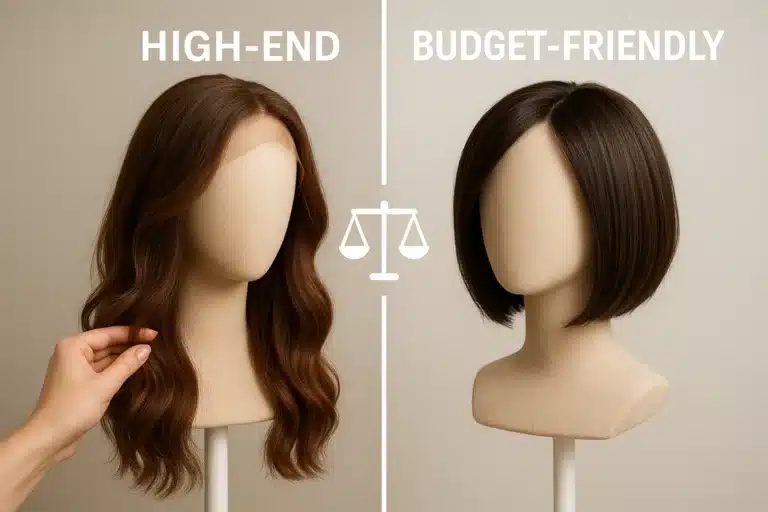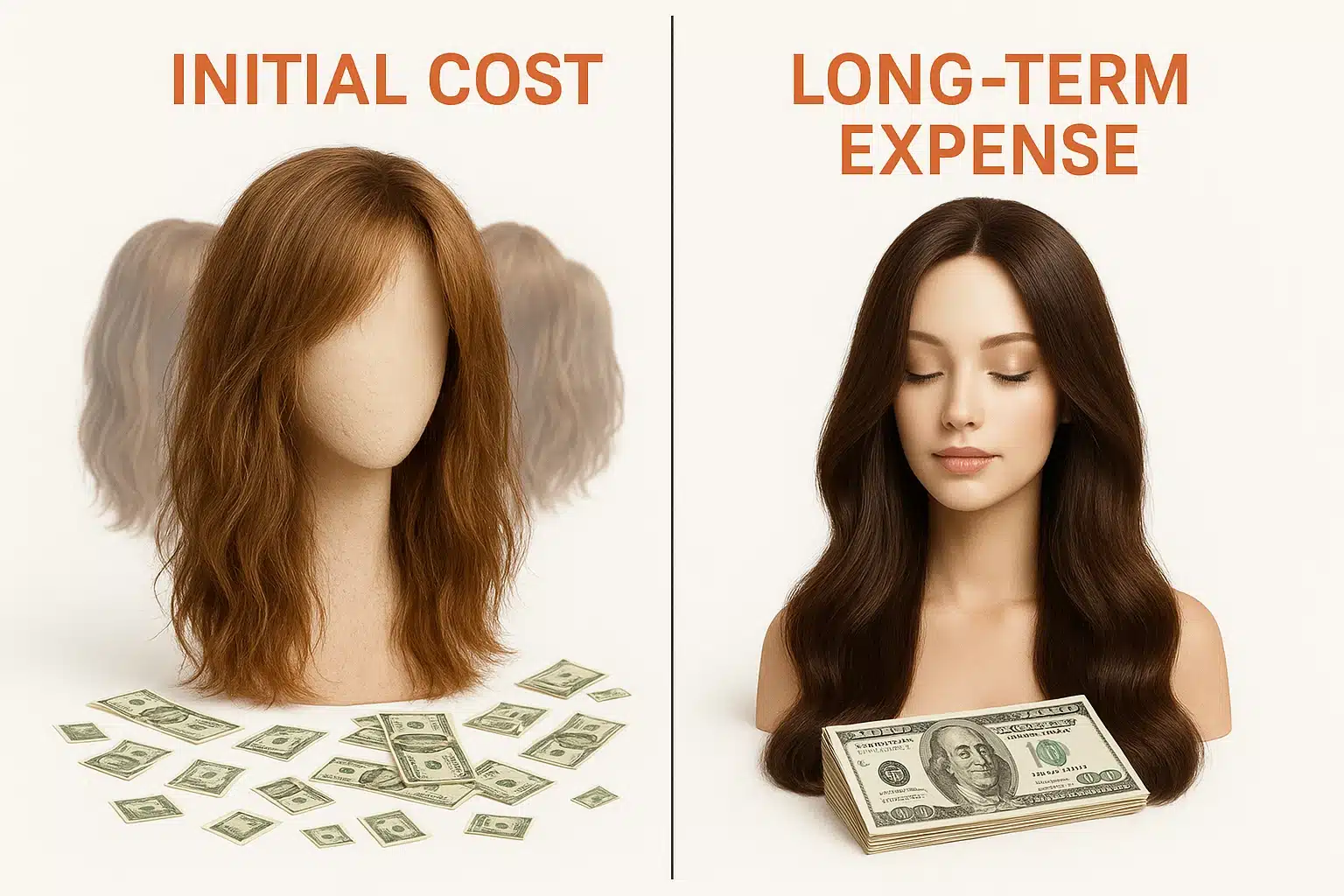
When you begin browsing for a new hairpiece, the price gap between a synthetic wig and a human hair system can feel overwhelming. It is entirely normal to look at a $200 synthetic option and a $1,500 human hair design and gravitate toward the lower number, especially if you are new to the world of alternative hair. It feels like the responsible, budget-friendly choice in the moment. However, experienced wearers know that the initial price tag is rarely an accurate indicator of what you will actually spend over time.
To make the best decision for your wallet and your peace of mind, it is helpful to look past the checkout screen and consider the total cost of wig ownership. When you analyze the long-term financial picture—accounting for replacement cycles, care products, and maintenance—the math often reveals that the “expensive” option may actually save you money in the long run. This guide is designed to move you from an emotional buyer to a strategic investor in your own confidence.
The “Upfront Price Trap”
One of the most common pitfalls for beginners is the “Upfront Price Trap.” This occurs when we focus solely on the immediate purchase price rather than the “Total Cost of Ownership” (TCO) over a 3 to 5-year period.
Think of it like buying shoes. A pair of inexpensive sneakers might cost $30 but wear out in three months. A high-quality pair of leather boots might cost $150 but last for three years with polish. Over a three-year cycle, the sneaker buyer spends $360 (replacing them 12 times), while the boot buyer spends $150 plus the cost of polish.
Wigs function similarly. Research into ownership costs reveals a significant gap where relying exclusively on budget-friendly synthetic wigs can sometimes become 20-40% more expensive than investing in human hair over a few years. This happens primarily because of lifespan velocity—how quickly a unit degrades and needs replacement.
Material Science 101: Synthetic vs. Human Hair Lifespan
To understand the money, you have to understand the fiber. The durability of the material dictates how often you have to swipe your credit card.
Synthetic Hair
Standard synthetic wigs are marvels of modern technology; they hold their style through rain and humidity and require very little styling effort. However, the fibers are essentially fine plastic.
- The “Friction” Factor: Synthetic fibers are prone to “friction frizz.” When the hair rubs against collars, scarves, or even your shoulders, the fibers generate heat and friction, causing them to fray and tangle permanently.
- Lifespan: With daily wear, a standard synthetic wig typically lasts 4 to 6 months. This means a daily wearer needs 2 to 3 wigs per year to maintain a fresh look.
Human Hair
Human hair wigs offer the most natural movement and versatility. Because the hair has a cuticle layer (especially in Remy hair), it is more resilient to heat and friction than plastic fibers.
- The Resilience Factor: You can use heat tools, dye the hair (professionally), and treat it much like biological hair.
- Lifespan: With proper care, a human hair wig can last 12 months to over 2 years.
The Math: Calculating Your Cost-Per-Wear (CPW)
To truly compare apples to apples, we use the Cost-Per-Wear (CPW) formula. This helps you understand the value you are getting for every day you feel confident in your hair.
The Formula:(Purchase Price + Maintenance Costs) / Days Worn = CPW
Scenario A: The Synthetic Cycle
- Wig Cost: $300
- Maintenance: $50 (shampoo, detangler)
- Lifespan: 120 Days
- Math: ($300 + $50) / 120 = $2.91 per day
Scenario B: The Human Hair Investment
- Wig Cost: $1,500
- Maintenance: $200 (deep conditioners, color touch-ups, styling products)
- Lifespan: 600 Days (approx. 20 months)
- Math: ($1,500 + $200) / 600 = $2.83 per day
In this scenario, the human hair wig—despite being five times the upfront cost—is technically cheaper per day of wear. While the upfront investment is higher, the long-term financial road map creates a break-even point where quality pays for itself.
Hidden Costs: The Maintenance Ecosystem
When planning your budget, you must account for the “ecosystem” required to keep the hair alive. The products you need vary significantly by material type.
For Synthetic Wearers
The cost here is often underestimated. Because synthetic hair cannot repair itself, you are fighting a losing battle against friction.
- Specialized Fluids: You need synthetic-safe shampoo and, crucially, high-quality detangling sprays and leave-in conditioners to combat frizz.
- Tools: A wide-tooth comb is non-negotiable. Using a standard brush can destroy a synthetic fiber in seconds, costing you the price of the wig in reduced lifespan.
- The Cost of Neglect: Skipping the detangler after wearing your wig seems free, but if it reduces the wig’s life by one month, that neglect effectively costs you $50-$75 in accelerated replacement needs.
For Human Hair Wearers
The maintenance costs here are closer to salon visits.
- Hydration: Since the hair is no longer attached to a scalp producing oils, you need salon-grade, sulfate-free shampoos and intensive hair masks (argan oil, keratin).
- Professional Servicing: Just like biological hair, human hair wigs oxidize (fade) in the sun. You may need to budget for professional color correction or deep conditioning treatments once or twice a year. Whether you are seeking maintenance for a hair system in Ireland or a salon in Toledo, professional help is an added annual cost.
The “3-Unit Rule”: Rotation is Key
One of the most powerful “aha moments” for long-term wearers is the 3-Unit Rule. Many beginners wear one wig until it falls apart, then rush to buy a replacement. This is the most expensive way to wear hair.
The Strategy: Aim to own three wigs at once.
- The Daily Driver: Your go-to for work or errands.
- The Backup: A slightly older unit rotated out of daily service, perfect for gym days or grocery runs.
- The “Special Occasion”: A pristine unit kept for events where you want to look your absolute best.
Why it saves money: Rotating wigs allows them to “rest.” It reduces the frequency of washing (the biggest stressor on fibers) and ensures you never have to pay for expedited shipping costs during a “hair emergency.” Rotating three wigs doesn’t just triple your time; it often quadruples it by reducing wear-and-tear intensity.
Insurance: The “Cranial Prosthesis” Factor
Finally, a critical part of financial planning for those with medical hair loss (Alopecia, Chemotherapy) is terminology.
If you are paying out of pocket, you are bearing 100% of the TCO. However, many insurance providers cover wigs if they are prescribed as a “Cranial Prosthesis.” Asking your doctor to write a prescription using this specific medical terminology—rather than the word “wig”—can sometimes unlock coverage ranging from 50% to 100% of the cost. This dramatically shifts the CPW calculation, potentially making a high-end human hair system more affordable than a synthetic one paid for entirely out of pocket.
Frequently Asked Questions
Can I use regular grocery store shampoo on my wig to save money?
No. Standard shampoos often contain sulfates and parabens that strip moisture. On a wig (which doesn’t receive natural scalp oils), this dries out the fiber instantly, leading to tangling and breakage. Saving $10 on shampoo can cost you hundreds in reduced wig lifespan.
Does an active lifestyle make human hair more expensive?
Yes and no. Sweat and frequent washing degrade all hair. However, human hair can be washed and deep-conditioned to restore softness. Synthetic fiber, once damaged by the friction of movement and sweat, cannot be repaired. Active individuals often find that having a dedicated, lower-cost synthetic unit for the gym protects their investment in their primary human hair piece.
How do I know when it’s time to replace my wig?
For synthetic wigs, the sign is usually “tipping”—when the ends become frizzy and rough like steel wool, and no amount of steaming fixes it. For human hair, the signs are extreme shedding (balding spots on the cap) or hair that has become unmanageably dry and brittle despite deep conditioning.
Next Steps in Your Journey
Understanding the financial landscape of wig ownership allows you to make choices that serve your life, not just your immediate budget. Whether you choose the ease of synthetic or the longevity of human hair, the goal is to feel confident in your investment.
If you are ready to explore high-quality options that align with your long-term goals, take your time to compare the fiber specifications and care requirements. The smartest purchase is the one you make with your eyes open.