You have likely invested a significant amount of time, emotion, and money into finding a hairpiece that makes you feel confident and beautiful. But even the highest-quality human hair or synthetic wig is not immune to the wear and tear of daily life. Perhaps you’ve noticed a thinning patch at the crown, a small tear in the delicate lace front, or the fibers have lost their movement. For many, the initial panic leads to the assumption that the unit needs to be replaced entirely. However, industry data suggests that professional maintenance can extend a wig’s lifespan by up to 2.3 times, transforming a “ruined” wig back into a favorite accessory.
The challenge isn’t usually the repair itself—it’s knowing who to trust with it. Unlike a standard hair appointment, wig repair requires a specialized “mechanic” rather than just a stylist. To master the basics of local discovery, start with our How to Find the Best Wig Stores Near You: A Local Search Guide to identify high-quality establishments in your area before booking a repair. Once you have a list of potential shops, the next step is vetting them to ensure they possess the technical skill to restore your investment.
The Technician vs. The Stylist: Understanding the Difference
One of the most common mistakes wig owners make is assuming their regular hairstylist can perform structural repairs on a wig. While a cosmetologist is an expert in cutting and coloring growing hair, a Wig Technician specializes in the construction and architecture of the cap and fiber.
Think of it this way: a hairstylist is like an interior designer who makes a room look beautiful, while a wig technician is the contractor who fixes the walls and foundation.
When searching for local help, you are looking for specific technical skills. A standard salon may offer a wash and blow-dry, but they rarely have the tools to perform ventilation (adding hair back into the cap) or re-sizing. Taking a damaged unit to a standard salon can sometimes result in further damage, particularly if heat or improper products are used on synthetic fibers.
Triage: Is Your Wig “Dead” or Just in Distress?
Before you begin calling local shops, you need to identify exactly what is wrong with your unit. This “triage” process helps you ask the right questions and avoid being upsold on services you don’t need.
Here are the three most common categories of wig distress and the professional solutions associated with them:
1. Structural Damage (The “Panic” Phase)
- Symptoms: Rips in the lace, holes in the mono-top, or loose ear tabs.
- The Fix: You need Lace Patching or Cap Repair. This involves using a specialized transparent thread or fusing material to close the tear without creating a visible seam.
- Aha Moment: Many people believe a torn lace front renders a wig useless. A skilled technician can often mend this so seamlessly that it is invisible to the naked eye.
2. Density Loss (The “Balding” Phase)
- Symptoms: You can see the cap through the hair, specifically at the part or crown.
- The Fix: You need Ventilation or Re-knotting. This is a meticulous process where individual strands of hair are hand-tied back into the lace grid.
- Note: This is distinct from standard wig maintenance, which usually refers to cleaning and conditioning. Ventilation is a restoration art form.
3. Fiber Fatigue (The “Frizz” Phase)
- Symptoms: The hair feels dry, stiff, or tangles immediately after brushing. The “movement” is gone.
- The Fix: You need Deep Conditioning and Steaming. For human hair, this restores moisture bonds. For synthetic hair, professional steaming removes friction frizz that accumulates over time.
The “Repair vs. Replace” Calculator
Is it worth fixing? This is the most common question we hear. A helpful framework is to look at the Cost-Benefit Analysis of restoration.
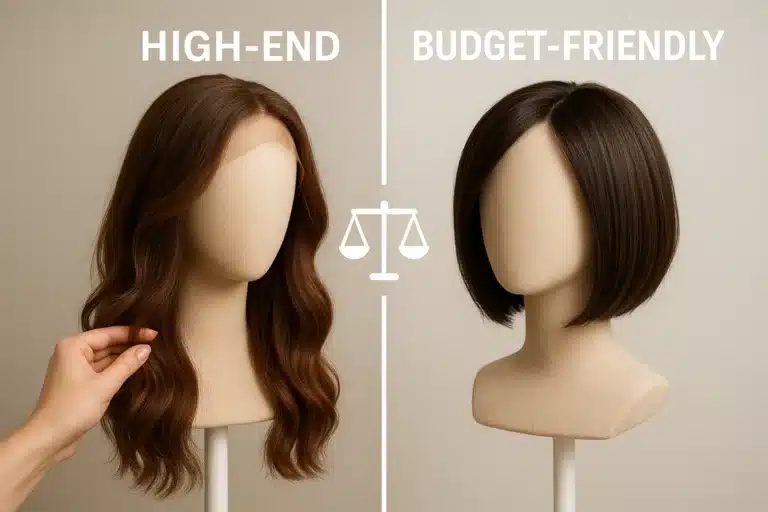
If you own a high-quality human hair wig that cost $1,200, and it has lost density at the part, a professional ventilation service might cost between $150 and $200. This repair restores the unit to “like-new” condition for roughly 15% of the replacement cost.
However, if you have a budget synthetic wig that cost $150, a $100 repair service may not be economical. In that case, standard wig care techniques you can do at home might be the better path, or it may be time to consider a replacement.
5-Point Vetting Checklist for Local Shops
When you find a local store that claims to offer repairs, do not simply drop off your wig. Use this checklist to vet their expertise. A reputable shop will be happy to answer these questions:
“Do you have a canvas block for repairs?”Repairs should never be done on a flat surface or a standard Styrofoam head. Professional repairs require a canvas block that mimics the shape of a human head to ensure the cap doesn’t shrink or stretch during the process.
“Do you perform ventilation in-house?”Some shops ship wigs out to third-party factories for re-knotting, which can take weeks. Ideally, you want a technician who can perform minor ventilation on-site.
“What is your process for synthetic fiber?”If they mention using standard curling irons or blow dryers on non-heat-friendly synthetic wigs, hang up immediately. They should mention steaming or specific low-heat tools.
“Can I see a portfolio of lace repairs?”Ask to see before-and-after photos of torn lace they have fixed. You are looking for transparency—if the repair looks like a thick scar, keep looking.
“Do you offer a consultation first?”A professional will always want to inspect the wig before quoting a price. They need to assess the integrity of the lace to see if it can handle the tension of new hair being tied in.
The Vocabulary of Repair: Speaking the Language
When you call a local shop, using the correct terminology signals that you are an educated consumer. It helps you get accurate quotes and establishes immediate respect with the technician.
- Ventilating: The act of hand-tying individual hairs into the lace cap. Use this word instead of “adding hair.”
- Blocking: The process of pinning a wig to a canvas head to reshape or stretch it back to its original size.
- De-Frizzing/Steaming: The standard term for smoothing out “friction frizz” on synthetic wigs.
- Return Hairs: The short hairs found at the root of the wig (where the knot is tied). Knowing this term helps you explain if you are seeing breakage or just normal construction features.
If you are dealing with a human hair piece that has lost its luster, knowing how to revive a human hair wig involves understanding terms like “acid bath” or “deep conditioning,” which strip buildup and restore softness.
Frequently Asked Questions
Can I just take my wig to my regular hair salon?
Generally, no. Unless your stylist has specific certification in wig making or alternative hair, they may not understand the construction of the cap. Cutting a wig requires different shears and techniques than cutting biological hair.
How often should I get professional maintenance?
For a daily-wear piece, a professional “tune-up” (deep clean and tightening) is recommended every 3 to 4 months. This is distinct from the regular synthetic wig care you do at home every 6-8 wears.
Is it possible to repair a ripped lace front?
Yes, but with caveats. If the tear is in the middle of the hairline, it can be patched, but the seam might be slightly visible upon close inspection. If the lace is fraying at the edges, a technician can often trim the lace back or apply a new band of lace.
Why is my wig losing hair?
All hand-tied wigs shed over time because there is no follicle to hold the hair. However, excessive shedding is often caused by scratching the scalp through the lace or using heavy oils that loosen the knots.
The Next Step in Your Journey
Finding a local “wig mechanic” transforms your relationship with your hair. It changes a wig from a disposable item into a long-term companion. By asking the right questions and understanding the difference between structural repair and cosmetic styling, you can protect your investment and ensure you always look your best.
As you continue to explore the world of alternative hair, remember that knowledge is your best tool for confidence. Whether you are looking to extend the life of a current favorite or are ready to browse for something new, we are here to support every step of your journey.