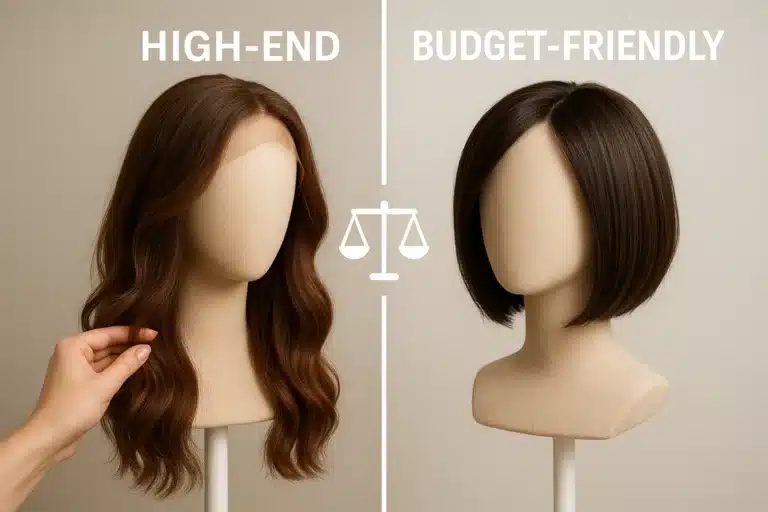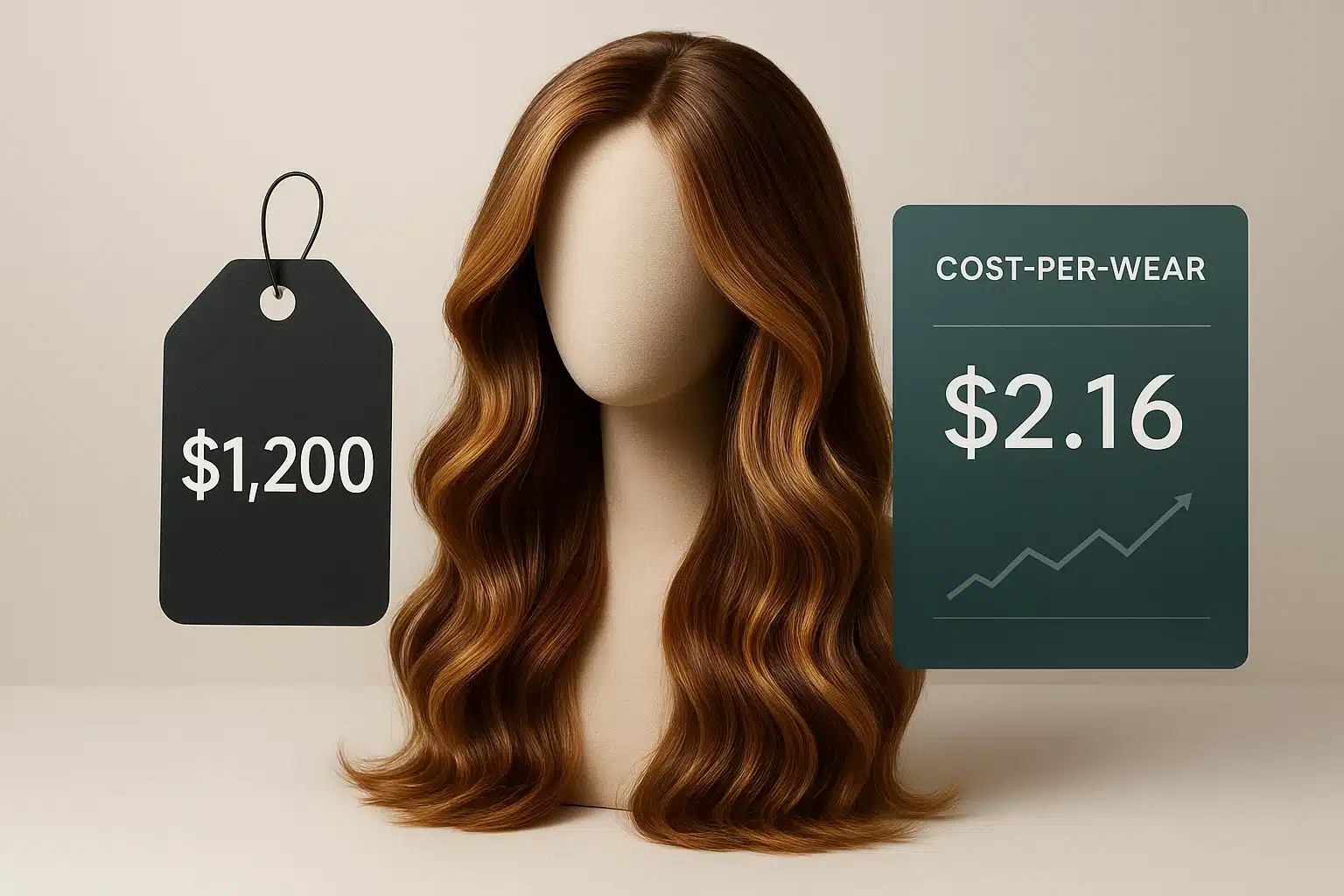
We have all experienced that moment of hesitation. You find a piece that looks absolutely perfect—the density is right, the shade is multidimensional, and the hairline is undetectable. Then, you look at the price tag. It is natural to feel a moment of “sticker shock,” especially if you are new to the world of alternative hair. However, viewing a wig merely as an upfront expense is like judging a book solely by its cover; you miss the entire story contained within.
To truly understand the value of your hair, you have to look beyond the initial purchase price and consider the longevity and daily experience of the piece. This is where the concept of “Cost-Per-Wear” (CPW) becomes your most valuable tool. By adopting a standard Total Cost of Wig Ownership: A Long-Term Financial Guide, you can transform a daunting retail transaction into a calculated investment in your confidence. Let’s break down the “hair math” that turns luxury into logic.
The Sticker Shock Myth: Price vs. Value
In the world of fast fashion, we are conditioned to look for the lowest bottom line. But hair is intimate; you wear it every day, it frames your face, and it directly impacts how you present yourself to the world. A common trap for beginners is the “false economy” of budget buying.
Buying a $150 wig that frizzes and loses its shape after three months forces you to buy four of them a year. That is $600 spent annually on hair that you might only feel confident in for a few weeks at a time. Conversely, a higher-quality piece might require a larger initial outlay, but when amortized over a year or two, the daily cost drops significantly—often costing less than your morning coffee.
The “Hair Math” Formula
To find the true value of a wig, we need to move from a retail mindset to an investor mindset. You don’t need a degree in finance, just a simple formula that reveals the hidden truth about pricing.
The CPW Formula:(Initial Price + Annual Maintenance Costs) ÷ (Days Worn Per Week × 52)
This formula accounts for the three pillars of wig ownership:
- Acquisition: The cost of the wig itself.
- Sustainment: The products and care required to keep it looking new.
- Frequency: How often you actually wear it.
By plugging your numbers into this equation, the difference between a “cheap” wig and a “valuable” wig becomes instantly clear. A piece that costs $0.50 per wear to own but makes you feel self-conscious is infinite times more expensive than a piece that costs $2.00 per wear and makes you feel unstoppable.
Factor 1: The Base Investment and Lifespan Reality
The biggest variable in your calculation is longevity. Not all fibers are created equal, and understanding the degradation timeline of different materials is crucial when navigating the wig price range options available on the market.
- Standard Synthetic: Typically lasts 3 to 6 months with daily wear. These fibers eventually succumb to “friction frizz,” usually starting at the nape of the neck where the hair rubs against collars.
- Heat-Friendly Synthetic: While versatile, these can sometimes have a shorter lifespan than standard synthetic if not cared for meticulously, as the fiber is more sensitive to friction.
- Premium Human Hair: Can last 1 to 3+ years with proper care. Because the cuticle is intact (especially in Remy hair), it resists tangling and can be restored with deep conditioning, much like biological hair.
When you calculate CPW, a human hair wig that lasts two years often beats the cost of replacing a synthetic wig every four months.
Factor 2: Hidden Costs and Maintenance
A transparent financial guide must include the “invisible costs” of ownership. Just as a car needs oil changes and tires, your wig requires specific maintenance to maintain its integrity.
- The Product Suite: You cannot use drugstore shampoo on a wig. You will need specialized shampoos, conditioners, and detanglers formulated for the specific fiber.
- Tools: A wig stand for drying, a wide-tooth comb, and perhaps a steamer for synthetic fiber maintenance.
- Professional Care: For human hair pieces, you might occasionally pay for a professional wash and style or a deep conditioning treatment.
Ignoring these costs leads to faster degradation of the fiber. Proper wig maintenance isn’t just about cleanliness; it is a financial strategy to protect your asset.
The Secret Multiplier: The Wig Rotation Strategy
Here is an industry secret that most beginners miss: owning two wigs doesn’t just double your style options; it can nearly triple the lifespan of both pieces. This is the “Rotation Multiplier.”
Fibers—both synthetic and human—need rest. Synthetic fibers need time to relax back into their shape after being stretched and heated by body temperature. Human hair needs a break from environmental exposure and styling manipulation.
By rotating between two units, you reduce the “wear fatigue” on each. If one wig lasts 6 months worn daily, two wigs rotated daily might last 18 months combined. You are buying time, quite literally.
The 12-Month Value Forecast
Let’s look at a hypothetical comparison to see how this plays out over one year for a daily wearer.
Scenario A: The Budget CycleYou buy a modest synthetic wig for $200. It looks great for 3 months. By month 4, the ends are frizzy. You replace it. You repeat this cycle three times in a year.
- Total Spent: $600 + shipping + frustration.
- Result: You spent 50% of your year wearing a wig that was degrading.
Scenario B: The Quality InvestmentYou invest in a high-quality piece for $800. You treat it well. It lasts the full year (and potentially longer).
- Total Spent: $800.
- Result: You spent 100% of your year wearing hair that moves and feels natural.
While the upfront difference is significant, the gap narrows when you consider the frequency of replacement. Furthermore, if you ask how long do human hair wigs last when properly cared for, you’ll find that extending that investment into year two makes the premium option mathematically cheaper than the budget cycle.
The “Starbucks Test”
If the math still feels abstract, try the “Starbucks Test.” Take the total cost of the wig you are eyeing and divide it by its expected lifespan in days.
If a premium wig costs you $2.50 per day to own over its lifespan, ask yourself: Is having perfect hair, confidence, and comfort worth less than the price of a daily latte? For most of us, the answer is a resounding yes.
Frequently Asked Questions
Q: Can I make a cheaper wig last longer to improve my CPW?
A: To a degree, yes. Using wide-tooth combs, avoiding friction (scarves, high collars), and using proper products will help. However, synthetic fibers have a structural limit. Eventually, the fiber ends will degrade regardless of care.
Q: Should I include professional styling in my cost calculation?
A: If you are buying a human hair wig, yes. Many wearers prefer to have their piece professionally customized (bangs trimmed, layers added) or washed and styled monthly. This ensures the cap fits perfectly and the hair remains healthy. You can look for wig maintenance specialists to estimate these costs.
Q: Is it better to start with a cheap wig to “practice”?
A: There is validity to this. If you are brand new to wigs, a lower-cost synthetic piece can help you get used to the sensation of wearing hair and caring for a cap without the pressure of a high-stakes investment. Just remember that the experience of wearing premium hair is significantly different in terms of comfort and realism.
Taking the Next Step
Understanding the Cost-Per-Wear formula empowers you to make decisions based on value rather than just price. Whether you choose a high-quality synthetic for its ease or invest in premium human hair for its longevity, the goal is to ensure every dollar you spend contributes to your confidence.
If you are ready to explore which category of hair fits your lifestyle and budget, take your time browsing through reputable collections. Remember, the best investment is the one that makes you feel like yourself.