If you’ve ever stepped out of your door on a gorgeous July morning in West Palm Beach, you know the feeling. The air is thick, the sun is brilliant, and the coastal breeze carries the undeniable scent of the ocean. It’s paradise—unless you are wearing a beautiful new wig.
Suddenly, that gorgeous unit you invested so much time and money into starts acting strangely. The nape of the neck gets “crunchy.” The fibers begin to fray. What was once sleek and bouncy now feels stiff, matted, and lifeless.
Most of us turn to the internet for answers, only to find a maze of confusing DIY “hacks” or basic washing instructions that just don’t solve the problem. The truth is, your wig isn’t just dirty; it’s experiencing structural changes. Whether you wear a piece for fashion, convenience, or as a solution for medical hair loss, your wig represents a significant financial and emotional investment.
Grab a cup of coffee. Today, we are bridging the gap between hair science and real-world care, giving you the definitive guide to professional wig cleaning, repair, and reconditioning right here in West Palm Beach.
The Anatomy of Wig Aging: Why South Florida is So Tough on Hair
To understand how to save your wig, we first need to understand what’s attacking it.
Standard washing won’t save a degraded wig because environmental damage goes far deeper than surface dirt. In West Palm Beach, your hairpieces are constantly battling a unique microclimate:
- Intense UV Radiation: Direct sunlight causes a photochemical reaction. In human hair, it cleaves the natural disulfide bonds that give the hair its strength. In synthetic pieces, it causes photo-oxidation, breaking down the polymer chains.
- High Humidity (75%+): Constant moisture in the air swells hair cuticles and disrupts synthetic style memory.
- Coastal Salt Spray: Airborne sodium chloride acts as a powerful natural desiccant. It actively pulls internal moisture out of the hair cortex, accelerating matting, brittleness, and fraying.
When you combine these three elements, you get an environment that drastically speeds up the aging process of your wig.
The Science of Synthetic Reconditioning: The Polymer Reset
Let’s talk about synthetic wigs. The biggest misconception is that you can “condition” synthetic hair the way you do biological hair. You can’t.
Synthetic fibers (like modacrylic or polyester) are essentially engineered plastics. Because they don’t have cuticles to absorb moisture, traditional conditioners simply slide right off or build up a sticky film on the surface. Instead, these fibers have a “style memory” locked in during manufacturing at specific heat thresholds.
To bring a frizzy, matted synthetic wig back to life, professionals use a steam-reset method. By applying wet steam (usually between 140°F and 160°F), the steam temporarily alters the polymer’s physical state. This allows micro-kinks and “friction frizz” to be smoothed out without melting the plastic.
The Temperature Safeguard Matrix
Understanding your fiber’s melting point is the secret to proper synthetic wig care. If you exceed these temperatures, the damage is irreversible:
- Standard Synthetics (Kalon / Toyokalon): Safe for cool-steam only (120°F – 130°F). Dry heat styling tools will melt these fibers instantly.
- Heat-Friendly Synthetics (Futura): Safe for styling tools up to 250°F – 280°F. Pushing past 300°F results in permanent fiber glazing (a shiny, melted plastic look).
Human Hair Revitalization: Deep Cuticle Repair
Unlike natural hair, which receives a constant supply of hydrating sebum from your scalp, a human hair wig is completely cut off from its natural moisture source. This leaves it structurally vulnerable to extreme lipid and protein loss.
When your human hair wig starts feeling like dry straw, it is suffering from moisture starvation. Fixing this requires the Hydrolyzed Keratin Protocol.
Professionals look for the best products for human hair wigs that contain low-molecular-weight proteins (specifically under 5,000 Daltons). Why? Because proteins any larger than that will just sit on top of the hair. Low-molecular-weight proteins actively penetrate the hair’s cortex to rebuild it from the inside out.
Once the protein is deposited, the final critical step is an acidic seal. A professional will use a low pH rinse (between 4.5 and 5.5) to snap the cuticle scales shut, lock in the new proteins, and restore that reflective, natural, healthy luster.
Advanced Structural Repairs: The Artisan’s Work
Sometimes, the issue isn’t the hair itself—it’s the foundation. Most online guides treat a bald spot or a stretched-out cap as a terminal issue, meaning you have to throw the wig away. But skilled artisans can often save your favorite piece.
Lace Ventilation and Re-Knotting
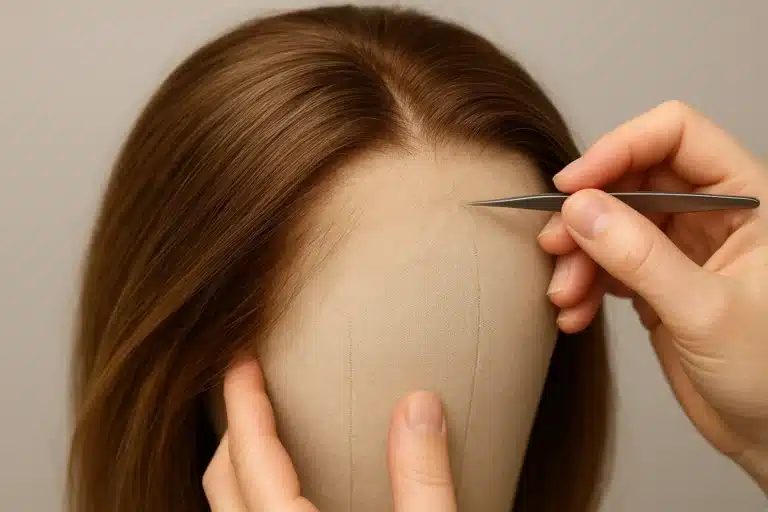
If you have a hand tied human hair wig, shedding can eventually lead to noticeable bald spots. Professionals use specialized micro-needles to perform lace ventilation. They painstakingly tie single, double, or split knots back into the fragile lace grid, flawlessly patching the bald spot without tearing the surrounding mesh.
Cap Resizing and Re-Tensioning
Over time, elastane fibers in a wig cap stretch out. A professional can evaluate the physics of this cap stretching, perform manual re-tensioning, and strategically place darts (small folds sewn into the cap) to restore a snug, secure fit. They can also use professional-grade fray-check sealants on loose wefts to secure the perimeter and stop future shedding.
Debunking the Myths: The Danger of DIY
If you spend any time on YouTube or TikTok looking for wig repair tips, you will inevitably encounter The Fabric Softener Myth.
- The Claim: “Soak your stiff synthetic wig in liquid fabric softener to make it soft again.”
- The Chemical Reality: Fabric softeners are loaded with quaternary ammonium compounds. These leave a heavy, hydrophobic coating on the fibers. In West Palm Beach’s humid climate, this sticky coating acts like a magnet for airborne pollutants, sweat, and dirt. Worse, the chemicals break down the elastane strands in the wig base (leading to “cap rot”) and permanently ruin the natural movement of the hair.
Leave the fabric softener in your laundry room.
The West Palm Beach Professional Service Registry
Fortunately, you don’t have to navigate these complex chemical and structural repairs alone. South Florida is home to several specialized boutiques equipped with the sanitization ovens, ventilation needles, and custom mold blocks required for true restoration. Whether you are actively seeking human hair wigs miami style alternatives or need local Palm Beach care, these resources are invaluable:
- Chic Wig Boutique (Downtown WPB): A local authority for deep sanitization, drop-off wash and styling, and custom structural alterations. They are particularly renowned for their specialized support for medical hair loss, including chemotherapy and alopecia patients.
- LNY Wig Boutique & Hair Pieces (WPB): Boasting an exceptional inventory of custom clinical hairpieces, they offer in-house cosmetologist adjustments and non-surgical hair replacement services.
- Innovative Hair Solutions (Palm Beach Gardens): The go-to destination for advanced wig restoration, precision detangling, and medical-grade cap adjustments.
- Life’s Changes Palm Beach County: A vital non-profit resource dedicated to providing compassionate, medical-grade wigs and styling adjustments specifically for cancer patients and those suffering from severe hair loss.
Frequently Asked Questions (FAQ)
What is the difference between wig reconditioning and standard washing?
Standard washing only removes surface dirt, oils, and styling products. Reconditioning is a structural intervention. For synthetics, it involves a steam-reset to realign the polymer chains. For human hair, it involves molecular-level protein deposits and pH-balancing to repair a damaged cuticle.
Why did the nape of my synthetic wig become stiff and “crunchy” after only three weeks in Florida?
This is known as “friction frizz.” The combination of high coastal humidity, body heat from your neck, and the physical friction of the hair rubbing against your collar chemically alters the style memory of the synthetic plastic, causing the fibers to crimp and fray.
Can a bald spot on a hand-tied lace front wig be repaired?
Absolutely. You do not always have to buy a new wig! A professional can use a tiny ventilation needle to meticulously tie new hairs into the lace mesh, completely restoring the natural hairline or crown.
How do professionals fix a stretched-out wig cap?
Professionals use a technique called re-tensioning. They place the wig on a custom canvas block and sew small, strategic tucks (called darts) into the cap’s foundation. This restores the wig’s original circumference and ensures a safe, secure fit without the need for excessive adhesives.
Next Steps on Your Wig Journey
Understanding the science behind your wig is the first step to protecting your investment. By ditching damaging DIY hacks and recognizing when to seek out a West Palm Beach professional, you can add months—if not years—to the lifespan of your favorite pieces.
If you are just beginning to explore the world of alternative hair and want to learn more about selecting the right cap construction, fiber type, or maintenance routine, continue exploring our educational resources. Your journey to comfortable, confident, and beautiful hair is just getting started!