Imagine bringing home a stunning, perfectly styled wig. Whether it’s a premium synthetic piece or a luxurious human hair unit, that first moment of putting it on and looking in the mirror is often deeply emotional. It’s not just hair; it’s a restoration of confidence. But fast forward a few weeks, and you might find yourself staring at frizz, tangles, or a duller shine, suddenly feeling overwhelmed by the prospect of maintenance. If you’ve recently navigated the process of finding the best wig stores in Garden City, NY to make your purchase, you likely already know that your new hair is a significant emotional and financial investment.
Depending on your choice, premium synthetic wigs typically range from $200 to $600, while high-quality human hair wigs can sit anywhere between $1,500 and $5,000. Protecting that investment requires more than a simple brush-through. Across Nassau County, wig wearers frequently find themselves caught between risky DIY internet hacks and the need for professional salon intervention. This guide bridges that gap, helping you master at-home care while knowing exactly when to call in the local Long Island experts to keep your hair looking flawless.
Understanding Fiber Physics: Why Wigs Behave the Way They Do
Before diving into maintenance routines, it’s crucial to understand what your wig is actually made of. Many beginner mistakes happen because we treat wig fibers exactly like the hair that grows out of our scalps.
The Truth About Synthetic Wigs
Synthetic hair isn’t organic; it is essentially a highly advanced, heat-sensitive acrylic or modacrylic monofilament. When natural hair gets tangled, it’s often due to a lack of moisture or a buildup of natural scalp oils. When synthetic hair gets tangled, it is almost entirely due to friction.
Friction from your collar, a car seat, or winter scarves creates static electricity, causing the micro-fine synthetic fibers to fray and mat. This is why learning proper synthetic wig care is so critical. Scrubbing a synthetic piece during washing actually causes more damage. Instead, they require a gentle, cool-water immersion soak.
Human Hair and Hybrid Blends
Unlike synthetic fibers, 100% human hair wigs crave hydration. Because they are no longer attached to a scalp that provides natural sebum (oil), they require manual moisture through specialized wig care routines involving sulfate-free shampoos and deep conditioners.
Meanwhile, synthetic/human hair blends offer the best of both worlds—the natural movement of human hair with the “style memory” of synthetic fibers. However, these hybrid pieces require a careful balancing act, adopting the heat limits of synthetic hair with the hydration needs of human hair.
The Long Island Guide to At-Home Wig Care
A quick scroll through TikTok or Reddit will reveal a flood of home remedies for wig washing—many of which can permanently ruin your piece. Let’s separate the science from the myths.
Myth-Busting Internet Hacks
You’ve likely seen influencers suggest washing synthetic wigs with Dawn dish soap or soaking them in fabric softener. Here is the reality:
- Fabric Softener: While it may create a temporary illusion of softness, fabric softeners leave behind a waxy, impenetrable film that eventually makes the wig stiff, dull, and impossible to style.
- Dish Soap: Formulated to strip heavy grease from pots and pans, dish soap aggressively strips the protective coating off synthetic fibers, leading to severe static and irreversible frizz.
Instead, always opt for formulated synthetic cleansers. Choosing the best products for human hair wigs or synthetic-specific non-foaming shampoos is the only way to preserve the factory finish.
The Ultimate Matted Synthetic Wig Rescue Protocol
If the nape of your synthetic wig has turned into a tangled “bird’s nest,” don’t panic. You can rescue it at home using this five-step protocol:
- Prep: Liberally apply a silicone-based detangling spray (never use standard human hair conditioners on synthetic fibers).
- Section: Pin the hair up, leaving only a small, manageable section at the bottom.
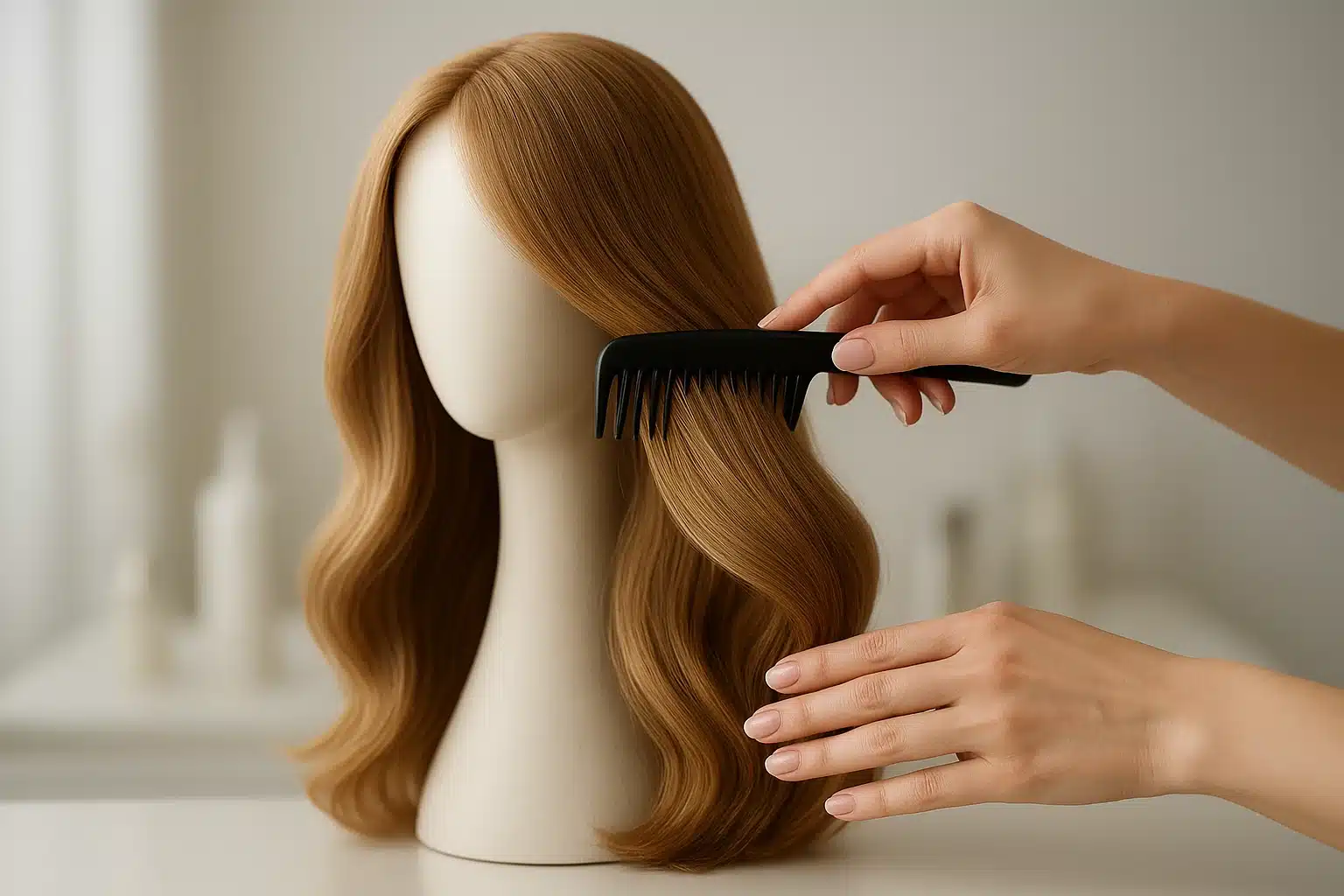
- Comb: Using a wide-tooth comb or a specialized loop brush, start at the very ends of the hair and gently work your way up to the cap. Never pull from the root down.
- Steam: For standard synthetic wigs, use a low-heat handheld garment steamer to smooth the frayed fibers. The moisture and gentle heat relax the acrylic.
- Finish: Lightly mist with the best hair spray for synthetic wigs to lock in the style without adding a crusty residue.
Note: If you have a “heat-friendly” synthetic wig, understand the heat-friendly trap. While they can be styled with hot tools, they have a strict maximum temperature threshold of 275°F to 280°F. Exceeding this will permanently melt the fibers.
DIY vs. Professional Intervention: When to Call Garden City Local Experts
While routine washing and detangling can (and should) be done at home, there are specific moments when DIY wig maintenance reaches its limits. Understanding when to transition from your bathroom sink to a licensed local professional can save your piece from early retirement.
Recognizing the Need for Structural Repairs
You need professional wig repair when the foundation of the piece is compromised. Signs it’s time to seek a local expert include:
- Torn Lace: The delicate lace front is fraying, ripping, or stretching out of shape.
- Cap Stretching: The wig no longer feels secure, slipping even when you adjust the internal straps.
- Balding Spots: Noticeable shedding at the part line or crown that requires custom hand-tying (hair fills) to restore density.
- Bulkiness: The wig feels unnaturally thick, requiring a professional to carefully debulk the wefts without ruining the style.
Choosing a Local Specialist in Nassau County
Garden City and the broader Nassau County area are home to several trusted professionals who understand the nuances of alternative hair. When researching local boutiques—such as Wig Wam Hair in neighboring Westbury, Gali’s Couture Wigs in Great Neck, or other specialized salons near Garden City—look for these key markers of authority:
- Private Consultation Rooms: A reputable salon understands the emotional vulnerability of medical hair loss and will offer discrete, private rooms for fittings and maintenance.
- Licensed Cosmetologists: Standard hairdressers often lack training in wig styling. Ensure the salon has specialists specifically trained in cutting and altering wigs, as alternative hair does not grow back if over-trimmed.
- Cranial Prosthesis Support: If you are wearing a wig due to chemotherapy or alopecia, local experts can often assist with medical billing, providing the correct itemized receipts needed for health insurance reimbursement.
- Advanced Treatments: Ask if they offer specialized salon services like hot oil treatments for human hair, cellophane glossing to restore shine, or professional lace re-fronting.
Frequently Asked Questions (FAQ)
How often should I wash my wig?
For synthetic wigs, a wash is typically recommended every 6 to 8 wears. Because they don’t absorb natural scalp oils, washing them too frequently will wear out the fibers prematurely. Human hair wigs can usually go 15 to 20 wears between washes, depending on your lifestyle and how much styling product you use.
Can you wash a synthetic wig with regular shampoo?
No. Regular shampoos often contain sulfates and heavy moisturizing agents designed for organic hair. On a synthetic wig, these ingredients will leave a dulling film and can degrade the fibers. Always use products specifically formulated for synthetic hair.
Can a torn lace front be repaired, or do I need a new wig?
In many cases, minor lace damage can be expertly repaired by a professional. Local specialists can perform lace re-fronting, where they trim the damaged lace and meticulously hand-tie new fibers into a fresh lace edge, saving you the cost of a full replacement.
What is the difference between daily home care and professional salon maintenance?
Daily home care involves gentle detangling, proper storage on a wig stand, and routine washing. Professional salon maintenance is for deep rejuvenation—think intensive hydration treatments, structural cap repairs, custom thinning, and resetting heat-friendly fibers that have severely matted over time.
Next Steps for Your Hair Journey
Your wig is a beautiful tool designed to help you feel entirely like yourself. By understanding the science behind the fibers, adopting a gentle, specialized at-home care routine, and knowing when to lean on the expertise of Long Island’s local wig professionals, you can drastically extend the life, comfort, and beauty of your hair.
Ready to dive deeper into perfecting your daily routine? Explore our comprehensive resources on building the ideal wig care toolkit, and empower yourself with the knowledge to wear your hair with absolute confidence every single day.