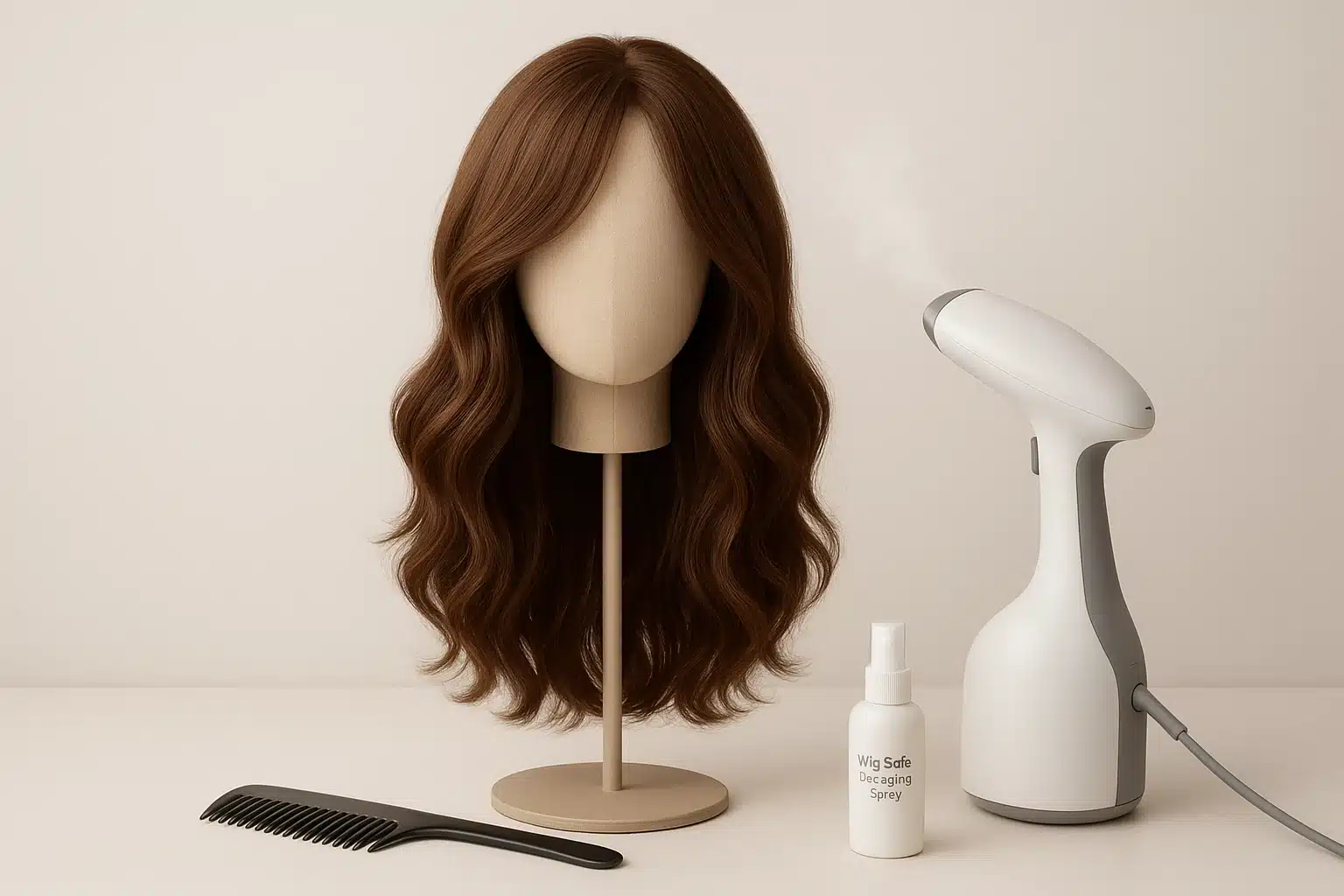
There is a specific moment of panic every wig wearer knows: you catch a glimpse of yourself in a mirror midday, and what started as a sleek, flowing style has transformed into a halo of static or a tangle of friction frizz at the nape of your neck. It’s easy to feel like you’ve done something wrong, but here is the truth—wigs don’t behave like biological hair because they aren’t built like it. They require a shift in mindset from “grooming” to “fiber engineering.”
The difference between a wig that looks artificial and one that turns heads lies entirely in how you handle the fiber. It isn’t about buying the most expensive piece; it’s about understanding the physics of the material. Whether you are navigating your first month of hair loss or you are a seasoned enthusiast looking to refine your look, we have designed this resource to help you Unlock Flawless Styles: Your Expert Guide to Wig-Safe Tools & Products. By mastering a few key tools and the science behind them, you can extend the life of your hairpiece and reclaim your confidence.
The “Fiber Memory” Concept: Why Wigs Behave the Way They Do
To troubleshoot problems, you first have to understand the medium. Synthetic hair is essentially a form of “memory plastic.” This sounds technical, but it’s actually the key to effortless styling.
Unlike human hair, which reacts to humidity by frizzing, synthetic fiber reacts to heat and cooling. The “aha moment” for most of our clients comes when they learn the Cooling Rule: styling doesn’t happen when the hair is hot; it happens the moment it cools.
- Heat (or Steam): Resets the memory, making the fiber pliable.
- Cold: Locks the new shape in place.
If you curl a synthetic wig with an iron and drop the curl immediately while it’s hot, gravity will pull it straight. If you hold that curl in your palm until it is cool to the touch, the fiber “remembers” that shape until heat is applied again. This is why understanding your fiber type is the foundation of all wig care.
Troubleshooting the “Big Three”: Frizz, Static, and Limpness
Even the highest quality wigs encounter environmental challenges. Here is how to address the most common frustration points using the right techniques.
1. The Battle Against Friction Frizz
Frizz usually attacks the nape of the neck first. This is caused by friction—the fibers rubbing against your collar or skin, generating heat that creates micro-kinks in the hair strand.
- The Fix: Don’t just brush it out; that can stretch the damaged fiber. Instead, use a wide-tooth comb and a steamer. Steam provides moisture and gentle heat that relaxes the fiber back to its original smooth state without the harsh direct contact of a flat iron.
- The Product: Apply a silicone-based detangling spray specifically formulated for wigs prior to combing. This creates a microscopic barrier that reduces friction (drag) as you move.
2. Stopping Static in Its Tracks
Static electricity is the enemy of a natural look, causing strands to float and cling unnatural ways. This is most common in dry climates or during winter months.
- The Fix: Swap your plastic comb for a metal one. Plastic generates static charge, while metal helps conduct it away from the hair.
- The Product: Keep a travel-sized anti-static spray in your bag. In a pinch, rubbing a dryer sheet over the hair can work, but specialized wig maintenance products are lighter and won’t leave a waxy residue that attracts dust later.
3. Reviving Limp Locks
Over time, gravity takes its toll, and a once-voluminous wig can fall flat.
- The Fix: The secret to volume isn’t just teasing (which can create tangles); it is structural support. Professional stylists often use a crimping iron on the bottom layers of the hair—closest to the wefts—leaving the top layer smooth. This hidden texture acts like a scaffold, propping up the visible hair for “gravity-defying” volume.
The Wig-Safe Temperature & Tool Matrix
One of the fastest ways to destroy a wig is using the wrong tool at the wrong temperature. “Low heat” on a standard bio-hair straightener is often still too hot for synthetic fibers.
Use this guide to ensure you are staying in the safe zone:
- Standard Synthetic: NO HEAT TOOLS. Use steam only. Even the lowest setting on a curling iron can melt these fibers instantly.
- Heat-Friendly (HD) Synthetic: 250°F – 275°F (120°C – 135°C). This is the “Goldilocks” zone. Above 280°F, you risk singing the fiber; below 240°F, the heat may not be sufficient to reset the style memory.
- Human Hair: 350°F – 400°F. While human hair can handle higher heat, always use a heat protectant spray to prevent drying out and breakage.
The Art of Product Layering
Have you ever applied a product and felt your wig become sticky or heavy? The problem likely wasn’t the product itself, but the order of application. Just like skincare, wig care relies on a specific sequence of operations to ensure the fibers remain healthy and movable.
The Golden Sequence:
- Detangle (Dry): Always remove knots before adding moisture.
- Protect (Damp): If heat styling, apply thermal protectant now.
- Style (Heat): Perform your steaming, ironing, or curling.
- Finish (Cool): Once the style is “locked” by cooling, apply finishing sprays or shine serums.
The “Kitchen Sink” Warning:A common myth circulating on social media suggests soaking wigs in fabric softener to restore them. While softener reduces static, it is not pH-balanced for contact with skin and can leave a film that traps dirt, making the wig look duller faster. Stick to water-soluble products specifically engineered for hair fibers.
Advanced Techniques: Beyond the Basics
Once you have mastered maintenance, you can explore the artistry of styling. For those looking to achieve specific looks—whether for a special event or a cosplay character—tools become even more critical.
- The Steamer vs. The Iron: Use a steamer for “rescue missions” (fixing frizz, restoring flow) and a flat iron or curling wand for “architectural work” (changing the shape of the hair).
- Holding the Style: Standard hairspray contains high alcohol content that can dry out and degrade synthetic fibers over time. Use “holding sprays” meant for wigs, which are often water-soluble. For extreme spikes or gravity-defying looks, clear, water-based styling glues (like those used in styling brows or spikes) are generally safe because they wash out easily without harsh scrubbing.
Frequently Asked Questions
Q: Can I use my regular hair dryer on a synthetic wig?
A: Generally, no. Most standard hair dryers blow air that is too hot and uncontrolled, which can frizzle synthetic fibers. If you must dry a wig quickly, use the “Cool” setting. Air drying on a wig stand is always the safest method to preserve the fiber’s integrity.
Q: Why do the ends of my wig look frizzy after a few weeks?
A: This is usually “friction frizz.” It happens when the hair rubs against your shoulders, back, or clothing. Using a steamer regularly (once a week for daily wearers) can relax these fibers before the damage becomes permanent.
Q: How often should I wash my wig?
A: Unlike bio hair, wigs don’t have natural oils. Washing them too often can dry them out. A good rule of thumb is to wash your wig every 6 to 8 wears, or when you notice a buildup of product or odors.
Q: Can I dye my synthetic wig to change the color?
A: Standard hair dye will not work on synthetic fibers because they lack the cuticle to absorb the pigment. While there are DIY methods using ink and alcohol, these can be messy and damaging. It is usually best to purchase a wig in the desired shade or consult a professional for custom coloring on human hair pieces.
Continuing Your Education
Styling your wig shouldn’t be a source of stress—it should be a creative outlet. By equipping yourself with the right knowledge and a few specialized tools, you transform from simply wearing a wig to truly owning your style.
Remember, every great style starts with healthy fiber. Treat your wig with the same compassion and care you give yourself, and it will keep you looking beautiful for months to come. If you are ready to explore the tools mentioned in this guide, browse our curated selection of professional care products designed to keep your hair looking its best.