Have you ever spent an hour meticulously curling your wig, only to watch the style fall flat before you’ve even left the house? It is a heartbreaking scenario that happens to the best of us, and it usually leads to a cabinet full of stronger hairsprays that only leave the hair crunchy and stiff. But here is the secret that professional stylists know: the problem isn’t usually the holding product. It’s a misunderstanding of the unique science behind the fiber you are wearing.
To truly master the art of the perfect wave, you need to look beyond standard salon methods used on biological hair. Unlocking professional results starts with having the right foundation—specifically, an expert guide to wig-safe tools & products designed to protect delicate fibers while delivering hold. Once you have the proper equipment in hand, the magic lies in mastering the physics of “fiber memory.”
The Science of the Curl: The “Thermodynamic Set”
If there is one concept that will transform how you style your hairpieces, it is the Thermodynamic Set.
When we style biological human hair, we use heat to break down hydrogen bonds, reshape the hair, and let it cool to reform those bonds. However, synthetic hair works on an entirely different principle known as “plastic memory.”
Here is the “aha moment”: Heat does not curl synthetic hair; cooling does.
When you apply heat to a synthetic fiber, you are essentially softening the plastic to make it pliable. If you release the hair from the curling iron while it is still hot, gravity will pull the softened fiber straight immediately. The curl is only “born” during the cooling phase. This is why the techniques you use on your own hair often fail on your wig—you are skipping the most crucial part of the process.
Fiber Identification: Know Before You Heat
Before you plug in a single tool, you must know exactly what material you are working with. Treating a traditional synthetic wig like a heat-friendly one is the quickest way to ruin a beloved style.
The Wig Heat-Limit Matrix
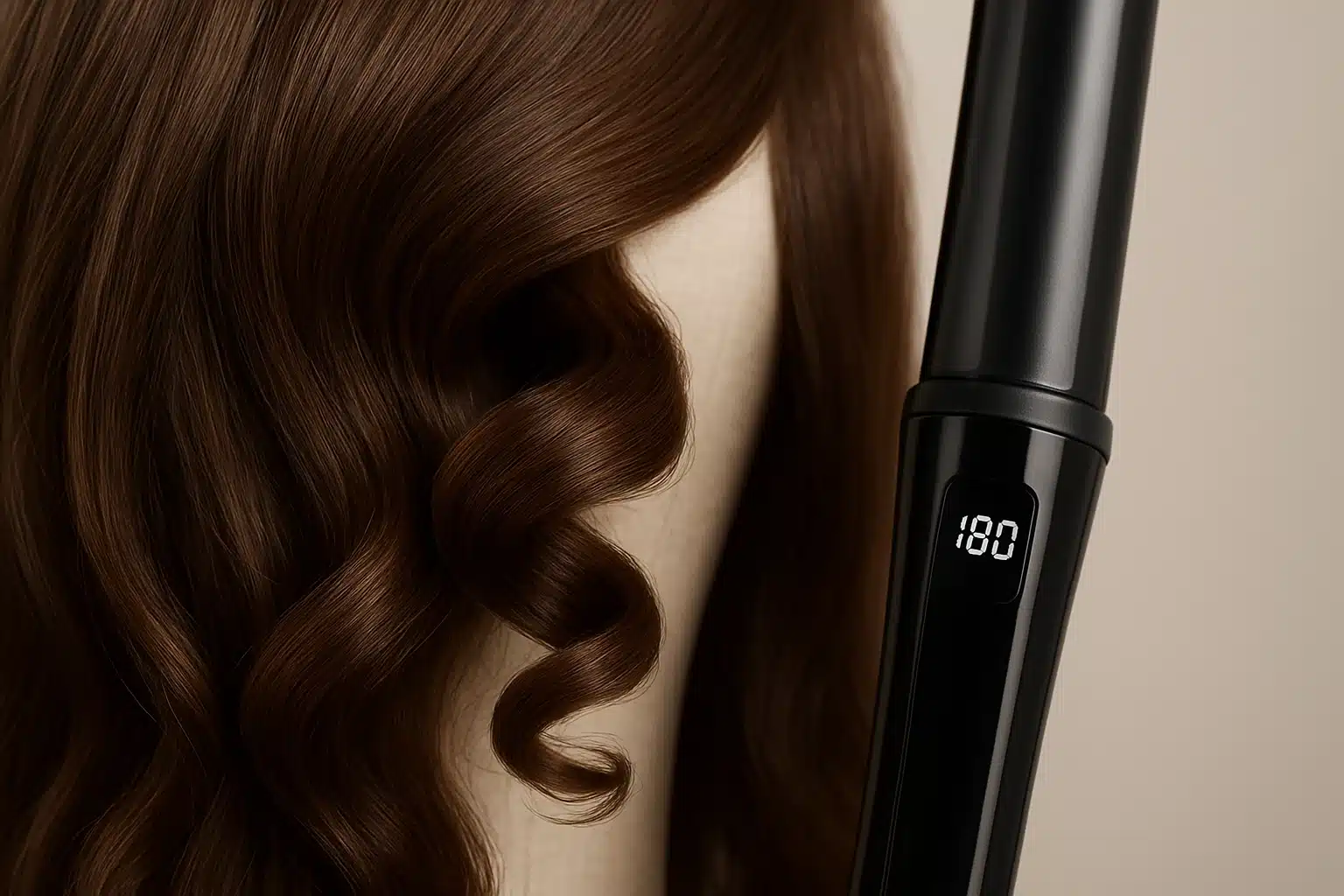
To keep your investment safe, we have compiled a matrix of temperature thresholds. It is vital to use tools with digital temperature displays rather than vague “low/medium/high” settings.
- Traditional Synthetic: Generally No Heat. (Limit: ≤120°C / 248°F). These fibers have a low melting point. The safest way to style these is using the “Steam Hack” or hot water setting methods (discussed below).
- Heat-Friendly Synthetic: 130°C – 180°C (266°F – 350°F). These are engineered to withstand styling tools, but they still require the cooling phase to hold a shape.
- Human Hair: Up to 185°C (365°F). Human hair is more resilient, but exceeding this temperature can cause “keratin denaturation,” leading to dry, brittle strands that snap easily.
The “Sizzle” Warning: Never apply heat to wet human hair or synthetic blends. If you hear a sizzling sound, that is the water inside the hair shaft boiling and expanding, which can rupture the cuticle (or the polymer surface), causing permanent frizz.
Master Techniques for Lasting Texture
Now that we understand the temperature limits, let’s explore the techniques that ensure your style survives the day.
1. The “Pin-and-Cool” Method (The 20-Second Rule)
This is the gold standard for heat-friendly synthetic wigs.
- Wrap a section of hair around your curling iron.
- Hold for the appropriate time (usually 10-15 seconds) to soften the fiber.
- The Critical Step: Catch the curl in your palm as you slide the iron out. Do not let it drop!
- Pin the curl against the head using a metal clip.
- Leave it pinned until the fiber is completely cool to the touch (approx. 20 minutes). This locks the “memory” into the fiber.
2. The Steam Hack: The Universal Tool
Steaming is the industry secret for styling traditional synthetics that cannot touch a curling iron.
- Set your wig on a canvas block head.
- Roll sections of hair onto sponge rollers or flexi-rods.
- Use a handheld clothes steamer to direct steam over the rollers. The steam heats the fiber to roughly 100°C (212°F)—just enough to mold it without melting it.
- Allow the wig to dry and cool completely before removing the rollers. This creates a bounce that can last for months.
3. The Hot Water Dip
For those seeking a more permanent texture change in synthetic wigs, the hot water dip creates a “factory-level” reset. By dipping roller-set hair into water between 160°F-180°F and letting it air dry overnight, you effectively rewrite the wig’s baseline style.
The Humidity Factor: Why Human Hair Curls Drop
Have you ever wondered why your human hair wig frizzes in the rain, but your synthetic wig looks perfect?
It comes down to moisture absorption. Human hair is porous; it absorbs water vapor from the air, which disrupts the hydrogen bonds you created during styling, causing the curl to drop. Synthetic hair, being non-porous, is impervious to humidity.
This distinction is crucial when choosing a wig for an event. If you are attending an outdoor summer wedding, a synthetic wig usually offers superior style retention compared to human hair, which may require anti-humidity sprays to hold its shape.
The 48-Hour Maintenance Cycle
Styling is only half the battle; preserving the style is the other. Proper wig maintenance extends the life of your curls significantly.
- Storage: Never throw a curled wig into a box. Store it upright on a wig stand to prevent the fibers from being crushed.
- Friction: “Friction Frizz” kills curls, especially at the nape of the neck. For longer styles, gently comb through the underside of the wig with a wide-tooth comb after every wear to prevent tangles from matting the curls.
Frequently Asked Questions
Why won’t my heat-friendly synthetic wig hold a curl?
You likely released the curl while it was still hot. Synthetic fiber must cool down in the shape you want it to hold. Try the “Pin-and-Cool” method mentioned above.
Can I use my regular curling iron on a wig?
For human hair, yes, provided you use a heat protectant. For heat-friendly synthetic hair, only if the iron has a digital temperature control that can go as low as 260°F-280°F. Standard irons often get too hot and can melt synthetic fibers.
How do I get loose beach waves instead of tight ringlets?
The tool dictates the texture. For loose waves, use a larger barrel iron (1.25 to 1.5 inches) or large velcro rollers with the steam method. The larger the tool, the looser the wave.
Is it possible to re-curl a frizzy wig?
Yes! Interestingly, heat can smooth frizz in heat-friendly synthetic wigs. Using a steamer and a fine-tooth comb can often “reset” the fiber, smoothing out the frizz before you re-curl it.
Your Journey to Styling Mastery
Understanding the science of fiber memory and the importance of cooling times transforms styling from a guessing game into a predictable art. By respecting the heat limits of your specific wig and utilizing tools like steamers and clips, you can achieve salon-quality results right at home.
Ready to build your styling toolkit? The right equipment makes all the difference in preserving the life and beauty of your hair. Take your time, experiment with these techniques, and enjoy the confidence that comes with a style that stays put.