Imagine this: You’ve invested time, emotion, and hard-earned money into finding the perfect wig. You likely spent hours researching the best wig stores in Brooklyn, NY to locate a piece that makes you feel beautiful and confident. But fast forward a year or two, and reality sets in. The delicate lace might be fraying, the hair is thinning at the part, or the beautiful color has lost its vibrancy.
When a high-quality wig starts showing signs of wear, panic often sets in. You’re suddenly faced with a tough dilemma: Do I throw it away and start over, or can this be saved?
The truth is, most premium wigs aren’t dead just because they look a little tired. The market for professional wig repair and restyling is a high-value, yet often misunderstood, segment of the beauty world. By understanding the anatomy of wig damage and knowing exactly where to find expert help in Brooklyn’s rich wig ecosystem, you can breathe new life into your favorite pieces—saving yourself hundreds, if not thousands, of dollars in the process.
The Post-Purchase Dilemma: Understanding Wig Aging
Wigs age just like natural hair, but without the benefit of a scalp to replenish vital oils. Over time, friction from clothing, the buildup of styling products, adhesive wear, and natural environmental factors take their toll.
While everyday washing and conditioning are part of standard upkeep, structural damage is an edge case that requires a specialist. Finding reliable local wig repair services can extend the lifespan of a premium unit by up to 50%. But before you can fix a problem, you need to understand exactly what’s breaking down.
Diagnosing the Damage: A Structural Breakdown
Before frantically searching for how to fix human hair wig damage online, it helps to identify exactly what is failing on your unit. Most wig damage falls into one of three categories:
1. Structural and Foundation Damage
The foundation of your wig is its cap and lace. Over time, the fine Swiss or HD lace at the hairline can tear from tension or improper adhesive removal. You might also notice balding spots at the parting area where individual hairs have shed. Additionally, the elastic bands in a half wig human hair or a headband wig human hair unit can stretch out, leading to a loose, insecure fit.
2. Color Oxidation and Fading
Human hair wigs are susceptible to color changes. If you own blonde human hair wigs, you’re likely familiar with the dreaded brassy, yellow tones that appear over time. A stunning 613 human hair wig can quickly turn dull without proper toning, and a vibrant, custom pink human hair wig will eventually fade from UV exposure and washing.
3. Texture and Fiber Fatigue
Without the scalp’s natural sebum, a vibrant human hair curly wig can become matted, frizzy, and lose its curl definition. Conversely, a sleek straight human hair wig can become stiff and dry at the ends.
The Technical Repair Spectrum: What Can Actually Be Fixed?
When you hand your wig over to a Brooklyn specialist, what exactly are they doing behind the scenes? Here is a breakdown of professional restoration techniques:
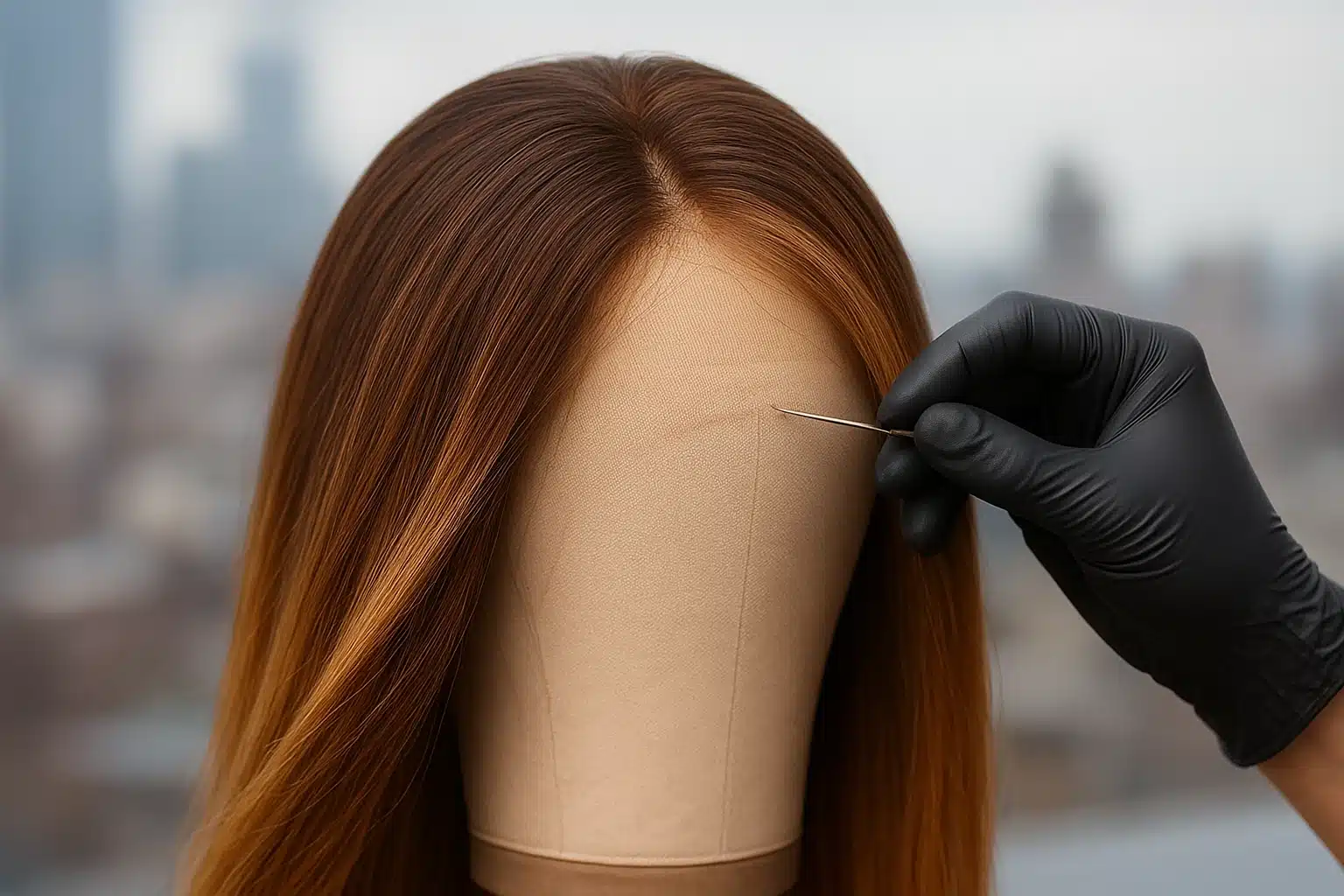
- Ventilating (Re-knotting): If your wig has bald spots, a professional can hand-tie new individual hairs directly into the lace or silk top to restore density. Advanced Brooklyn specialists even use a “rootless technique” to hide the knots, making the hairline look incredibly natural.
- Lace Patching vs. Full Frontal Replacement: A minor tear can often be patched seamlessly. However, if the front lace is shredded, a specialist can remove the damaged section and sew on a brand-new lace frontal, completely saving the back of the wig.
- Cap Surgery and Alterations: If your unit has stretched out, a tailor can resize the cap. They can also convert full wigs into band falls, or repair the stretched bands on active-wear styles like popular sunber wigs and other headband units.
- Chemical & Color Refresh: Professionals can execute complex balayage, root smudging to hide lace knots, and deep brassiness correction to revitalize old colors safely.
The “Repair vs. Replace” Cost-Benefit Matrix
How do you know when to fix human hair wig damage and when it’s time to say goodbye? Use this simple diagnostic framework:
When to Repair:
- Lace tears are smaller than an inch and located near the edges.
- Shedding is localized to just the parting space or crown.
- The cap is slightly stretched but the hair quality is still soft and viable.
- The color is faded but the fibers aren’t chemically melted.
When to Replace:
- The lace is shredded across more than 50% of the frontal area.
- The cap foundation is permanently warped, torn in multiple places, or dry-rotted.
- Synthetic fibers are melted from improper heat application.
- In these cases, investing in new human hair wigs is often more cost-effective and less frustrating than attempting a massive structural overhaul.
(Note: While this guide focuses heavily on Brooklyn, if you are relocating or traveling, knowing where to find high-quality wig repair across the country is a great way to protect your investment long-term.)
DIY vs. Professional Care: Knowing Your Boundaries
It’s tempting to try and fix a damaged unit at home, but knowing your boundaries is crucial.
What You Can Do at Home:You can safely manage emergency detangling, gentle lace cleaning to remove adhesive residue, and basic washing. If you are wondering how to restyle a human hair wig, you can safely use heat tools at home provided you keep the temperature between 300°F and 350°F and always use a high-quality thermal protectant.
When to Call a Professional:Never attempt to sew a torn lace front with standard cotton thread—it will rip the delicate lace further. Do not attempt to bleach the knots on your lace if you aren’t experienced, as over-processing will cause immediate, severe shedding. Furthermore, standard synthetic wigs should never be styled with direct hot tools; professionals use specialized steamers to safely reshape synthetic fibers without melting them.
The Definitive Brooklyn Wig Repair & Restyling Directory
Brooklyn is home to a deeply specialized, yet heavily segmented, wig community. From the custom sheitelmachers in Boro Park to the lace-front experts in Crown Heights, here is how to navigate the local landscape:
Boro Park & Midwood (The Custom Sheitel Ecosystem)
This area is globally renowned for its high-end human hair craftsmanship, particularly silk tops and kosher sheitels.
- Zissy Wigs & Shevy’s: Excellent for deep conditioning, cap resizing, and structural repairs of premium European human hair.
- Fortune Wigs: A great resource for routine maintenance, color correction, and cap adjustments.
Crown Heights & Ditmas Park (Lace & Custom Color Experts)
- Brocha Repairs: Known for high-engagement “wig surgery.” They excel at debulking wigs that are too thick, repairing torn lace, and offering transparent case-study visual results.
- Needle & Lace: Specialists in intricate ventilating (re-knotting) and delicate lace frontal replacements.
Downtown Brooklyn & General Specialists
- Shuly Wigs: A prominent local authority that excels in technical services. They offer highly specific solutions like rootless hair addition, baby hair customization, and converting full wigs to band falls.
Frequently Asked Questions (FAQ)
How much does professional wig restoration cost in Brooklyn?
Prices vary based on the damage. A deep conditioning and professional restyling session typically ranges from $50 to $150. Structural repairs, such as re-ventilating bald spots or replacing a lace frontal, generally run between $125 and $300+.
Can a torn lace front be fixed completely?
Yes. Minor tears can be patched invisibly using clear nylon thread. If the tear is extensive, a Brooklyn specialist can remove the damaged lace entirely and ventilate a brand-new lace frontal into the existing cap.
Can you heat-restyle synthetic wigs?
Traditional synthetic wigs cannot withstand direct heat from flat irons or curling wands; they will melt. Professionals use controlled steam to restyle standard synthetic wigs. However, if you have a “heat-friendly” synthetic wig, it can typically withstand temperatures up to 275°F–300°F.
How long does a professional repair usually take?
Routine wash and restyles take about 3 to 7 days. Complex “wig surgery,” such as color correction, lace replacement, or extensive re-knotting, can take anywhere from 2 to 4 weeks depending on the specialist’s waitlist.
Moving Forward with Confidence
Experiencing damage to a beloved wig doesn’t have to be a devastating loss. By understanding the mechanics of your piece—whether it’s the delicate lace, the elastic foundation, or the complex coloring—you can make empowered decisions about its care.
Brooklyn offers one of the most robust wig repair landscapes in the country. By trusting your maintenance and edge-case repairs to local professionals, you ensure that your investment continues to provide you with the beauty, comfort, and confidence you deserve for years to come.