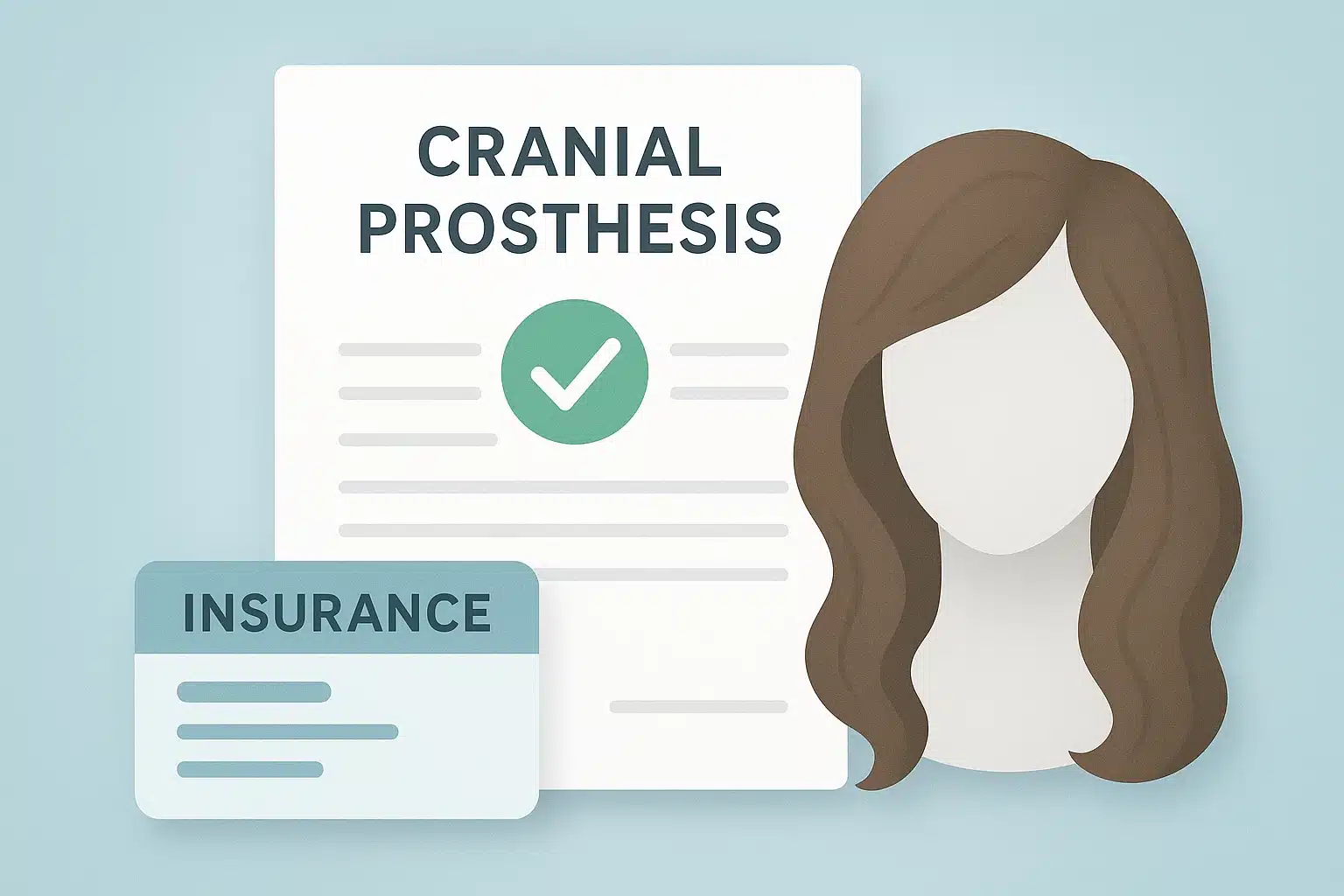
Navigating medical hair loss due to chemotherapy, alopecia, or scalp trauma is an emotionally exhausting journey. When you are already managing treatments, doctors’ appointments, and the deeply personal impact of losing your hair, the last thing you want to deal with is a confusing insurance reimbursement ecosystem. For patients in Newark and the greater Essex County area, the financial burden of replacing your hair is often compounded by a profound lack of clear, actionable guidance on how to actually get insurance to pay for it.
Most people begin their search by simply looking for local retailers. While exploring our comprehensive guide to the best wig stores in Newark, NJ is a fantastic first step to finding top-rated boutiques, securing an insurance-covered medical wig requires a specific clinical blueprint.
Here is the secret most insurance companies won’t freely tell you: to get your hair replacement covered, you aren’t shopping for a “wig.” You are being prescribed a “Cranial Prosthesis.” Understanding this simple shift in terminology is the key to unlocking the coverage you deserve.
Demystifying Insurance: The Rules of Medical Wig Coverage
When dealing with medical hair loss, language is everything. If you submit a claim to your insurance company with a receipt for a “wig,” it will almost certainly be denied. Why? Because insurance providers classify standard wigs as cosmetic accessories.
However, when a hairpiece is required due to a medical condition or treatment, it transitions from a cosmetic accessory to Durable Medical Equipment (DME). The legally and medically recognized term for this equipment is a Cranial Prosthesis.
The “Prescription Wording” Breakthrough
Nearly 80% of initial insurance claim denials happen for one simple reason: a well-meaning doctor wrote “wig for hair loss” on the prescription pad.
To ensure your claim is processed correctly, your documentation must feature specific medical coding. Here is a cheat sheet to bring to your doctor’s appointment:
- HCPCS Billing Codes (The code that identifies the item):
- A9282: “Wig, any type, each” (This is the current industry standard for cranial prostheses).
- S8095: “Wig, prescribed for cancer patients or medical conditions” (Used by select private payers).
- ICD-10 Diagnostic Codes (The code that identifies your medical condition):
- L63.0 – L63.9: Indicates variants of Alopecia Areata (Totalis, Universalis, Unspecified).
- C00 – C97 or Z51.11: Indicates cancer diagnoses and chemotherapy sessions.
The New Jersey Insurance Landscape
Health insurance policies vary wildly, but residing in New Jersey comes with specific regional guidelines and state mandates regarding medical hair replacement.
Here is how the landscape generally looks for Newark-area residents:
- Horizon NJ Health (Medicaid): Under NJ Medicaid managed care, policies generally reimburse up to $500 per unit specifically for cancer-related hair loss.
- Aetna Better Health of NJ: Typically provides up to $400 per year for chemotherapy-induced alopecia.
- Commercial Plans (Blue Cross Blue Shield, UnitedHealthcare, Cigna): Many robust PPO plans cover 80% to 100% of the cost under your Durable Medical Equipment (DME) benefits, provided your out-of-network DME deductible has been met. State mandates (like NJ Assembly Bill A2604/S2500) often dictate coverage limits and replacement cycles (such as one unit every 36 months for permanent conditions).
The Step-by-Step Insurance Reimbursement Blueprint
Navigating the transition from prescription to reimbursement doesn’t have to be a headache. Follow this structured pathway to protect yourself financially.
Step 1: Benefit Verification (Before You Shop)
Call the number on the back of your insurance card and ask for the Durable Medical Equipment (DME) department. Ask them directly:
- “Does my policy cover a Cranial Prosthesis for [your condition]?”
- “What is my specific coverage limit or percentage?”
- “Are there specific in-network providers I must use, or can I submit an out-of-network claim?”
Step 2: The Physician Visit
You will need two things from your oncologist or dermatologist: a prescription and a Letter of Medical Necessity (LMN). Pro-tip: If you use a patient portal like MyChart, send this exact message to your doctor prior to your visit: “Hi Dr. [Name], I am planning to purchase a medical hair replacement. For my insurance to cover this, could you please prepare a prescription for a ‘Cranial Prosthesis’ using HCPCS code A9282 and my specific ICD-10 diagnosis code? I will also need a brief Letter of Medical Necessity.”
Step 3: Shopping at Newark-Area Retailers
A major misconception is that wig shops take insurance cards the same way a pharmacy does. In reality, 90%+ of wig boutiques require upfront payment. They will then provide you with a specialized, itemized medical invoice that you submit to your insurance for reimbursement. Ensure the shop provides an invoice containing their official Tax ID, the HCPCS Code (A9282), and the description “Cranial Prosthesis.”
Step 4: Claim Packet Assembly
Submit your claim directly to your insurance company’s medical claims address. Your packet must include:
- The doctor’s prescription.
- The Letter of Medical Necessity.
- The itemized receipt from the wig retailer (showing a zero balance).
- Your completed insurance claim form.
Step 5: Overcoming Denials
If your claim is rejected, don’t panic. Call your insurance provider to find out exactly why. Often, it’s a simple coding error on the receipt or prescription. Ask for an appeal, correct the missing information, and resubmit.
Local Resource Guide: Medical Wig Stores Near Newark
When you are ready to shop, you need a provider who understands this medical billing process. While national e-commerce fashion sites cannot provide the necessary medical receipts, several specialized boutiques serving the Newark and greater Essex County area can:
- NYC Medical Wigs (Bayonne, NJ): Serving the broader Newark area, they specialize exclusively in cranial prosthetics, custom human hair caps, and complete medical invoice preparation.
- A House Of Wigs (Millburn, NJ): Offers custom fittings and private consultation rooms, ensuring a comfortable, dignified experience for chemotherapy patients.
- Tiffany Wigs Inc. (Rochelle Park, NJ): Known for their onsite services and extensive experience generating the exact paperwork needed for insurance claims.
- Design by Flora (Teaneck, NJ): An excellent resource if you need specialized medical caps designed for severe alopecia and highly sensitive scalps.
Alternative Funding & Cost Savings
If you don’t have insurance, or if your policy denies your claim, there are still ways to alleviate the financial strain:
- HSA and FSA Accounts: Because a cranial prosthesis is a medical device, you can legally use your Health Savings Account (HSA) or Flexible Spending Account (FSA) funds to pay for it entirely tax-free.
- IRS Tax Deductions: Under IRS Publication 502, unreimbursed expenses for a wig purchased upon the advice of a physician for the mental health of a patient who has lost their hair due to disease can be deducted as a medical expense.
- Non-Profit Support: Look into the American Cancer Society’s “TLC” (Tender Loving Care) program, or the National Alopecia Areata Foundation (NAAF), both of which offer financial assistance programs for qualifying individuals.
Frequently Asked Questions
Why won’t my insurance just pay the store directly?
Most wig boutiques are considered “out-of-network” retail establishments rather than licensed medical facilities. Because they don’t have direct billing contracts with insurance giants like Horizon or Aetna, you must purchase the prosthesis upfront and have the insurance company reimburse you.
What is the difference between a fashion wig and a cranial prosthesis?
Beyond the billing terminology, a cranial prosthesis is physically constructed differently. They are designed specifically for people with total or substantial hair loss, featuring medical-grade, hypoallergenic caps, non-slip silicone materials, and softer interiors to protect sensitive, bare scalps.
Can I buy a wig online and still get reimbursed?
It depends entirely on the vendor. If you buy a wig from a generic online fashion retailer, they likely cannot provide the required medical invoice featuring a Tax ID and HCPCS coding. Always verify with an online retailer that they can provide a “Cranial Prosthesis Medical Receipt” before completing your purchase. At Wig Superstore, we specialize in high-quality hairpieces and compassionate care, understanding exactly what individuals experiencing hair loss need.
How often will my insurance pay for a new medical wig?
This varies by policy and condition. Patients undergoing chemotherapy are typically approved for one cranial prosthesis per lifetime or per cancer diagnosis. Individuals with permanent conditions like Alopecia Universalis may qualify for a replacement every 1 to 3 years, depending on state mandates and plan specifics.
Your Next Steps
Experiencing medical hair loss is challenging, but taking control of your recovery shouldn’t be. By approaching your hair replacement as a prescribed medical device rather than a cosmetic purchase, you empower yourself to navigate the insurance landscape with confidence.
Start by calling your insurance provider today to verify your Durable Medical Equipment benefits. Then, reach out to your physician through your patient portal to request your prescription. Equipped with the right language, the correct medical codes, and a comprehensive understanding of your rights, you are ready to find a hairpiece that restores your comfort and your confidence.