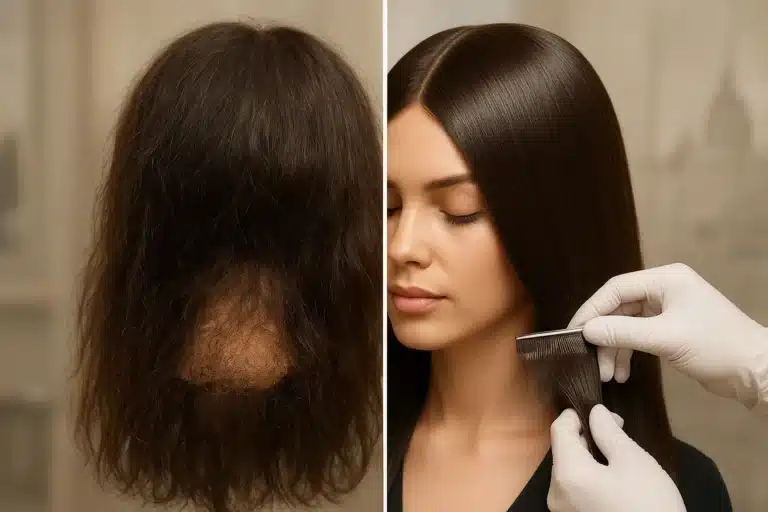
Navigating hair loss—whether driven by chemotherapy, alopecia, or hormonal changes—is an intensely emotional and vulnerable milestone. If you are beginning this journey, your immediate priority likely isn’t a retail transaction; it’s finding a space that offers psychological safety, dignified discretion, and clear, compassionate education. You want to know if your sensitive scalp will be accommodated, if you’ll have privacy, and how to make sense of medical insurance terminology.
When you start looking for solutions in the Kentuckiana area, finding the best wig stores in Louisville, KY involves much more than simply locating the closest beauty supply shop. It requires identifying dedicated medical boutiques and understanding the nuances of private consultation services. This guide will dismantle the intimidating “black box” of wig fittings, transforming an overwhelming errand into an empowering, step-by-step experience.
Demystifying the Private Wig Consultation: What Actually Happens?
One of the most common zero-knowledge questions we hear is: “Will other people in the store see me without hair?”
It is completely normal to feel anxious about taking off your hat, scarf, or current hairpiece in front of a stranger. This is exactly why medical-focused wig boutiques prioritize private, closed-door consultation suites. Unlike traditional salons or general retail stores, a specialized consultation is designed to protect your emotional safety.
Here is what you can expect during a standard 60-minute private consultation:
- The Lifestyle & Scalp Evaluation: Your consultant will sit down with you to discuss your daily routine, styling preferences, and the specific nature of your hair loss. They will gently evaluate your scalp’s current sensitivity level.
- Precision Measurements: Using a soft measuring tape, the fitter will take millimeter-accurate measurements of your head to ensure the cap won’t slip or cause pressure headaches.
- Trial Fittings: You will try on different cap constructions (more on this below) in a completely curtained or walled-off room.
- Custom Adjustments: Once you find a style you love, the consultant will discuss potential customizations, such as trimming bangs, thinning out bulk, or adjusting the cap size.
Pro Tip: You do not need to shave your head before your appointment! Many clients come in with thinning hair or patchy loss. Bring photos of your natural hair from before your hair loss began, wear comfortable clothing, and feel free to bring a trusted friend or family member for support.
Cap Anatomy 101: Comfort for Sensitive Scalps
When shopping for wigs, it’s easy to focus entirely on the hair. But for medical hair loss, the most critical element is actually what you can’t see: the cap construction. Standard fashion wigs often use open-wefted machine bases, which can be scratchy and severely irritate tender scalps during chemotherapy or active alopecia flare-ups.
Upgrading Your Cap Construction
If you have a sensitive scalp, you’ll want to look for specific cap features:
- Monofilament Tops: A sheer mesh material where each hair is individually hand-tied. This creates the illusion of natural hair growth directly from your scalp and allows you to part the hair in any direction.
- 100% Hand-Tied Caps: The gold standard for scalp comfort. The entire cap is made of soft, stretchy material that eliminates friction and molds to your head perfectly.
- Polyurethane (Silicone) Linings: These strips grip the scalp securely without the need for clips or combs, which is ideal if you have total hair loss.
Synthetic vs. Human Hair Wigs
- Synthetic Wigs: Offer fantastic “style memory.” If you wash them, they air-dry back into their original style. They are lightweight, budget-accessible, and require very little maintenance.
- Human Hair Wigs: Provide maximum styling versatility. You can use heat tools, change the color, and enjoy the natural, fluid movement of real hair.
The “Four-Finger Rule”
A common mistake beginners make is pulling the wig too far down on their forehead. To find your natural hairline, place four fingers flat against your forehead horizontally, resting your pinky just above your brow bone. Your index finger marks where the front of the wig should sit!
Navigating Louisville’s Local Consultation Landscape
The Louisville market offers a mix of dedicated medical boutiques and general retail beauty stores. When seeking a private fitting, you want to focus on specialists like The Wig Shoppe, Beauty Personified Custom Wigs, or Apollo of Louisville, which cater heavily to emotional recovery and medical needs. Regional options like Star Wigs & Hair Extension Wig Shop also offer varied selections.
When calling to book an appointment at any Louisville shop, ask these three critical questions:
- “Do you have a private, closed-door consultation room available?”
- “Is there a consultation fee, and does it apply toward my purchase?”
- “Do you have a licensed stylist on staff who can trim and customize the wig?”
The Financial Blueprint: Filing for a Cranial Prosthesis
One of the biggest “aha moments” for medical wig buyers is learning that health insurance may cover the cost—but only if you use the right vocabulary.
If your doctor writes a prescription for a “wig,” insurance companies will almost universally deny the claim, classifying it as a cosmetic fashion item. In the medical billing world, a wig prescribed for medical hair loss is called a Cranial Prosthesis.
Your 5-Step Insurance Claim Protocol
- Get the Right Wording: Ask your oncologist or dermatologist to write a prescription for a “Cranial Prosthesis for Alopecia Secondary to [Chemotherapy / Medical Condition].”
- Ensure Proper Coding: The prescription must include the exact HCPCS Billing Code: A9282. It should also include your specific ICD-10 medical necessity code.
- Request an Itemized Receipt: When you purchase your wig, ask the store to provide a receipt that lists the item as a “Cranial Prosthesis,” not a wig.
- Pre-Authorization: Call your Kentucky health plan provider beforehand to ask if they require pre-authorization for out-of-network durable medical equipment (DME).
- Keep Copies: Submit your claim, but always keep digital and physical copies of your prescription, receipt, and diagnostic documentation.
Note: If your insurance does not cover the cost, your purchase may still qualify as a tax-deductible medical expense.
The Hybrid Buyer’s Strategy: Online Selection Meets Local Tailoring
Many buyers feel trapped by a false binary: either buy locally with a limited selection, or buy cheaply online and sacrifice personalized service.
Today’s most savvy shoppers use a hybrid approach.
Step 1: Measure at Home
You can confidently shop online by taking three precise measurements:
- Circumference: Wrap the tape around your hairline, behind your ears, and down to the nape of your neck.
- Ear-to-Ear: Measure across the top of your head from the front of one ear to the other.
- Front-to-Back: Measure from your front hairline over the crown to the nape of your neck.(Standard sizing typically falls into: Petite 21″, Average 21.5″-22.5″, and Large 23″+).
Step 2: Buy Online, Customize Locally
By purchasing online, you gain access to thousands of styles, medical-grade cap constructions, and competitive pricing. Once your wig arrives, you can book an appointment with a licensed Louisville hair stylist to perform post-purchase customization. They can thin out unnatural bulk, trim the lace front to perfectly match your hairline, and cut face-framing bangs to ensure the piece looks completely authentic to your unique face shape.
Frequently Asked Questions (FAQ)
How much does a private wig fitting cost in Louisville?
Consultation fees in the area typically range from $35 to $75. However, many reputable boutiques will apply this fee directly toward the purchase of your wig if you buy from them on the same day.
What makes a realistic wig look natural at the front hairline?
The secret to a natural hairline is a “Lace Front.” This involves a sheer strip of lace at the forehead where individual hairs are meticulously tied. The best medical wigs also use graduated densities—meaning the hair is slightly thinner right at the very front and gets thicker toward the crown, mimicking how natural hair grows.
What is the difference between a boutique consultation fee and insurance reimbursement?
A consultation fee is a private, out-of-pocket charge from the salon for the specialist’s time. Insurance reimbursement under billing code A9282 applies strictly to the actual cost of the physical Cranial Prosthesis (the wig itself), though some comprehensive plans may cover fitting fees if itemized correctly.
Your Next Steps on This Journey
Losing your hair can feel like losing a piece of your identity, but taking the steps to find a beautiful, comfortable replacement is a profound act of reclaiming your narrative. You don’t have to rush this process.
Start by taking your measurements at home to get a feel for your size. Explore different cap constructions online to learn what materials sound most soothing to you. When you feel ready, reach out to a local Louisville specialist to book a private consultation, armed with the knowledge of what to ask and what you deserve from the experience. Education is your greatest tool—and your comfort, privacy, and confidence are always the ultimate goal.