If you have ever ordered a textured wig online only to open the box and find a glossy, unnatural unit that looks nothing like your natural hair, you are not alone. For Black women and textured-hair wearers in the Greater Pittsburgh region, finding high-quality, culturally authentic wigs has historically been a frustrating challenge. While the internet offers an endless sea of options, the inability to physically feel a curl pattern, check the lace transparency, or assess the true density of a wig often leads to costly disappointments.
Stepping into a local boutique where you can see how a piece moves under natural lighting changes everything. Whether you are dealing with medical hair loss or simply looking for a protective style that perfectly mirrors your natural curl pattern, referencing a dedicated guide to the best wig stores in Pittsburgh, PA provides essential clarity. It bridges the gap between generic beauty supply racks and specialized local spaces where you can find verified inventory, personalized consultations, and custom lace-matching services.
Let’s decode the world of natural hair textures and explore exactly what you need to know before shopping for textured wigs locally.
The Texture Mislabeling Trap: Decoding Curl Patterns
One of the most common “aha moments” for wig buyers happens when they realize why their past purchases looked unnatural: texture mislabeling. Many retailers categorize standard deep wave or loose curly units as “kinky curly.” As a result, beginners often end up with high-sheen, silky hair that completely clashes with their natural edges.
To find a seamless match, it helps to understand the commercial adaptation of the Andre Walker Hair Typing System used by high-end wig manufacturers:
- Kinky Straight / Yaki: This mimics natural hair that has been blown-out or silk-pressed. It has no distinct curl pattern but features a micro-crimped texture that perfectly blends with natural 4-type edges.
- Kinky Curly (3C–4A): These are distinct corkscrew ringlets and springy, pencil-diameter spirals. They have high definition and moderate volume.
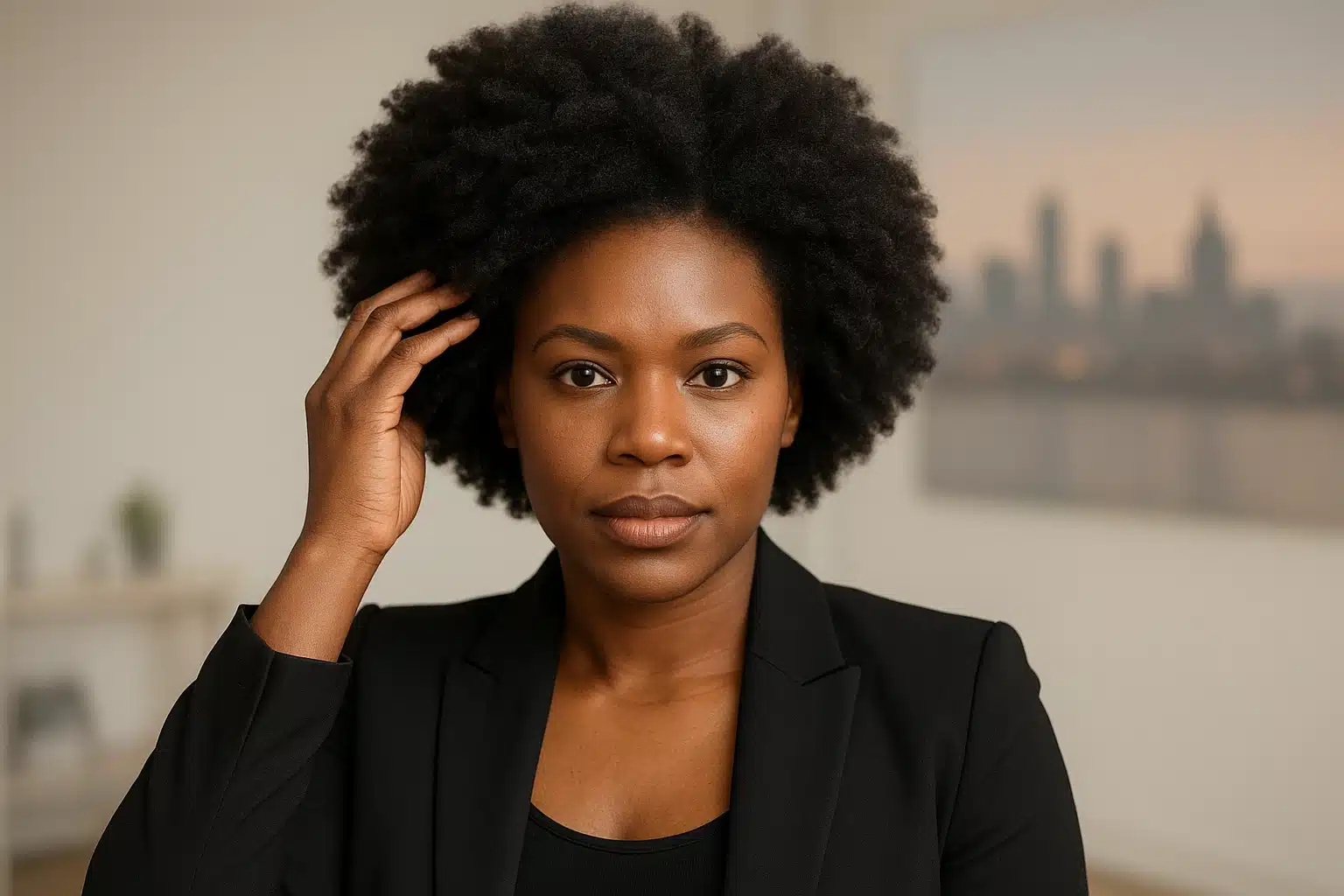
- Afro Kinky Coily (4B–4C): Characterized by dense, compact Z-pattern coils. This texture has a beautiful low-luster, matte finish with maximum volume and shrinkage.
When you know exactly which micro-texture you are looking for, finding the perfect human hair kinky wig becomes a straightforward process of elimination rather than a guessing game.
Understanding the Shrinkage and Density Trap
Have you ever wondered why a 16-inch straight wig falls past your collarbone, but a 16-inch 4C wig barely grazes your shoulders? The answer is shrinkage.
Tightly coiled afro textures experience anywhere from 50% to 70% shrinkage. Most generic wig guides fail to explain this, leading buyers to select the wrong lengths and densities. When shopping for afro-textured wigs, density (the amount of hair sewn onto the cap) is just as critical as length:
- 120%–130% Density: Ideal for natural, tapered bobs and ultra-realistic short kinky curly afro wigs. It mimics the natural thickness of a biological scalp.
- 150%–180% Density: Perfect for voluminous, statement-making styles that require shape and body.
- 200%+ Density: While tempting, selecting 200% density in a 4C texture often creates an unnaturally bulky, unmanageable “helmet” shape that is difficult to style and blend.
Navigating Local Stores: The In-Person Advantage
Shopping for wigs in Pittsburgh offers a unique geographic advantage if you know where to look. Moving past the generic aisles and into specialized local boutiques—from Shadyside and the Hill District to Murray Avenue in Squirrel Hill—allows you to perform hands-on assessments. Local staples like A Hair Boutique of Shadyside, Serenity Wig Salon, Two Cousins on Centre Ave, and Penn Wig have historically served the community, though knowing how to evaluate their inventory is key.
The Tactile In-Store Assessment Checklist
When visiting local Pittsburgh stores, always perform the “Strand Stretch & Luster Test” under the store’s lighting:
- The Luster Check: Natural afro hair has a low-to-medium matte sheen. If the wig looks overly shiny or reflects light like plastic, it likely has a synthetic silicone coating that will look unnatural outdoors.
- The Root Inspection: Part the hair at the crown and check the density. Is the hair evenly distributed, or is it heavily bunched at the top to hide a poorly constructed weft?
- The Lace Grid & Knot Scale: Hold the lace against your forehead. Does the lace match your warm or neutral undertones? Ensure the knots around the perimeter are single-tied, which prevents the dreaded “dot” appearance along your hairline.
Materials & Cap Engineering: Protecting Your Crown
Your natural hair’s health underneath the wig is just as important as the style itself. Tension and friction are the enemies of delicate 4C edges, making cap construction a vital consideration.
- Glueless HD Lace Frontals: These allow you to wear the unit without harsh adhesives, protecting your natural hairline from traction alopecia.
- U-Parts and V-Parts: Excellent for those who want to leave out a small section of their natural hair for a flawless, scalp-level blend without dealing with lace.
- Headband Wigs: The ultimate low-manipulation, protective style for running errands around Pittsburgh or giving your edges a complete break.
Pittsburgh Weather and Your Wig’s Lifespan
Pittsburgh’s climate—famous for its humid summers and incredibly dry, cold Allegheny winters—drastically affects how your wig behaves.
Human hair afro kinky wigs will react to the environment just like natural hair. In July humidity, they will swell and frizz, requiring anti-humectant serums. In January, the dry indoor heating will zap their moisture, necessitating rich leave-in conditioners. Synthetic fibers, on the other hand, retain their baked-in curl pattern regardless of the dew point, but they typically have a shorter lifespan due to friction matting against winter coats and scarves.
The Golden Maintenance Equation: Longevity = Moisture Lock (Water + Leave-In) + Low Manipulation (Wide-Tooth Comb / Fingers) – Direct Heat & Sulfates.
Frequently Asked Questions (Beginner FAQs)
What is the difference between kinky curly and afro kinky curly hair?
Kinky curly (typically 3C/4A) features distinct, springy ringlets that look like tiny corkscrews. Afro kinky curly (4B/4C) features a tighter, zig-zag pattern with less visible ringlet definition, offering a fluffier, more voluminous, and matte appearance.
Are afro kinky wigs better in human hair or synthetic?
It depends on your lifestyle. A 100% human hair wig lasts much longer (often over a year with proper care), can be custom-colored, and offers incredible realism. High-quality synthetic afro wigs are fantastic for beginners because they are budget-friendly and the curl pattern never drops, but they usually need replacing every 2 to 3 months.
How do I wash a kinky curly wig without ruining the curls?
Never scrub or bunch the hair together. Fill a basin with lukewarm water and sulfate-free shampoo, and gently dunk the wig. Always use the “finger detangle” method while the hair is saturated in conditioner, starting from the ends and working your way up to the roots to prevent matting.
Taking the Next Step
Finding the perfect natural-textured wig doesn’t have to be an overwhelming journey of trial and error. By understanding your specific curl pattern, calculating shrinkage, and knowing exactly what to look for when inspecting lace and luster in local boutiques, you take control of your hair loss or protective styling journey. Armed with this knowledge, you are ready to explore Pittsburgh’s local offerings and find a unit that makes you feel confident, beautiful, and entirely yourself.