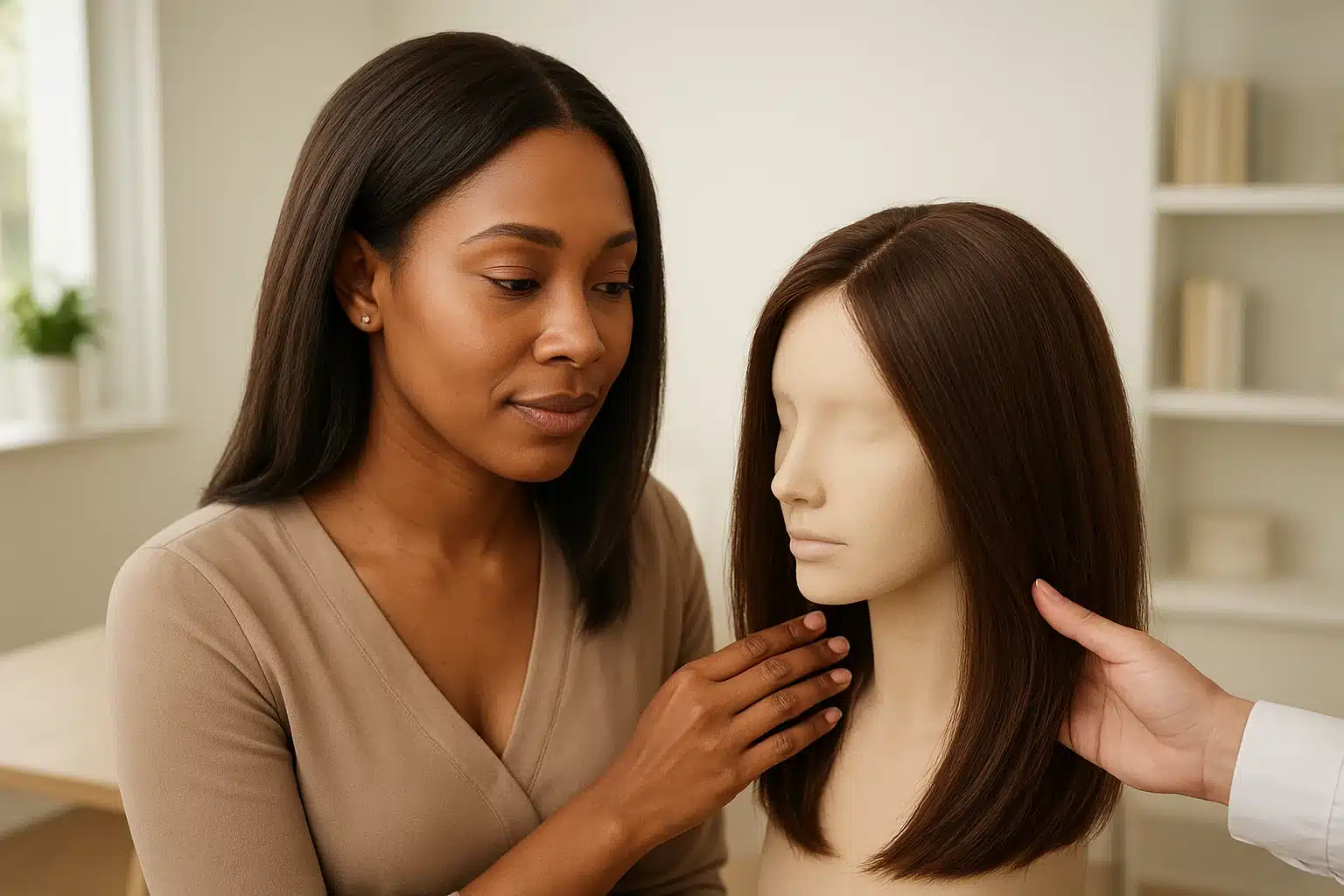
Have you ever walked into a beauty supply store, stared at a wall of boxed synthetic hair, and felt instantly overwhelmed? For many consumers in Northern California, the transition from casually browsing off-the-rack fashion wigs to seeking a personalized, medical-grade cranial prosthesis can be incredibly confusing. The reality is, a true wig consultation in a professional setting is completely different from a standard retail transaction. It isn’t just about picking a color off a shelf; it’s an empowering educational experience that factors in scalp biomechanics, lifestyle longevity, and precise anatomical fit.
Oakland is a vibrant hub that uniquely intersects textured hair artistry with world-class medical oncology care—home to patients navigating treatments at Kaiser Permanente and Alta Bates Summit, as well as a diverse demographic seeking protective styling. Finding the right guidance here means moving past transactional storefronts that simply list inventory. If you’re navigating this journey, knowing how to identify the best wig stores in Oakland, CA is your crucial first step. A proper consultation replaces high-pressure sales with diagnostic expertise, transforming a stressful process into a masterclass in self-care.
The Difference Between Buying a Wig and Being Fitted for a Cranial Prosthesis
When beginners start exploring alternative hair, the most common questions revolve around aesthetics. But professional boutique consultations dig much deeper. They focus on the anatomical and clinical architecture of a hair system.
Retail wigs often use standard circumference sizing (usually 21.5 to 22.5 inches). However, human heads are beautifully complex and rarely fit perfectly into a single measurement. During a professional consultation, specialists use a 6-point cranial measurement protocol. They don’t just measure the circumference; they map the front-to-nape, ear-to-ear across the forehead, ear-to-ear over the crown, temple-to-temple around the back, and the width of your nape.
This meticulous process includes teaching you the “Four-Finger Rule”—a widely respected anatomical guideline to ensure your unit’s hairline sits exactly where your natural one would, preventing it from creeping too far down your forehead or pulling back too far.
The 5-Stage Oakland Boutique Consultation Workflow
So, what exactly happens behind the closed doors of a private wig consultation? Let’s decode the intake workflow used by master cranial prosthetists and stylists.
Phase 1: Diagnostic Assessment & Scalp Health
Before a single wig is tried on, a specialist evaluates your scalp. Are you experiencing active chemotherapy-induced hair loss? Do you have friction alopecia? Determining your scalp’s sensitivity dictates the entire direction of your fitting, ensuring your final piece is hypoallergenic and completely frictionless.
Phase 2: Foundation & Protective Prep
How your biological hair is prepped matters just as much as the wig itself. For those in Oakland with natural hair, braids, or locs, this phase is crucial. Specialists will evaluate braiding patterns and wig grips. For example, if you have existing locs, a stylist might demonstrate how to use specialized accessories like a wrap a loc styling tool to compress and lay your foundation hair flat beneath the cap, preventing a bulky silhouette.
Phase 3: Silhouette & Texture Blending
Oakland’s diverse culture means consultations must cater to an incredibly wide spectrum of hair textures—from fine, untreated virgin European hair (often referred to in the industry simply as a premium euro wig) to kinky-straight and beautiful 4C afro-coiled human hair. A great consultation matches curl patterns and blends textures seamlessly with multicultural skin tones.
Phase 4: Customization & Fitting
Here is where the biggest “aha moment” happens for most beginners: The Density Trap. Many first-time buyers assume that a higher density wig (130%–150%) means higher quality. In reality, heavy density is the number one reason a wig looks fake or “helmet-like.” Professional stylists will actually customize standard units down to a realistic 100%–120% density using thinning shears and manual plucking, tailoring the hairline specifically for your face shape.
Phase 5: Home Maintenance Education
Finally, the consultation shifts to long-term success. You’ll learn washing schedules, fiber refresh techniques, and storage strategies. For medical patients, boutiques often discuss how to integrate hygiene assistance, sometimes collaborating with local institutional care providers and specialized services like Jimmy’s personal care to ensure your medical hair management routine is safe and sustainable at home.
Cap Biomechanics: Navigating the Comfort Spectrum
Not all caps are created equal. Understanding cap anatomy is essential for long-term comfort, especially in the fluctuating Bay Area microclimates.
- Machine-Wefted Caps: These are the most common and affordable. While they offer good durability and built-in volume, they are heavier and can trap heat—not always ideal for an active lifestyle or a highly sensitive scalp.
- 100% Hand-Tied Caps with Monofilament Silk Tops: This is the gold standard for medical hair loss. Because every single hair is individually tied to a soft mesh cap, it provides frictionless comfort, supreme breathability, and omnidirectional parting—meaning the hair moves naturally, just like it’s growing right out of your scalp.
- Polyurethane (PU) Strips and Silicone Tabs: Added for grip, these elements allow those with total hair loss to securely wear a unit without adhesives.
Medical Insurance and the Billing Code Confusion
If you are experiencing hair loss due to alopecia or chemotherapy, navigating insurance can feel like learning a foreign language. One of the most common mistakes patients make is searching for a generic wig cpt (Current Procedural Terminology) code to submit to their insurer.
Here is the vital clinical distinction you need to know: CPT codes define procedural physician services. Cranial prosthetics, on the other hand, are billed using the HCPCS Level II code A9282.
To successfully secure reimbursement, your doctor’s prescription must avoid the word “wig.” Instead, it should explicitly state: “Cranial prosthesis for medical hair loss.” It must also include the correct ICD-10 diagnosis codes (such as L63.0 for Alopecia totalis or L63.9 for Alopecia areata), along with your doctor’s NPI and Tax ID numbers. A reputable consultation service will guide you through gathering exactly what your insurance company requires for a CMS-1500 form submission.
Frequently Asked Questions (FAQ)
Do consultations require you to buy a wig on the spot?
Absolutely not. A professional consultation is an educational and diagnostic appointment. While you can certainly purchase a unit if you fall in love with one, the primary goal is to gather your custom measurements, assess your scalp health, and educate you on your options without high-pressure sales tactics.
How do monofilament parts and Swiss lace compare in Bay Area microclimates?
Swiss lace is exceptionally delicate and creates a nearly invisible hairline, making it great for breathability in warmer weather. Monofilament caps use a slightly denser, yet highly breathable micro-mesh that mimics the look of a natural scalp. Both are excellent for the Bay Area’s varied temperatures, but a monofilament top is often preferred by those with sensitive scalps who want maximum styling versatility.
Can a boutique modify a cap if my head circumference is non-standard?
Yes! If you measure at a 20.5-inch petite or a 23.5-inch large, master stylists can alter cap foundations. They can custom-ventilate (add hair), stretch, or tailor the base to ensure it sits securely without causing tension headaches or friction alopecia.
Why does virgin European hair behave differently than processed Remy or synthetic fiber?
Virgin European hair is completely untreated, meaning its cuticles are intact and naturally aligned. It reacts to Oakland humidity exactly like biological hair—it can hold a curl, frizz slightly in the fog, and requires professional hydration. Synthetics hold their shape permanently regardless of weather, while processed Remy hair sits somewhere in the middle, offering human hair versatility but requiring gentler styling.
Your Next Steps in the Journey
Transitioning to alternative hair is a deeply personal journey, and it deserves to be treated with empathy, expertise, and time. By understanding the anatomy of a wig, the necessity of precise measurements, and the intricacies of medical billing, you are no longer just a shopper—you are an informed advocate for your own health and confidence.
At Wig Superstore, with nearly two decades of experience, we believe that high-quality products must be matched with compassionate customer care. Whether you are dealing with medical hair loss or simply looking to enhance your everyday style, arming yourself with this foundational knowledge ensures that when you do step into a consultation room, you’re ready to find a solution that genuinely feels like you.