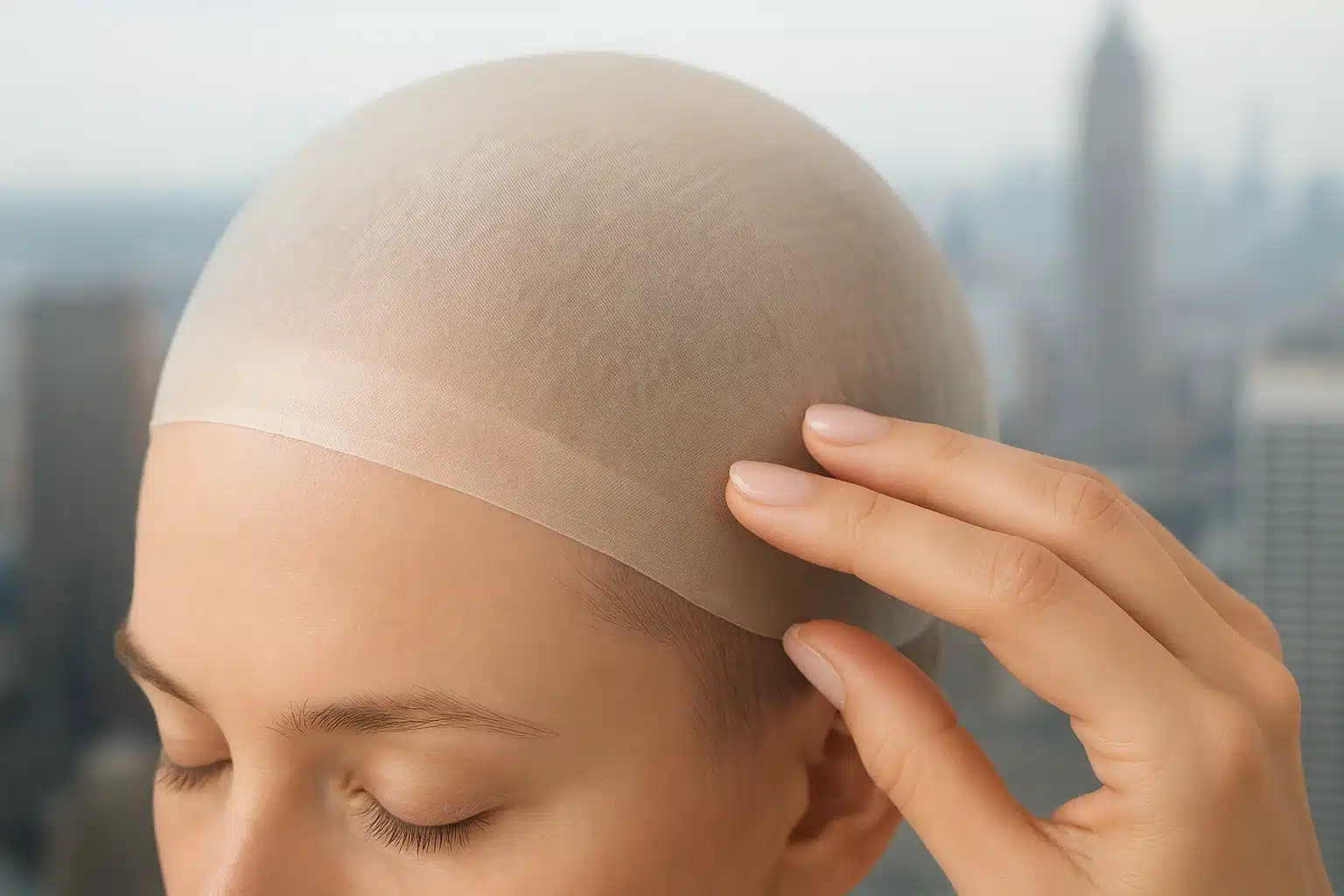
Navigating hair loss is already an emotional journey, but when you pair it with an inflamed, reactive, or tender scalp, the challenge becomes intensely physical. If you are undergoing chemotherapy, managing alopecia areata, or experiencing severe contact dermatitis, you likely already know the feeling: you find a beautiful hairpiece, slip it on, and within minutes, you are overwhelmed by an unbearable, prickly itch.
For many, the aesthetics of a wig become entirely secondary to tactile distress. Scratchy machine wefts, stifling nylon caps, and allergic reactions to chemical dye residues can make daily wear feel impossible. If you’re currently searching for the best wig store in Manhattan or the greater New York City area, it’s crucial to look beyond the surface styling. You need a space that understands the engineering of medical-grade caps, friction-free liners, and hypoallergenic bases.
Let’s demystify the science of sensitive-scalp wig construction, explore what triggers that dreaded itch, and outline how to find the perfect, comfortable cranial prosthesis in NYC.
The Dermatology of Wig Discomfort: Why Does My Scalp Hurt?
When your scalp burns or itches under a wig, it’s easy to blame it on a “cheap cap” or assume that wigs are just inherently uncomfortable. In reality, dermatologists and trichologists break scalp irritation down into three distinct categories:
1. Allergic Contact Dermatitis (ACD)This is a chemical reaction. The most common culprits are acrylates (found in many wig glues and adhesive tapes), residual disperse dyes used in coloring synthetic hair, and latex or harsh elastic bands woven into the cap’s perimeter. If your scalp is red, blistering, or profoundly itchy in the exact spots where adhesive or elastic touches the skin, you are likely experiencing ACD.
2. Mechanical FrictionThis is a physical reaction. Standard wigs are often made using “machine wefts”—long strips of hair sewn together by a machine. The heavy stitching and stiff tracks can act like mild sandpaper against a bare, sensitive scalp, causing friction burns.
3. Thermal OcclusionThis is an environmental reaction. When a thick, non-breathable cap traps sweat and heat against your skin, it creates a micro-environment for microbial growth, leading to heat rash, fungal irritation, and blocked follicles.
The “Knot Friction” Revelation (and How to Fix It)
One of the biggest “aha!” moments for new wig wearers comes from understanding how premium wigs are made. You will often hear that “100% hand-tied” wigs are the most comfortable. While it’s true that hand-tied bases offer incredible, multidirectional stretch that eliminates the friction of machine wefts, there is a hidden catch for bare scalps.
In a standard hand-tied wig, individual hairs are knotted directly into a sheer lace mesh. This leaves thousands of microscopic, abrasive stem ends (the tiny tail of the knot) resting directly against your skin. On a scalp with natural biological hair, you’d never feel it. On a bare, sensitive scalp, it feels like wearing a sweater made of thistles.
To solve this, medical-grade wigs utilize advanced cap architecture:
- Double Monofilament Caps: These caps feature an internal “second layer” of ultra-soft, glass-silk mesh that sits between the hand-tied knots and your bare skin. It acts as a permanent, built-in buffer, completely isolating your scalp from prickly friction.
- Silk Tops (French Drawn Tops): The absolute pinnacle of scalp simulation and comfort. The knots are hidden entirely between layers of material, leaving a perfectly smooth surface against your head and creating the illusion of hair growing directly from a natural scalp.
Building a Better Foundation: Liners and Glueless Innovations
If you aren’t ready to invest in a double-monofilament cap, or if you already own a wig that is irritating your scalp, you can alter the interior environment using specialized liners and grips.
Bamboo Viscose vs. Standard Nylon
Most wig wearers default to the standard nylon wig caps found in beauty supply stores. However, for a sensitive scalp, nylon is virtually non-porous. It traps microbial sweat and friction-burns bare skin.
Instead, look for bamboo viscose liners. Bamboo fiber has a microscopic gap structure that makes it highly breathable, thermoregulating, and naturally antimicrobial. It wicks moisture away from the scalp, keeping you cool in the summer and insulated in the winter, drastically reducing thermal occlusion.
The Glueless Revolution
For medical wig wearers, “glueless” isn’t just a convenience trend—it’s a dermatological necessity. By eliminating liquid adhesives and tapes, you completely remove exposure to cyanoacrylates (major skin sensitizers). Today’s premium hypoallergenic wigs utilize medical-grade silicone strips embedded in the cap, which gently grip bare skin using natural body heat without pulling or leaving residue. Alternatively, soft velvet wig grips can comfortably anchor a unit securely in place all day.
Climate and Customization: Surviving NYC’s Extremes
Wig comfort is highly geographic. Wearing a wig in New York City means navigating the brutal humidity of a July subway platform and the bone-dry, radiator-heated air of a February apartment.
- Summer Sensitivities: Heavy polyurethane (PU) caps will cause heavy scalp sweat. Breathable Swiss lace fronts paired with bamboo liners are essential for surviving NYC summers.
- Winter Eczema: Dry indoor heating exacerbates eczema and dry scalp under wigs. A silk-lined cap helps retain your scalp’s natural moisture barrier when the humidity plummets.
For those engaging in DIY wig crafting, selecting the right types of wig caps for making wigs or wig caps for making half wigs is crucial. If you have diffuse thinning (like androgenetic alopecia) and want to blend your natural hair, building a custom U-part wig on a hypoallergenic monofilament foundation ensures you aren’t causing tension alopecia on your remaining delicate hair.
Navigating NYC’s Best Sensitive-Scalp Specialists
New York City boasts a dense ecosystem of bespoke cranial prosthesis studios, but finding a space that prioritizes medical empathy over high-pressure sales is key. When booking a consultation in the city, look for ateliers that offer private fitting suites and understand how to navigate out-of-network insurance claims (using the HCPCS A9282 code for cranial prosthetics).
Several standout studios cater specifically to sensitive scalps:
- HairPlaceNYC (Upper East Side): Known for ultrathin, featherlight caps and deep customization for medical hair loss.
- Shuly Wigs (Brooklyn): A destination for dedicated cranial prosthesis design featuring luxury European hair and custom sensitive-scalp fittings.
- Angelo David Salon (Midtown Manhattan): Renowned for custom couture hair prostheses designed specifically with oncology patients in mind.
- Bitz-N-Pieces (Manhattan): Boasts a decades-long track record in compassionate medical cap alterations and bespoke resizing.
Insider Tip: When booking, ask the specialist if they offer double-monofilament caps and if they provide custom hypoallergenic cap linings.
The 48-Hour At-Home Patch & Wear Protocol
Even the most luxurious, hypoallergenic wig cap requires a proper introduction to your skin. Before you trim the lace or wear your new wig out for a full day, follow this protocol:
- The Pre-Wash: Always gently wash a new wig before its first wear. Factories use volatile processing chemicals, sizing resins, and disperse dyes to keep hair looking fresh in transit. Using a sulfate-free cleanser to wash the cap interior neutralizes these potential allergens.
- The Patch Test: If you are trying a new velvet grip or medical silicone strip, wear it behind your ear or across the nape of your neck for 48 hours while at home.
- The Wear Test: Wear the wig around your house for 30 to 60 minutes. Notice where the cap creates pressure points. A properly fitted medical cap should feel like a gentle hug, not a tight band.
Frequently Asked Questions About Hypoallergenic Wigs
What is a hypoallergenic sensitive scalp wig cap made of?
Hypoallergenic caps prioritize skin-safe materials like double-monofilament mesh, silk tops, and 100% hand-tied multidirectional stretch bases. They often integrate medical-grade silicone perimeters instead of harsh elastic, and use bamboo viscose or pure cotton linings to wick away moisture and prevent bacterial buildup.
Can you wear a wig without glue or adhesive tape if your scalp is raw?
Absolutely. The safest option for a raw, sensitive scalp is a glueless system. These wigs utilize velvet wig grips, medical-grade silicone panels that adhere gently via body heat, or custom-measured tension fits to stay securely in place without introducing chemical acrylates to inflamed skin.
How do I wash away manufacturing resins from a new wig cap?
Before your first wear, turn the wig inside out. Submerge the cap in cool water mixed with a gentle, sulfate-free wig shampoo. Gently massage the cap interior (avoiding aggressive scrubbing of the knots), rinse thoroughly with cool water, and allow it to air dry on a canvas block head.
Does a velvet or silicone wig grip irritate sensitive skin?
For the vast majority of users, no. Medical-grade silicone is inert and highly biocompatible, making it ideal for bare skin. Velvet grips provide a soft, friction-free barrier between the wig cap and your scalp. However, it’s vital to wash your grips regularly, as trapped sweat and body oils on the grip can eventually cause irritation.
Taking the Next Step in Your Journey
Finding a wig that feels as good as it looks doesn’t have to be a painful process of trial and error. By understanding the anatomy of wig caps—recognizing the value of double monofilament layers, the breathability of bamboo liners, and the safety of glueless, medical-grade silicone—you empower yourself to make choices rooted in true comfort.
Take your time, ask questions about interior cap construction, and remember that your physical comfort is the most important metric of a successful hairpiece.