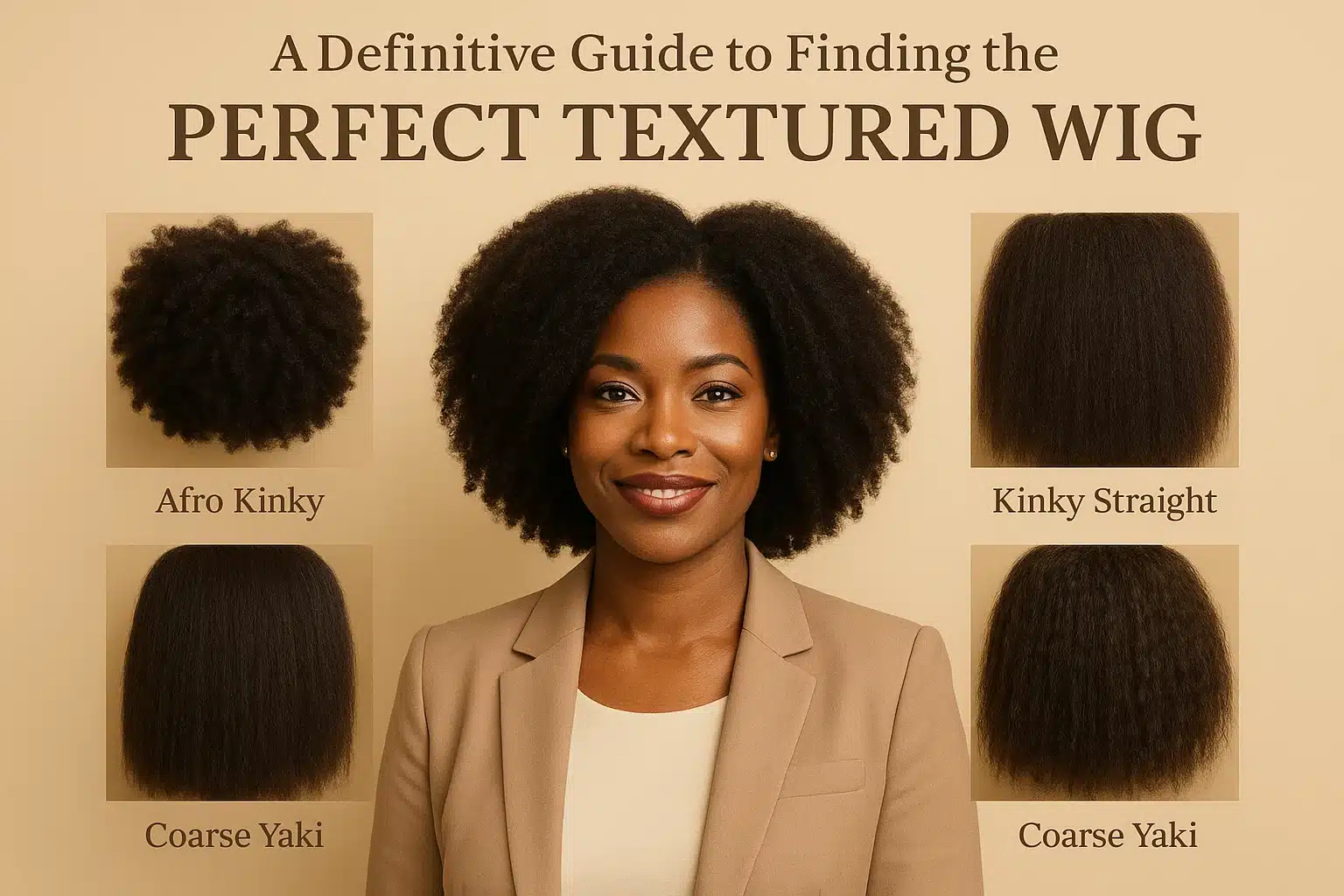
Finding high-grade, naturally textured hairpieces in Central Texas has historically presented a major challenge. If you’ve ever walked into a beauty supply store only to be met with aisles of silky straight units that look nothing like your natural hair, you are not alone. Standard retail guides often treat wig shopping as a generic transaction, but navigating textured units—from tightly coiled afros to blown-out yaki styles—requires a deep understanding of natural curl patterns, cuticle integrity, and how lace interacts with melanin-rich skin.
For shoppers exploring options across Central Texas, navigating the wigs austin market involves more than just finding an open store. It requires decoding technical hair science, understanding cap breathability in our famous Texas humidity, and knowing exactly which local shops cater to specific styling, transitioning, or medical hair restoration needs.
Grab a cup of coffee. We are going to demystify texture matching, uncover the mathematics of curl shrinkage, and provide a curated audit of local Austin wig shops that truly understand African American hair.
Decoding Textured Hair: Finding Your Perfect Match
A major point of confusion for many beginners is distinguishing between marketing buzzwords and actual biological curl equivalents. Whether you are looking at premium synthetic blends or investing in human hair wigs, knowing the terminology will save you from costly mismatches.
- Kinky Curly (Mimics 3B–4A): This texture features defined, springy corkscrew ringlets. When wet or conditioned, the curls clump smoothly; when picked out, they expand into high-volume, soft shapes. It’s perfect if your natural hair forms defined coils when damp.
- Afro Kinky / Afro Coily (Mimics 4B–4C): Characterized by dense, tightly packed zig-zag or micro-spiral patterns with minimal natural shine and high volume. This offers a highly authentic match for natural 4C crowns without requiring any heat manipulation of your leave-out hair.
- Kinky Straight (Mimics Blown-Out 4A-4C): Replicating afro-textured hair that has been blow-dried, stretched, or banded. It retains a beautiful textured, crimped feel without defined curls, offering a full-bodied alternative to flat-ironed styles.
- Coarse Yaki (Mimics Silk-Pressed 3C-4C): This mimics afro-textured hair that has been relaxed or silk-pressed. It possesses microscopic crimps that catch the light realistically, eliminating the artificial, doll-like gloss common to standard straight textures.
The Mathematics of Wigs: Shrinkage and Density Demystified
Have you ever purchased a 20-inch kinky curly wig expecting it to cascade down your back, only to find it resting near your collarbone? Welcome to the reality of curl elasticity.
Because textured hair expands horizontally (outward) rather than just vertically (downward), it requires a different set of expectations than straight hair.
The Shrinkage Conversion Rule:
- Coarse Yaki / Kinky Straight: A 18-inch wig will visually rest at about 17–18 inches (minimal shrinkage).
- Kinky Curly (3B–3C): A 20-inch wig will visually rest at 15–16 inches (about 25% shrinkage).
- Afro Kinky Coily (4A–4B): A 20-inch wig will visually rest at 13–15 inches (about 35% shrinkage).
- Afro Kinky (4C Micro-Coil): An 18-inch wig will visually rest at just 10–12 inches (about 45% shrinkage).
Density Dynamics: When shopping, you’ll often see densities listed as 130%, 150%, or 180%. The standard advice of “pick 180% for full hair” is a mistake for textured units. Because kinky coily fibers carry massive volume, a 130% density kinky curly unit often matches the visual weight of a 180% density silky straight wig. Buying a 200% density in tight curl patterns can overwhelm smaller facial structures and look unnatural.
Cap Construction and Lace Melting on Melanin-Rich Skin
Finding the right texture is only half the battle; ensuring the wig looks like it’s growing from your scalp is the other.
The Science of Lace Tones
Avoid standard “light brown” lace from generic manufacturers, which often carries cool, grey undertones that appear chalky or ashy on dark skin. For a flawless melt on Fitzpatrick skin types IV through VI, you need to match your specific undertone.
- HD Lace: The thinnest filament, undetectable on camera, but highly delicate. Ideal for special occasions or low-tension installs.
- Swiss Lace: Slightly thicker but highly durable. Perfect for daily wear in the Texas heat.
To achieve a seamless blend, use warm, orange-, red-, or golden-based lace tint mousses to correct the lace color before installation.
Protecting Your Edges
Understanding proper wig cap construction is essential to prevent friction alopecia, particularly around the fragile temporal (edge) hairs. Prioritize glueless cap constructions featuring velvet-lined nape tabs, silicone interior grips, and wide, adjustable elastic bands over harsh liquid adhesives, especially in humid climates where sweat can compromise glue.
The Austin Field Guide: Where to Find African American Wigs Locally
Austin’s alternative hair market features a distinct divide: clinical cranial prosthesis studios, boutique styling salons, and high-volume multi-ethnic beauty supplies. Here is your categorized guide to navigating the local landscape.
Medical Cranial Prostheses & Customization Studios
- Abba Wigs & All Cranial Needs (1105 Kramer Ln): A top choice for women experiencing alopecia or chemotherapy-induced hair loss. They accept health insurance cranial prosthesis filing and offer dedicated private fitting rooms for custom human hair and premium synthetic units.
- Serenity Wig and Salon (2900 W Anderson Ln): Ideal for clients who want an in-store stylist to customize density, trim bangs, and perform personalized cap sizing on an everyday unit to perfectly match their face shape.
Mid-Range Retail & Try-On Showrooms
- Wig Ave (5222 Burnet Rd): Known by locals as wig ave austin, this central location boasts a strong inventory for first-time wearers wanting to compare standard caps, monofilament crowns, and mid-range human hair options in person.
- Urban Beauty (405 E Braker Ln): Features a well-organized, extensive collection of ponytails and blends. Shoppers should note store try-on guidelines, as they typically require the purchase of a nominal try-on cap and have per-visit try-on limits.
Multicultural Beauty Supply Staples
- Cal’s Beauty Supply & Styling (6448 E Hwy 290): A deeply rooted community staple in East Austin offering products specifically engineered to maintain moisture balance under protective units.
- K Beauty Supply (7216 Cameron Rd): Highly respected for exceptional customer service. The staff actively helps shoppers navigate beginner-friendly synthetic textures and edge-protecting caps at budget-conscious price points.
- Supreme Beauty Supply (6021 N I-35 Frontage Rd): A high-volume mega-store best for experienced shoppers who want to evaluate dozens of kinky curly and kinky straight options side-by-side.
- Big Joy Wigs & Beauty (6406 N I-35 Frontage Rd #2700): A spacious retail environment with convenient highway access, carrying trending glueless protective styles suited for quick wear.
- Ebony Beauty Mart (825 E Rundberg Ln J2): Caters specifically to multi-ethnic and African American hair routines, carrying specialized maintenance accessories like satin bonnets, lace adhesives, and wide-tooth detangling picks.
- A1 Beauty Supply (7408 Cameron Rd): A Black-owned beauty supply offering culturally competent product recommendations for maintaining natural leave-out hair while wearing U-part and V-part textured units.
Surviving the Central Texas Climate: Care and Maintenance
Austin’s intense summer heat and fluctuating humidity levels can cause synthetic hair to frizz prematurely and human hair to swell. A solid wig maintenance routine requires understanding the “Hydration vs. Moisture” breakthrough.
Many beginners accidentally suffocate their textured synthetic or human hair wigs with heavy oils and grease, which acts as a magnet for dust and leads to intense tangling at the nape of the neck. Instead, recognize that wig fibers are non-living cuticle scales. They need hydration (water-based leave-in conditioners and humectants) sealed lightly with silicone-based serums to block out Texas humidity.
The In-Store Shopping Checklist
Before heading out to shop locally, keep these practical tips in mind:
- Understand Sizing: Wigs aren’t one-size-fits-all. Learning how to choose wig cap size petite vs average before arriving will save you hours of trying on units that will inevitably slide back or give you a headache.
- The Four Finger Rule: Beginners often pull wigs too far forward, creating an unnatural, helmet-like look. Place four fingers horizontally above your eyebrow—your wig’s hairline should start exactly above your top finger.
- Check the Policies: Always ask about return restrictions and try-on cap fees before you begin pulling boxes from the shelves.
Frequently Asked Questions
Why does my kinky curly wig mat at the nape of the neck?
Matting at the nape is caused by a combination of sweat, friction from collars, and using overly heavy oils. In the humid Texas climate, it’s best to use a lightweight, water-based detangling spray and gently comb the nape with a wide-tooth comb at the end of every day to prevent microscopic tangles from turning into mats.
Can I use health insurance to pay for a wig in Austin?
Yes, if you are experiencing medical hair loss (such as traction alopecia, CCCA, or chemotherapy-related loss). You must obtain a physician’s prescription for a “cranial prosthesis” (CPT Code A9282). Local medical wig studios, like Abba Wigs, can often help you navigate the insurance filing process.
How do I know if the wig I’m looking at in a beauty supply is truly human hair?
Many beauty supplies stock “human hair blends” which mix synthetic fibers with human hair. In-store, check for stiffness in the cap border and excessive, unnatural shine. If store policy allows, you can perform a strand test by running your fingers through the unit; chemical silicones used to hide split ends in low-grade hair will often leave a faint, unnatural residue on your fingers.
What density should I choose for a natural-looking 4C afro wig?
Because 4C micro-coil textures expand outward dramatically, you rarely need high density. A 120% to 130% density provides a highly realistic, lightweight volume that mirrors a natural head of 4C hair without looking bulky around the face.