
Picture this: You step out of a crisp, 68-degree air-conditioned café into a 95-degree wall of Central Florida humidity. It’s a sudden, breathless shock to the system that locals know all too well. If you’re wearing a wig, that instant climate shift can suddenly make your scalp feel like it’s trapped under a woolen winter beanie. Because up to 10% of your body’s metabolic heat naturally escapes through your head, placing a poorly ventilated cap over it in subtropical weather isn’t just slightly uncomfortable—it’s physically exhausting.
Fortunately, staying cool while wearing hair in hot climates isn’t a luxury; it’s an engineered science. By understanding exactly how different cap architectures breathe and how individual hair fibers react to intense moisture, you can thrive in the heat rather than hide from it. Whether you are just beginning your research online or planning to visit the best wig stores in Orlando to try on these climate-friendly designs in person, knowing the mechanics of a breathable wig will completely transform your daily experience.
Here is everything you need to know about finding a lightweight, breathable wig that can conquer Florida’s climate.
The Thermodynamics of Your Scalp: Why Standard Wigs Feel So Hot
Many beginners assume that the hair itself is what causes them to overheat. In reality, it’s almost entirely about the cap construction.
Think of a traditional, fully closed wig cap—often made with solid lace linings or heavy polyurethane perimeters—like a thermal insulator. When you step outside into the Orlando sun, your scalp generates heat. If that heat hits a solid, non-porous cap lining, it has nowhere to go. This “greenhouse effect” can raise the microclimate temperature of your scalp by a staggering 3°F to 7°F. Furthermore, if your cap is strapped on too tightly, it gently compresses surface blood vessels, which actually magnifies your physical sensation of heat.
To beat the heat, you need a cap that promotes convective cooling—what experts call the “chimney effect.” This happens when your cap allows your body heat to rise and escape vertically out of the crown, while letting ambient cross-breezes reach your scalp directly.
The Moisture-Weight Paradox: Human Hair vs. Synthetic in Humidity
When shopping for wigs, it’s natural to assume that human hair, being organic, is the coolest and most comfortable option. In a dry climate, that might be true. In Florida, however, you have to account for the “Moisture-Weight Paradox.”
Human hair is hygroscopic, meaning it absorbs moisture from its environment. In 80%+ humidity, human hair acts like a sponge, drawing in airborne water vapor and scalp perspiration. Throughout a humid day, a human hair wig can actually expand in diameter, lose its styling shape, and become 15% to 25% heavier.
High-grade synthetic fibers, on the other hand, are hydrophobic—they actively repel water. While the plastic-like fibers themselves do not breathe, they maintain their pre-set style memory perfectly in 90% humidity, dry in minutes if you get caught in a sudden summer downpour, and remain feather-light. The secret to making synthetic hair work in Florida is ensuring it is paired with a highly ventilated cap to offset the fiber’s heat retention.
Deconstructing Wigs That Breathe: A Cap Geometry Guide
When evaluating different types of wig caps for a subtropical environment, you have to look closely at their physical architecture. Here is how the most popular styles stack up against the heat.
The Capless (Open-Wefted) Advantage
Don’t let the name fool you—”capless” wigs do have a cap, but it’s constructed of horizontal hair wefts sewn onto thin, elasticized vertical ribbons. This creates visible 0.5 to 1 cm gaps throughout the back and sides. These open channels are the absolute gold standard for airflow, allowing maximum heat dissipation and keeping the wig incredibly lightweight.
The Monofilament Trap
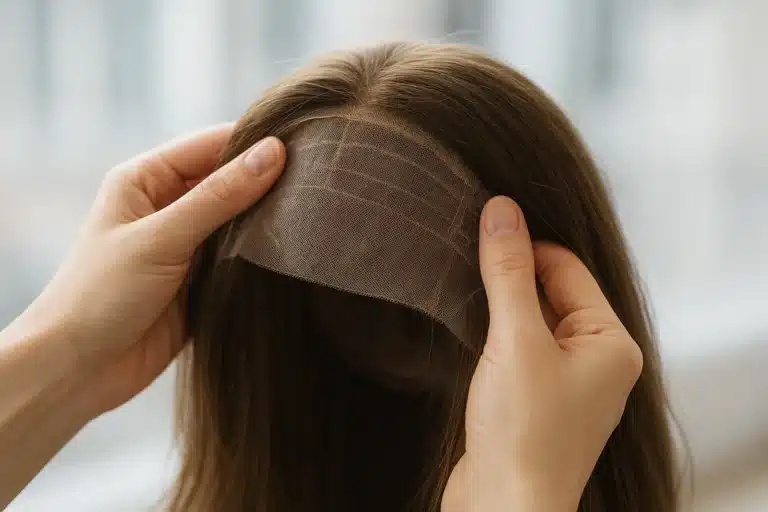
Monofilament (or “mono”) tops are beloved because they look exactly like a natural scalp, allowing you to part the hair anywhere. However, there is a catch. Double-monofilament caps or those rimmed with thick polyurethane moisture barriers can trap sweat. In hot climates, look for a partial mono-part or a single-layer monofilament crown paired with open-wefted sides. This gives you the illusion of a natural part where it matters most, without sacrificing the cooling breeze on the back of your neck.
The Density Trap: Why Less is More in Orlando
When buying a wig for the first time, many people want the biggest bang for their buck, leading them to choose wigs with 150% to 180% hair density.
In the wig world, extra density means less airflow. Thick hair traps a boundary layer of warm air right against your scalp. For a Florida lifestyle, choosing a wig with 100% to 120% density creates natural, beautiful movement while drastically opening up the air channels. Shorter styles—like textured bobs, pixies, and tapered lobs—also keep hair off the nape of your neck, which is the body’s primary temperature regulator.
Beating the Melt: Sweat, Scalp Care, and Security
If you plan on spending eight hours at an Orlando theme park, how do you keep your wig secure when you’re sweating?
The Glue Emulsification Myth
A common misconception is that Florida heat “melts” wig glue. In reality, your body’s natural sebum (oil) and perspiration emulsify water-based and acrylic adhesives from underneath. The glue turns into a tacky, white film that slips, slides, and clogs your pores.
Glueless and Friction Alternatives
Instead of fighting a losing battle against liquid adhesives, embrace glueless securing methods. Adjustable velvet grips, silicone-grip strips, and built-in tension bands provide superior security without chemical degradation. These are especially popular features in active wigs designed for outdoor lifestyles, hiking, or fitness.
The Bamboo-Viscose Counterintuitive Truth
It sounds completely backwards to put another layer on your head to stay cool, but wearing a cooling wig cap or a moisture-wicking bamboo-viscose liner is a game-changer. Rather than letting salty sweat pool against your skin and crystallize inside the wig’s lace mesh (which causes intense itching), a bamboo liner actively wicks moisture away from your scalp, lowering irritation and keeping your head dry.
The “Touch & Check” Salon Inspection Guide
If you decide to browse local Orlando wig boutiques to find your match, use this simple checklist to verify you’re getting a climate-friendly piece:
- The Light Test: Hold the wig up to the ceiling lights. If you can see light shining clearly through the sides and back, it has good open-wefted ventilation.
- The Tension Check: Ensure the wig fits your exact circumference. A wig that is too small will compress your scalp and instantly make you feel hotter.
- Ask About De-Bulking: A great stylist can use texturizing shears to strategically “thin out” a factory wig, dramatically improving air circulation without ruining the style.
Frequently Asked Questions (FAQ) for Florida Wig Wearers
Q: Will people see my scalp through a lightweight, open-wefted cap?
A: No. High-quality open-wefted wigs use a technique called “perma-tease” at the root, or strategic knotting, which hides the wefts and gaps entirely while still allowing air to flow freely.
Q: How do I prevent synthetic hair from frizzing at the nape of my neck?
A: Frizz at the nape is caused by friction (rubbing against your collar) combined with chemical reactions from sweat and sunscreen. To prevent this, keep the hair off your neck during peak heat, wash the nape of the wig gently after heavy outdoor days, and utilize a wide-tooth comb with synthetic-safe detangling spray.
Q: Can I comfortably wear a wig to a theme park all day?
A: Absolutely, provided you are prepared. Wear a low-density, open-wefted synthetic wig, secure it with a velvet grip instead of glue, and wear a bamboo liner to manage sweat. Bring a few blotting sheets and a portable mini-fan for your neck, and you’ll be much more comfortable than you expect!
Next Steps on Your Journey to Comfort
Transitioning into wearing wigs—whether for medical hair loss, convenience, or fashion—is a deeply personal journey. Dealing with a hot and humid environment adds an extra layer of complexity, but it is entirely manageable when you know the science of cap construction and fiber weight.
You don’t have to sacrifice comfort for beauty. By prioritizing breathable architectures, exploring glueless security options, and choosing lightweight densities, you can step out into the Florida sun with total confidence. Take your time, do your research, and remember that the perfect, feather-light fit is out there waiting for you.