If you have ever hesitated to plan a summer vacation or attend an outdoor event because you were worried about being uncomfortably hot in your wig, you are not alone. It is perhaps the single most common anxiety among new wig wearers: the fear that wearing a wig will feel like wearing a thick wool hat in the middle of July.
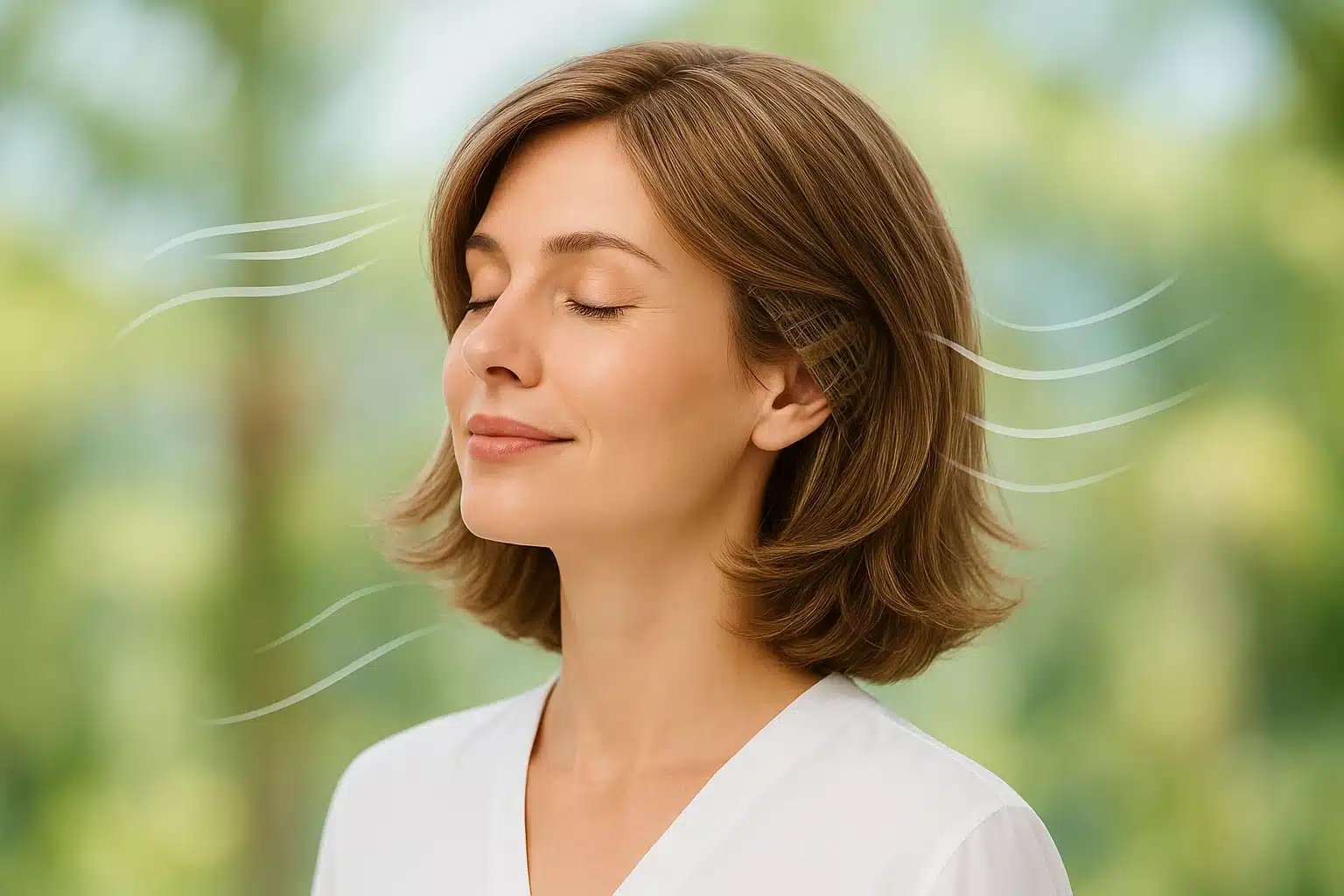
The reality, however, is much more optimistic. Just as athletic wear has evolved from heavy cotton to moisture-wicking technical fabrics, wig technology has undergone a quiet revolution. Modern cap designs are engineered with ventilation, airflow, and lightweight materials specifically designed to mitigate heat. Finding the perfect breathable cap is a crucial part of a larger comfort strategy, which starts with choosing a wig that fits your life and daily demands. By understanding a few key construction features, you can turn a potentially sweaty situation into a breeze.
The Great Misconception: Are All Wigs Hot?
Before we dive into the mechanics of cap construction, it is important to address the “heat myth.” Many people assume that more hair equals more heat, or that covering your head inevitably leads to overheating. While adding a layer to your head does provide insulation, not all layers are created equal.
The feeling of heat build-up usually comes from two things: weight and lack of circulation. Older wig designs were often constructed with dense, closed materials that trapped body heat against the scalp. Today’s breathable caps focus on creating “exit routes” for that heat.
Myth vs. Fact
- The Myth: You have to sacrifice hair density or style to stay cool.
- The Fact: You can have a full, voluminous look that breathes, provided the foundation (the cap) allows air to pass through to your scalp.
- The Myth: Synthetic wigs are always hotter than human hair.
- The Fact: While human hair “breathes” naturally, high-quality synthetic fibers on an open-wefted cap can actually be cooler and lighter than a dense human hair wig.
Your Breathability Toolkit: Understanding Cap Constructions
When you are browsing for a wig, the description often lists terms like “monofilament,” “wefted,” or “hand-tied.” Think of these not just as quality markers, but as climate control features. Here is how different constructions impact airflow.
Open-Wefted (Capless): The Ventilation King
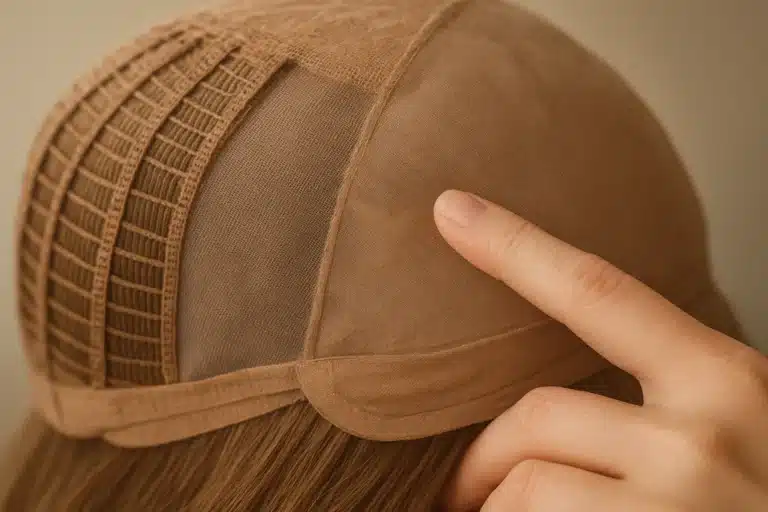
If maximum airflow is your priority, the open-wefted cap (often called “capless” or “open cap”) is the gold standard. In this construction, wefts of hair are sewn onto thin, elastic strips rather than a solid piece of fabric.
- Why it works: The spaces between the wefts allow air to circulate directly to your scalp and let heat escape.
- The experience: It feels lightweight and stretchy. Because there is less solid material, it is often the coolest option available for casual wear.
100% Hand-Tied: The Lightweight Luxury
For those seeking the ultimate in comfort—especially if you have a sensitive scalp—hand tied wigs are a game-changer. In this design, every single hair is individually knotted by hand into a soft, stretchable mesh material.
- Why it works: There are no heavy wefts or thick seams. The mesh base is incredibly fine, feeling more like a second skin than a cap. This allows for superior breathability because the base material itself is porous.
- The experience: It is the lightest cap construction available. The lack of mechanical seaming means there is very little to trap heat or cause friction against the skin.
Monofilament and Lace Front Hybrids
Many of the best human hair wigs utilize a hybrid approach. They might feature a “monofilament top” (a sheer mesh that mimics the scalp) combined with an open-wefted back.
- Why it works: You get the best of both worlds. The top provides a natural look where the hair parts, while the open back and sides provide the ventilation needed to keep you cool.
- The experience: This offers a balance of realism and practicality. You get the natural appearance at the hairline and part, without the heat retention of a fully solid cap.
The Right Cap for the Right Moment: A Scenario-Based Guide
Knowing the definitions is helpful, but applying them to your life is what matters. A cap that works for an air-conditioned office might not hold up during a beach vacation. Here is how to match the cap to the context.
Scenario 1: The Tropical Vacation
You are headed somewhere humid. You will be outdoors, perhaps near the ocean, and humidity is a guarantee.
- The Challenge: Humidity causes sweating, and a heavy wig can take a long time to dry if it gets damp.
- The Solution: An Open-Wefted Synthetic Wig.
- Why: The open spaces allow the breeze to hit your scalp. Furthermore, synthetic fiber holds its style in humidity (unlike human hair, which may frizz) and dries much faster if you get caught in a misty rain.
Scenario 2: The Active Lifestyle
You enjoy brisk walks, yoga, or gardening. You are going to move, and your body temperature will rise.
- The Challenge: Security and sweat management. You don’t want the wig to slip, but you also don’t want heat trapped under a heavy silicone gripper.
- The Solution: A Hand-Tied Cap with a Bamboo Liner.
- Why: The hand-tied cap moves with you and is light enough not to weigh you down. Adding a liner (more on this below) helps wick moisture away before it creates discomfort.
Scenario 3: The High-Heat Commute
You live in a city with scorching summers. You need to look professional for work, but the commute is sweltering.
- The Challenge: You need a wig that looks completely realistic for face-to-face meetings but won’t leave you overheating on the subway.
- The Solution: A Hybrid Monofilament Top with Open Wefted Sides.
- Why: This gives you the natural scalp appearance you need for professional settings, but the open back ensures heat can escape from the densest part of your hair (the back of the head).
Alternatively, for days when it is simply too hot for a full wig, many wearers rely on hat fall wigs. These are hairpieces with an open top designed specifically to be worn under hats, eliminating the bulk of a wig cap entirely while protecting your face from the sun.
Beyond the Cap: Materials and Accessories
Even the most breathable cap can benefit from the right foundation. If you are preparing for a particularly hot season, consider what you wear under the wig.
The Magic of Bamboo
Cotton liners can absorb sweat, but they tend to stay wet, which can be uncomfortable and heavy. Bamboo (or bamboo viscose) liners are naturally moisture-wicking and thermal-regulating. They pull moisture away from your scalp to the exterior of the liner where it can evaporate, keeping your head drier and cooler.
Secure Grip Without the Heat
Velvet wig grips are popular for security, but in 100-degree weather, a thick velvet band adds insulation. Look for silicone or “lace-grip” bands that are thinner and designed to allow heat to escape while still keeping your wig secure.
Frequently Asked Questions
Can I wear my wig to the gym?
Absolutely. Many people do. The key is to choose a shorter style (to keep hair off the neck) and utilize a moisture-wicking liner. Afterward, be sure to air out your wig on a stand rather than a Styrofoam head so the cap can dry completely.
Does wig color affect heat?
Technically, dark colors absorb more heat from the sun than light colors. However, the difference for the wearer is usually negligible compared to the construction of the cap. Prioritize the cap type (open wefted vs. closed) over the hair color for cooling benefits.
Will a human hair wig be cooler than a synthetic one?
Not necessarily. While human hair is a natural fiber, human hair wigs often require thicker caps to hold the hair securely. A high-quality synthetic wig with an open-wefted cap is often lighter and cooler. However, human hair moves more naturally, which can create a psychological feeling of “lightness.”
Next Steps in Your Journey
Comfort is personal. What feels breezy to one person might feel structured to another. The most effective way to find your perfect match is to consider your primary environment. Are you battling humidity? Are you seeking relief for a sensitive scalp?
By prioritizing cap construction, you are taking the first step toward a wig experience that feels as natural as it looks. Don’t let the heat dictate your style—modern technology has ensured that you can feel confident and cool, no matter what the thermometer says.