Imagine the relief of taking off a pair of stiff, uncomfortable shoes after a long day. Now, imagine if you couldn’t take them off. For many individuals navigating hair loss—whether due to chemotherapy, alopecia, or natural thinning—the scalp becomes a point of extreme vulnerability. It isn’t just about aesthetics; it is about physical sensation. When your scalp is tender, hot, or easily irritated, the wrong wig can feel like wearing a wool sweater on a sunburn.
However, modern wig technology has evolved significantly. Finding a hairpiece that feels as good as it looks is no longer a luxury; it is a standard you should expect. This guide is a foundational piece of Lifestyle-Based Wig Selection: Choosing a Wig That Fits Your Life, helping you prioritize physical comfort alongside style so you can feel confident and pain-free, day or night.
Understanding Scalp Sensitivity
Before diving into solutions, it helps to understand the “why.” When we lose hair, we lose a natural protective barrier. The scalp is rich in nerve endings, and without hair to buffer friction, it becomes hyper-aware of textures, temperature changes, and pressure.
For those undergoing medical treatments, this sensitivity is often heightened. The skin may become dry, prone to redness, or tender to the touch. This is why “standard” wig construction—which might work perfectly for someone wearing a wig for fashion—can be problematic for someone with medical hair loss. The goal isn’t just to cover the head; it is to cradle it.
The “Comfort Pyramid”: A Framework for Selection
When shopping for a comfort-centric wig, it helps to visualize a pyramid. Most buyers focus on the style (the top), but comfort is built from the bottom up.
1. Base Layer: Cap Construction
The way a wig is built determines 80% of its comfort level. Traditional wigs use “wefts”—rows of hair sewn onto strips of fabric. While durable, these can create ridges and seams that press against a sensitive scalp.
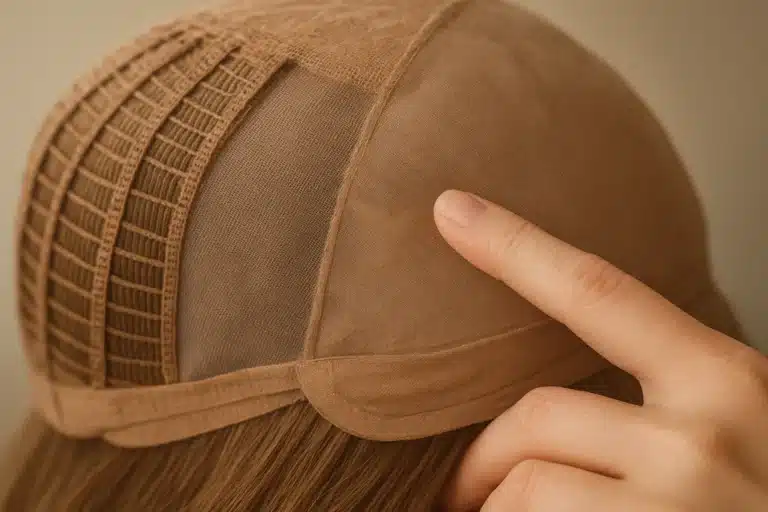
For maximum comfort, industry experts recommend hand tied wigs. In this construction, each hair is individually knotted into a soft mesh cap by hand. There are no wefts and no seams. Think of it as the difference between a seamless, high-quality athletic shirt and a stiff t-shirt with thick, itchy stitching. Because there is no mechanical structure restricting movement, the cap moves fluidly with your skin, reducing friction and irritation.
2. Middle Layer: The Materials
Once you have the right construction, look at the fabric touching your skin.
- Double Monofilament: You may have heard of “monofilament” tops, which create the illusion of scalp growth. A double monofilament top adds a secondary layer of silk-like material on the underside of the cap. This protects the scalp from the hand-knotting, providing a surface that feels as smooth as a high-thread-count pillowcase.
- Silicone Grips: For those with total hair loss, caps with velvet-lined ear tabs or medical-grade silicone patches offer a grip that mimics skin traction, eliminating the need for harsh glues or tight elastic bands.
3. Top Layer: Fiber Texture
The weight and texture of the hair fiber contribute to how “heavy” the wig feels.
- Synthetic: Modern synthetics are incredibly lightweight, which is excellent for a fatigued scalp.
- Human Hair: When looking for the best human hair wigs, the texture plays a massive role. High-quality human hair is softer and less abrasive against the neck and ears than standard fibers, though it can be slightly heavier.
Symptom-to-Solution Guide
To make this practical, let’s map specific scalp sensations to the features that solve them.
If Your Scalp is Hot and Itchy
- The Problem: Heat accumulation under the wig causes sweat, which leads to itching (pruritus).
- The Solution: Look for a 100% Hand-Tied Cap. Unlike solid caps, the mesh material allows air to circulate freely through the entire wig, not just the top. This ventilation keeps the scalp cool and reduces moisture buildup.
If Your Scalp is Tender to the Touch
- The Problem: Pressure points from clips, combs, or seams cause soreness.
- The Solution: Avoid combs entirely. Opt for a Double Monofilament top with a polyurethane strip at the front. The polyurethane warms to your body temperature and adheres gently using friction, spreading the tension evenly rather than focusing it on specific spots.
If You Need to Wear a Wig for Lounging
- The Problem: You want coverage at home or in the hospital, but a full-density wig feels like “too much.”
- The Solution: Consider “halo” wigs or specialized headwear with attached hair. These leave the top of the head open (covered by a soft bamboo beanie or scarf), eliminating the weight and heat of a full wig while still providing the appearance of hair around the face and neck.
The “Overnight” Question: Can I Sleep in My Wig?
This is one of the most common questions from first-time wearers. The technical answer is yes, you can, but the educational answer is a bit more nuanced.
Wearing a wig 24/7 shortens its lifespan significantly due to friction against the pillow. More importantly, your scalp needs time to breathe and rest. However, there are emotional and practical reasons why you might need to wear hair overnight—perhaps you are traveling, or you simply feel more like yourself with hair.
If you choose to wear a wig overnight, follow these rules for comfort:
- Choose a “Sleep Wig”: Do not sleep in your primary, expensive human hair wig. Keep a shorter, lower-density synthetic wig or a comfortable cotton/bamboo cap specifically for sleeping.
- Silk Pillowcases are Mandatory: Cotton pillowcases create friction that snags hair and pulls on the wig (and your scalp). Silk or satin allows the hair to glide.
- Loosen the Straps: Loosen the adjustable straps at the nape of the neck to prevent tension headaches while you sleep.
Myths vs. Reality
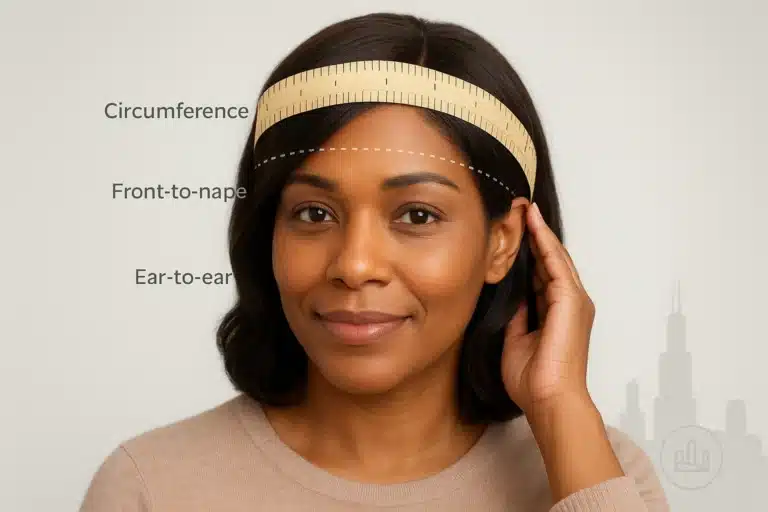
Myth: “A tighter wig is a more secure wig.”Reality: A wig that is too tight will ride up and slip off. Security comes from a proper fit (circumference) and non-slip materials like silicone or velvet wig grips, not from strangling your head.
Myth: “Wigs are always itchy.”Reality: Itchiness is usually a sign of a low-quality cap construction or a dirty scalp. A clean, hand-tied wig worn with a bamboo liner should feel virtually weightless and undetectable.
Frequently Asked Questions
What is the most comfortable wig cap for chemotherapy patients?
Most experts recommend a 100% Hand-Tied cap with a Double Monofilament top. The hand-tied construction eliminates seams, and the double monofilament layer provides a silky barrier between the scalp and the hair knots.
How do I stop my wig from slipping without using glue?
If you have a sensitive scalp, avoid glues and tapes. Instead, use a wig grip band. These are soft, velvet bands that you wear under the wig. The friction of the velvet holds the wig securely in place, even without hair, and acts as a cushion for your scalp.
Is human hair better for sensitive scalps than synthetic?
Not necessarily. While human hair is softer to the touch, the wigs can be heavier. High-quality synthetic wigs are lighter, which can be less fatiguing for a sensitive scalp. The cap construction matters more than the fiber type for scalp comfort.
Can I wear a wig if I have psoriasis or eczema on my scalp?
Yes, but hygiene is critical. You should use a wig liner (preferably bamboo or cotton) to wick moisture away from the skin and wash both your scalp and the liner daily. Choose a breathable, hand-tied cap to prevent heat and moisture from exacerbating the condition.
Conclusion
Choosing a wig when your scalp is sensitive or you are feeling vulnerable is not just about vanity—it is about reclaiming your comfort and confidence. By focusing on the “Comfort Pyramid”—prioritizing hand-tied construction, soft materials like double monofilament, and gentle retention methods—you can find a hairpiece that feels like a natural extension of yourself.
Remember, the goal is to forget you are wearing a wig at all. Start by identifying your primary sensitivity triggers, and let those guide you toward the construction that fits your life, not just your look.