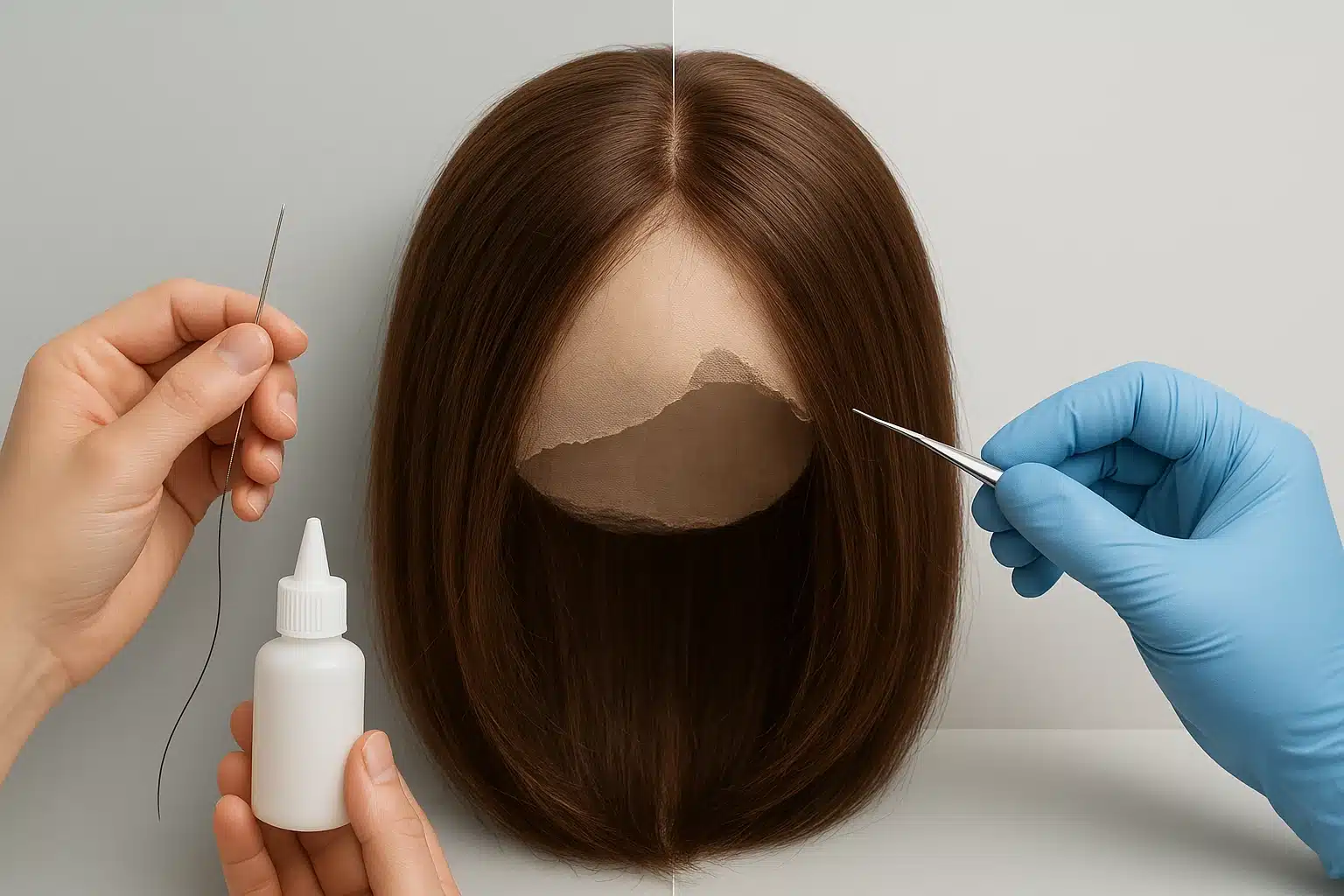
It’s a heart-sinking moment every wig wearer eventually faces. You reach for your favorite, most trusted hairpiece, only to notice the delicate lace front has a tear, the cap feels frustratingly loose, or the ends have become irreparably matted. When a cherished wig loses its luster or structural integrity, wearers face an immediate crossroads: do you attempt a home fix with an online restoration kit, or do you seek out hands-on professional service at a local boutique? Because a high-quality wig is both a financial and emotional investment, making the right choice is critical to preserving your confidence.
When weighing whether to tackle restoration yourself or seek professional hands-on care, consulting our guide to the best wig stores in Raleigh NC provides an immediate baseline for finding reputable local stylists and dedicated cranial prosthesis centers across the Triangle. But before you book an appointment or add a DIY repair kit to your online cart, you need to know exactly what is happening to your unit.
Here is your comprehensive guide to understanding wig diagnostics, avoiding viral internet repair traps, and deciding exactly when to leverage local Raleigh experts versus when to handle your wig maintenance at home.
Anatomy of Wig Damage: Diagnosing Your Unit
Most online tutorials treat “wig restoration” as just detangling and conditioning. But true restoration requires understanding the actual architecture of your hairpiece. To figure out if your wig is salvageable, you need to diagnose issues across a “3-Pillar Wig Anatomy Diagnostic”:
- Fiber Integrity: Is the hair itself damaged? In human hair wigs, this looks like protein depletion, extreme dryness, and color fading. In synthetic wigs, it appears as friction-induced polymer fraying—those rough, crinkly ends at the nape of the neck.
- Hair Attachment Architecture: How is the hair attached to the cap? Are machine-sewn tracks (wefts) coming loose, or are the tiny, hand-tied knots on the lace front shedding and creating bald spots?
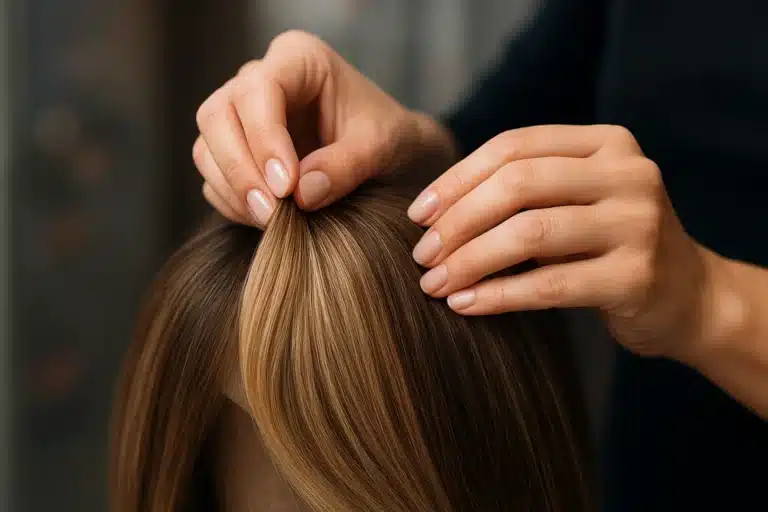
- Foundation & Cap Structure: This is the underlying skeleton. Issues here involve stretched elasticity, warped ear tabs, a torn lace front, or a circumference that no longer grips securely.
The “Honest Limit”A knowledgeable wig specialist will always look for the “honest limit”—the point where damage is stacked. For instance, if your wig only has dry ends, it’s easily saved. But if it has a torn lace front, a stretched cap, and severe fiber degradation, the cost of specialized repair may exceed the price of replacement.
Structural Wig Cap Repairs Explained Simply
Understanding wig cap how-tos can save you a lot of headache and scalp pain. Think of a wig cap like a tailored garment. It relies on specific geometry (circumference, front-to-back depth, and temple-to-temple width) to lay flat and feel secure.
Sizing Down (Darting)
When a wig stretches, it often bags at the crown or slips at the nape. Professionals fix this by “darting” the cap—folding and sewing tiny triangles of fabric to reduce circumference, or sewing in heavy-duty internal elastic bands. When done correctly, this eliminates bagging without causing the front lace to pucker and buckle.
Sizing Up
Expanding a tight skull cap wig is highly complex. It requires cutting the foundation and seamlessly matching and sewing in new expansion materials. Crude cutting at home usually results in a wig that unravels or loses its shape entirely.
Fixing Slippage safely
If you’re wondering how to fix a skull cap wig that constantly slides backward, the solution usually lies in reconstructing the nape tension or replacing worn-out internal silicone grips, rather than aggressively pulling the adjustable straps, which can distort the hairline.
Re-Wefting vs. Hand-Tied Knot Ventilating
If your wig is shedding or thinning, the repair depends entirely on how the hair was constructed in the first place.
What is Re-Wefting?
Re-wefting involves resewing loose hair tracks (wefts) along the back and sides of the cap using curved needles and heavy-duty nylon thread. Because this is somewhat similar to traditional sewing, many people with sewing experience can manage minor re-wefting at home.
What is Ventilating?
Ventilating is the delicate, highly specialized art of using a tiny, hook-like needle to knot individual strands of hair into a fine lace or monofilament mesh. When a lace front tears or a part line goes bald, it requires a master benchworker to re-ventilate the area. This is almost never a successful DIY project for beginners.
The Truth About Online DIY Wig Restoration Kits
For $15 to $45, you can buy DIY wig repair kits online. These typically include ventilating needles, curved C-pins, knot sealers, and patches of lace mesh.
Where DIY Kits Excel:These kits are brilliant for minor, cosmetic wig care. If you need to reinforce a loose comb, sew up a tiny tear in the fabric (not the lace), gently de-frizz synthetic ends with a steamer, or do a routine deep-condition, a DIY kit is your best friend.
The 4 Dangerous DIY Pitfalls:However, the internet is full of “hacks” that can ruin your investment. Beware of these common traps:
- The “Boiling Water” Myth: Viral videos suggest boiling frizzy synthetic wigs to smooth them. Standard synthetic fibers (like Kanekalon) will melt or permanently warp under uncontrolled boiling water. Only specific Heat-Friendly HD fibers or human hair can handle high heat, and even then, temperature control is paramount.
- Super Glue on Torn Lace: Applying fabric glue or household super glue to a torn lace front makes the delicate mesh brittle, crystallized, and impossible for a professional to re-ventilate later.
- DIY Hairline Darts: Sewing tucks near the front of the wig to make it tighter often creates visible bulges on the forehead, ruining the illusion of a natural hairline.
- Harsh Solvents: Using aggressive adhesive removers on delicate monofilament bases can strip the materials and loosen the hand-tied knots, causing massive shedding.
Raleigh In-Person Repair Services: Local Specialists & Salons
Sometimes, an online kit simply won’t cut it. Seeking an in-person evaluation in the Raleigh-Durham area allows for tactile head measurements, precise fiber identification, and custom color matching.
The Local Landscape
The Triangle is home to a diverse array of wig experts:
- Medical Boutiques: For alopecia and chemotherapy patients wearing medical wigs, sensitive-scalp cap liners and warranty protections are vital. Boutiques specializing in cranial prostheses offer private fitting rooms and ensure that any structural cap alterations (like darts or elastic replacement) utilize hypoallergenic threads that won’t create painful pressure sores.
- Full-Service Lace Spas: Salons focusing on cosmetic and fashion wigs excel at lace track adjustments, deep-cleaning, custom re-styling, and immediate turnaround refreshes.
Cost-to-Value Repair Thresholds
- Minor DIY Maintenance: $0 – $35 (Replacing a clip, gentle detangling).
- Local Raleigh Professional Cap Alterations: $50 – $175 (Sizing down via nape darts, perimeter elastic replacement, track re-wefting).
- Specialist Bench Work: $150 – $500+ (Micro-ventilating bald spots on a lace front or fully reconstructing torn lace).
Local Raleigh Salon vs. DIY Kit: The Practical Decision Matrix
How do you choose? Here is an objective breakdown to guide your decision:
- Routine Wig Maintenance (Washing, detangling, replacing a clip):
- DIY Kit: Perfect. Low risk, low cost, immediate turnaround.
- Stretched Cap / Crown Bagging:
- DIY Kit: High risk of distorting the hairline if you don’t know how to place a dart.
- Local Salon: Ideal. They can measure your head and strategically place darts for $50-$100.
- Torn Lace Front / Bald Parting Space:
- DIY Kit: Extremely high risk. Glue will ruin the lace; ventilating takes months to learn.
- Specialist Bench: Required. Re-ventilating delicate lace demands professional craftsmanship.
- Specialized Medical Needs (Chemo/Alopecia):
- DIY Kit: Not recommended. Bulky DIY hand-sewing creates pressure sores on sensitive scalps. Unauthorized alterations can also void medical insurance coverage and manufacturer warranties.
- Local Medical Boutique: Necessary. They use seamless, friction-free techniques designed specifically for sensitive skin.
Practical Next Steps & Preventative Care
The best way to handle wig repair is to prevent severe damage from happening in the first place. Good daily habits—such as using proper wide-tooth comb mechanics, avoiding placing heavy conditioner near hand-tied roots (which loosens the knots), and using satin storage caps—extend the life of your hairpiece immensely.
If you decide you need local Raleigh expertise, prepare for your consultation. Wash your wig gently beforehand, take note of specific pressure points on your scalp, and be ready to ask your stylist questions like: “Do you perform re-wefting in-house, or do you outsource your ventilating work?”
Embrace the DIY kit for gentle, daily care, but know that when structural foundation issues or delicate lace tears arise, trusting local experts is the safest way to protect your investment.
Frequently Asked Questions
Why is my wig cap slipping or bagging at the crown?
Cap slippage usually happens when the internal elastic bands wear out over time, or the overall circumference of the wig has stretched from daily wear. A professional can “dart” the cap (sewing in small fabric folds) or replace the elastic tension band to restore a snug, custom fit.
Can torn lace or a bald spot in my wig part be repaired, or do I have to buy a new one?
It can absolutely be repaired! A skilled professional can patch torn lace and use a process called “ventilating” to hand-tie new strands of hair into the bald spots. However, if you have applied super glue or harsh adhesives to the tear at home, the lace may be permanently crystallized and beyond repair.
What is in a wig repair kit, and do I need one?
A standard DIY repair kit includes curved needles, nylon thread, T-pins, knot sealer, and sometimes extra clips or combs. Every wig wearer should have a basic kit for minor emergencies (like a loose comb), but they should not be used for structural cap resizing or delicate lace repair.
Will altering the cap or re-wefting void my medical cranial prosthesis warranty?
Yes, it very well might. For medical wearers with alopecia or undergoing chemotherapy, unauthorized DIY structural alterations can void manufacturer warranties and complicate insurance claims. Always take a cranial prosthesis to a certified medical wig specialist for repairs.
How to fix a wig that is frizzy, matted, or dry?
If it’s human hair, it needs intense moisture therapy and protein treatments. If it is synthetic, the frizz is actually friction-damage (micro-tears in the plastic fibers). Synthetic frizz must be gently smoothed with specialized low-heat tools or professional steaming—never with uncontrolled boiling water, which can melt the fibers.