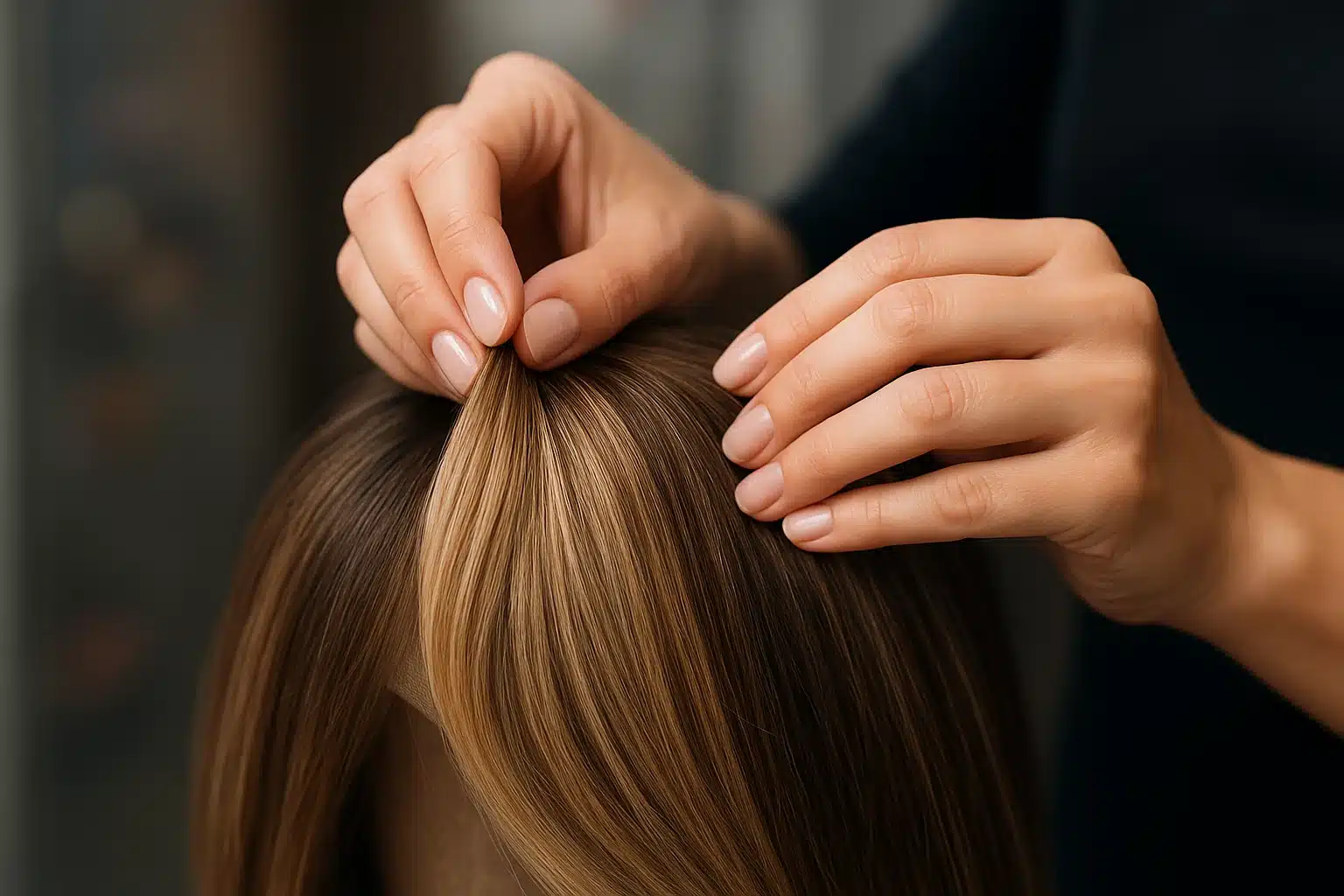
When stepping into the world of alternative hair, almost every shopper shares the same quiet anxiety: the fear of the “helmet.” We’ve all seen wigs that look exactly like what they are—flat, uniformly colored, and completely artificial. The secret to a truly undetectable hairpiece doesn’t just lie in the lace construction or the cut; it rests almost entirely on the science of color matching and multi-tonal dimensional blending.
If you are exploring the top wig stores in San Antonio in search of a flawless, natural-looking match, you probably already know that browsing standard color swatches online isn’t enough. Achieving true realism—especially if you are trying to seamlessly integrate a topper with your biological hair—requires moving beyond off-the-shelf shades. It demands an understanding of optical light reflection, level systems, and the customized root work offered by skilled local colorists.
Let’s pull back the curtain on how elite wig customization actually works, so you can walk into your next salon consultation with total confidence.
The Monolithic Color Trap: Why Single-Tone Wigs Look Fake
The reason so many wigs look unnatural is due to a phenomenon we call the “monolithic color trap.” Natural, biological human hair is never just one color. If you were to look at a healthy head of natural hair closely, you would see between 10 to 14 distinct micro-tones. Sunlight naturally lightens the surface layer, the roots remain darker, and individual strands vary slightly in pigment.
Many standard wigs feature a single-process dye. Even if that single color perfectly matches your natural base level, the absence of micro-pigment variation reads to the human eye as artificial. True realism requires an interplay of depth, light refraction, and root diffusion.
The Science of True Color Matching
Before you sit down with a wig specialist, it helps to understand the language of hair color. Professional colorists don’t just see “brown” or “blonde”; they see a combination of depth, tone, and light reflection.
Decoding the Level and Tone System
Every hair color is built on a universal 1 to 10 (or sometimes 12) depth scale.
- Level 1 is jet black.
- Level 10 is the palest Scandinavian platinum blonde.
Once the depth level is established, colorists look at the undertone. Undertones can be warm (gold, copper, red), cool (ash, violet), or neutral/beige. Matching a wig to your skin tone requires balancing these undertones. For instance, if your skin has warm, olive undertones, an ashy, cool-toned blonde wig might wash you out, while a golden, honey-toned blonde will make your complexion glow.
The Metamerism Warning (and the “Three-Light Test”)
Have you ever purchased a sweater that looked dark brown inside the store, but turned a vibrant plum purple when you walked outside? That’s called metamerism—the scientific phenomenon where two colors match perfectly under one light source but clash drastically under another.
This is the biggest pitfall in wig shopping. A wig might look perfectly matched under the 2700K incandescent lights of a salon mirror, only to look remarkably brassy or completely mismatched under the harsh 5000K midday Texas sunlight or cool LED office lighting.
The Insider Tip: Always use the “Three-Light Protocol” during a consultation. Ask your specialist if you can examine the hair swatch in indoor warm light, near a window for natural shade, and, if possible, in direct sunlight.
Anatomy of a Custom Blend: Creating Movement and Depth
To avoid the monolithic color trap, high-quality wigs and toppers use advanced dimensional coloration techniques. Master colorists use specific industry terminology to describe these blends:
- Piano Blend (P-Tone): Side-by-side micro-ribbons of color that create high-definition light reflection, much like the keys on a piano.
- Balayage: Hand-painted, graduated depth that mimics the natural sun-kissed lightening of biological hair over 6 to 8 weeks of growth.
- Tipped & Frosted Formulations: Concentrated illumination placed at the surface and ends of the hair, preventing the perimeter from looking too heavy or dense.
- The Root Smudge (Shadow Root): This is perhaps the most critical element for realism. A shadow root that is 1 to 2 levels darker than the rest of the hair provides the illusion of biological hair growing straight from the scalp follicle.
Synthetic vs. Human Hair Chemistry: What Can Actually Be Blended?
A common misconception is that you can buy any wig and take it to your regular hair salon for a custom dye job. In reality, the material of the wig dictates its chemical limitations.
Synthetic Fiber Wigs: Standard and heat-friendly synthetic fibers are made from pre-pigmented polymers. They do not have a cuticle, meaning standard oxidative salon dyes will physically ruin them. Custom blends in synthetic wigs are achieved through factory engineering—mixing differently colored strands together during the manufacturing process.
Human Hair Wigs: Made from true keratin, human hair pieces (like Remy or European hair) are receptive to custom salon balayage, lowlighting, and deposit-only glossing. However, there is a catch we call “The Bleach Trap.” Attempting to aggressively lighten a dark human hair wig can permanently destroy the delicate, hand-tied knots at the lace foundation, causing the wig to shed massively. This is why professional, specialized customization is essential.
Navigating San Antonio’s Premier Custom Color Salons
Fortunately, San Antonio is home to a robust network of specialized boutiques that understand the nuances of custom blending, matching, and physical swatch consultations.
- Benjamin Hair & Co. (North Loop 1604 W): Renowned for their bespoke human hair toppers, this salon excels in custom balayage and root tinting. They are particularly skilled at the precise physical blending required to marry a hairpiece seamlessly with your biological hair.
- HER Beauty Brands (N Loop 1604 W): Offering high-touch, private consultations, this studio specializes in personalized color and style matching for 100% human hair units, delivering ready-to-wear custom cutting.
- San Antonio Wigs & Hair Salon (West Ave): A trusted destination providing private, personalized styling consultations tailored heavily toward medical and aesthetic hair-loss integration.
- Other Notable Destinations: Boutiques like Jovonne Wig Salon, The Pink Boutique, and New Concept Wig Salon also offer various levels of localized in-person execution that far exceed what you can get from ordering blindly online.
Furthermore, a local expert understands the local environment. South Texas UV intensity is notorious for accelerating warm-tone brassiness in human hair wigs. A San Antonio master colorist can formulate specialized violet or blue deposit-only toning masks to keep your custom blonde or brunette shades perfectly balanced despite the Texas sun.
The Shopper’s Vetting Checklist
When you visit a local wig atelier for a custom color match, watch out for the “Perimeter Error.” This happens when a shopper tries to match a hairpiece to the dry, sun-lightened split ends of their biological hair, rather than the live root and temple perimeter where the piece will actually sit.
To ensure you are getting top-tier service, ask your colorist these questions:
- “Does this manufacturer color ring reflect exactly how the color will look on a high-density cap?” (Higher density wigs often read 1-2 levels darker than a thin swatch).
- “If we custom-tone this human hair piece, what is your protocol for protecting the hand-tied knots at the lace foundation?”
- “Can we view these swatches near the window before we finalize the order?”
Frequently Asked Questions (FAQ)
What do the letters and numbers on wig colors mean?
Manufacturers use a shorthand code. Numbers usually indicate the depth level (e.g., 4 is dark brown, 27 is honey blonde, 613 is platinum). Letters indicate the blending style: “R” or “SS” means Rooted/Shadow Shade, “F” means Frosted, and “P” means Piano blend. A code like 12FS8 typically means a level 12 blonde, frosted, with a level 8 shadow root.
How do I match a hair topper to my thinning natural hair?
Always match the topper to your biological hair’s root and mid-shaft color, not the ends. A topper sits at the crown, so if the root color clashes, the transition will be obvious. A skilled local stylist can add a custom root smudge to the topper to make the blend undetectable.
Can I take my human hair wig to my standard hair salon to get dyed?
It is highly discouraged unless your stylist is specifically certified in alternative hair. Wigs are chemically processed differently than growing hair. Standard salon bleach and high-volume developers can melt the lace, loosen the knots, and cause irreversible shedding.
Will the Texas sun ruin my custom wig color?
Prolonged UV exposure causes oxidation, which brings out unwanted warm (red/orange) undertones in human hair wigs. You can protect your investment by using UV-protectant sprays designed for alternative hair, wearing a hat during peak sun hours, and having a wig specialist apply a deposit-only toner every few months.
Next Steps on Your Hair Journey
Transitioning into wearing wigs or hair toppers doesn’t mean you have to sacrifice the dimensional, beautiful hair color you love. By understanding the science of light, depth, and custom blending, you are no longer just a shopper—you are an educated consumer.
Take the time to schedule an in-person consultation at a reputable local studio. Feel the swatches, check the colors in natural light, and ask questions about root depth and undertones. The perfect, undetectable match isn’t an accident; it’s a carefully crafted blend designed uniquely for you.