
If you have ever ordered an afro-textured wig online only to unbox something that looks suspiciously like a generic, shiny loose wave, you already know the struggle. Navigating the world of natural hairpieces can be incredibly frustrating when brands use terms like “curly,” “kinky,” and “coily” interchangeably. When you are looking for a true 4C texture but the industry keeps handing you 3B ringlets, the disconnect can cost you both time and money.
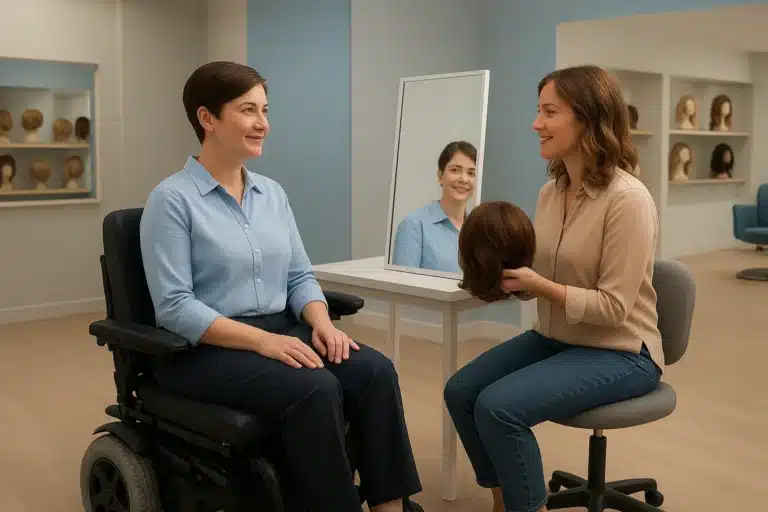
The truth is, finding a wig that perfectly mimics authentic natural hair requires more than just looking at stylized photos on a screen; it requires tactile evaluation. Being able to touch the hair fibers, inspect the lace, and understand how the unit will behave is crucial. That is exactly why taking the time to explore wig shops in Tulsa OK is a game-changer for local residents. By stepping into local stores, you bypass the guesswork and gain the ability to match curl diameters, density, and cap construction to your specific needs in real time.
Let’s break down the science of textured wigs, how to navigate Tulsa’s unique climate, and what to look for when you are shopping locally.
Decoding the Texture Spectrum: Curl, Coil, or Kink?
The biggest hurdle in finding the perfect textured wig is understanding the nomenclature. Hair typing isn’t just marketing jargon; it’s basic geometry. Understanding the difference between an S-pattern and a Z-pattern will completely change how you evaluate a human hair kinky wig at the counter.
Here is an easy way to visualize curl patterns, using what we call the “Sharpie to Crochet Needle” rule:
- Type 3B–3C (Curly): Think of these as distinct corkscrews. A 3B curl has the diameter of a Sharpie marker, while a 3C curl is closer to the size of a standard pencil. These units feature a continuous, looping “S” pattern.
- Type 4A (Coily): These are tight spring-coils with the circumference of a crochet needle. They retain an S-pattern but are densely packed, offering significant volume.
- Type 4B–4C (Kinky): This hair features an angular “Z” pattern. Rather than curling around in a loop, the hair strand crimps in sharp angles. This structure creates maximum visual density and that beautiful, cloud-like silhouette.
The Shrinkage Reality & Volume Mathematics
When you buy a straight wig, a 16-inch length falls right at your collarbone. But textured hair introduces a fascinating challenge: shrinkage.
Stretched Length vs. Resting Drop
Many buyers experience “shrinkage shock” when they purchase highly textured units. A 4C kinky wig that measures 20 inches stretched will often have a resting drop of just 12 to 14 inches. When shopping in Tulsa boutiques, always ask the sales associate to clarify if the listed length is the resting length or the stretched length so you don’t end up with a bob when you wanted a mid-back flow.
The Density Trap
In the wig industry, 180% to 200% density is often marketed as the gold standard for a full, luxurious look. However, this rule applies mostly to straight or wavy hair (Type 1 and 2). Because Type 4 coils create massive outward expansion (volumetric displacement), a kinky or coily wig at just 130% to 150% density will yield the equivalent visual fullness of a 200% straight wig. Buying a 200% density 4C wig will often result in an unnatural, helmet-like silhouette that is difficult to style and heavy to wear.
Surviving the Oklahoma Climate: Fibers and Humidity
Tulsa is known for its humid subtropical climate, with summer humidity levels frequently exceeding 70% to 80%. This microclimate dictates how your wig will behave, making your choice of hair fiber a critical decision.
- Unprocessed Human Hair: Human hair cuticles react to Tulsa’s high dew points just like hair growing out of your scalp. They absorb ambient moisture, which can cause excessive volume ballooning and frizz. If you opt for human hair, you must treat it with lightweight, anti-humectant sealants to block the humidity.
- Synthetic Fibers: Modern, heat-resistant synthetic fibers have incredible “curl memory.” They won’t swell in the Oklahoma humidity. However, their kryptonite is friction. Synthetic coily wigs are prone to tangling aggressively at the sweaty nape of the neck during hot summer days. Using a silicone-based friction guard on the underside of the wig will extend its lifespan significantly.
Cap Construction for Textured Hair
Achieving a seamless blend with textured hair is heavily dependent on the foundation of the wig.
- Lace Fronts and Full Lace: These provide the most natural-looking hairlines, allowing you to part the hair anywhere. However, they require careful plucking and lace tinting to match your scalp seamlessly.
- Glueless Innovations: For those who want to protect their natural edges from adhesives, high-quality glueless lace wigs are fantastic options. They use adjustable bands and combs to sit securely on the head without glue or tape.
- U-Parts and Half-Wigs: These allow you to leave out a portion of your natural hair to blend with the wig. If you choose this route, it is vital to ensure the wig’s texture exactly matches your leave-out so you don’t have to resort to damaging heat tools every day to force a blend.
For beginners looking for the easiest possible application, grab and go wigs that require zero styling or cutting of lace are an excellent introduction to protective styling.
A Compass to Tulsa’s Wig Store Corridors
Tulsa has a rich ecosystem of beauty destinations, but not all stores cater equally to natural hair textures. When you are ready to shop, understanding the layout of the city’s beauty supply landscape will save you hours of driving:
- North Tulsa (Pine/Peoria & Utica): This area is home to stores with deep cultural roots. If you are looking for authentic ethnic hair centers that carry a wide variety of 4A-4C textures, closures, and frontals, this is your starting point.
- East Tulsa (Sheridan Corridor): Known for massive, high-volume beauty supply warehouses, this corridor is great for variety. You’ll find long aisles of boxed synthetic units as well as diverse human hair bundles.
- Central Tulsa (Harvard Ave): Stores in this area tend to offer more boutique, curated selections. It’s a quieter shopping experience where you can take your time browsing.
- South Tulsa (71st & Memorial): This corridor leans heavily into full-service fitting. If you want a more guided experience where staff will measure your head and help you try on different cap constructions, these locations are ideal.
The Counter-Side Inspection Protocol
Before you check out, always perform a tactile inspection:
- Check the wefts: Are they sewn tightly, or does the hair shed immediately when you run your fingers through it?
- Examine the lace: Is it a stark, ashy white, or does it feature transparent/HD lace that can be easily tinted to your skin tone?
- Inspect the knots: Are the knots at the hairline large and dark, requiring bleaching, or are they small and delicate?
- Feel the ends: Do the coils feel incredibly dry and brittle right out of the package? (If so, pass on it).
Protecting Your Investment: Texture Maintenance
Once you have secured the perfect unit, maintaining that texture requires a specific approach. Never dry-brush a kinky or coily wig. Dry brushing shatters the curl memory, causes severe frizz, and stretches out the Z-pattern into an unrecognizable puff.
Always follow the “wet-with-slip” rule. Detangle only when the hair is damp and saturated with a slippery conditioner or detangling spray, working patiently from the ends up to the roots with a wide-tooth comb or your fingers. At night, protect your unit from friction by storing it on a mannequin head or inside a silk bonnet to preserve the curl structure.
Frequently Asked Questions About Textured Wigs
What is the difference between “kinky coily” and “curly” hair in wigs?
Curly hair (Type 3) features a loopy, continuous S-pattern, like a corkscrew. Coily hair (Type 4A) is a very tight, densely packed spring. Kinky hair (Type 4B/4C) features sharp, zig-zag angles rather than round loops, creating a beautiful, dense, cotton-like appearance.
Why does a 14-inch kinky curly wig look like an 8-inch bob?
This is due to shrinkage. Tightly coiled and kinky hair can shrink up to 50% to 75% of its actual length. When purchasing, always account for this shrinkage and buy a unit that is mathematically longer if you want a specific resting length.
Why is my coily wig tangling at the nape so quickly?
This is usually caused by friction against your clothing (especially collars) and the natural heat/sweat from your neck, which is especially common in humid environments like Tulsa. Using a silicone-based friction defense spray on the nape area of the wig can drastically reduce this tangling.
How do I know what density to choose?
For straight wigs, 150% to 180% density is standard for a full look. Because Type 4 hair expands outward, 130% to 150% density is usually more than enough to create a voluminous, natural-looking silhouette without feeling heavy.
Continuing Your Hair Journey
Understanding hair geometry, density, and shrinkage is the first step to becoming an empowered wig shopper. By learning how these elements interact with the local climate and knowing exactly what to look for on the shelves of your local beauty supply store, you eliminate the anxiety of protective styling.
While exploring your local corridors is invaluable for tactile learning, having a trusted educational resource ensures you always make informed decisions. At Wig Superstore, we believe in providing the education, compassion, and high-quality options you need to feel confident at every step of your hair journey. Whether you’re hunting for the perfect Type 4 coil or simply trying to navigate cap constructions, knowing your textures changes everything.