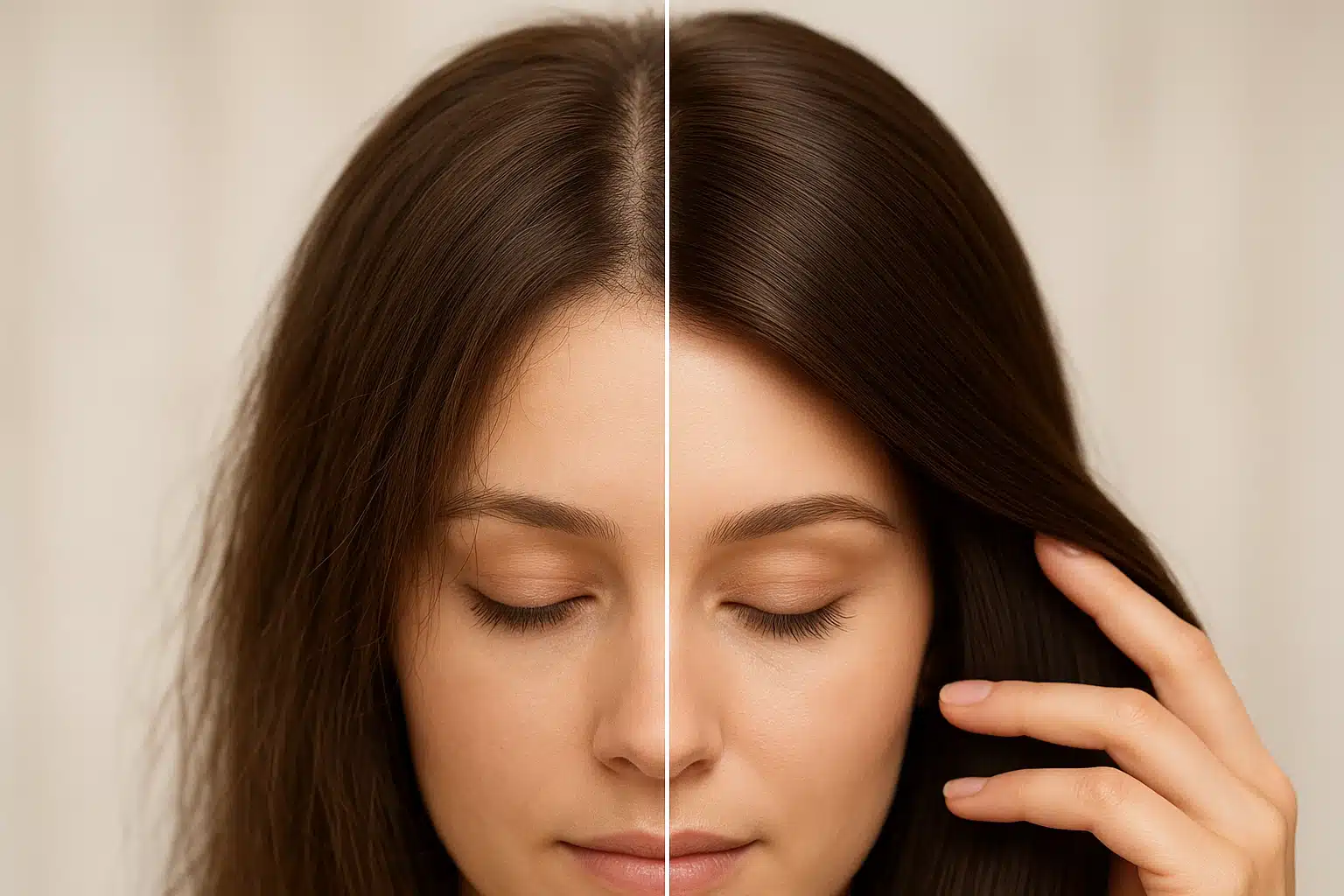
There is a distinct, heart-sinking feeling that comes with watching a beloved wig lose its luster. Maybe you’ve noticed your premium human hair unit thinning along the delicate lace parting line, or your favorite everyday synthetic piece has developed a stubborn, frizzy tangle right at the nape of the neck. For many wearers, these signs feel like the end of the road—a signal that it’s time to reluctantly retire a significant financial and emotional investment.
But what if that isn’t the case? When investing in alternative hair, finding the perfect piece is only the first part of your journey. If you’ve spent time navigating the top wig shops in Tulsa OK, you already know that high-quality wigs are carefully constructed works of art. Just like a tailored suit or a luxury vehicle, they aren’t meant to be discarded at the first sign of wear. Professional restoration, re-ventilation, and cap reconstruction can breathe months—or even years—of vibrant life back into your hairpiece at a fraction of the cost of buying a new one.
Let’s pull back the curtain on the science of wig restoration, explore why viral internet DIY hacks might be secretly destroying your unit, and discover how to navigate local repair services right here in Green Country.
The Anatomy of Aging Alternative Hair
To understand how a wig is repaired, we first have to understand why it degrades. Wigs age differently depending on their fiber chemistry and cap construction.
The Mystery of the Disappearing Hair: Knot Integrity
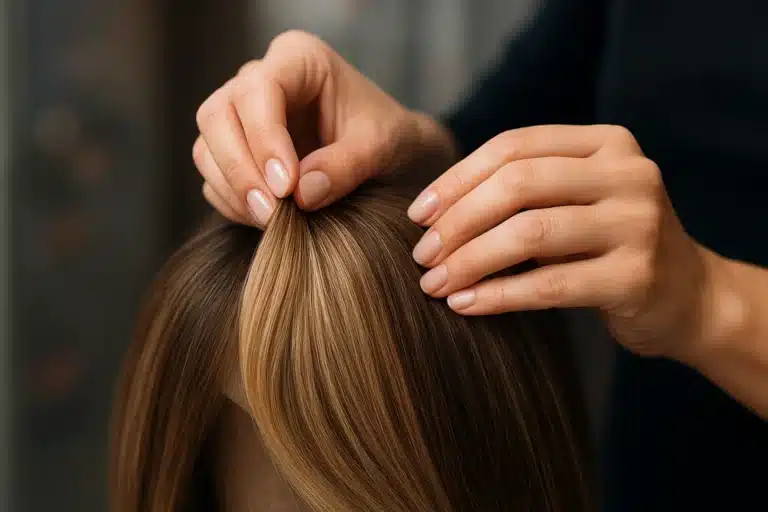
If you’ve noticed your lace wig shedding, you’re experiencing a breakdown in “knot integrity.” Every single hair on a high-quality lace front is hand-tied into microscopic mesh cells using tiny knots. Over time, friction from styling, aggressive brushing while the hair is wet, or improper removal of lace adhesives causes these knots to loosen and slip.
Here’s the ultimate truth about wig shedding: Once a knot slips out, no miracle shampoo or deep conditioner can make it grow back. The only way to restore that lost density is through physical re-ventilation (which we’ll explore below) or a complete closure replacement.
The Thermoplastic Threshold: Understanding Synthetic Fiber
Synthetic hair isn’t actually hair—it’s an extruded plastic polymer, typically a modacrylic fiber. These fibers have a specific “molecular memory” baked in at the factory.
Over time, friction against your collar causes the ends of these fibers to fray and tangle. Because it is a thermoplastic, synthetic hair responds drastically to its environment. Here in Oklahoma, our extreme weather plays a major role. Tulsa’s high-humidity summers can alter synthetic static, while our dry winter heating cycles sap moisture from the environment, making the fibers brittle.
Human Hair: Cuticles and Hydration Loss
Unlike your natural biological hair, human hair wigs no longer receive nourishing oils from a scalp. Without a continuous supply of sebum, the hair cuticles (the shingle-like outer layer of the hair shaft) become dehydrated and lift. In Tulsa’s summer humidity, these lifted cuticles swell with moisture from the air, causing severe frizz and tangling, while winter leaves them desperately parched and prone to snapping.
Stop the Scroll: Why Viral DIY Hacks Destroy Your Investment
The internet is flooded with quick-fix wig tutorials. Unfortunately, treating a precision-crafted hairpiece with household chemicals usually results in permanent damage. Here are the three most dangerous myths you need to avoid:
1. The Fabric Softener Fallacy
The Myth: Soaking a matted synthetic wig in a mixture of water and household fabric softener will make it silky again.The Reality: Fabric softeners are designed for porous cotton, not non-porous plastics. They coat your synthetic wig in a heavy silicone film. While it might feel slick for a day, this sticky film acts like a magnet for microscopic dust and environmental debris. Within a week, the friction matting will return twice as aggressively.
2. The Crude Sewing Repair
The Myth: If you tear your delicate Swiss or HD lace, just stitch it back together with clear nylon fishing line or standard thread.The Reality: Sewing directly through a lace tear without properly reinforcing the underside creates uneven tension. As soon as you put the wig back on your head, the stretch causes the repair to pucker, creating a visible, unnatural ridge right on your hairline.
3. Harsh Adhesive Solvents
The Myth: Scrubbing hardened lace glue with acetone or harsh rubbing alcohol is the fastest way to clean your cap.The Reality: Acetone rapidly degrades the polyurethane ear tabs and delicate Swiss lace of your wig. Scrubbing also pulls at the delicate knots we mentioned earlier, accelerating hair loss. Proper glue removal requires emulsification using gentle citrus-based or medical-grade solvents that melt the glue without stressing the mesh.
The Masterclass: Inside Professional Wig Restoration
So, if DIY fixes are off the table, what exactly happens when you hand your unit over to a restoration professional? A true wig artisan uses clinical, precision techniques to rebuild your piece.
Lace Re-Ventilation
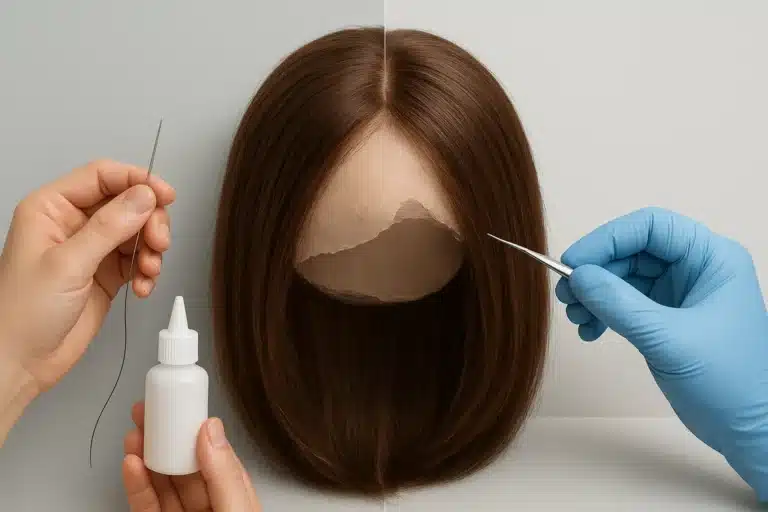
This is the art of restoring a receding wig hairline. Instead of clumsily sewing in a bulky track or hair weft (which destroys the illusion of a natural scalp), a professional uses a specialized ventilating needle. They meticulously hand-tie individual hair follicles back into the open cells of the lace. By strategically using single knots at the very front hairline for a seamless look, and double knots further back for durability, they seamlessly restore the wig’s original density.
Professional Fiber Resurfacing
For damaged synthetic wigs, professionals don’t use fabric softener. Instead, they utilize controlled indirect steam. By applying steam at precise temperatures (usually under 160°F–180°F for standard modacrylic fibers), they gently heat the plastic just enough to reset its factory molecular memory without melting it, smoothing out the frayed ends entirely.
For human hair, professionals perform deep-penetrating protein and lipid infusions that artificially rebuild the stripped cuticles, sealing them shut for a vibrant, healthy shine.
Structural Cap Reconstruction
A professional bench-worker can also perform invisible ladder stitching to mend torn lace, patch the underside to prevent puckering, replace shot elastic bands, install fresh silicone grips, and swap out broken comb clips to ensure your wig fits as securely as the day you bought it.
Navigating Tulsa Services: The “50% Rule”
How do you know when it’s time to seek local repair services versus shopping for a new piece? Industry experts swear by The 50% Rule.
If the quoted cost of repairing and re-ventilating a wig exceeds 50% of the cost to replace it (common with unbranded, lower-tier synthetic units), it is usually more economical to replace it.
However, if you own an $800 to $2,500 European human hair unit or a medical cranial prosthesis, investing $150 to $300 in a professional restoration is overwhelmingly the superior financial choice.
What to Expect Locally: If you drop off your wig at a reputable Tulsa-area salon or wig specialist, typical turnaround times for basic refurbishments—like deep conditioning, detangling, and thermal resurfacing—range from 24 to 72 hours. Costs for basic styling start around $40.
For more intensive structural work, such as complete lace frontal closures or heavy re-ventilation, prices generally range from $200 to $300+, and the unit may occasionally need to be sent out for a 6-week factory reconstruction.
A note for medical wearers: If your wig was prescribed as a cranial prosthesis for medical hair loss, check with your provider. Some insurance allowances may cover professional cap refitting and ongoing maintenance.
Your Daily Longevity Protocol
The best repair strategy is prevention. To extend the time between professional restorations, adopt these daily habits:
- Mind Your Comb Angles: Never brush a wig straight from the root to the tip. Always start detangling at the very bottom ends, slowly working your way up to the cap to minimize tension on the knots.
- Nighttime Protection: Never sleep in your wig unless absolutely necessary. If you must, utilize a silk or satin pillowcase to drastically reduce friction.
- Controlled Removal: Never impatiently peel off a glued lace front. Always wait for your release agent to fully dissolve the adhesive to protect your lace foundation.
Frequently Asked Questions (FAQ)
Can a synthetic wig be revived once it gets severely frizzy at the nape?
Yes! As long as the synthetic fibers haven’t been irreversibly melted by high heat (like an oven blast or curling iron), a professional can use controlled steam to reset the thermoplastic memory, completely removing the frizz and restoring the fiber’s smooth texture.
What is the difference between lace re-ventilation and sewing in a hair track?
Sewing in a track (or weft) involves stitching a solid line of hair onto the wig cap, which is bulky and visible if exposed. Re-ventilation is a microscopic process where an artisan uses a tiny hook needle to tie individual strands of hair directly into the sheer lace mesh, mimicking hair growing naturally from a scalp.
How do I safely clean hardened lace glue buildup without tearing the lace?
Avoid harsh scrubbing and acetone. Use a specialized citrus-based adhesive remover or 99% isopropyl alcohol (used sparingly). Let the solvent sit for a few minutes to chemically break down and emulsify the glue, allowing you to gently wipe it away with a microfiber cloth without tugging at the delicate hair knots.
Can split ends on a human hair wig be repaired, or must they be trimmed?
Just like biological hair, once a human hair wig fiber splits, it cannot be permanently fused back together. Deep conditioning treatments can temporarily smooth the appearance of the split, but a light professional trim is required to prevent the split from traveling further up the hair shaft.
Your Next Steps in Alternative Hair Care
Understanding the anatomy of your wig—and knowing that shedding, tangling, and lace tears aren’t the end of the world—empowers you to wear your hair with absolute confidence. By moving away from dangerous DIY internet hacks and embracing professional, localized care, you can protect your investment for the long haul.
If you are currently experiencing issues with your wig’s cap structure, fiber texture, or density, take a moment to assess it using the 50% Rule. Whether it’s time to seek a revitalizing steam treatment or begin exploring new, high-quality replacement options tailored to your unique style and needs, prioritizing expert care ensures you will always look and feel your absolute best.