Imagine investing in a beautiful, high-quality wig that makes you feel entirely like yourself again. The color is perfect, the cut is incredibly flattering, and the lace front melts seamlessly into your skin. But two hours into your day, it starts inching backward. By hour four, you have a nagging tension headache. What went wrong?
When you first begin exploring the best wig shops in Tulsa OK, it is completely natural to focus entirely on the hair itself. However, the true secret to making a piece look authentic, feel comfortable, and last for years rarely lies in the hair. It lies in the structural foundation—the grips, liners, stands, and adhesives that support it.
For alternative hair wearers in Green Country, figuring out how these accessories work and exactly where to buy them locally can be a frustrating guessing game. Let’s demystify the mechanical physics of wig accessories and map out exactly where you can find these structural essentials across the Tulsa metro today.
Foundation First: Wig Liners and Cap Systems
If you’ve ever worn a wig and felt like your scalp was suffocating, your liner was likely the culprit. Many beginners grab whatever generic nylon stocking cap they can find, but nylon is notorious for trapping heat, absorbing natural scalp sebum, and creating tight friction lines across the forehead.
Instead, think of your liner as a breathable “traction shield” designed to protect your biological hair edges and scalp without compression.
- Bamboo-Viscose Liners: Incredibly soft and breathable, these are fantastic for regulating temperature, especially during humid Oklahoma summers.
- Open-Weave Fishnet Caps: If you have biological hair to pin up, fishnet caps are brilliant. They provide structure to pin your hair flat without adding an extra layer of insulating fabric over your scalp.
The Science of Security: Deciphering Wig Grips
One of the biggest misconceptions in wig wearing is that a wig needs to be strapped on tightly to stay secure. Tightening an adjustable velcro band until the wig stops shifting does not create hold—it creates occipital nerve compression (the dreaded wig headache).
Hold isn’t about tension; it’s about surface friction.
Velvet vs. Silicone
Which grip you choose depends on what is happening on your scalp.
- Silicone Grips: These use “vacuum friction” to stick gently to the skin, making them ideal for total alopecia or bare scalps.
- Velvet Grips: These rely on “micro-hook friction” and are perfect if you have biological hair.
The “Nap Test”
If your velvet grip is sliding, you might have it on backward! Velvet fibers angle in one specific direction. Before putting it on, run your finger across the band. One way will feel smooth, and the opposite way will feel rough (that’s the resistance). You want the rough nap facing backward toward your crown. This creates tiny physical anchors that stop the wig from shifting backward when you talk, smile, or move.
Pro Tip: Use the “4-Finger Rule.” Place the grip four fingers above your eyebrows to ensure it stays completely invisible beneath a lace front.
Protecting Your Investment: Stands, Blocks, and Hardware
If you take only one thing away from this guide, let it be this: Standard solid styrofoam heads can quietly destroy your wig.
Most cheap styrofoam heads are only 19 to 20 inches in circumference, which is significantly smaller than the average human head. Pinning a wig to them can permanently warp the cap’s geometry. Worse, solid styrofoam blocks air circulation. If you place a damp, freshly washed wig on a styrofoam head, moisture gets trapped inside, degrading the delicate lace threading and fostering odors.
The 3 Stands Every Wearer Needs:
- The Collapsible Plastic Stand: Open to the air, these are strictly for post-wash drying. They allow 360-degree airflow, protecting the cap from mildew.
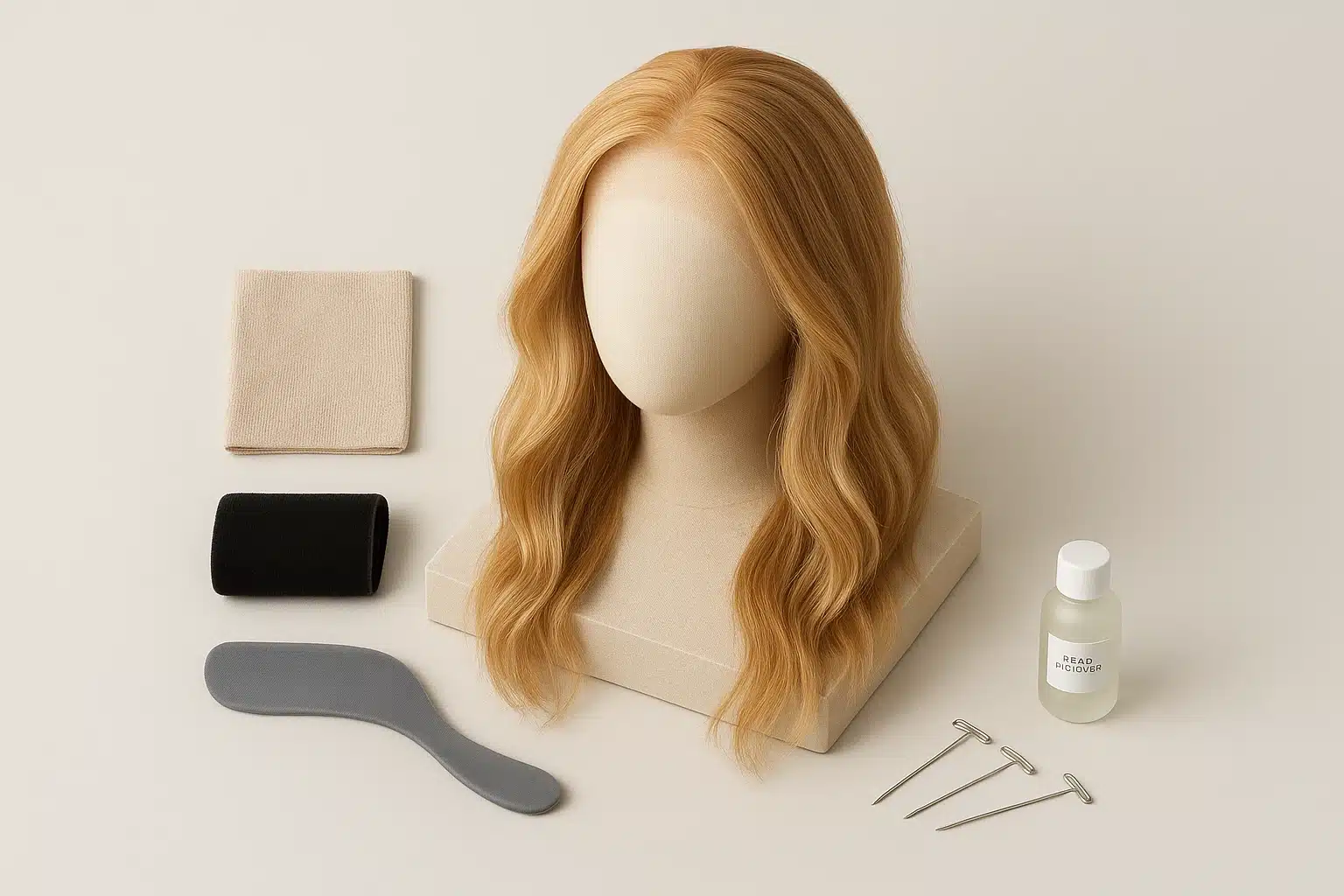
- The Canvas Styling Block: This is your heavy-duty workstation. Unlike styrofoam, canvas blocks come in exact circumferences (21″, 22″, 23″). You must match your canvas block to your actual head size so you don’t over-stretch the cap’s elastane wefts while styling.
- T-Pins: When securing your wig to a canvas block for heat styling, never pin through the delicate front monofilament or lace boundary. Always anchor your T-pins through the reinforced ear tabs and the thicker seam at the nape of the neck.
Application Essentials: Adhesives and Removers
Not every wig requires glue. In fact, daily wearers can usually achieve complete stability using a velvet-lace hybrid grip, preserving adhesives for multi-day wear or active events.
When adhesive is warranted, you have two main routes:
- Tape Strips: Great for easy cleanup and strong hold, especially on polyurethane (poly) perimeters.
- Liquid Water-Based Copolymers: These are generally safer and more breathable for sensitive skin than harsh acrylics.
The Golden Rule of Adhesives: Never pull, tug, or peel a glued wig off your head. You must use a citrus or alcohol-based bond release agent to dissolve the glue. Tugging stretches out the Swiss lace and thins the hair at the hairline. Patience here saves your investment.
Where to Buy Wig Hardware Locally in Tulsa
When you need a T-pin, a canvas block, or a replacement grip immediately, waiting 3 to 5 days for shipping isn’t an option. Tulsa’s retail landscape is actually wonderfully segmented if you know where to look:
East Tulsa Corridors (41st & Memorial)
This area boasts the highest concentration of high-density beauty supply stores.
- Mandy’s Beauty Supply (7212 E. 41st St) and Snatch Worthy Wigs (2607 S. Memorial Dr) are your go-to destinations for extensive adhesive lines, bond removers, specialized lace-front grips, melting bands, and edge tools.
Midtown Hub (Harvard Corridor)
- Thrift Beauty Supply & Wigs (2622 S. Harvard Ave) offers an established, full-service environment. This is an excellent stop for daily maintenance tools, breathable liners, grips, and internal comb attachments.
South Tulsa Pro Suppliers (91st to 103rd Corridors)
If you need structural hardware, head south.
- Armstrong McCall (8222 E. 103rd St) and regional Sally Beauty locations stock professional-grade tools. This is where you will find heavy-duty table clamps (C-clamps), standing mannequin tripods, properly sized canvas blocks, and specialized T-pins.
Quick Diagnostic Troubleshooting
- If your wig is slipping backward: Check the “nap” of your velvet grip. It’s likely facing the wrong direction.
- If you have a red line across your forehead: Your cap or grip is too tight. Loosen the adjustable straps and rely on grip friction, not band tension.
- If your lace is fraying at the front: You are likely using harsh adhesives without proper citrus solvents, or pinning the delicate lace directly to a styling block.
Frequently Asked Questions (FAQ)
Do I need glue to wear a lace front wig?
Absolutely not. Most modern lace front wigs are designed to be “glueless.” A properly fitted cap combined with a good velvet wig grip is more than enough security for daily wear. Glue is typically reserved for highly active days or for wearers who prefer to leave their wig on for several days at a time.
Why do canvas block heads come in different sizes?
Because human heads do! If you measure your head and find you are a 22-inch circumference, putting your wig on a 24-inch block to style it will permanently stretch out the cap. Always buy a canvas block that matches your personal head measurements.
What is the difference between a wig cap liner and a melting band?
A wig cap liner goes under the wig to protect your biological hair and scalp from friction. A melting band is an elastic band wrapped around the outside perimeter of the wig only during the application process. It presses the lace firmly into the adhesive or skin for 10–15 minutes to create a flawless, invisible hairline, and is then removed before you leave the house.
Can I leave my wig on a styrofoam head long-term?
It is not recommended. Styrofoam heads are smaller than human heads, meaning your wig cap will likely lose its custom, snug shape over time. Furthermore, styrofoam does not allow the interior cap to breathe.
***
Understanding the physical foundation of your wig transforms it from an accessory you simply wear into a natural extension of yourself. By curating the right liners, utilizing the physics of grip friction, and investing in proper structural stands from our local Tulsa suppliers, you ensure your wig remains as flawless as the day you brought it home. Keep exploring, keep learning, and give your alternative hair the foundational support it deserves.