Stepping through the doors of a wig boutique for the first time can feel incredibly intimidating. If you are navigating hair loss due to chemotherapy treatments at University Hospitals Seidman Cancer Center or the Cleveland Clinic, managing alopecia, or simply seeking a fresh protective style, the emotional weight of that physical threshold is entirely real. You might be dreading the idea of sitting in an open salon chair, or feeling overwhelmed by a wall of hairpieces that all look identical yet have wildly different price tags.
The good news? You don’t have to walk into this experience blind. To help you understand your local options, we’ve created a comprehensive guide to the best wig stores in Cleveland, OH that highlights reputable boutiques prioritizing your comfort and privacy. But before you even make an appointment, knowing exactly what happens during a consultation, understanding the language stylists use, and preparing your expectations can transform a nerve-wracking chore into an empowering journey of self-discovery.
Here is your step-by-step roadmap for what to expect when visiting a Cleveland wig shop for the very first time.
Demystifying the Wig Lexicon: Decoding Fibers and Caps
Before you start trying things on, it helps to speak the language. The wig industry is full of technical terms that can sound confusing, but they simply describe how the wig is built and what the hair is made of.
The Fiber Spectrum
- Traditional Synthetic Wigs: These are fantastic for beginners because they have “style memory.” You can wash them, let them air dry, and they will snap right back into their original shape.
- Heat-Friendly Synthetic: These fibers allow you to use low-heat tools to change the style, offering more versatility, though they require a bit more maintenance.
- Human Hair: Ranging from thick and textured to fine European hair (often referred to as a “euro wig”), human hair offers the most realistic movement and longevity but requires the same styling effort as natural hair.
The Cap Architecture (Visualized)
Think of the cap as the foundation of a house. It dictates how the wig breathes and moves on your scalp.
- Lace Front: Imagine this as a “contact lens for your forehead.” It features a sheer, invisible mesh at the front hairline where hairs are individually tied, allowing you to pull the hair away from your face naturally.
- Monofilament: This creates a “micro-mesh illusion.” It looks exactly like natural scalp, meaning wherever you part the hair, it appears as though it is growing directly from your own pores.
- 100% Hand-Tied: This provides “second skin movement.” Without heavy fabric ridges, the cap stretches in every direction, making it incredibly gentle for sensitive scalps.
Beginner’s Quick Guide: If your scalp is bare or highly sensitive due to alopecia or chemo, request a Monofilament + 100% Hand-Tied cap. If you have a natural hairline you want to blend and are looking for budget versatility, ask for a Lace Front + Machine-Wefted Back.
Before You Arrive: Your Preparation Blueprint
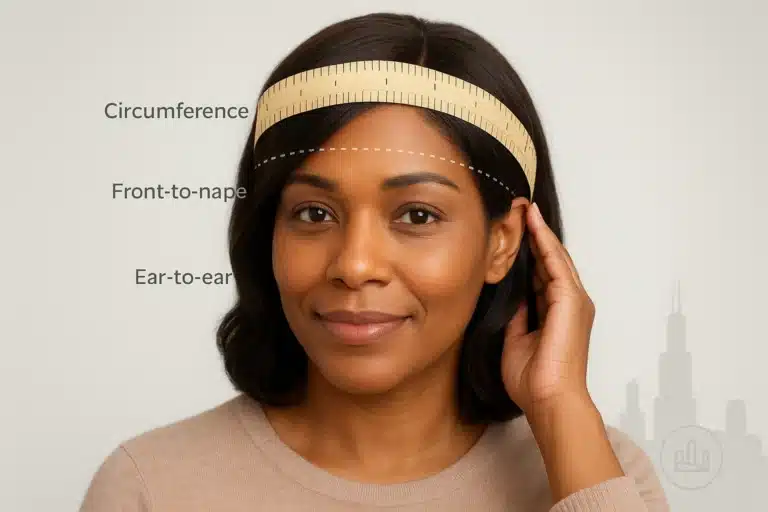
Great wig shopping starts at home. A proper wig fitting relies on accurate head measurements. Before you leave the house, take a soft measuring tape and measure your circumference (around the hairline), ear-to-ear across the top of your head, and front-to-back (from the forehead hairline to the nape of the neck). Knowing if you are a Petite, Average, or Large cap size prevents the headache of an overly tight wig or the insecurity of a loose one.
Next, pack your “Consultation Go-Bag.” Bring a few photos of hairstyles you love, a small clipping of your biological hair if you’re trying to color-match, and consider doing your everyday makeup. Trying on hair without your usual face makeup can sometimes make the reflection in the mirror feel like a stranger.
Inside the Cleveland Boutique: A Minute-by-Minute Walkthrough
Whether you are visiting a specialized medical boutique on the East Side or exploring premium salons in the suburbs, high-quality shops generally follow a similar, respectful process—much like a private wig consultation you would find in any top-tier salon across the country.
Phase 1: The Private Intake
You shouldn’t be trying on wigs in a crowded storefront window. A reputable shop will guide you to a private consultation suite. Your stylist will start by asking about your lifestyle, scalp health, and emotional goals. This is a judgment-free zone.
Phase 2: The Sanitary Cap and Fitting Diagnostic
For sanitation and comfort, the stylist will hand you a thin nylon wig cap to wear over your natural hair or bare scalp. They will then assess your measurements to determine your true cap size. If a wig’s ear tabs buckle outward, the cap is too big. If it rides up in the back, it’s too small.
Phase 3: The Try-On Experience and the “Four-Finger Rule”
As you try on different styles, your stylist will teach you the golden rule of wig wearing: The Four-Finger Rule. The most common beginner mistake is pulling the wig down too far onto the forehead, which immediately looks unnatural. To find your natural hairline, place four horizontal fingers flat against your forehead, resting the bottom finger firmly on your brow bone. Your wig’s lace front should begin right above your top finger.
Note for Diverse Hair Needs: If you are looking for textured options like yaki, kinky straight, or require lace tinting for deeper skin tones, don’t hesitate to ask upfront. While Cleveland has great resources, it’s always good to check a boutique’s specialty before booking. (For example, travelers or out-of-state friends often seek dedicated wig stores in nashville tn or Atlanta for highly specific African American textured customizations, but many premium Cleveland shops offer excellent textured lines as well.)
Phase 4: Custom Shaping
No wig comes out of the box perfectly tailored to your face. The final step involves a professional stylist trimming the bangs, thinning out excess density (to avoid the dreaded “helmet” effect), and customizing the piece to frame your unique features.
Navigating Medical Wigs and Insurance in Cleveland
If you are experiencing medical hair loss, you aren’t just shopping for a fashion wig—you are shopping for a cranial prosthesis.
Many first-time buyers don’t realize that health insurance, HSAs, or FSAs may cover a portion or the entirety of this cost. However, the terminology is critical. If your doctor writes a prescription for a “wig,” insurance will likely deny the claim, viewing it as a cosmetic accessory.
Your Cleveland Medical Reimbursement Flowchart:
- The Prescription: Ask your oncologist or dermatologist (at Cleveland Clinic, UH, or private practice) for a prescription for a “Cranial Prosthesis” due to medical hair loss. Ensure they include the proper billing code: HCPCS A9282 (commonly searched online as the wig cpt code).
- The Boutique Invoice: Purchase your unit from a boutique that can provide an itemized receipt with their NPI (National Provider Identifier) number.
- The Claim: Submit the prescription and the itemized invoice to your insurance provider.
Community Tip: If a custom cranial prosthesis is outside your budget, Cleveland offers incredible non-profit resources. Organizations like The Gathering Place provide free synthetic wigs and care kits for patients currently undergoing chemotherapy.
The “First 72 Hours”: Your Beginner’s Survival Kit
Once you get home, the anxiety can creep back in. How do you keep it on? How do you maintain it? Basic wig care is much easier than you think.
- Securing the Foundation: You rarely need messy tapes or glues. A velvet wig grip (a comfortable band worn under the wig) provides incredible security through natural friction, preventing the wig from sliding back.
- De-Shining: Brand-new synthetic hair often has an overly shiny, unnatural finish. A quick mist of dry shampoo will dull the factory shine and make it look just like natural, healthy hair.
- Combing: Never brush a curly or synthetic wig with a standard hairbrush. Only use a wide-tooth comb to gently detangle from the ends upward.
Red Flags and Green Flags: Knowing You’re in the Right Place
As you embark on your first boutique visit, trust your intuition. Here is a quick framework to help you gauge the quality of a local shop:
Green Flags:
- They offer private consultation rooms with mirrors positioned comfortably.
- They take the time to measure your head before bringing out inventory.
- They are completely transparent about cap construction, fiber materials, and care routines.
Red Flags:
- High-pressure sales tactics or rushing your decision. A good shop respects that you may need 24 hours to think it over.
- Refusal to disclose the brand name or removing tags from the pieces.
- No clear, transparent price tags on the inventory.
Frequently Asked Questions for First-Time Wig Buyers
Will people be able to tell I’m wearing a wig?
Not if it’s fitted properly and customized to your face! Features like lace fronts and monofilament tops mimic natural hair growth so perfectly that even close friends usually can’t tell.
Do I have to try on wigs in front of other shoppers?
You shouldn’t have to. The best wig boutiques in the Cleveland area provide private, discreet consultation rooms to ensure your comfort and privacy.
Are wigs hot and itchy?
They can be if you choose the wrong cap for your needs. If you have a sensitive scalp, opt for a 100% hand-tied cap, which is incredibly lightweight, breathable, and soft against bare skin.
Your Next Steps
Purchasing your first wig is a deeply personal milestone, and feeling apprehensive is completely normal. By understanding the language of wig construction, knowing how to measure your head, and confidently navigating the medical insurance process, you have already taken the hardest step.
Remember, you are entirely in control of this process. Take your time, ask plenty of questions, and give yourself the grace to find a piece that doesn’t just look beautiful, but makes you feel completely like yourself again.