Picture this: You’ve finally found the hairpiece of your dreams. The color is stunning, the style frames your face perfectly, and you step out feeling like a million bucks. But two hours later, you have a pounding headache at your temples, the cap is slowly sliding backward, and you’re counting the minutes until you can take it off. If this sounds familiar, you are experiencing the most common—yet least talked about—challenge in the hair replacement journey: the myth of the “one-size-fits-all” cap.
Wig wearing is often portrayed as a plug-and-play experience, but the reality is that standard “off-the-rack” medium caps only fit about 60% of consumers comfortably. For the remaining 40%, trying to force a standard size leads to severe physical discomfort, slippage, and unnatural “puffy crowns.” If you are beginning your search for localized solutions and exploring wig shops in Sacramento CA to find that elusive perfect fit, understanding the mechanics of cap alterations will completely transform your experience.
Let’s demystify the science of wig tailoring, explore how to troubleshoot your specific fit issues, and highlight exactly where to find specialized alteration services right here in the Sacramento area.
The Reality of the “Average” Cap Size
Most standard wigs are manufactured with a 22-inch circumference. If your head measures under 21.5 inches (requiring small size wigs) or over 22.5 inches (requiring large head size wigs), a standard cap isn’t just an inconvenience—it’s a recipe for discomfort.
When a cap is too small, it acts like a tight rubber band, putting intense pressure on the temporal bones and leading to tension headaches. Conversely, a cap that is too large will chafe against your ears, slide around, and gap at the nape of your neck. The key to a seamless, undetectable look isn’t just the quality of the hair; it’s the physical engineering and structural fit of the foundation beneath it.
The 3D Sizing Masterclass: Going Beyond Circumference
One of the biggest “aha moments” for new wig wearers is realizing that head size is three-dimensional. The industry suffers from a “Three-Measurement Fallacy” where beginners only measure the circumference of their head. While circumference is important, the depth and arch of your skull dictate how a wig actually sits.
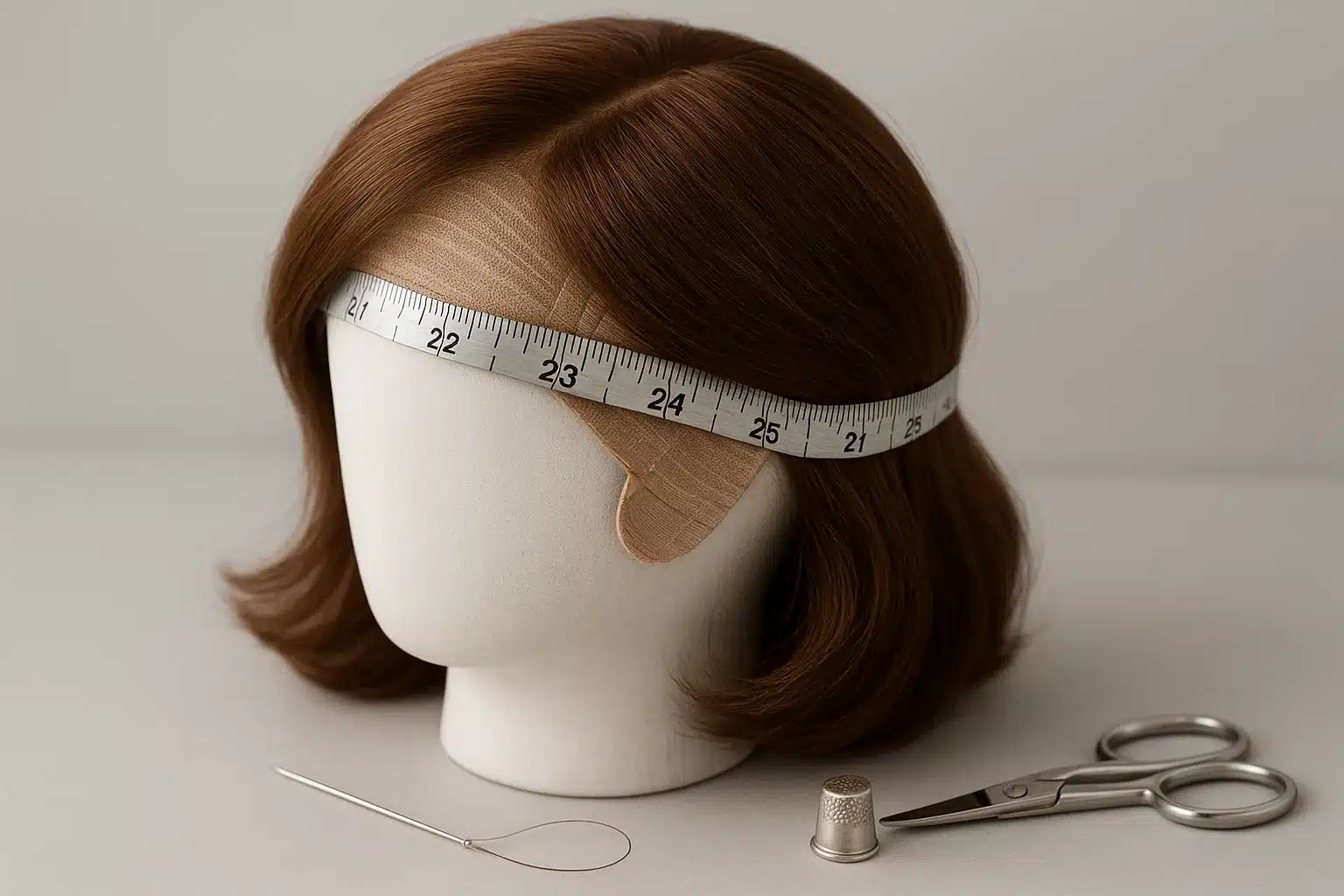
To map your true custom size wig head, you need three foundational measurements:
- Circumference: Wrapped around the hairline, behind the ear, and across the nape of the neck.
- Front-to-Nape: Measured from your front hairline, straight back over the crown of your head, down to the nape of your neck. (This is crucial for preventing deep or shallow crowns).
- Ear-to-Ear over Crown: Measured from the top of one ear, over the top of your head, to the top of the other ear. (This dictates where the ear tabs will rest).
If your circumference is “Average” but your Front-to-Nape is “Petite,” a standard wig will bunch up at the top of your head, creating an unnatural, puffy look.
Structural Troubleshooting: Why Your Wig Hurts (And How to Fix It)
Once you understand your 3D measurements, it becomes incredibly easy to diagnose a poorly fitting wig. Here is a breakdown of common physical symptoms and the structural tailoring needed to fix them:
The Symptom: Your wig slides backward throughout the day, exposing your natural front hairline.
The Root Cause: The cap circumference or depth is too small, causing the wig to pull back toward the crown.
The Tailoring Action: A professional can install a custom elastic band or sew in elastic gussets to give the cap more stretch.
The Symptom: The lace front buckles, ripples, or puckers at your temples.
The Root Cause: The ear-to-ear distance of the cap is too long for your face, leaving excess front lace.
The Tailoring Action: Sewing professional darts to tighten the lace and lay it flush against the skin.
The Symptom: Pain, red marks, or rubbing directly above or behind your ears.
The Root Cause: The wig features low ear tabs that are digging into your sensitive cartilage, or the ear-to-ear measurement is too wide.
The Tailoring Action: A specialist can reduce and shift the ear tabs upward, removing excess material and relocating the structural wire.
The Symptom: A puffy, bulbous, “cone-head” look at the top of your head.
The Root Cause: The crown depth (front-to-nape) is too long for your skull shape, trapping air.
The Tailoring Action: Taking in the excess vertical cap fabric by releasing wefts at the nape and overlapping them.
Professional Cap Alterations vs. DIY Fixes
When a wig doesn’t fit, you have two paths: DIY modifications or professional alterations.
The DIY Approach (For Budget Wigs)
If you have an affordable, basic wefted wig, minor modifications can be done at home. Adjustable velvet-grip bands can be added for security, and temple wires can be gently bent inward to hug your face securely.
If your wefted wig is slightly too large, you can sew a Flat-Seam Dart:
- Mark the excess cap fabric at the back of the wig with chalk.
- Fold the fabric over to form a flat pleat (never fold the lace!).
- Secure the fold with wig clips, then sew it flat against the cap using heavy-duty nylon thread.
Caution: Simple folds can sometimes create bulky ridges. If you have a sensitive scalp due to medical treatments, these DIY seams can cause severe irritation.
The Professional Approach (When to Seek an Expert)
For delicate Swiss lace fronts, expensive human hair pieces, or medical-grade bases, professional tailoring is non-negotiable. Attempting to cut a hand-tied lace base at home will often cause the hair to permanently unravel.
Professionals specialize in skin-safe alterations, which are vital for individuals requiring a cranial prosthesis due to alopecia or chemotherapy. They can expertly add medical-grade polyurethane (PU) strips for glueless wear, replace scratchy materials with bamboo velvet liners, and properly expand a large size wig using custom elastic gussets without damaging the structural integrity of the piece.
Vetted Directory of Sacramento’s Custom Sizing & Alteration Specialists
You don’t have to navigate cap alterations alone or mail your precious hairpiece across the country. For those looking for the best wigs Sacramento has to offer alongside expert tailoring, Northern California is home to several highly specialized studios:
- The Wig Shoppe (Sacramento, CA – Fair Oaks Blvd)
- Specialty: Personalized, in-person fitting consultations. This is an ideal starting point for first-time wearers who need hands-on guidance in selecting their correct initial cap size before making a purchase.
- Tresses by Juless (Folsom, CA – Blue Ravine Rd)
- Specialty: Premium customization. They offer top-tier European human hair tailoring, custom root placement, density thinning, face-framing cuts, and meticulous lace tightening for a hyper-realistic look.
- Elite Hair Loss Solutions (Sacramento, CA)
- Specialty: Medical hair loss and cranial prosthetics. They excel in custom-molded caps, custom base tailoring, and adding non-slip security features perfect for highly sensitive scalps.
- Kathy’s Wigs (Roseville, CA – Melody Ln)
- Specialty: Full structural alterations. A trusted local destination for custom fitting, cutting, restructuring, and deeply modifying human hair wigs.
- Wigs R You (Roseville, CA)
- Specialty: Personal styling and sizing adjustments. They provide comprehensive custom fits for both synthetic and human hair pieces, helping you transition your wig from “off-the-rack” to uniquely yours.
Frequently Asked Questions (FAQ)
Can any wig be resized?
Most wigs can be sized down much easier than they can be sized up. Basic wefted wigs can be downsized by cutting away weft tracks and sewing the cap back together. Sizing a wig up usually requires professional intervention to add elastic gussets at the nape or temples.
Why do I get a headache when wearing my wig?
Wig headaches are almost always a sizing issue. If your circumference measurement is larger than the cap, the wig’s structural band restricts blood flow and puts pressure on your temporal bones. Sizing up, or having a professional add an elastic expansion, will relieve this instantly.
How much do cap alterations usually cost?
It depends entirely on the complexity of the base. Adding a simple elastic band might be quite inexpensive, while intricately taking in a hand-tied lace front or reconstructing ear tabs on a premium human hair wig will require a higher investment for the stylist’s specialized labor and precision.
What is the safest way to alter a wig if I have a sensitive scalp?
Avoid DIY sewing if you have total hair loss, as thick thread knots and folded fabric will rub painfully against bare skin. Always opt for flat, professional alterations and ask your local stylist to line any altered areas with a soft material like silk or diamond velvet.
Your Next Steps to the Perfect Fit
Understanding that a comfortable wig requires precise, 3D measurements is the first step toward reclaiming your confidence. You no longer have to settle for a beautiful hairpiece that hurts to wear. By utilizing the troubleshooting tips above, taking accurate measurements, and leaning on the incredible local talent available in the Sacramento area, your perfect fit is entirely within reach.