
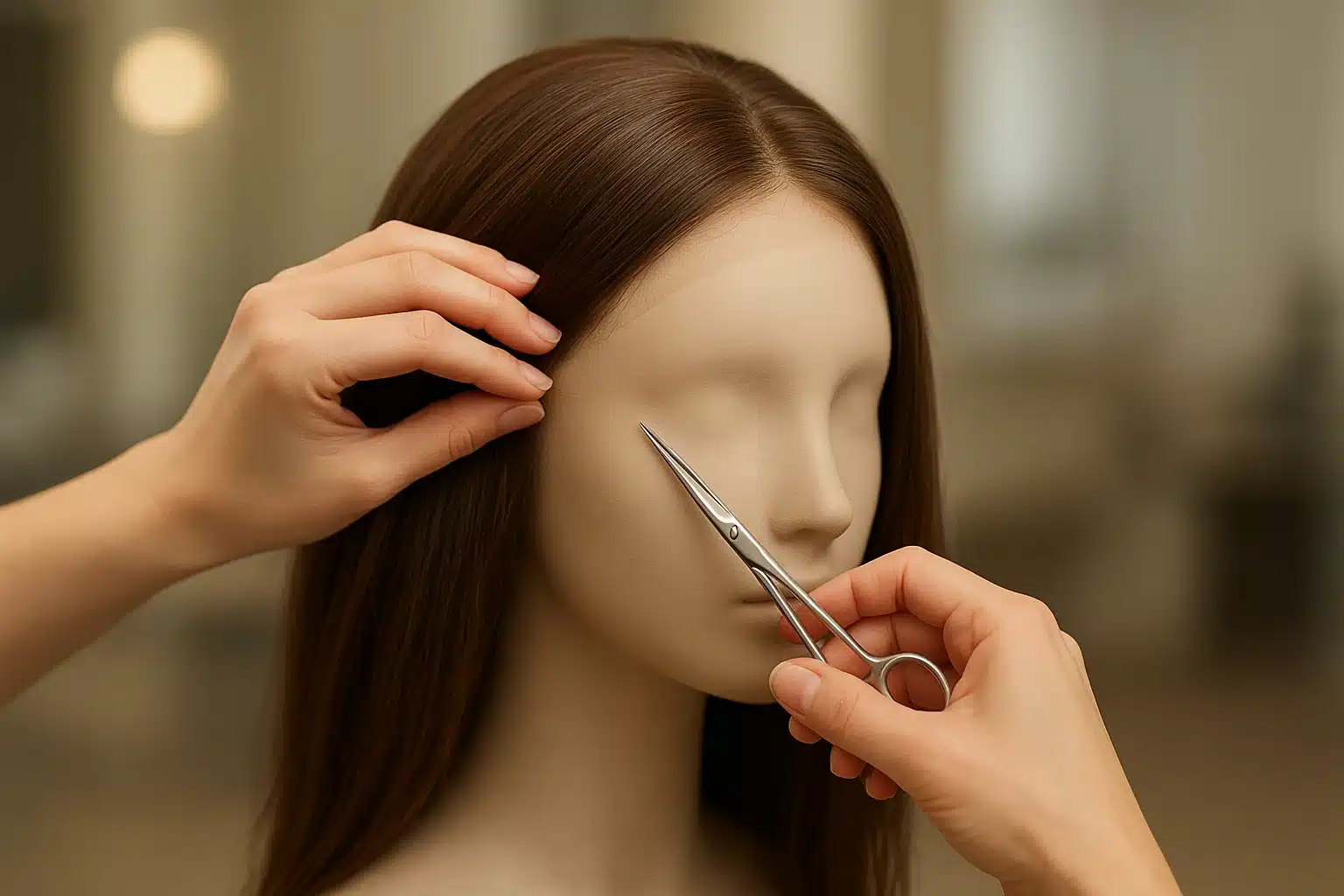
Imagine buying a gorgeous, high-end designer suit off the rack. Even if it’s technically your exact size, it rarely fits perfectly without a trip to the tailor. The sleeves might be a fraction too long, or the waist might need taking in. Wigs operate on the exact same principle. A beautiful, high-quality hairpiece can easily look “wiggy” or feel uncomfortable if it hasn’t been tailored to your unique head shape and features.
If you are just beginning your hair replacement journey, finding the right base piece is your first priority. A great place to start is by Evaluating the Best Wig Stores in San Diego, CA: Your Complete Buyer’s Guide. This resource helps you navigate the local landscape to find reputable inventory. But once you have found a piece you love at a local wig shop San Diego relies on, the real magic begins with professional customization.
Let’s pull back the curtain on the mechanical and artistic process of wig customization, showing you exactly what to look for—and what to ask for—when seeking professional fitting services in San Diego.
Why “Out-of-the-Box” is a Myth: The Anatomy of an Alteration
Many first-time alternative hair wearers assume that once they purchase a wig, their journey is over. In reality, “customization” isn’t just about styling the hair; it’s about weight distribution and scalp tension.
When exploring different wig shops San Diego has to offer, you’ll quickly realize the market is divided. Some locations are purely transactional—you buy the piece and leave. Others, particularly those specializing in compassionate care and medical hair loss, understand that a wig must be properly altered to be wearable all day.
An off-the-rack cap that is even slightly too large can cause friction, leading to skin irritation and a shifting hairline. Conversely, a cap that is too small will create uncomfortable tension headaches. A professional custom fitting ensures your piece feels like a natural extension of yourself.
The Tailoring Process: Sizing, Darting, and Sourcing the Perfect Fit
When you take your wig to a professional for alterations, what exactly are they doing? Here are the mechanical adjustments a skilled technician will perform:
Cap Sizing and “Darting”
If your cap is too large, a professional won’t just pull the adjustable straps tighter—that creates unnatural bunching at the nape of the neck. Instead, they use a tailoring technique called “darting.” Just like taking in a dress, a stylist will sew precise, tiny folds into the foundation of the wig cap. This removes excess bulk and reduces the circumference without ruining the delicate lace structure.
Ear Tab Adjustment
Have you ever worn a wig that dug painfully into the top of your ears? Ear tabs are rigid sections of the cap designed to keep the wig flush against your temples. A professional fitter will adjust the placement and angle of these tabs so they sit perfectly, allowing you to wear glasses or sunglasses comfortably.
The “4-Finger Rule” for Placement
A critical part of a custom fitting is educating the wearer on placement. The golden standard is the “4-finger rule.” If you place four fingers horizontally across your forehead, resting resting right above your brow bone, your wig’s hairline should start exactly at your top finger. A professional will measure your specific forehead dimensions to ensure the cap sits naturally.
The Artistic Customization: Achieving a Flawless, Natural Look
Once the mechanical fit is secured, the artistic customization begins. This is where the highest quality human hair wigs San Diego locals invest in are elevated from simply “hair” to a completely undetectable look.
- Plucking and Density Reduction: Most wigs come heavily dense around the hairline to ensure longevity. However, natural human hairlines are actually quite fine and sparse at the very front. A customization expert will painstakingly “pluck” individual hairs from the front of the lace to graduate the density, mimicking a natural hairline.
- Knot Bleaching and Toning: On lace front pieces, every single hair is tied to the lace with a tiny knot. On darker hair colors, these knots look like tiny black dots on your scalp. Professionals use a gentle bleach to lighten these knots, making the hair look as though it is growing directly out of your scalp.
- Thinning for Realism: Wigs are crafted with uniform density. A skilled stylist will use thinning shears to remove bulk from underneath the top layers, allowing the hair to move and sway naturally in the ocean breeze rather than sitting like a solid helmet.
Navigating the San Diego Climate and Local Market
Unlike traditional retail wig stores in San Diego CA, a premium customization service will factor your lifestyle and local climate into your fitting.
San Diego’s unique weather patterns play a major role in how your alternative hair behaves. If you live near the coast in La Jolla, the marine layer and humidity require different styling and maintenance techniques compared to the dry, hot air of East County. A professional fitter might suggest integrating an elastic band into the nape of your wig for a secure, glueless fit—perfect for active, outdoor Southern California lifestyles. They can also advise on transitioning from a full wig to a lightweight topper during the warmer summer months.
The San Diego Customization Checklist: What to Ask Your Stylist
Before handing your beautiful piece over to a stylist, use this checklist to ensure they are equipped to handle complex alterations:
- Do you perform cap darting? (Ensures they know how to properly size a cap down without just pulling the straps).
- Are you experienced with lace manipulation? (Crucial for plucking and knot bleaching).
- Do you offer secure elastic band integration? (Important for a comfortable, glueless fit).
- How do you approach thinning a high-density unit? (They should thin from the inside layers, never the top).
Frequently Asked Questions (FAQ)
Can I alter a wig I bought online at a local San Diego shop?
Many salons offer a “BYOW” (Bring Your Own Wig) service, though prices will vary. It is always recommended to call ahead, as some medical-grade hair loss centers only alter pieces purchased directly from their inventory to guarantee the quality of the base materials.
What is the difference between a fashion wig and a medical cranial prosthesis?
A medical cranial prosthesis is designed specifically for individuals experiencing total hair loss due to medical conditions. The caps are crafted from softer, hypoallergenic materials with non-slip silicone grips, whereas fashion wigs often assume the wearer has natural hair underneath to help anchor the piece.
How long does a full custom alteration take?
While a simple trim might take an hour, full customization—including darting, knot bleaching, and hairline plucking—is highly labor-intensive and can take a professional several days to complete perfectly.
Taking the Next Step
Understanding the mechanics behind wig customization empowers you to make informed decisions about your hair replacement journey. You no longer have to settle for an uncomfortable fit or an unnatural hairline.
If you’re ready to explore high-quality options that serve as the perfect foundation for customization, take your time browsing reputable providers. Look for environments that prioritize empathy, deep industry expertise, and compassionate care. A great wig doesn’t just change how you look—when fitted perfectly, it fundamentally restores how you feel.






