Living in the Pacific Northwest, sustainability isn’t just a trend—it’s woven into our daily lives. From composting our organic waste in Pierce County to shopping at local zero-waste hubs, we are highly conscious of our environmental footprint. Yet, when it comes to alternative hair, there is a surprising blind spot. If you’re navigating hair loss or simply switching up your style, you might not realize that the standard synthetic wig is often treated like fast fashion, made largely of petroleum-derived plastics like PVC, nylon, and polyester.
Finding beautiful, high-quality hair pieces that align with your environmental values doesn’t have to be a guessing game. Whether you are exploring sustainable bio-fibers or ethically sourced human hair, knowing where to look locally is half the battle. If you’re wondering where to start, researching the best wig stores in Tacoma, WA will help you discover local retailers who are beginning to bridge the gap between stunning, confidence-boosting hair and eco-conscious beauty.
The Hidden Cost of Vanity (And Your Scalp Health)
For decades, the wig industry has relied heavily on synthetic materials. While these pieces offer quick style changes, they come with hidden costs. Fast-fashion synthetic wigs shed non-biodegradable microplastics into our water systems every time they are washed. Furthermore, they typically degrade within 60 to 90 days of daily wear, destined to sit in a landfill for centuries.
But the impact isn’t just environmental—it’s personal. Have you ever put on a synthetic wig and immediately felt a tight, itchy sensation? That “wig itch” isn’t just in your head. Many conventional synthetic wigs are coated in alkaline lye sprays and chemical plasticizers to achieve shine and heat resistance. These harsh chemicals can directly trigger contact dermatitis, especially for individuals already dealing with sensitive scalps due to medical hair loss. Understanding that “eco-friendly” also means “hypoallergenic” is often a massive aha! moment for wig wearers.
The Wig Sustainability Spectrum: What Are Your Options?
Alternative hair is undergoing a massive ethical shift. Moving away from single-use plastics, the industry is innovating rapidly. Here is how the materials break down on the sustainability spectrum:
Tier 1: Petroleum Synthetics (The Baseline)
Made from virgin polyester, modacrylic, and nylon. These have a high carbon footprint, do not biodegrade, and often feature heavy polyurethane chemical coatings.
Tier 2: Recycled Fibers (A Step Forward)
Crafted from post-consumer recycled plastics (like rPET). While they still behave like traditional synthetics and aren’t biodegradable, they require significantly less resource extraction and keep existing plastics out of the ocean.
Tier 3: Bio-Based & Plant Fibers (The Innovators)
This is where material science gets exciting. Innovators are now creating hair fibers from banana trunks, pineapple silk, and bamboo cellulose. These bio-based options are naturally hypoallergenic, flame-retardant-free, and in many cases, commercially compostable.
Tier 4: Ethically Certified Human Hair (The Longevity Leader)
When ethically sourced (meaning single-donor traceable hair where donors are paid fair, premium wages), human hair is the ultimate sustainable choice. High-grade human hair is fully biodegradable (once removed from its cap) and offers unparalleled longevity, making it a regenerative choice for the earth.
The Cost-Per-Wear Equation: Rethinking “Expensive”
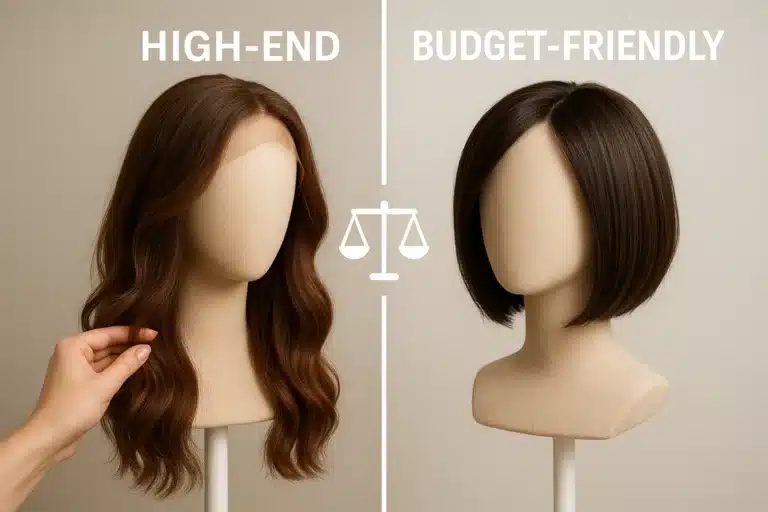
Let’s do some quick math. Fast-fashion synthetic wigs generally cost between $40 and $90. Because they degrade, tangle, and lose their luster quickly, a daily wearer might need 4 to 6 replacements a year.
While you might initially search for affordable wigs to fit a strict budget, the true cost adds up quickly—both financially and environmentally.
An ethically sourced, high-grade human hair wig or advanced plant-fiber unit might require a higher initial investment, but with proper maintenance, it can last beautifully for 24 to 36 months. By investing in quality, you dramatically lower your cumulative plastic footprint while ultimately spending less on a “cost-per-wear” basis.
The Tacoma Shopper’s Field Guide: 5 Questions to Ask
As you navigate local independent beauty hubs, medical hair restoration providers, or spots like Mattice Beauty Supply on 6th Ave, take a moment to evaluate the products. Here are five questions to ask your local wig associate:
- What is the cap made of? Look for caps utilizing organic cotton bases, bamboo silk, or water-based adhesives rather than heavy, toxic polyurethane coatings.
- Is this human hair ethically sourced? If a “100% human hair” wig is priced suspiciously low (under $150), it is highly likely the result of an exploitative supply chain. True fair-trade hair requires ethical compensation for donors.
- Does this fiber contain chemical sealants? Ask if the hair is coated in flame retardants or lye, which is crucial information for sensitive scalps.
- Can this unit be repaired? A high-quality wig can have its lace repaired or hair re-knotted to double its lifespan.
- How can I safely dispose of this? See if the store partners with recycling initiatives.
Responsible End-of-Life: Can You Compost a Wig?
One of the biggest misconceptions in eco-beauty is the word “biodegradable.” Even if you purchase a 100% human hair wig, you cannot simply toss it into your Pierce County brown yard waste bin when you’re done with it.
Why? Because the hair is usually stitched onto polyester lace caps using nylon thread and synthetic adhesives. Throwing mixed materials into local municipal composting contaminates the system.
Instead, look for circular beauty solutions. You can physically disassemble a worn-out wig—cutting the organic compostable hair away from the synthetic cap. Alternatively, look for certified Green Circle Salons in Tacoma (such as Chémel Salon) that repurpose old hair clippings and natural hair units for environmental projects, like creating mats to clean up ocean oil spills through the Matter of Trust program. Synthetic wigs can often be sent to TerraCycle programs specifically designed for complex plastic breakdowns.
Frequently Asked Questions (FAQ)
Are synthetic wigs bad for the environment?
Standard synthetic wigs are made from petroleum-based plastics. They require fossil fuels to produce, shed microplastics during washing, and can take hundreds of years to break down in a landfill.
Why do cheap synthetic wigs make my scalp itch?
Many budget synthetics are treated with chemical plasticizers and alkaline sprays to make the plastic fibers mimic the shine and heat resistance of human hair. These chemicals easily cause contact dermatitis.
Are human hair wigs automatically ethical and cruelty-free?
No. The sourcing of human hair is largely unregulated. Ethical human hair requires transparent, traceable supply chains where donors willingly give their hair and receive fair market compensation. If the price seems too good to be true, it often comes at a human cost.
How do I extend the life of my wig to be more sustainable?
Maintenance is conservation! Use sulfate-free, eco-certified cleansers, wash with cool water to protect the fibers, and seek out local Tacoma wig specialists who can re-block, steam, or re-ventilate your wig to give it a second life.
Your Next Steps to Sustainable Styling
Navigating hair loss or searching for protective styling should be an empowering experience, not a source of environmental guilt. With nearly two decades of experience in the industry, we know that education is the key to feeling beautiful, confident, and aligned with your values.
The alternative hair market is evolving, and as consumers demand better, safer, and more ethical products, the options will only continue to grow. Start by checking your current wig’s materials, treating your existing pieces with care to extend their lifecycle, and keeping these sustainability principles in mind for your next purchase.
When you know better, you can shop better—for your scalp, your confidence, and the planet.