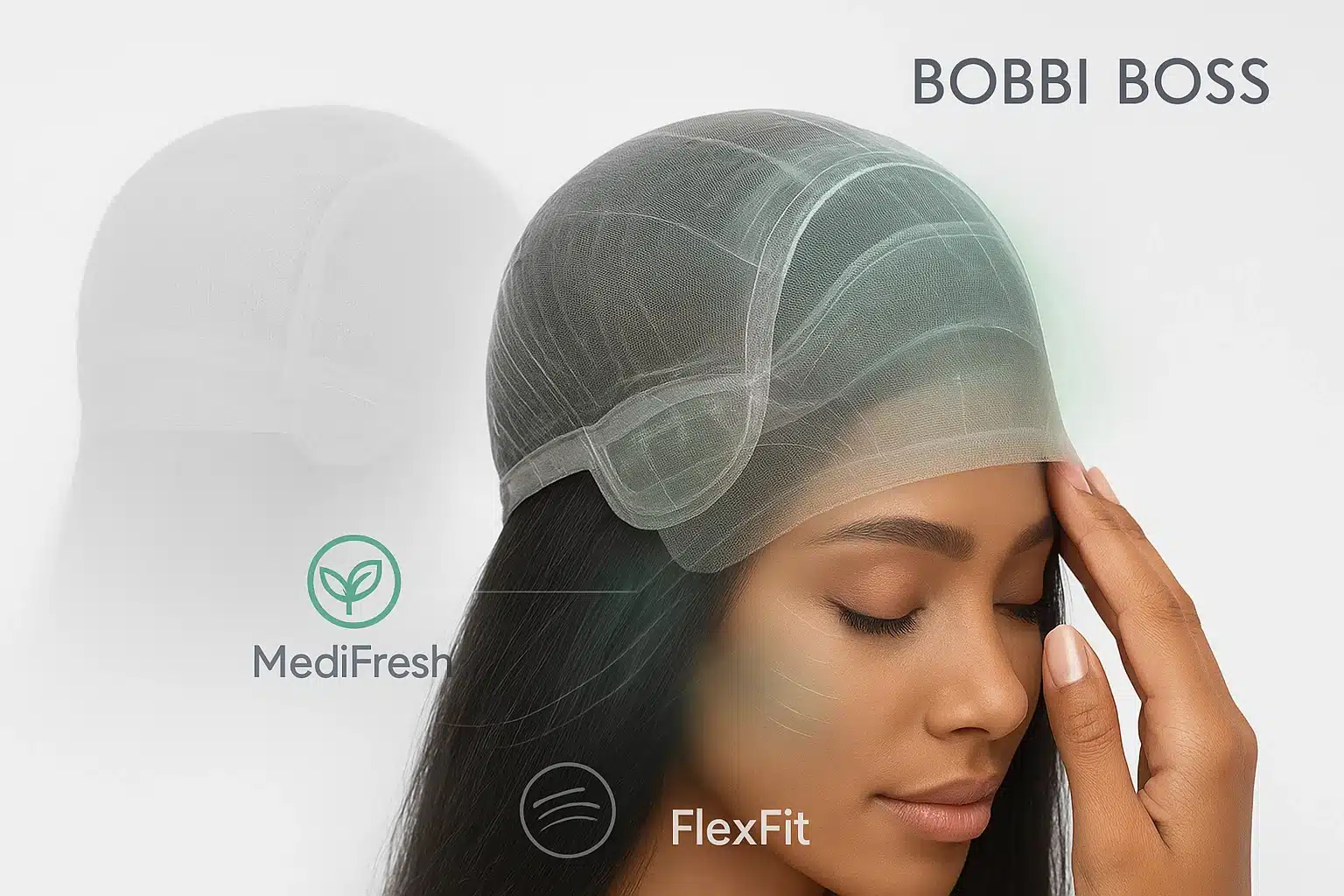
If you have ever worn a wig for eight hours straight, you know that the most beautiful hair in the world means nothing if the cap underneath feels like a vise. For years, the wig industry focused almost entirely on the exterior—the curl pattern, the color blend, and the shine. However, a quiet revolution has been taking place “under the hood.” For those navigating hair loss or seeking protective styles, the construction of the wig cap is not just a technical detail; it is the difference between enduring your day and enjoying it.
Understanding the architecture of your wig is the first step toward reclaiming your comfort. Before we dive deep into the specific technologies that have revolutionized scalp health, it’s helpful to understand the broader context of choosing your perfect Bobbi Boss wig: a complete guide, which sets the foundation for navigating the vast options available today. This evolution—from basic, machine-made caps to high-tech, antimicrobial designs—tells the story of how manufacturers have finally started listening to the real-world needs of wig wearers.
The “Under-the-Hood” Philosophy: Why Cap Architecture Matters
To the casual observer, a wig is simply hair. But to the wearer, the cap is a second skin. At Wig Superstore, we often compare wig construction to luxury automobiles. You can have a car with a flawless paint job, but if the suspension is rigid and the engine overheats, the ride will be miserable.
In the past, many wig wearers accepted discomfort as the price of beauty. The “wig headache”—a tension headache caused by poor elasticity and rigid circumferences—was considered normal. Itching was attributed to heat, rather than the materials interacting with the scalp. Today, the philosophy has shifted. Leading innovators like Bobbi Boss have transitioned from viewing the cap as a mere structure to hold hair, to viewing it as an active component of scalp health and hygiene.
The Primitive Era: When Nylon Was the Norm
In the early days of mass-market wigs, the priority was durability and cost, often at the expense of breathability.
The “Swimming Cap” Effect
Early wig caps were primarily constructed from dense, machine-made nylon networks. While sturdy, these materials offered very little ventilation. Heat trapped between the scalp and the cap had nowhere to escape, creating a greenhouse effect. For women wearing wigs daily due to medical hair loss, this often exacerbated scalp sensitivity.
The Problem with Fit
During this era, “one size fits all” usually meant “one size fits small.” The construction lacked dynamic tension. You essentially had two settings: loose and insecure, or tight and headache-inducing. The internal combs were often bulky and placed in areas that caused friction against the hairline, leading to traction issues over time.
The Scalp Health Revolution: Decoding MediFresh Technology
The most significant leap forward in wig cap evolution came with the realization that a wig cap shouldn’t just sit on the head—it should protect it. This birthed the concept of “MediFresh,” a term you may have seen but perhaps didn’t fully understand.
More Than Just a Marketing Term
Many wearers assume “MediFresh” simply refers to a lighter material. However, the technology is rooted in hygiene science. The “itch” many wearers experience isn’t always just about heat; it is often caused by the accumulation of bacteria and sweat in the cap’s fibers.
MediFresh caps utilize a specialized Safe & Clean Cap system that treats the mesh with antimicrobial properties. This inhibits bacterial growth, drastically reducing the itch factor and keeping the wig feeling fresher for longer periods.
UV Protection Integration
Another often-overlooked feature introduced during this phase was UV protection. For individuals with total hair loss (alopecia universalis or chemotherapy-induced hair loss), the scalp is incredibly vulnerable to sun damage. Modern caps began incorporating UV-blocking materials into the mesh itself, acting as a physical barrier against harmful rays—a crucial “aha moment” for wearers who hadn’t considered sun protection for their scalp.
The Realism Pivot: From Swiss to HD Lace
As comfort improved, the demand for visual realism skyrocketed. The transition from standard lace to Swiss and eventually HD (High Definition) lace marked a pivotal moment in making wigs undetectable.
The Evolution of the Parting Space
Historically, machine-made wigs offered very limited parting space—typically a shallow 1-inch to 2-inch strip that looked dense and unnatural.
- The Shift: Technology allowed for the expansion of hand-tied sections. We moved from 3.5-inch partings to deep 4.5-inch and 5-inch partings.
- The Result: This depth allows the hair to fall naturally rather than bunching up at the crown, mimicking the density and movement of biological hair.
HD Lace Clarity
Standard lace often had a grayish or thick tint that required heavy makeup to conceal. The introduction of HD Lace featured a finer, more fragile grid that melts into the skin. While this requires more delicate handling, it solved the “visible grid” problem that plagued earlier designs.
Modern Mastery: FlexFit and the Glueless Era
Today, we are in the era of the “customized feel” right out of the box. The focus has shifted toward “Big-Head Friendly” designs and glueless security, addressing the diverse range of head shapes and sizes.
The FlexFit Advantage
If you have ever felt a wig slowly slipping back or squeezing your temples, you have experienced a failure of elasticity. The “FlexFit” innovation replaced rigid perimeter bands with dynamic, high-stretch materials.
- How it works: Instead of a static circumference, the cap expands and contracts with your jaw movement and head positioning.
- The Metric: This responsiveness allows the cap to accommodate head circumferences comfortably without the need for excessive tightening of the adjustable straps.
360-Degree Glueless Security
Modern construction now frequently includes a 360-degree sheer lace perimeter paired with silicone or velvet traction bands. This allows for high ponytails and up-dos without the need for adhesive. For the beginner, this removes the intimidating learning curve of using wig glue, making the morning routine faster and safer for the hairline.
How to Choose: Matching Technology to Your Needs
With so many advancements, how do you decide which cap architecture is right for you? Use this guide to match your primary concern with the solution.
If you struggle with “Wig Itch” or Scalp Sensitivity:
- Look for: MediFresh / Safe & Clean Cap systems.
- Why: The antimicrobial treatment prevents the bacterial buildup that causes irritation.
If you have a larger head circumference:
- Look for: FlexFit or “Big Head Friendly” designations.
- Why: These caps prioritize elasticity and dynamic tension over rigid measurements.
If you want to wear your hair up/off the face:
- Look for: 360 Lace or 13×4 Hand-Tied Frontals.
- Why: This construction extends the realistic hairline all the way around the perimeter, not just the front.
If you are a beginner intimidated by glue:
- Look for: Glueless Grip Bands or Adjustable Elastic Bands.
- Why: These provide mechanical security, removing the need for chemical adhesives.
Frequently Asked Questions
Does the MediFresh cap actually prevent itching?
While no cap can guarantee zero irritation for every single person, the MediFresh technology specifically targets the biological causes of itching: bacteria and fungus. By inhibiting these from growing on the cap mesh, the vast majority of wearers report a significantly cooler and itch-free experience compared to standard nylon caps.
What is the difference between Swiss Lace and HD Lace?
Swiss lace is slightly more durable and thicker, making it easier for beginners to handle without tearing. HD (High Definition) lace is thinner, softer, and more transparent, offering a superior melt into the skin, but it is more delicate and requires a gentle touch.
Can I adjust the size of a FlexFit cap?
Yes. Even with the advanced elasticity of FlexFit, these caps still include adjustable nape straps. However, a common mistake is over-tightening them. Because the FlexFit material is designed to grip naturally, you can often leave the straps looser than you would on an older, standard wig.
Is “First Class Hair” a type of fiber or a cap style?
It is actually a combination. Bobbi Boss uses the “First Class” designation to indicate their premium tier, which usually combines their highest quality synthetic fibers with their most advanced cap construction (usually including deep lace and MediFresh features).
Continuing Your Journey
Understanding the history and technology behind your wig cap empowers you to make choices that prioritize your well-being, not just your appearance. At Wig Superstore, we believe that true confidence comes from comfort. By selecting the right foundation, you ensure that your hair system supports your lifestyle rather than hindering it.
As you explore different styles, always check the “cap construction” tab in the product description. Now that you know what terms like MediFresh and FlexFit actually mean for your daily life, you can look past the style and ensure the science is working in your favor.