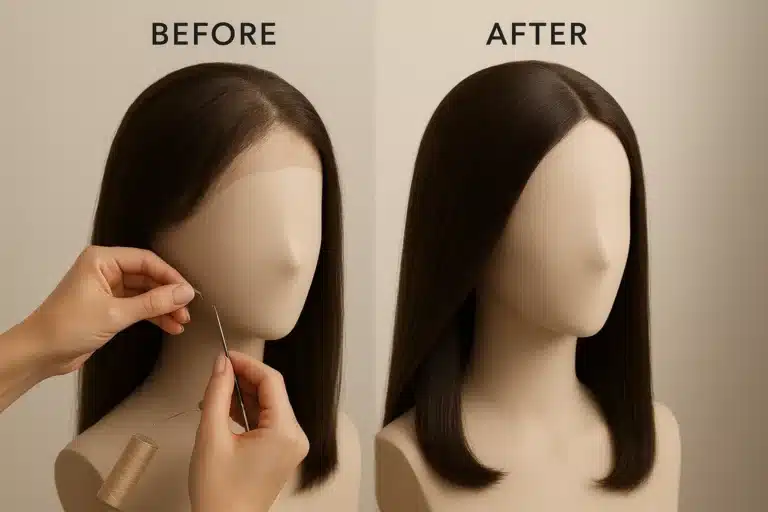

Imagine this: You’ve just found the perfect, flawlessly colored human hair wig. It looks gorgeous in the box, and you can’t wait to wear it. But as you look in the mirror, a wave of questions hits you. How will this unit hold up against Houston’s notorious 90% humidity? Will the adhesive damage my natural hairline? And most importantly, how on earth do I take this off safely?
If you’re navigating the world of wigs—whether for protective styling, medical hair loss, or simply a breathtaking new look—buying the unit is only the first step. The true secret to a flawless look lies in Scalp and Edge Preservation Engineering.
At Wig Superstore, with nearly two decades of experience helping individuals navigate hair loss with compassion and expertise, we know that a wig should protect your natural hair, not punish it. Whether you’re visiting a local wig dealer or shopping online, understanding the biomechanics of professional wig installation and safe removal is critical.
Grab a cup of coffee. Let’s demystify the professional salon experience, decode Houston’s climate challenges, and explore how to protect your precious edges.
Why Professional Installation is an Investment in Your Scalp
A quick scroll through TikTok or Instagram will show you endless videos of seamless “lace melts” and DIY applications. While these short-form clips are mesmerizing, they rarely show you the long-term reality of improper application: edge loss, biomechanical scalp tension, and chemical damage.
Professional installation goes far beyond aesthetics. Certified stylists view your scalp as a biological canvas. They understand how to distribute tension evenly, protect delicate hair follicles from occlusive adhesives, and ensure that your new look doesn’t come at the cost of your natural hair’s health.
Understanding Wig Types and Attachment Mechanics
Before you book a wig install, it helps to know your options. The right foundation makes all the difference.
Decoding the Terminology
- Lace Frontals & Full Lace: Usually noted as 13×4 or 13×6, these units offer a breathable lace base that mimics a natural hairline, allowing for versatile parting.
- Human Hair vs. Synthetic: If you’re searching for a “wig store near me human hair,” you likely know that virgin human hair offers unparalleled styling versatility and longevity. High-heat synthetics, however, are fantastic for holding pre-set styles—like a vibrant blonde wig—without the high maintenance.
Low-Manipulation Alternatives
Not everyone needs or wants adhesive. If you’re looking for low-tension, everyday wear, consider these options:
- Headband Wigs: Perfect for gym-goers or busy mornings. If you’ve been looking for a “headband wig in store near me,” these units offer a throw-on-and-go solution with zero glue.
- Half Wigs: Want to blend your natural hairline with added volume? A half wig leaves your front edges exposed for a seamless blend. Finding a high-quality “curly half wig near me” is a game-changer for quick, natural-looking volume.
The Master Installation Process: What Happens in the Salon Chair?
Understanding what happens during a professional appointment empowers you to advocate for your scalp health. Here is the blueprint of a clinically safe installation.
Step 1: Scalp Preparation and the Low-Tension Braid-Down
A flawless install starts with a flat, tension-free foundation. Your stylist will cleanse your scalp with detoxifying shampoos before creating a braid pattern (like a beehive or straight-back) tailored to the geometry of your skull.
Step 2: Wigs Over Locs and Dense Hair
Yes, you can wear a flat lace wig over dreadlocks! If you’ve been searching for a “wig over locs near me,” specialized stylists use flat-twist pinning and strategic anchor-point distribution to lay units flat without creating bulky lumps or pulling on your roots.
Step 3: The Wig Cap Barrier Method
Your stylist will use a wig cap (typically a friction-free satin or sheer nylon cap) to create a protective barrier over your natural hair. This cap is often tinted to match your skin tone, creating the illusion of a natural scalp.
Step 4: The Four-Finger Rule
This is the golden rule of edge preservation: Lace and adhesives should never sit on your biological hairline. Professionals place the unit just in front of your baby hairs, protecting your delicate follicles.
Step 5: Securing the Unit
Depending on your lifestyle, your stylist will secure the wig using glueless elastic bands, sewn perimeter anchors, or humidity-resistant lace bonding.
The Tension Self-Check: Pain is not security. If you are sitting in the salon chair and feel stinging, throbbing at the temples, or cannot raise your eyebrows without pulling, speak up! Mechanical traction can lead to permanent scarring alopecia. A professional install should feel comfortably snug, never painful.
Beating the Gulf Coast Humidity: A Houston Survival Guide
Houston’s subtropical climate presents a unique challenge. With average summer humidity levels soaring between 75% and 90%, the sweat emulsification underneath a wig can break down standard adhesives in a matter of hours.
Generic online tutorials often ignore climate. Here is how local experts beat the heat:
- Adhesive Installs: Avoid standard water-based glues during peak summer. Ask your stylist about medical-grade polyurethanes or water-resistant copolymer adhesives that withstand heavy perspiration.
- Glueless Alternatives: When the heat index peaks, many Houstonians switch to glueless units with silicone-grip bands or sewn-in foundations featuring breathable net barriers. These methods allow your scalp to breathe and eliminate the worry of your lace lifting during a humid outdoor event.
The Chemistry of Safe Removal (The Non-Negotiable Step)
If there is one thing you take away from this guide, let it be this: Never just pull your wig off.
Mechanical peeling tears the stratum corneum (the outermost layer of your skin) and rips hair follicles straight from the bulb, causing 90% of wig-related edge damage. Professional salons treat removal as a crucial chemical process.
Instead of rubbing alcohol—which dehydrates natural hair and turns adhesives into a stubborn, rubbery residue—professionals use specialized emulsion solvents. Citrus-based and medical-grade silicone removers are applied and left to sit (the “dwell time”). These solvents molecularly break down waterproof acrylics and glues, allowing the wig to slide off with zero resistance. Following removal, a clarifying scalp treatment hydrates the edges and purifies the follicles.
Extending Your Wig’s Lifespan at Home
Your salon visit sets the foundation, but your at-home routine preserves the investment.
- Storage: Never toss your wig in a drawer. Searching for “wig stands near me” is worth the effort—ergonomic stands allow your unit to air-dry properly, preventing mold and retaining the cap’s structural shape.
- Nighttime Care: If your wig is sewn down, friction is your biggest enemy. Wrap your hair in a silk or satin bonnet nightly to prevent tangles and preserve the lace.
How to Vet Houston Wig Stores and Salons
Houston boasts a rich topography of wig specialists, but finding the right fit requires knowing what to look for. When vetting a local store or salon, consider their specialty:
- Medical & Hair Loss Specialists: Places like Billie Jean’s Wig Salon or New Beginnings Wigs specialize in private fittings, cranial prostheses, and compassionate care for those undergoing chemotherapy or experiencing medical hair loss.
- Loc-Care Specialists: Salons like Treasured Locs and Tips Medical Units excel in advanced techniques for installing over microlocs and sensitive scalps.
- Full-Service Custom Styling: Establishments like Alter Ego Hair Salon and Wig Bar or M.E.M. Beauty Wigs offer full-service application, custom braid-downs, and maintenance tightening.
5 Questions to Ask Before You Book:
- Do you use chemical solvents for safe adhesive removal?
- How do you protect natural hairlines during a glued install?
- What adhesives do you recommend for Houston’s high humidity?
- Do you offer low-tension installs for sensitive scalps or locs?
- What is the total cost breakdown (unit, install, and future removal)?
Frequently Asked Questions
How much does a professional wig install cost in Houston?
On average, a professional installation ranges from $100 to $250+, depending on the complexity (e.g., custom plucking, bleaching knots, installing over locs). This usually does not include the cost of the wig itself.
Will wig glue rip out my edges?
It shouldn’t, provided two rules are followed: the glue must be applied in front of your natural hairline (The Four-Finger Rule), and it must be removed using professional chemical solvents, not by mechanical peeling.
How long does a professional install last?
Depending on the adhesive used, your body chemistry, and Houston’s humidity, a glued install typically lasts 2 to 4 weeks. Glueless or sewn-in units can be removed daily or last several weeks with proper tightening.
Can I sleep in my wig?
If it is a glued or sewn-in install, yes, but you must protect it. Wrap the perimeter with a silk edge band and wear a satin bonnet to minimize friction and prolong the adhesive’s hold.
***
Navigating hair loss or stepping into a new aesthetic should be an empowering, joyful experience. By prioritizing scalp health, understanding the mechanics of professional installation, and respecting the chemistry of safe removal, you can wear your dream hair with absolute confidence.
At Wig Superstore, we believe that education and compassionate care are the foundations of true beauty. Whether you’re exploring your very first wig or seeking ways to protect your natural hair underneath your favorite unit, remember that your scalp’s health is always the ultimate priority.