
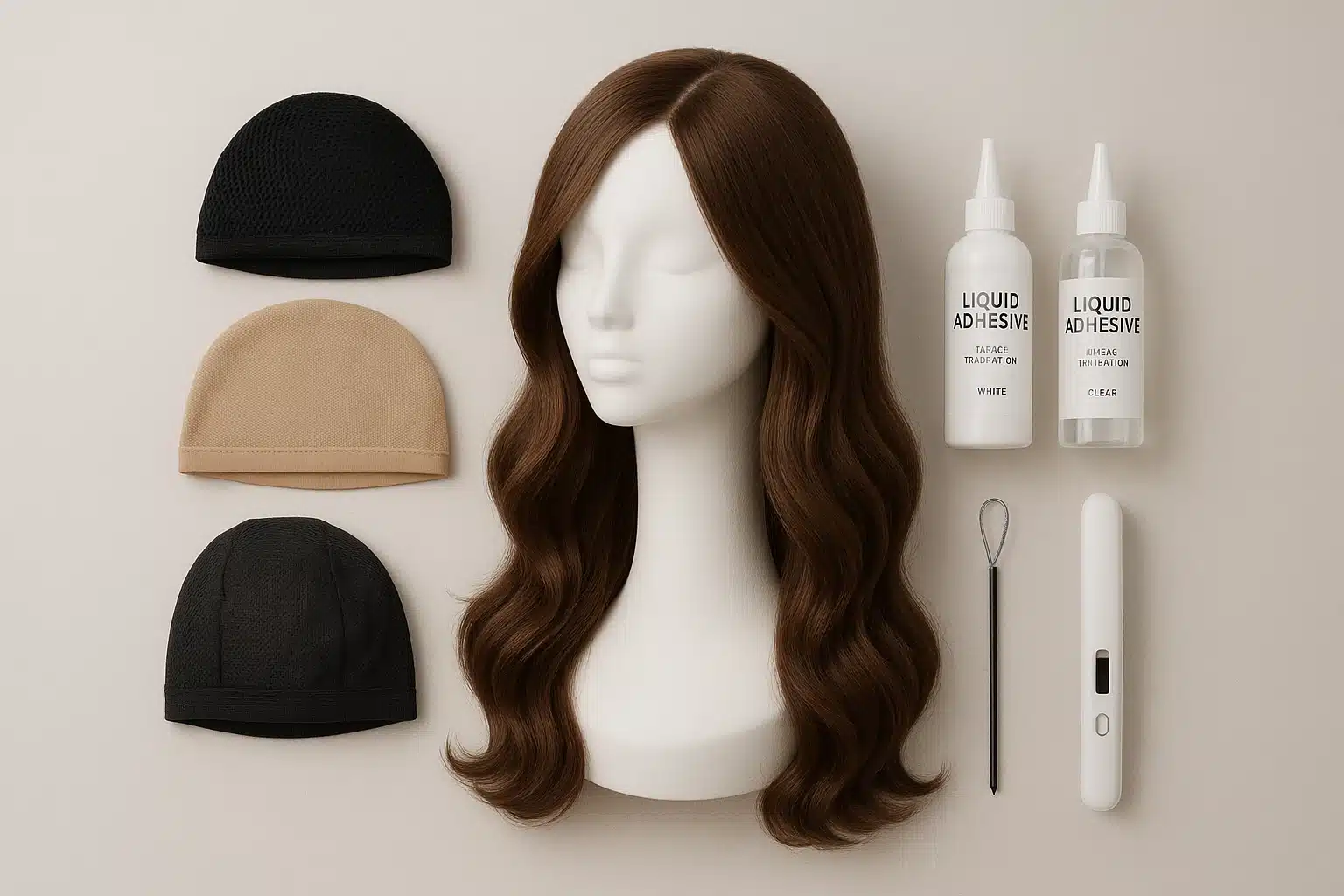
You’ve finally found it—the perfect wig. The color complements your complexion, the style frames your face beautifully, and as you look in the mirror, everything just clicks. But if you’re new to the world of alternative hair, you might be surprised to learn that acquiring the piece itself represents only half of your investment. To keep that unit secure, natural-looking, and intact for the long haul, you need a specialized ecosystem of maintenance tools. Whether you’re seeking fashion pieces or specialized solutions like chemotherapy wigs detroit residents rely on, the accessories you use dictate your daily comfort and long-term success.
Many first-time buyers in Southeast Michigan begin by navigating the best wig stores in Detroit MI to choose between gorgeous human hair and synthetic lace fronts, only to encounter an educational void right after checkout. What keeps a lace front secure during a humid Michigan summer? How do you protect your natural edges from aggressive glues? This guide bridges that gap, demystifying the mechanics of wig care and mapping out where to find these essential supplies across Detroit’s physical retail corridors.
The “Hidden Half” of Wig Ownership
It’s incredibly common to see beginners enthusiastically purchase a beautiful, high-quality wig, only to experience frustration a week later when it slips, the lace frays, or the hair tangles excessively. Generic online tutorials often fail to account for local realities—like how Michigan’s harsh freeze-thaw cycles and notoriously humid summers interact with hair adhesives.
Understanding your accessories is about more than just styling; it’s about skin safety, fiber preservation, and scalp health. Before you make a trip to a local supply store, you need a foundational understanding of what these tools actually do.
The Foundation: Building Your Wig Toolkit
Walking into a beauty supply store can be overwhelming. Let’s break down your shopping list into four crucial categories.
Under-Cap Foundations: More Than Just a Stocking
Novices are often told to simply “wear a stocking cap,” regardless of their natural hair length or scalp condition. But choosing the right foundation is a tailored process:
- The Stocking Cap: Best for those with very fine hair or those practicing the “bald cap method” for lace frontals.
- Breathable Mesh Dome Caps: Ideal for thick natural hair that needs to be anchored via flat perimeter cornrows. It prevents the bulky crown bulge that standard stocking caps can cause.
- Bamboo and Silicone Liners: For those dealing with medical hair loss or seeking alopecia wigs detroit specialists recommend, a hypoallergenic silicone grip band or cooling bamboo liner is essential to protect sensitive scalps from friction.
Adhesives and the “Tacky Transition” Rule
Do you need glue for a lace front? Not necessarily—many wigs stay on perfectly with combs, adjustable straps, or silicone bands. However, if you prefer the melted, undetectable hairline of a liquid adhesive, you must understand the chemistry of curing.
The golden rule of liquid bonding glues (like those used for long-term wear) is the “Tacky Transition.” Water-based copolymer adhesives go on white but turn clear as the moisture evaporates. If you press your delicate Swiss lace into milky-white glue, the adhesive will seep through the lace knots, ruining the wig and causing immediate lifting. You must apply 3 to 4 paper-thin layers, letting each dry completely translucent before adding the next.
The Science of Safe Removal
If there is one thing you take away from this guide, let it be this: never peel off an adhered wig without the proper solvent. The physical mechanism of traction alopecia is frequently caused by ripping off elastic melt bands and tape. Always use a dedicated citrus-based remover (like C-22) or 99% isopropyl alcohol to break down the chemical bond of the adhesive, allowing the lace to lift away without pulling a single natural hair follicle.
Mastering Styling Tools by Fiber Type
You cannot treat all wigs equally. The Detroit wigs market is diverse, and the tools you use must match the exact fiber of your unit.
The Heat and Fiber Compatibility Matrix
- Standard Synthetic: Tolerates exactly 0°F of heat. Keep curling irons away. These require specialized steam nozzles and wide-tooth loop brushes to prevent static and melting.
- Heat-Friendly Synthetic: Safe for maximum temperatures of 275°F–300°F (135°C–148°C). You must use digital, temperature-controlled ceramic irons. Traditional human-hair heat settings will instantly melt the monofilament fibers.
- 100% Remy Human Hair: Can tolerate heat up to 350°F–400°F when paired with thermal protectants. Because these wigs lack natural scalp sebum, they require leave-in argan or silicone sealing sprays to maintain their luster.
The Secret of the Loop Brush
Why do wig experts insist on a specialized wire “loop brush”? Traditional ball-tipped brushes catch on the hand-tied knots at the base of your wig, pulling the hairs right out of the lace. A loop brush glides cleanly over the internal knots without snagging, extending the lifespan of your piece dramatically.
Tools for Theatrical and Character Styling
Sometimes, everyday wear isn’t the goal. If you are doing advanced character styling—perhaps creating a gravity-defying cosplay silhouette like a Dragon Ball wig, or heavy feathering like a Stevie Nicks wig—standard styrofoam heads won’t cut it. You will need a heavy-duty 21-to-24-inch cork or canvas block, T-pins to secure the piece tightly, and specialized setting lacquers to hold extreme shapes.
The Detroit Wig Accessory Sourcing Map
You don’t have to wait for shipping to get commercial-grade wig supplies. Detroit’s physical retail corridors are packed with specific accessory hubs.
- Kelly Beauty Supply (Houston Whittier) & Golden Beauty Supply (West 7 Mile): These are your go-to pragmatic beauty supply hubs. If you need lace melting sprays, stocking caps, canvas styling blocks, or high-hold adhesives today, these aisles are fully stocked.
- Hairland Beauty Supply (West Warren) & Chin’s Wigs (Gratiot Ave): Excellent for a wide variety of daily maintenance tools, including wide-tooth detangling combs, C-curve weaving needles, and professional edge-rescue solvents.
- Medical Boutiques & Private Studios: Locations like Rebecca’s Wigs, Jean’s Boutique, and It’s Still Me Wig Studio offer empathetic, clinical perspectives. They are the ideal destinations for sensitive scalp care, bamboo cooling liners, and medical-grade non-adhesive mechanical grip devices.
Frequently Asked Questions for Beginners
Why did my wig glue turn white after sweating?
Michigan’s high mid-summer humidity can cause water-based adhesives to re-emulsify. When this happens, the glue turns white and gummy. You can often reactivate and clear it by gently tapping it with a bit of alcohol on a cotton swab and re-tying your melt band, though frequent sweating may require an anti-humidity skin prep primer before installation.
How do I stop my lace from fraying at the forehead?
When customizing your wig, always trim the lace using pinking shears (which cut in a zig-zag pattern) or a razor comb. A perfectly straight cut with standard scissors actually makes the lace more visible against the skin and highly prone to fraying.
How do high-profile figures make their hairlines look so natural?
Celebrity lace systems—often discussed when people ask how actors achieve undetectable mature hairlines—rely on a combination of HD Swiss lace, custom edge thinning (plucking the hairline to mimic natural hair density), and precise color-matching with lace tints. It’s less about the wig itself and more about the meticulous customization accessories.
Next Steps in Your Alternative Hair Journey
Purchasing your wig is an exciting first step, but empowering yourself with the right education and accessories is what transforms a good hair day into a great hair life. By understanding the chemistry of your adhesives, respecting the heat boundaries of your fibers, and knowing exactly where to shop in Detroit for your canvas blocks and loop brushes, you take full control of your alternative hair journey.
Treat your wig care routine as an act of self-care. Take the time to gather your localized tool kit, patch-test your adhesives, and practice your maintenance techniques. With the right foundation, your hair will not only look flawless but feel incredibly comfortable, every single day.