If you’ve ever attended a Kabuki performance or seen a geisha gracefully walking through the streets of Kyoto, your eyes were likely drawn immediately to their spectacular, sculptural hair. For most of us, our first instinct is to wonder, “Is that their real hair?” It’s a natural question, but the answer opens the door to a hidden world of artistry, physical endurance, and storytelling.
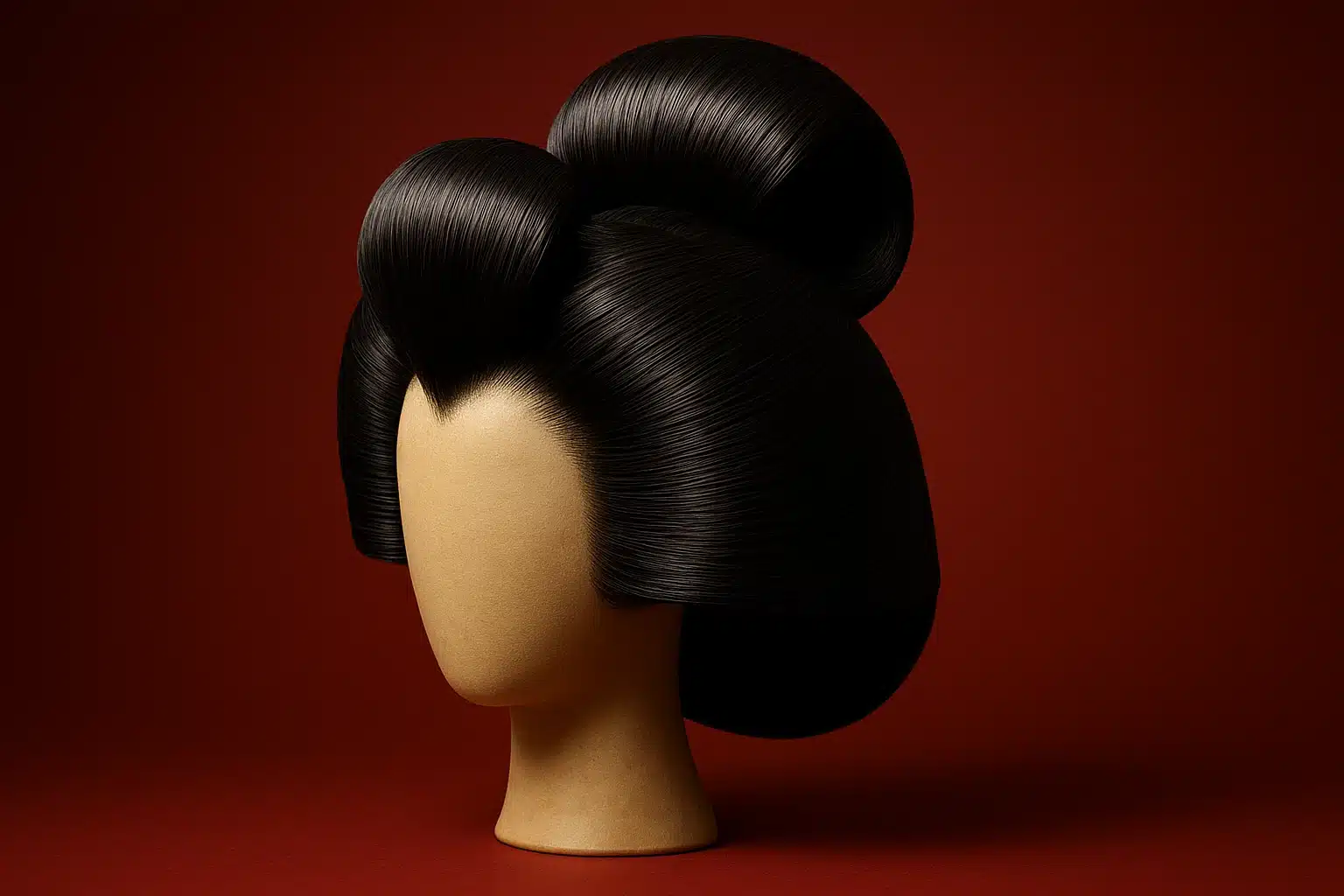
What you are looking at is not just an accessory. It is a katsura—a traditional Japanese wig that serves as a masterpiece of metallurgy, craftsmanship, and performance psychology. Far beyond simple theatrical props, these wigs represent the cultural and spiritual authority of wigs worldwide, anchoring performers in a profound legacy that dates back to the Edo period. Today, we’re going to look past the beautiful surface to understand the incredible secrets, heavy burdens, and masterful artisans behind traditional Japanese wigs.
The Myth-Buster: Why Geisha Choose Wigs Over Natural Hair
One of the most common misconceptions is that wearing a wig is somehow “easier” or “lazier” than styling natural hair. In the world of Japanese traditional arts, the exact opposite is true. Graduating to a wig is a mark of ultimate prestige.
Consider the journey of a geisha. When a young woman begins her apprenticeship as a maiko, she uses her own natural hair to create elaborate styles. She must sleep on a special, elevated wooden pillow (a takamakura) to keep the style perfectly intact for days, which is notoriously uncomfortable.
However, when she graduates to become a fully-fledged geiko (geisha), she transitions to wearing a katsura. This isn’t a shortcut; it is a sign that she has reached an elite professional status. Wearing the katsura protects her natural hair from the years of intense pulling and heavy waxing required of apprentices, while allowing her to achieve a level of flawless, uniform beauty that only a master craftsman can provide.
The Secret Foundation: The “Aha!” Moment of the Katsura
When most of us think of a wig, we imagine a soft, flexible lace cap. If you were to pick up a professional Kabuki katsura, you would be in for a shock.
The secret to a katsura’s gravity-defying shape isn’t just hairspray—it’s metal. At the heart of every authentic traditional wig is the daigane, a custom-fitted frame crafted from copper or aluminum.
Because these wigs are incredibly heavy and must withstand intense athletic movements on stage, the daigane is molded precisely to the exact contours of an individual actor’s skull. It is so exact, in fact, that if an actor’s head changes size by even 2 centimeters—perhaps due to weight loss or aging—the wig will cause immense pain or fly off during a performance. The metal frame must be meticulously reshaped by a master artisan to ensure a flawless fit.
Anatomy of the Nihongami (Traditional Hairstyle)
To understand the language of a katsura, you have to know its four distinct geographic regions. Just like reading a map, these four elements tell you everything you need to know about the person wearing it:
- Maegami (The Forelocks): The hair at the front. Its fullness and styling often denote youth or specific personality traits.
- Bin (The Sides): The sweeping side sections. The width of the bin can dramatically alter the shape of the face and the presence of the character.
- Tabo (The Back): The section that swoops down toward the nape of the neck. In geisha styles, an elegant, deep tabo accentuates the nape, which is considered a focal point of beauty in ancient traditional Japanese makeup and styling.
- Mage (The Topknot): The crowning feature. The shape, droop, or height of the mage is the ultimate indicator of social status, profession, and age.
The Masters Behind the Hair: Tokoyama vs. Katsuraya
A masterpiece requires masters, and the katsura requires two distinct types of artisans who dedicate their entire lives to this craft.
- The Katsuraya (The Frame Maker): This artisan is the architect. They measure the actor’s head, forge the copper daigane frame, and meticulously hand-sew the foundational human hair onto the base.
- The Tokoyama (The Hair Stylist): This artisan is the sculptor. Living in dedicated boarding houses to immerse themselves entirely in the craft, the tokoyama takes the completed base and styles it using specialized combs and a unique, animal-fat-based wax called bintsuke-abura. This wax doesn’t just hold the hair; it literally “stores” the character’s shape, ensuring it doesn’t melt under hot stage lights.
The Language of Hair: Character Archetypes in Kabuki
In Western theater, you might listen to a character’s dialogue to figure out if they are good or evil. In Kabuki, you simply look at their katsura. The wig, paired with a Japanese traditional outfit for men or elaborate kimonos for women, is the final lock that completes the costume and instantly communicates the character’s soul to the audience.
The Color Code
You might assume all traditional wigs are black, but color is deeply symbolic. If a play is a historical drama (Jidai-mono), the wigs are dyed a stark, dramatic “jet black” for bold theatrical impact. However, if the play is a domestic drama about everyday people (Sewa-mono), the hair is dyed a softer, dark brown to mimic natural human hair tones.
The Archetypes
- The Princess (Akahime): Wears her hair long, flowing, and impeccably refined. The style signals royal lineage and sheltered elegance.
- The Hero (Aragoto): Wears an exaggerated, towering wig with thick, stiffened hair that bristles with power, matching his dynamic poses and booming voice.
- The Villain: Often paired with indigo kumadori makeup, the villain’s wig features sharp, harsh, angular lines. A drooping mage (topknot) instantly signals to the audience that this character is comedic, untrustworthy, or morally corrupt.
The Weight of Tradition
To build empathy for the performers, we must understand the sheer physical toll of these arts. Wearing a katsura is an act of supreme endurance.
| Element | Estimated Weight / Burden |
|---|---|
| Everyday Fashion Wig | 100 – 200 grams |
| Standard Katsura Wig | 1 – 2 kilograms (focused heavily on the top of the skull) |
| Aragoto (Hero) Kabuki Costume | Up to 63 kilograms (e.g., the famous Shibaraku costume) |
Imagine balancing a heavy, metal-framed sculpture on your head, coated in thick wax, while wearing up to 60 kilograms of fabric, all while performing delicate, highly controlled dances. It is a stunning display of human capability.
Frequently Asked Questions
Are these wigs made of real human hair?
Yes. Professional katsura used by geisha and top-tier Kabuki actors are meticulously crafted from high-quality, real human hair. This allows the tokoyama (stylist) to use traditional waxes and hot irons to shape the hair realistically, something synthetic fibers could not withstand.
How do they get the wig to stay on during a performance?
Because the daigane (copper frame) is perfectly molded to the exact lumps and curves of the performer’s skull, it essentially “locks” into place. It is then tied securely under the chin or along the hairline with silk bands, ensuring it won’t slip during vigorous dances.
What is the difference between a geisha and a maiko’s hair?
A maiko (apprentice) styles her own natural hair, incorporating colorful, dangling ornaments to highlight her youth. A geiko (fully-fledged geisha) wears a custom-fitted katsura wig. The geisha’s wig uses more subtle, elegant ornaments (kanzashi) and features a flatter, wider topknot (taka shimada) to signal her maturity and seniority.
How often do the wigs need to be re-styled?
A tokoyama must dismantle, clean, and re-style a heavily used theatrical wig quite frequently—sometimes every few days during a busy Kabuki run—because sweat, stage makeup, and movement break down the wax.
Your Own Crown of Confidence
While the heavy copper frames and thick waxes of the Japanese katsura are reserved for the stage and the tea houses of Kyoto, the underlying philosophy remains universal. Around the globe, a beautifully crafted wig is never just about hiding hair loss or changing a look—it is about stepping into a version of yourself that feels powerful, beautiful, and complete.
Just as the tokoyama dedicates their life to ensuring the performer feels perfectly supported by their hairpiece, modern wig wearers deserve the same level of empathy, expertise, and quality. When you understand the craftsmanship that goes into high-quality hairpieces, you realize that choosing a wig isn’t a compromise. It is an investment in your personal story, your comfort, and your everyday confidence.