Navigating medical hair loss is an intensely emotional journey. Whether you are dealing with alopecia, undergoing chemotherapy, or recovering from medical treatments, the physical loss of hair is often compounded by the confusing, bureaucratic maze of healthcare reimbursement. The last thing you want to deal with when seeking comfort and normalcy is a prolonged battle with your insurance provider over medical terminology.
If you are just beginning this journey, finding the right provider is essential. While we’ve previously covered how elite urban centers handle custom scalp styling and professional fittings in our guide to the Best Wig Stores in San Francisco CA Your Guide to Finding the Perfect Fit, patients here in Indiana need hyper-localized execution. Finding wig shops in Indianapolis Indiana that understand the precise mechanics of direct billing, local hospital networks, and VA benefits can be the difference between paying entirely out-of-pocket and having your piece fully covered. Let’s demystify the process and explore the safety nets available right here in Indianapolis.
The Golden Ticket: The Vocabulary of Insurance
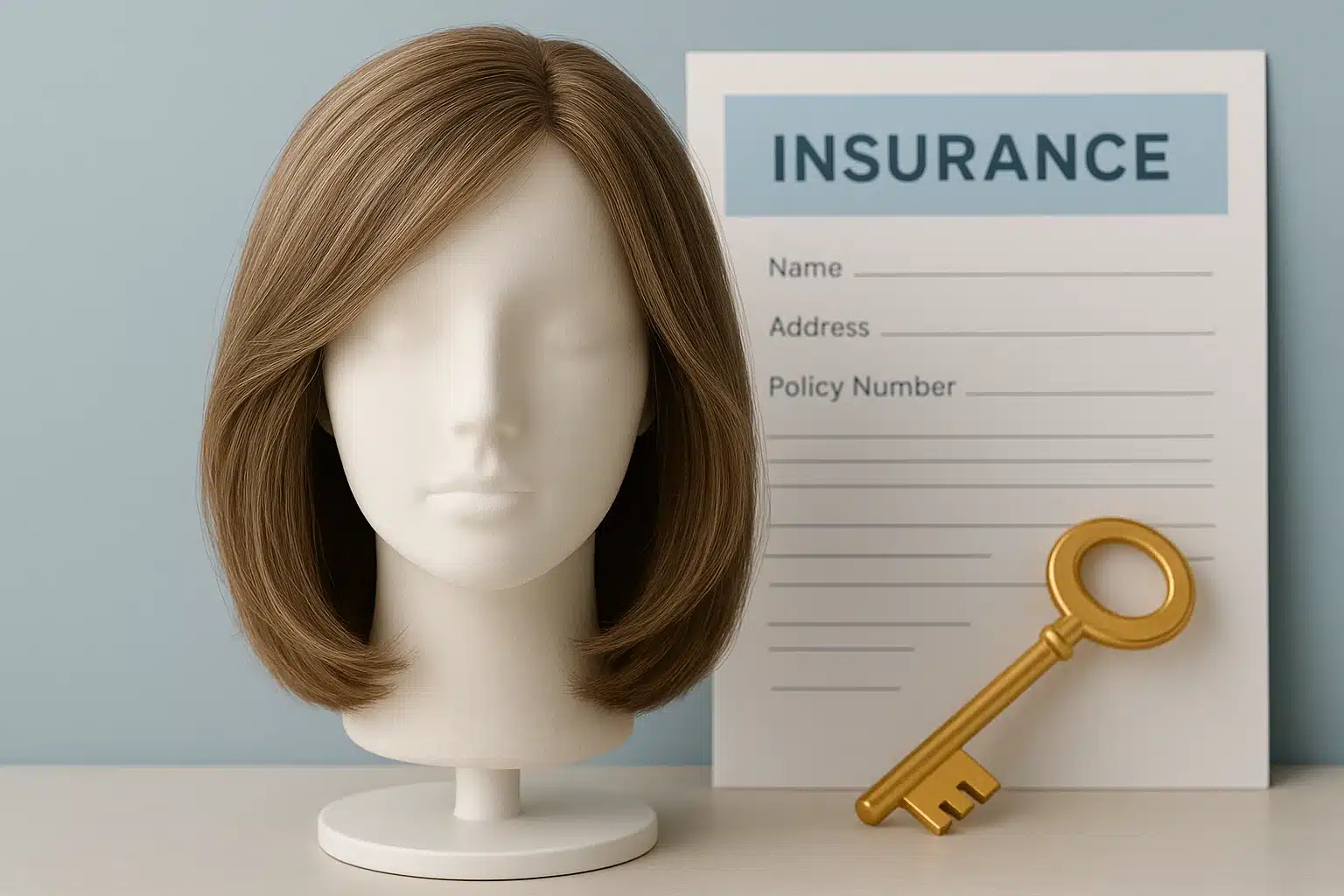
The most critical “aha moment” in the medical hair loss journey revolves around a single word. If you call your insurance company and ask if they cover a “wig,” their automated systems and representatives will almost certainly deny the request as a cosmetic expense.
To unlock your health insurance benefits, you must adopt clinical vocabulary. The medical industry refers to a therapeutic wig as a Cranial Prosthesis (or medical hair prosthesis). This terminology must be strictly utilized on every doctor’s prescription, invoice, and claim form.
Medicare vs. Private Insurance Nuances
A common point of confusion is how different insurance frameworks treat cranial prostheses. Standard Medicare Part B strictly excludes wigs from coverage. However, if you are enrolled in a Medicare Advantage plan or carry private PPO insurance (such as Anthem Blue Cross Blue Shield of Indiana), cranial prostheses are frequently approved under your Durable Medical Equipment (DME) rider.
Navigating the Billing Codes (HCPCS & ICD-10)
To ensure your claim sails through the system rather than getting flagged for review, you must connect the right diagnosis with the right product code.
Essential HCPCS Billing Codes
Your cranial prosthesis provider will need to list specific Healthcare Common Procedure Coding System (HCPCS) codes on your invoice:
- HCPCS Code A9282: This is the standard billing code for “Wig, any type” and is universally recognized by major local insurers.
- HCPCS Code S8095: An alternative code for wigs used by select private commercial plans.
Essential ICD-10 Diagnosis Codes
Your oncologist or dermatologist must write your prescription linking your hair loss to a specific medical condition using ICD-10 codes, such as:
- L63.9: Alopecia areata, unspecified
- L66.9: Scarring alopecia, unspecified
- C80.1: Malignant neoplasm (often associated with chemotherapy treatments)
The 5-Step Claim Strategy
- Verify DME Benefits: Call your insurer and specifically ask, “Do I have benefits for a Cranial Prosthesis under my Durable Medical Equipment rider?”
- Secure the Prescription: Ask your doctor to write a prescription for a “Cranial Prosthesis for medical hair loss due to [Insert ICD-10 Diagnosis Code].”
- Select an Accredited Provider: Choose a medical boutique (ideally Board of Certification/BOC accredited) rather than a standard retail store.
- Obtain the Correct Invoice: Ensure the provider’s invoice lists their Tax ID, NPI number, the HCPCS code, and the term “Cranial Prosthesis.”
- File & Follow Up: Submit the claim, and remember that initial denials are common but easily won on appeal once the terminology is corrected.
Top Medical Wig Providers in Indianapolis
When searching for wigs Indianapolis Indiana, it is crucial to work with specialists who understand medical-grade cap constructions designed for sensitive scalps and insurance documentation.
- Shar’s Medical Supplies / Shar’s Hair Wig Boutique (8330 Naab Road, Suite 130): A standout in the local community, Shar’s is a BOC-accredited facility. They specialize in a “Premium Medical Collection” and offer direct insurance billing support, meaning they often handle the claims process on your behalf.
- FigLeaf Boutique North (7240 Shadeland Station, Suite 100): Integrated into the Community Health Network, this boutique offers a seamless, hospital-supported experience for oncology patients, including complimentary fittings.
- Ascension St. Vincent Women’s Health Boutique (1344 S Range Line Rd, Carmel): A highly respected clinical setting specializing in both mastectomy and hair loss prosthetics under the Ascension hospital umbrella.
- Transitions of Indiana (2440 Westfield Blvd, Suite 100): Focuses on high-end custom medical hair systems and clinical restoration strategies.
- Taylor’d Made by Couture (6697 E 82nd St): Local specialists in custom styling and tailored wig caps designed specifically for medical patients.
Veterans’ Corner: VA Benefits & The Community Care Network
Navigating “VA disability for alopecia” is a highly specific process. The Department of Veterans Affairs evaluates service-connected hair loss under the Schedule of Ratings for the skin. Specifically, Diagnostic Code 7830 evaluates Scarring Alopecia (granting up to a 20% rating), while Diagnostic Code 7831 evaluates Alopecia Areata (granting up to 10% for complete hair loss).
Veterans with service-connected alopecia have access to a distinct advantage: 100% covered cranial prostheses through the VA Prosthetics department. If the VA cannot accommodate your needs internally, you can request a referral to an approved VA Choice / Community Care Network (CCN) provider. In Indianapolis, local vendors like Shar’s Medical Supplies (an SBA 8(a) certified contractor) can coordinate directly with the VA to provide premium hand-tied medical wigs with zero out-of-pocket costs.
The Legal Realities of Hair Loss: When It’s More Than Medical
While most medical hair loss is a natural side effect of conditions like alopecia or life-saving chemotherapy, there are rare, devastating instances where permanent scarring alopecia is caused by severe clinical errors. Examples include radiation overdoses, improper chemotherapy administration, or chemical scalp burns during procedures.
When hair follicle destruction is iatrogenic (caused by medical treatment), the lifetime cost of high-grade custom cranial prostheses becomes a legal matter. In these complex scenarios, hospital networks generally rely on a medical malpractice defense Indianapolis firm to handle liability and coordinate settlements.
Across the healthcare spectrum, major underwriters such as Princeton Insurance Company medical malpractice policies and Lexington Insurance Company medical malpractice coverage plans frequently step in to manage claims involving permanent clinical hair loss. Whether care is coordinated through regional networks or systems operating under policies similar to Pasteur Medical Center insurance, Poinciana Medical Center insurance, Emanuel Medical Center insurance, Winchester Medical Center insurance, Rossignol Medical Center insurance, or Hunterdon Medical Center insurance, risk managers understand that lifetime prosthetic care is a standard part of patient restitution.
The Local Safety Net: Indianapolis Non-Profits
If your insurance completely denies your claim, or if you are currently uninsured, Indianapolis has incredible local safety nets ready to catch you.
The Little Red Door Cancer Agency (1801 N Meridian St) is a pillar of the local healthcare community. They provide an extraordinary service: offering one high-quality free wig per cancer diagnosis to local residents facing financial hardship. They ensure that no patient has to go through cancer treatment without access to a comforting, confidence-boosting prosthesis.
Frequently Asked Questions
Can I get my medical wig fully covered upfront, or must I pay out-of-pocket?
This depends entirely on your provider. Boutiques that offer “direct billing” (like Shar’s Medical Supplies) will frequently process the claim directly with your insurer, meaning you only pay your deductible or co-pay upfront. “Reimbursement-only” models require you to purchase the wig yourself and submit the invoice to your insurance for a check later.
How do I initiate the conversation with my doctor?
Doctors are focused on your internal health and sometimes overlook the emotional/prosthetic side of recovery. Take a proactive approach. Hand them a note that says: “Could you please write me a prescription for a Cranial Prosthesis for medical hair loss due to [Your Condition]?” Having the phrasing ready makes it effortless for them to help you.
What should I say when I call my insurance company?
Use this exact interactive verification script: “Hi, I am calling to verify if my plan includes benefits for a Cranial Prosthesis under my Durable Medical Equipment coverage. The HCPCS billing code will be A9282. Could you tell me what percentage is covered and if I need prior authorization?”
Next Steps in Your Journey
Losing your hair is a profound transition, but reclaiming your confidence shouldn’t require fighting the healthcare system alone. Start by securing your prescription from your doctor utilizing the correct “cranial prosthesis” terminology. Then, verify your DME benefits and reach out to one of the specialized boutiques here in Indianapolis to schedule a private, compassionate consultation.
By arming yourself with the right vocabulary and leaning on trusted local resources, you can smoothly navigate the insurance landscape and get back to focusing on what truly matters: your health, your healing, and your peace of mind.