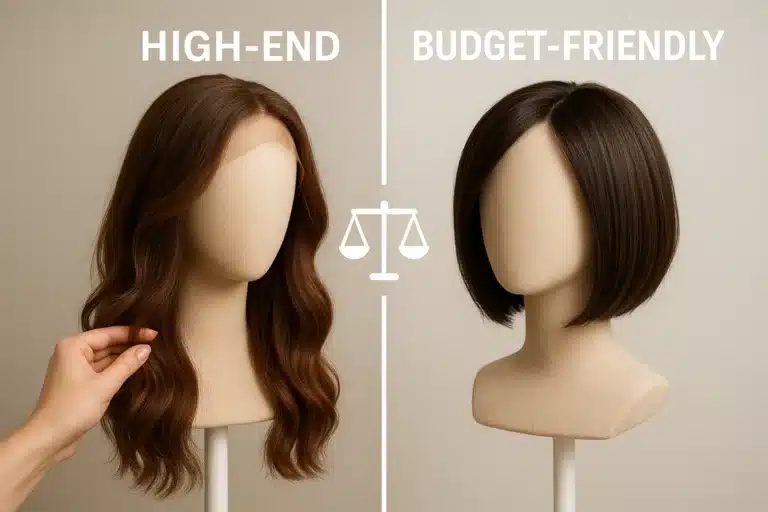
Imagine unboxing a beautifully crafted, high-quality wig. The hair is soft, the cap structure feels solid, but when you place it on your head, something just feels… off. The hairline might look a little too perfect, the density too heavy, or perhaps the color doesn’t completely harmonize with your skin’s natural undertones. If you’ve ever found yourself in this scenario, you’re experiencing the fundamental difference between an “off-the-shelf” hairpiece and a truly bespoke wig.
For years, the wig buying experience has felt fragmented. On one end, there are basic salon directories offering generic sew-ins and quick cuts. On the other end are dense, jargon-heavy cosmetology manuals that leave everyday consumers feeling overwhelmed. But the world of advanced wig customization—specifically manual lace ventilation, multi-step chemical dyeing, and precision hair fiber blending—is what transforms a standard wig into an undetectable, deeply personal piece of wearable art. If you are exploring local options around the Broad Street, Ironbound, or Bergen Street corridors, knowing exactly what to look for is crucial. To help map out your local journey, you can reference our ultimate guide to the best wig stores in Newark, NJ to locate verified brick-and-mortar storefronts before commissioning advanced artisan work.
In this guide, we are going to demystify the science and artistry behind advanced wig customization, equipping you with the knowledge to make empowered, confident decisions for your unique hair journey.
The Shift from Basic Styling to Advanced Customization
Basic wig styling typically involves trimming, basic heat application, or adhesive installations. While necessary, styling alone cannot change the structural DNA of a wig.
Advanced customization, however, deconstructs and rebuilds the unit to suit your precise biological features. This requires an artisan to master three distinct pillars of wig-making:
- Lace Ventilation: The meticulous process of tying individual strands of hair into a sheer lace foundation.
- Custom Color Chemistry: Modifying factory-processed hair pigments without destroying the delicate hair cuticle.
- Texture Blending: Seamlessly integrating different hair densities and textures so the unit mimics natural human hair growth patterns.
Let’s dive deeper into each of these transformative techniques.
Lace Ventilation and Hairline Reconstruction
When someone complains that their wig looks “wiggy,” the culprit is almost always the hairline and the parting space. Many online tutorials claim that simply bleaching the knots will create an invisible scalp illusion. However, over-bleaching often leads to chemical breakage and shedding. True customization relies on the mechanics of lace ventilation.
The Knot Hierarchy Explained
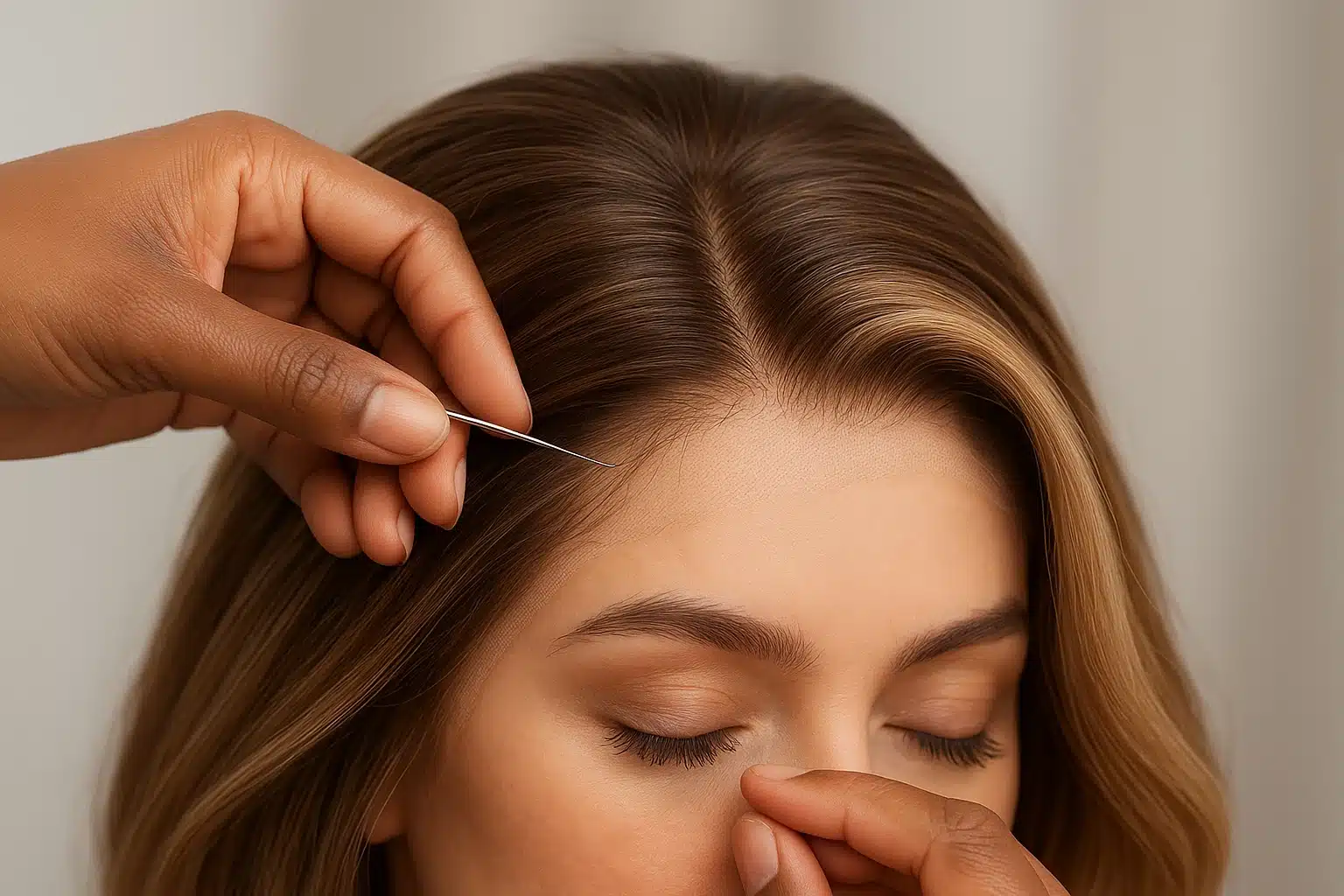
Master wig artisans in Newark utilize specialized ventilation needles (ranging in microscopic gauges from 00 to 3) to manipulate how hair sits on a Swiss or HD lace mesh.
- Single Knots: Tying one hair per hole in the lace creates zero bulk. This is ideal for the first 0.5 centimeters of the perimeter hairline to mimic soft “baby hairs,” though it offers lower structural durability.
- Single Split Knots: This is the gold standard for ultra-realistic parting lines. The knot sits incredibly flat against the lace, allowing the hair to reverse direction seamlessly, giving the illusion of hair growing directly from the scalp.
- Double Flat Knots: Tying 2–3 hairs per hole creates maximum lock against rigorous brushing. Technicians strategically place these behind the transitional hairline zone where density and durability are most needed.
By utilizing single split knots at an 80% to 100% graduated density, a skilled technician can reconstruct a balding lace front or patch a sparse crown without ever needing to rely on damaging bleach.
The Chemistry of Custom Wig Coloring
A common misconception is that coloring factory-made wigs is identical to coloring the hair growing out of your head. In reality, commercial human hair wigs often undergo heavy processing, including industrial acid baths and silicone coatings, before they ever reach a salon.
Lifting Factory Pigment: The “Low & Slow” Rule
When coloring human hair wigs, applying standard 40-volume bleach to a factory-dyed Black (Color #1/1B) unit is a recipe for disaster. Lifting pigment requires specialized low-and-slow developers and porosity equalizers to protect the hair’s integrity. A skilled colorist will always perform a strand test to determine how the hair’s cuticles react before committing to a full balayage or root smudge.
The Watercolor Immersion Method
Have you ever seen a wig featuring a flawless, streak-free pastel, rich copper, or multidimensional ash blonde? Advanced customizers often use the Hot-Water Immersion (or “Watercolor”) Technique. By submerging the lace frontal into a carefully measured bath of liquid pigments, the colorist achieves an incredibly even, translucent distribution of color that standard bowl-and-brush applications simply cannot replicate.
Knowing Your Fiber Limits
Understanding what your wig is made of dictates what can be done to it:
- 100% Virgin Human Hair: Can safely undergo oxidative chemical lifts (bleach) and deposit coloring. It handles heat styling up to 400°F.
- Human Hair / Synthetic Blends (e.g., 70/30 or 50/50): These require deposit-only colors (direct dyes). They maintain “style memory” but have a strict heat limit (usually between 280°F–320°F).
- High-Heat Synthetics: These have zero tolerance for chemical bleach. Customizing wig colors on these units requires specialized fabric or alcohol-based dyes, and reshaping is typically done via hot-water steaming.
The Art of Texture Blending & Fiber Compatibility
If you suffer from hair loss or simply wear wigs as a protective style, you might opt to leave some of your natural hair out to blend with the wig. The technical challenge here is matching the wig’s density and texture to your biological hair.
Advanced Newark wig artisans excel in density gradation. Rather than offering a standard, heavy 150% density all over, a custom piece might start at 130% at the hairline and gradually build to 180% at the nape. Furthermore, blending straight, kinky straight, or yaki-textured human hair with fine European synthetic fibers requires an artisan’s eye for cuticle direction (Remy vs. Non-Remy alignment) so that the hair behaves beautifully when moved by the wind or tucked behind an ear.
Navigating Newark’s Customization Scene: A Buyer’s Consultation Checklist
When visiting specialty boutiques around Greater Essex County, you want to transition from a casual shopper to an educated client. Before commissioning a customization service that can cost anywhere from $100 for hourly ventilation labor to upwards of $300 for complex lace rebuilds, use this consultation scorecard:
- Ask about Knotting Techniques: “Do you ventilate single split knots at the perimeter to reduce bulk?”
- Ask about Chemical Safety: “Do you test strand porosity before doing a full balayage lift on processed human hair?”
- Inquire about Base Reinforcement: “Can you integrate silicone lining or fabric reinforcement under the lace to protect my sensitive scalp?”
- Confirm the Service Boundaries: Make sure you understand exactly what the turnaround timeline is (custom work can take 2 to 12 weeks) and what maintenance schedules are required.
Frequently Asked Questions (FAQ)
What is the difference between wig styling and advanced wig customization?
Styling encompasses temporary changes like cutting, curling, or flat-ironing. Advanced customization involves permanently altering the unit’s construction through hand-tying new hair into the lace (ventilation), chemically altering the hair fibers (custom coloring), or structurally resizing the wig cap.
Can you color or bleach any wig, or does it have to be 100% virgin human hair?
Only 100% human hair can be lightened with bleach (oxidative lifting). Synthetic wigs and human-synthetic blends will melt or dissolve if exposed to bleach. However, synthetics can be darkened or tinted using specialized fabric dyes or the watercolor method.
How much does ventilation repair usually cost compared to buying a new frontal?
While buying a pre-made replacement lace frontal might cost between $100 and $250, having an artisan hand-ventilate and repair a balding spot on your favorite, perfectly-fitted custom wig is usually priced per square inch (often around $150/sq. inch). Repairing is often more cost-effective and emotionally rewarding if the wig is a cherished, high-quality piece.
Why do my bleached knots keep shedding?
The chemicals used to bleach knots weaken the integrity of the hair strand right where it is tied to the lace. Over time, friction from brushing causes the weakened knot to snap. This is why advanced artisans prefer using single split knots, which hide the knot visually without requiring harsh, damaging chemicals.
Your Next Steps in the Wig Customization Journey
Entering the world of custom wigs is an empowering step toward reclaiming your confidence and celebrating your personal style. By understanding the intricate mechanics of ventilation, the chemistry of custom color, and the nuances of fiber blending, you no longer have to settle for a wig that just feels “okay.”
Whether you are navigating medical hair loss or seeking the ultimate protective style, prioritizing compassionate expertise is key. Take the time to evaluate the construction of your current wigs, ask technical questions when visiting local Newark artisans, and remember that true hair customization is an art form entirely dedicated to making you feel like your most authentic self.