Finding the perfect wig is rarely just a simple shopping trip—especially when you are searching for authentic ethnic hair textures. If you’ve ever typed “wigs near me” into a search engine only to walk into a store that doesn’t understand your natural curl pattern, you know exactly how frustrating the process can be. The anxiety is real: nobody wants to invest in a piece only to be plagued by the fear of an unnatural, “wiggy” hairline or a texture that completely clashes with their natural hair.
Navigating local business listings will tell you where a store is, but it won’t tell you who truly understands the nuances of 4C hair or who offers private spaces for medical hair loss consultations. If you’re exploring your options and want to avoid expensive mistakes, our comprehensive guide to evaluating the best wig stores in Philadelphia, PA serves as the perfect foundation for your journey. Let’s dive deeper into the science of texture, the secrets of a flawless fit, and how to find exactly what you need in the City of Brotherly Love.
The “Natural” Challenge: Why Texture Matching is Everything
The current landscape of local shopping often leaves a massive gap between simply having products on a shelf and providing true technical education. Many boutiques offer a wide array of wigs, but lack the specific expertise required for ethnic hair needs.
This leads to what many in the community call the “Texture-Match Crisis.” If you are wearing a U-part wig and leaving some of your natural hair out for blending, the wig’s texture must be an exact match to your own. Whether you are looking for fashion-forward units, specialized medical wigs, or a custom cranial prosthesis covered by insurance, understanding the technical side of your hair is your best defense against an unnatural look.
A Masterclass in Texture: Breaking Down 3A to 4C
Before you step foot in a Center City boutique or a South Philly beauty supply, you need to know your numbers and letters. The ethnic hair typing system is your ultimate cheat sheet for wig shopping.
Understanding the “S” vs. “Z” Pattern
- Type 3 (3A, 3B, 3C): These are your “S-pattern” curls. They range from loose, bouncy loops (3A) to tight, corkscrew curls (3C). When shopping for Type 3 wigs, you are looking for moisture-rich human hair that holds a defined ringlet.
- Type 4 (4A, 4B, 4C): These are your “Z-pattern” or kinky-coily textures. 4A has a tight, visible “S” coil, 4B bends in sharp “Z” angles, and 4C features extremely tight, densely packed coils.
The Density Myth: More Hair ≠ Better Hair
One of the most common mistakes first-time buyers make is misunderstanding density. In the wig world, density refers to how much hair is ventilated into the cap.
A 150% density straight wig might look naturally full. However, a 150% density curly or 4C kinky wig will look incredibly voluminous—sometimes resulting in the dreaded “helmet head.” Understanding the balance between density and volume is critical. When shopping locally, look for boutiques that educate you on the fact that with highly textured hair, a lower density (like 130%) often yields a much more natural, everyday look.
The Philadelphia Evaluation Framework: Lace, Tints, and Tangles
When you finally locate the best wig store in philadelphia for your specific needs, how do you evaluate their products? Your focus should immediately shift to the lace construction and their fitting expertise.
HD Lace vs. Transparent Lace for Melanated Skin
Not all lace is created equal, and for women of color, the wrong lace can ruin a beautifully textured wig.
- Transparent Lace: This lace is typically light and needs to be tinted to match brown or deep skin tones using specialized sprays, powders, or dyes.
- HD (High Definition) Lace: This is a much thinner, more delicate material that melts seamlessly into almost any skin tone, offering the most undetectable hairline. However, because it is so thin, it is also more fragile.
A knowledgeable Philadelphia boutique will not only explain this difference but will often offer in-house lace tinting to perfectly match your complexion.
The 4-Finger Rule & Hairline Placement
Here is a major “Aha!” moment for wig wearers: the placement of your wig is just as important as the quality. Many beginners pull their wigs too far forward, shrinking their forehead and creating an instant giveaway that the hair isn’t theirs.
Follow the 4-Finger Rule: place four fingers horizontally across your forehead, with your pinky resting on your eyebrows. Your index finger marks exactly where your natural hairline should begin. When going in for a professional wig fitting, pay attention to whether the stylist respects your natural hairline or tries to pull the lace too far down.
The Philly Texture Map: Finding the Right Specialization
Philadelphia’s wig market is incredibly diverse, stretching from Fishtown to South Philly. Instead of just looking for the closest shop, categorize your search by specialization:
- For Customization and Medical Needs: Look for boutiques (similar to places like Hairs 2 U or specialized local studios) that offer semi-private or fully private consultation rooms. Empathy and privacy are vital when dealing with thinning hair or medical treatments.
- For Luxury and Premium Installs: Seek out specialized salons (like Salon Bala’s local equivalents) that prioritize custom plucking, bleached knots, and high-end human hair installations. These locations treat the wig as a bespoke garment.
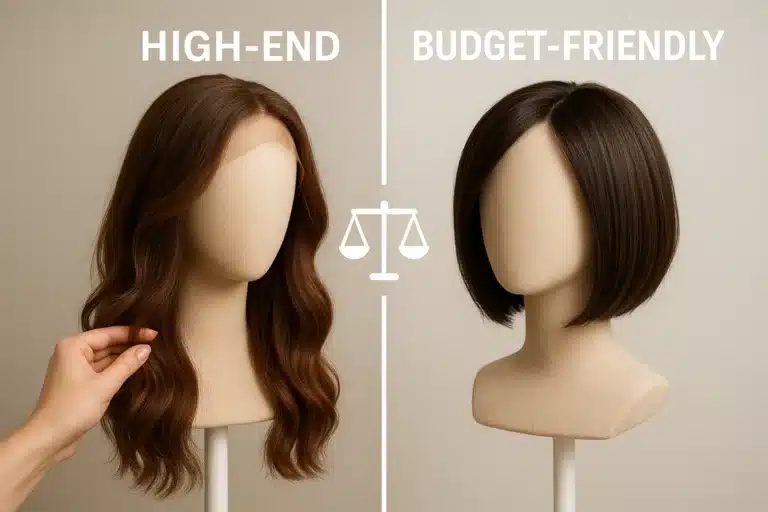
- For Variety and Budget-Friendly Curly Units: Larger beauty hubs (like BUW-style factory direct stores) are great for experienced wearers who know exactly what 4C or 3B unit they want and don’t require heavy in-store customization.
Maintenance Progress Checkpoints: Caring for Ethnic Textures
Buying a premium curly or kinky-coily wig is only the beginning. Maintaining that texture requires a specific roadmap. Note that detangling a 4C synthetic wig requires entirely different products (like silicone sprays) compared to a human hair 4C wig (which needs water, leave-in conditioner, and a Denman brush).
- Week 1-2: Focus on moisture. Curly wigs do not receive natural sebum from your scalp. Hydrate daily with a water and leave-in conditioner mix.
- Month 1-3: Watch the “Tangle Zones.” The nape of the neck is notorious for matting due to friction against your clothes. Detangle this area gently every single night.
- Month 4-6: Deep conditioning and trim time. Just like natural hair, the ends of your human hair wig will get dry. A light trim by a professional will breathe new life into the unit.
Stylist “Green Flags”: What to Look For Before the Cut
Before you allow a local Philly stylist to cut the lace on your new investment, look for these green flags:
- They ask about your daily routine. (Do you work out? Do you sweat a lot? This determines the type of adhesive or glueless method they recommend).
- They custom pluck the hairline. No natural hairline is perfectly straight and dense.
- They do a skin patch test. If they are using glues or holding sprays, they should test your skin for sensitivities first.
Frequently Asked Questions (FAQ)
What is the difference between HD lace and transparent lace for brown skin?
HD lace is extremely thin and naturally “melts” into any skin tone, making it ideal for a flawless, undetectable look on melanated skin. Transparent lace is slightly thicker and usually white or very light; it must be manually tinted with makeup or lace tint sprays to match darker skin tones.
How much does a high-quality ethnic human hair wig cost locally?
Prices in Philadelphia can vary widely based on length, density, and lace size (closure vs. frontal). A high-quality, human hair curly or kinky-textured wig typically ranges from $250 to $800+. Custom color and professional installation will add to this cost.
Can I get a custom wig fitted and styled in-store?
Yes! Many specialty boutiques and salons in Philadelphia offer comprehensive services. You can purchase the unit and have a licensed stylist bleach the knots, pluck the hairline, tint the lace, and style the unit to perfectly frame your face.
How do I maintain the curl pattern of a kinky-curly wig without shedding?
Moisture and gentle handling are key. Always detangle when the hair is damp and saturated with a slippery conditioner. Use a wide-tooth comb or a specialized detangling brush, starting from the ends and working your way up to the roots to minimize shedding.
Are there semi-private boutiques for hair loss consultations in Philadelphia?
Absolutely. Many high-end wig boutiques recognize that hair loss is a deeply personal journey. When calling to book an appointment, simply ask if they offer private consultation rooms for clients experiencing medical hair loss or seeking cranial prostheses.
Your Next Steps
Understanding your hair texture, knowing the right questions to ask, and recognizing a quality installation are the first steps to reclaiming your confidence. You don’t have to settle for “close enough” when it comes to your crown. By arming yourself with this educational framework, you can confidently navigate local boutiques and online options alike to find a piece that truly feels like you.