Receiving a medical diagnosis that involves hair loss is overwhelming. Between navigating crowded parking garages at major medical centers and managing the physical toll of treatments, your schedule is likely stretched thin. The reality of “chemo brain” and treatment fatigue means that everyday tasks require far more energy than usual. During this vulnerable time, the last thing you need is a stressful, cross-town commute just to find a comfortable solution for your hair loss.
When mapping out your treatment plan, coordinating your hair replacement strategy alongside your hospital visits can save you immense time and energy. If you are just beginning this journey, learning how to find and evaluate the best wig store in Philadelphia that truly understands medical hair loss is a critical first step. By focusing on retailers situated near major Philadelphia hospitals, you can easily transition from an infusion appointment to a compassionate, private wig fitting without missing a beat.
The Diagnosis-to-Wig Timeline: Why Planning Matters
One of the most common challenges patients face is waiting too long to explore their hair replacement options. Medical professionals often recommend looking for a wig before you begin chemotherapy or radiation.
Why? Because shopping for a wig when you still have your natural hair allows a specialist to see your natural color, texture, and style. Furthermore, the “pharmacy-to-salon pipeline” is much easier to navigate before treatment fatigue sets in. Planning a consultation at a wig store located just a few blocks from your treatment center means you can comfortably bundle your appointments, conserving your energy for what matters most: healing.
The “Cranial Prosthesis” Secret: Unlocking Insurance Benefits
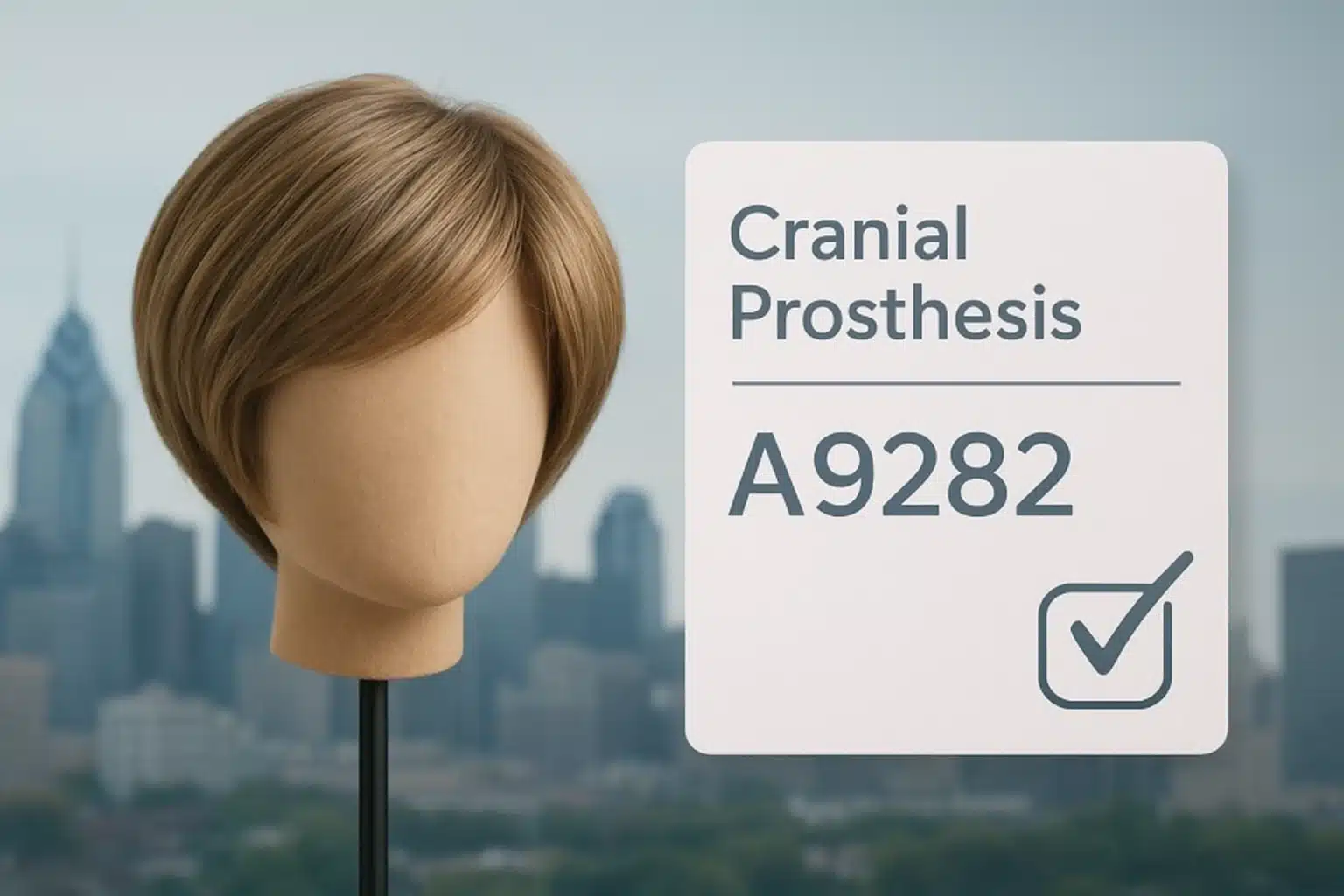
Here is a crucial “aha moment” that often gets lost in the shuffle of medical paperwork: If you are losing your hair due to a medical condition or treatment, you are not shopping for a “wig” in the eyes of your insurance company. You are looking for a “Cranial Prosthesis.”
Many patients search online for “chemo wigs” and find themselves paying completely out of pocket because they didn’t know the proper medical terminology to use with their provider.
To trigger insurance coverage with Pennsylvania carriers like Independence Blue Cross (IBC) or UPMC Health Plan, you need a specific prescription. When you speak to your oncologist or dermatologist, ask them to write a prescription for a “cranial prosthesis.” The universal medical billing code (HCPCS Code) for this is A9282. Understanding this terminology is the bridge between clinical necessity and retail convenience, ensuring you access the financial benefits you are entitled to.
Hospital Mapping: Finding Medical Wigs Near Your Treatment Center
Philadelphia is home to world-class medical institutions. Fortunately, the city also hosts several dedicated resources strategically located near these hubs.
Thomas Jefferson University Hospital (Center City)
If you are receiving treatment at Jefferson, convenience is highly accessible. Jefferson offers an on-site Appearance Center, which is an excellent starting point for many patients. However, if their selection doesn’t quite match your personal style or budget, specialized local retailers like The Beauty Place are situated nearby. Having off-campus options within a short distance means you can easily explore alternatives right after a morning appointment.
Penn Medicine (HUP & Perelman Center)
Patients at the Hospital of the University of Pennsylvania (HUP) or the Abramson Cancer Center have access to the Penn Medicine Boutique. For those who are underinsured or seeking community-supported options, the Hairs 2 U Wig Bank is a phenomenal local landmark that provides free or subsidized resources. Knowing these options exist prevents the frustration of encountering dead links on generic hospital resource pages.
Temple University Hospital (North Broad)
While the immediate vicinity of Temple University Hospital features several standard beauty supply stores, patients seeking specialized medical fittings might need to plan a slight travel buffer. When dealing with sensitive scalps, it is often worth taking a short ride to a specialized boutique that offers private fitting rooms rather than purchasing from a standard retail storefront.
Fox Chase Cancer Center
Fox Chase patients benefit immensely from the hospital’s on-site boutique. Because the campus is located further from Center City, utilizing the on-site resources for your initial cranial prosthesis consultation can save you a significant commute.
The Financial Toolkit: PA Insurance Checklist
Navigating the financial aspect of medical hair loss doesn’t have to be a mystery. Before your next appointment, prepare a simple checklist:
- Request the Right Prescription: Ask your doctor explicitly for a prescription for a “Cranial Prosthesis” detailing your diagnosis (e.g., Alopecia, Chemotherapy-induced hair loss).
- Confirm the Code: Ensure the HCPCS Code A9282 is utilized.
- Call Your Provider: Contact Independence Blue Cross, UPMC, or your specific provider to ask: “What is my out-of-network reimbursement rate for a cranial prosthesis?”
- Seek Medical Billers: Look for wig boutiques that explicitly state they help with medical billing or provide the exact itemized receipts required for insurance reimbursement.
Practical Mastery: Preparing for Your Fitting
Before you head to a boutique near your hospital, understanding a few basics will make the process incredibly smooth.
During treatments like chemotherapy or radiation, your scalp will likely become highly sensitive. While 100% human hair wigs offer unparalleled realism, many patients are surprised to learn that high-quality synthetic wigs are often recommended during active treatment. Synthetic hair requires far less styling and maintenance—a massive benefit when dealing with treatment fatigue—and the caps are often lighter and softer on a sensitive scalp.
Additionally, you can take a soft measuring tape and measure the circumference of your head before your first infusion. Having these basic measurements written down can help a specialist pre-pull options for you, drastically reducing the time you need to spend in the chair.
Frequently Asked Questions About Medical Wigs
Does insurance cover wigs for chemo in PA?
Yes, many Pennsylvania insurance plans cover a portion or the full cost of a wig if it is prescribed as a “cranial prosthesis” by your doctor. Coverage varies widely between plans (like IBC or UPMC), so it is vital to call your insurance provider and ask about your specific benefits for HCPCS code A9282.
How do I get an oncologist to write a wig prescription?
Simply ask your oncology nurse navigator or oncologist during your consultation. They are highly accustomed to these requests. Make sure they use the term “cranial prosthesis” rather than “wig” on the actual prescription pad.
Should I choose synthetic or human hair for a sensitive scalp?
Both have benefits, but premium synthetic wigs are generally lighter, more breathable, and require significantly less upkeep. Medical-grade wigs (often called monofilament or hand-tied wigs) feature incredibly soft caps designed specifically to prevent irritation on scalps without hair.
Next Steps in Your Hair Restoration Journey
Losing your hair is a deeply personal experience, but finding the right support shouldn’t be a struggle. By utilizing boutiques near Philadelphia’s major hospitals, you can merge your medical care with compassionate retail support, ensuring you feel confident and comfortable every step of the way.
As you navigate this journey, remember that expertise and empathy matter just as much as the product itself. With nearly two decades of experience helping individuals through hair loss, Wig Superstore is dedicated to providing the education, high-quality options, and supportive care you deserve. Take your time, ask questions, and prioritize your comfort—you don’t have to walk this path alone.