For many, the moment they realize hair loss is becoming noticeable is quickly followed by a second, equally jarring realization: the price tag of fixing it. You might find yourself late at night, scrolling through clinic websites, only to experience “sticker shock” when a quote for a hair transplant rivals the down payment on a car. It’s a common scenario that leaves many feeling stuck between doing nothing and spending a fortune.
However, the conversation around hair restoration often focuses heavily on the “lifetime value” while ignoring the immediate financial barrier to entry. When you look at the hair wig surgery cost landscape, it becomes clear that there is a massive difference between the cash required today to solve the problem versus a theoretical cost spread over ten years. Understanding these initial investment options is the first step toward reclaiming your confidence without compromising your financial stability.
The “First 30 Days” Financial Reality
When analyzing hair loss solutions, most people look at the end result. But for your bank account, the most critical period is the first 30 days. This is where the difference between surgical intervention, pharmaceutical treatments, and wearable hair becomes stark.
The Surgical Deposit Barrier
Hair transplants are often marketed as a “one-time” cost. While attractive in theory, the barrier to entry is high. Most reputable clinics require a significant non-refundable deposit just to book a date—often ranging from $1,000 to $2,500. This is money that leaves your pocket months before the procedure even happens. When you add the remaining balance due on the day of surgery (often $5,000 to $15,000 depending on the number of grafts), the initial upfront capital required is substantial.
The Pharmaceutical “Subscription” Model
On the other end of the spectrum are topical treatments and pills. The entry cost here seems low—perhaps $50 to $100 for a consultation and the first month’s supply. However, this is a financial model based on risk. You are essentially paying a monthly subscription for a result that isn’t guaranteed. If the treatment doesn’t yield results for you (which can happen in 40-60% of cases), the hundreds of dollars spent over the first six months are a sunk cost with no return on investment.
The Immediate ROI of Wigs
In contrast, high-quality wigs operate on a “what you see is what you get” financial model. The initial investment for premium natural looking wigs typically ranges from $400 for high-end synthetic fibers to $1,500+ for human hair. While not “cheap,” this payment guarantees 100% coverage and immediate results on day one. There is no biological gambling involved; you purchase a full head of hair, and you receive a full head of hair.
The Hidden Currency: “Time to Confidence”
One factor often missing from financial calculators is the cost of time. How long do you have to wait to see a return on your investment?
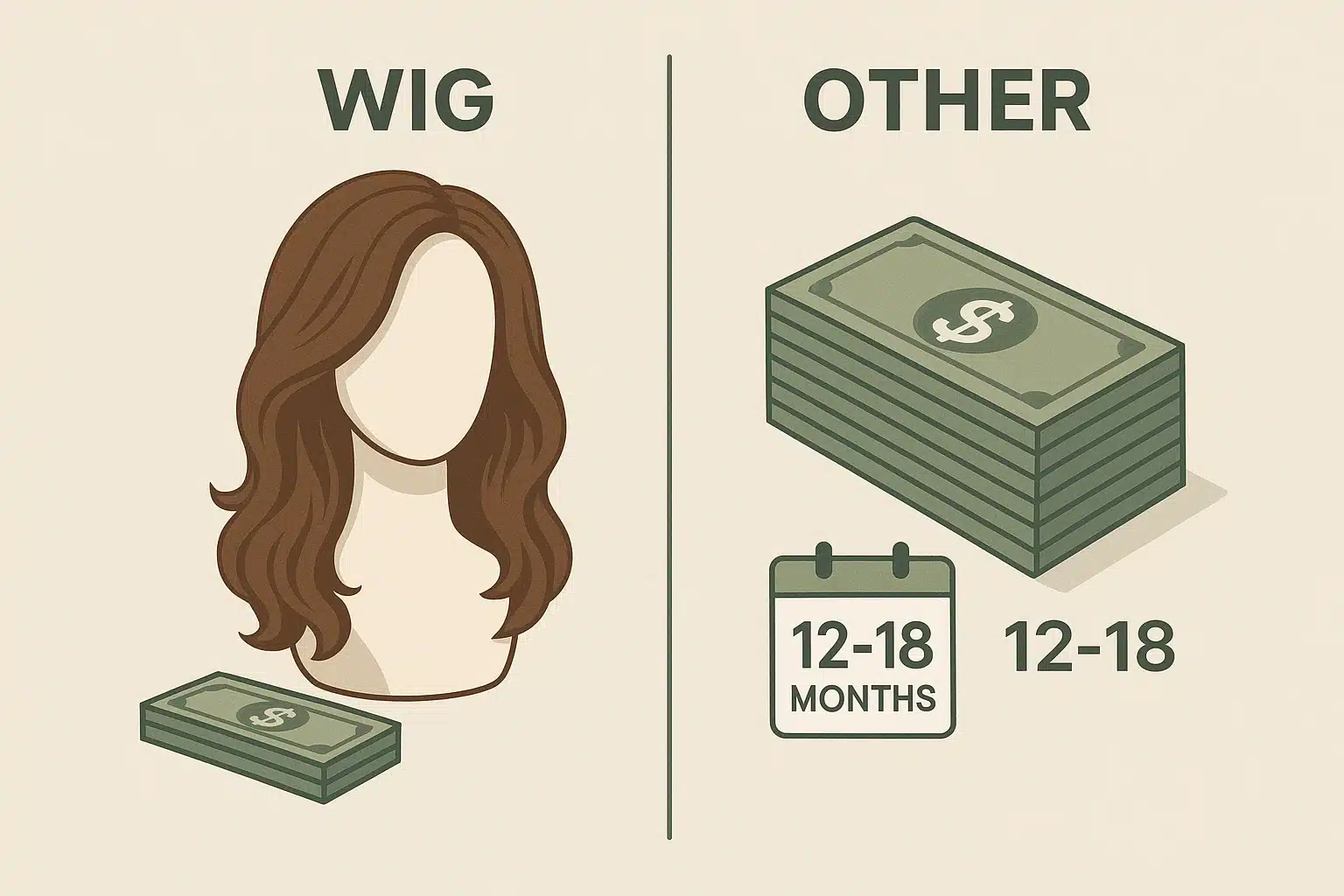
- Transplants: After the expensive surgery, there is a recovery period. Ironically, many patients experience “shock loss” (shedding) initially. The full results often aren’t visible for 12 to 18 months. You are paying thousands of dollars today for a result you won’t fully enjoy until next year.
- Pharmaceuticals: These treatments are a slow burn. It generally takes 6 to 9 months to see visible thickening. During that time, you are paying monthly while still dealing with the daily anxiety of thinning hair.
- Wigs: This is the only solution with a “12-minute install.” The return on investment is immediate. For those dealing with sudden hair loss or an upcoming social event, the value of instant confidence often outweighs the appeal of a permanent biological solution that is years away.
Decoding the Entry-Point Investment
To make an informed decision, it helps to break down what the first month of ownership actually looks like for a wearable hair solution compared to other methods.
Understanding Quality Grades
If you choose the wig route, your budget determines the longevity and realism of the piece.
- Budget Synthetic ($150 – $300): Great for occasional wear, but may lack the movement of natural hair.
- Premium Synthetic / Heat Friendly ($350 – $600): These offer a balance of durability and realism, often indistinguishable from biological hair to the untrained eye.
- Human Hair ($900 – $3,000): This is an investment in texture and styling versatility. The “Hair Quality Index” (often graded 8A to 10A) determines how processed the hair is. Higher grades cost more but last significantly longer with proper care.
Operational Costs
Just as surgery has anesthesia fees and follow-up meds, wigs have operational costs. When budgeting, you should account for accessories. Proper wig maintenance requires specific shampoos, conditioners, and perhaps a mannequin stand or styling tools. These “hidden” startup costs usually total around $50-$100 but are essential for protecting your investment.
Wigs as a Financial Bridge
Perhaps the most empowering way to view wigs isn’t as a “final” choice, but as a strategic financial bridge.
Many individuals use wigs to “buy time.” If a hair transplant is your ultimate goal but saving $15,000 will take three years, you don’t have to suffer through hair loss during that saving period. A high-quality wig allows you to maintain your image and confidence immediately. It takes the desperation out of the decision-making process, allowing you to save for a permanent solution at your own pace, or simply decide later that the flexibility of wigs suits your lifestyle better.
Frequently Asked Questions
Q: Are wigs covered by medical insurance?
A: In many cases, yes. If your hair loss is due to a medical condition (like alopecia or chemotherapy), many insurance providers cover a “cranial prosthesis.” Check with your provider for specific coverage details.
Q: Will a cheaper wig look fake?
A: Technology has come a long way. Modern premium synthetic wigs use multi-tonal fiber blends to mimic the natural variation of biological hair. The “shine” associated with old-school wigs is largely a thing of the past in reputable brands.
Q: How long does the initial investment last?
A: A high-quality synthetic wig worn daily typically lasts 4-6 months with proper care. A human hair wig can last over a year. When you break this down to a “cost per day,” it is often comparable to or cheaper than a daily coffee habit.
Q: Can I finance a wig purchase?
A: Many online retailers now offer “Buy Now, Pay Later” options, breaking the upfront cost into 4 interest-free payments. This makes the entry barrier even lower compared to the lump sums required for medical procedures.
Taking the Next Step
Understanding the financial landscape of hair restoration helps remove the emotion from the purchase and allows you to look at it as a practical investment in yourself. Whether you are looking for a permanent solution down the road or need an immediate fix today, knowing your entry-point options puts you in control.
If you are curious about what a budget-friendly, high-quality solution looks like, exploring the different grades of hair and cap constructions is a great place to start your research. There is a solution for every budget; it’s just a matter of finding the one that offers you the best return on confidence.