There is a specific, quiet anxiety that comes with wearing a wig for the first time. It isn’t usually about how the hair looks—modern synthetic and human hair wigs are incredibly realistic. Instead, the worry centers on movement. Will it slip if I turn my head too fast? Can I hug a friend without worrying about the hairline shifting? These questions are universal, but the answers aren’t always straightforward because every scalp and lifestyle is different.
True comfort comes from knowing your wig isn’t just sitting on your head, but is securely anchored in a way that suits your day-to-day life. Whether you are running a marathon or running a board meeting, the goal is seamless wig integration, confidence, & lifestyle adaptations that allow you to forget you are wearing a hairpiece at all. This guide will walk you through the mechanics of security, helping you move from constant checking to effortless wear.
The Foundation: Understanding Your Options
Before you purchase a single product, it is vital to understand that wig security generally falls into three categories: Glueless (using tension and friction), Temporary Adhesion (tapes), and Long-Term Bond (liquid adhesives).
The “best” option doesn’t exist in a vacuum; it depends entirely on your skin chemistry (oily vs. dry), your level of hair loss (bio hair vs. bare scalp), and your daily activity level.
1. The Glueless Route: Wig Grips and Bands
For many beginners, the idea of applying glue to their skin is intimidating. This is where wig grips shine. They are the “comfort-first” choice, ideal for those with sensitive skin or those who want to remove their wig easily at the end of the day.
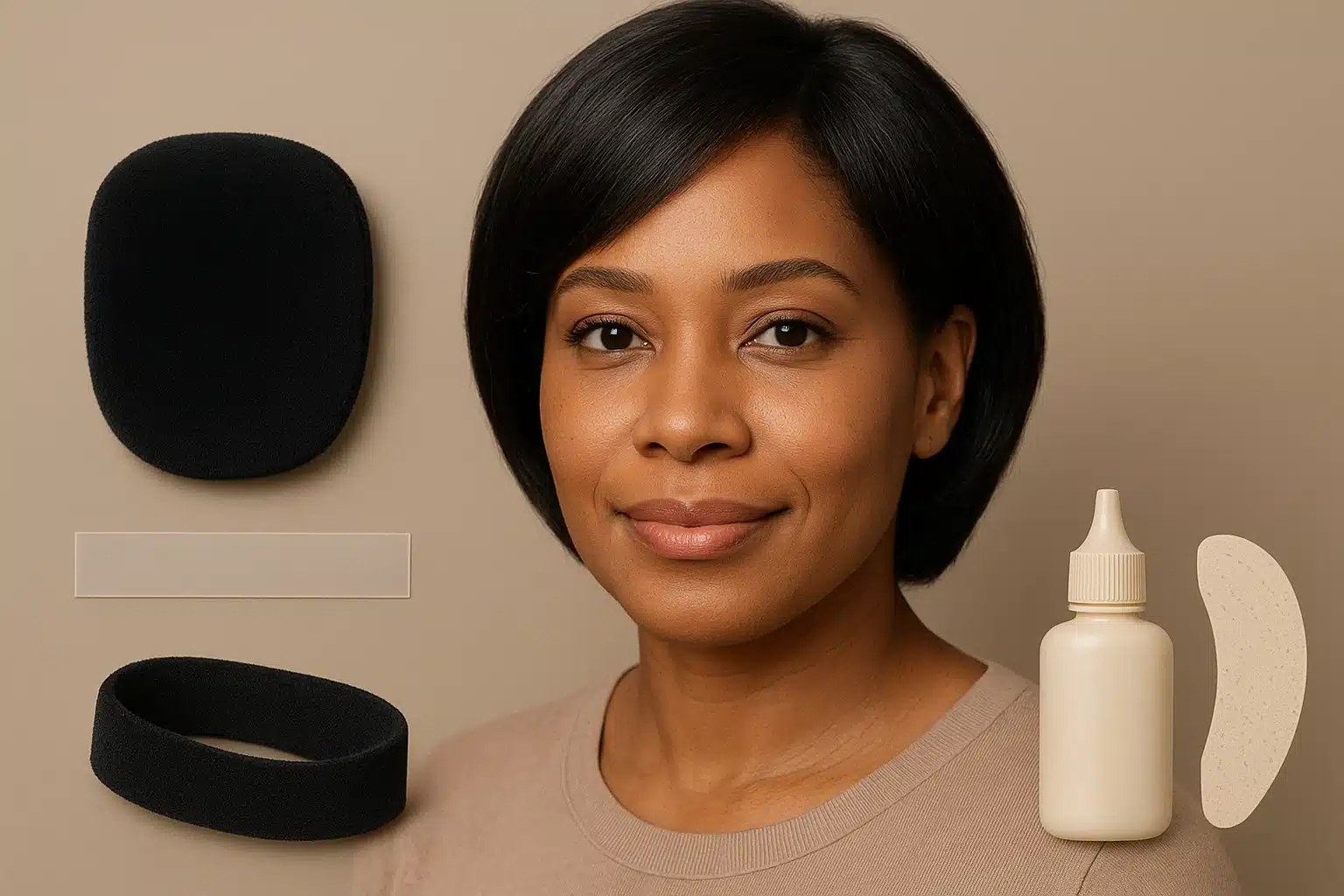
- Velvet Wig Grips: These are adjustable headbands made of velvet. The science behind them is simple but effective: the velvet fibers create friction against the inside of the wig cap, preventing it from sliding backward. They also provide a soft barrier between the wig cap and your scalp, which can reduce tension headaches.
- Silicone Bands: These offer a more “sticky” grip without actual adhesive. They work exceptionally well on those with total hair loss, as the silicone creates a vacuum-like seal against the skin. However, they can trap heat, so they may not be ideal for those who run warm.
Best For: Daily wear, sensitive skin, and individuals who want to take their wig off instantly when they get home.
2. The Flexible Middle Ground: Wig Tape
If you need more security than a grip provides but aren’t ready for liquid glue, wig tape is the industry standard. Unlike household tape, these are medical-grade adhesives designed to be skin-safe.
- Rolls vs. Strips: Tape comes in rolls (customizable length) or pre-cut contour strips (shaped to match the hairline).
- Breathability: Because tape is applied in sections rather than a solid layer, it allows the scalp to breathe better than liquid adhesives. This is often a preferred method for lace fronts, as clear tape can disappear under the mesh for a natural look.
Best For: Intermediate wear (1-3 days), windy days, and keeping lace fronts flat against the forehead.
3. Maximum Security: Liquid Adhesives
Liquid adhesives provide the strongest hold, often lasting anywhere from a few days to several weeks. However, they require the most skill to apply and remove correctly.
- Water-Based Adhesives: These are gentler on the skin and easier to clean up. They dry clear and are great for day-to-day security.
- Acrylic/Solvent-Based Adhesives: These provide the “super hold” required for long-term wear or high-intensity activities (like swimming). Note: These are more likely to cause irritation, so a patch test on your arm is non-negotiable before applying them to your scalp.
Best For: Long-term wearers, athletes, and those who want to sleep in their wig.
The Unsung Hero: Wig Liners
While grips and glues focus on keeping the wig on, liners focus on keeping your scalp happy. A wig liner is a cap worn underneath the wig.
If you have biological hair, a mesh liner helps contain it and flatten it to ensure the wig sits naturally. If you have a sensitive scalp or total hair loss, a bamboo or cotton liner can be a game-changer. These natural fibers wick away sweat and prevent the itchiness that can occur when a wig cap rubs directly against the skin.
Matching the Method to Your Lifestyle
To help you decide, let’s look at three common scenarios.
The “9-to-5” Professional
Challenge: You need your wig to stay put during meetings and commutes, but you want to take it off to relax in the evening.Solution: A Velvet Wig Grip. It offers all-day security without the mess of glue. It’s easy to adjust in the restroom if needed and comes off in seconds when you get home.
The Fitness Enthusiast
Challenge: You sweat—a lot. Moisture is the enemy of most adhesives.Solution: Waterproof Tape or Acrylic Adhesive. While a velvet grip might slip if it gets too saturated, waterproof adhesives are designed to withstand perspiration. Ensure you use a scalp protector spray beforehand to create a barrier against sweat oils.
The Sensitive Scalp
Challenge: Your skin reacts to chemicals, or you are undergoing medical treatments that make your scalp tender.Solution: Glueless with a Bamboo Liner. Avoid adhesives entirely. Use a soft bamboo liner to protect the skin and a velvet grip worn over the liner to secure the wig.
Frequently Asked Questions
Q: Will wig glue pull out my edges?
A: Glue itself doesn’t pull out hair—improper removal does. If you peel off a glued wig without using a release spray or solvent, you risk damaging your skin and bio hair. Patience during removal is key.
Q: How do I keep my wig clean if I use glue?
A: Residue build-up is common. Regular wig maintenance is essential to keep the lace clean and invisible. Use a mirror slide technique (sliding the lace over a mirror with cleaner) to gently remove gunk without tearing the delicate lace.
Q: Can I combine methods?
A: Absolutely. Many wearers use a wig grip for the back of the wig and a small piece of tape specifically at the front hairline to keep the lace flat. This “hybrid” method offers the best of both worlds: comfort and a natural look.
Taking the Next Step
Finding your perfect combination of grips, adhesives, and liners is a journey of trial and error. What works in the winter might not work in the humid summer, and that is okay. Start with the least invasive option (like a grip) and work your way up to adhesives only if you feel you need more security.
Your wig should be a source of confidence, never a source of stress. By choosing the right accessories, you ensure that the only thing people notice is your beautiful hair—not what’s holding it in place.