Imagine wearing a pair of shoes that are a half-size too small for an entire day. Now, imagine that sensation around your head. For many first-time wig wearers, the fear of physical discomfort is matched only by the anxiety of insecurity—the constant, nagging worry that the wig might slip, shift, or look unnatural in a sudden breeze. These concerns are valid, but they are almost always the result of a misunderstanding about how wigs are supposed to fit.
A truly exceptional wig experience doesn’t rely on luck; it relies on the science of precise fitting. While high-quality materials are essential, the geometry of the cap relative to your specific head shape is what dictates comfort. This is where understanding the nuance of measurement and adjustment comes into play. By learning the mechanics behind a secure fit, you move from hoping a wig works to knowing it will. The role of professional consultation in wig selection often centers on these precise details, transforming a standard purchase into a personalized solution that feels like an extension of yourself.
The Foundation: Why One Size Rarely Fits All
The term “Average” in the wig industry is a statistical concept, not a guarantee. While roughly 90% of wearers fall into the Average size category, human heads are distinct biological landscapes. You might have the circumference of an “Average” size, but a deeper front-to-back measurement, or perhaps a flatter occipital bone (the bone at the base of your skull).
When a wig fits incorrectly, it does more than just feel awkward. A loose fit causes friction, which can damage the delicate hair fibers at the nape of the neck. Conversely, a fit that is too tight can restrict circulation, causing “wig headaches” and damaging biological hair underneath. Understanding the anatomy of a fit helps you identify not just what size you need, but why certain styles feel better than others.
The Anatomy of a Perfect Fit: Mastering Your Measurements
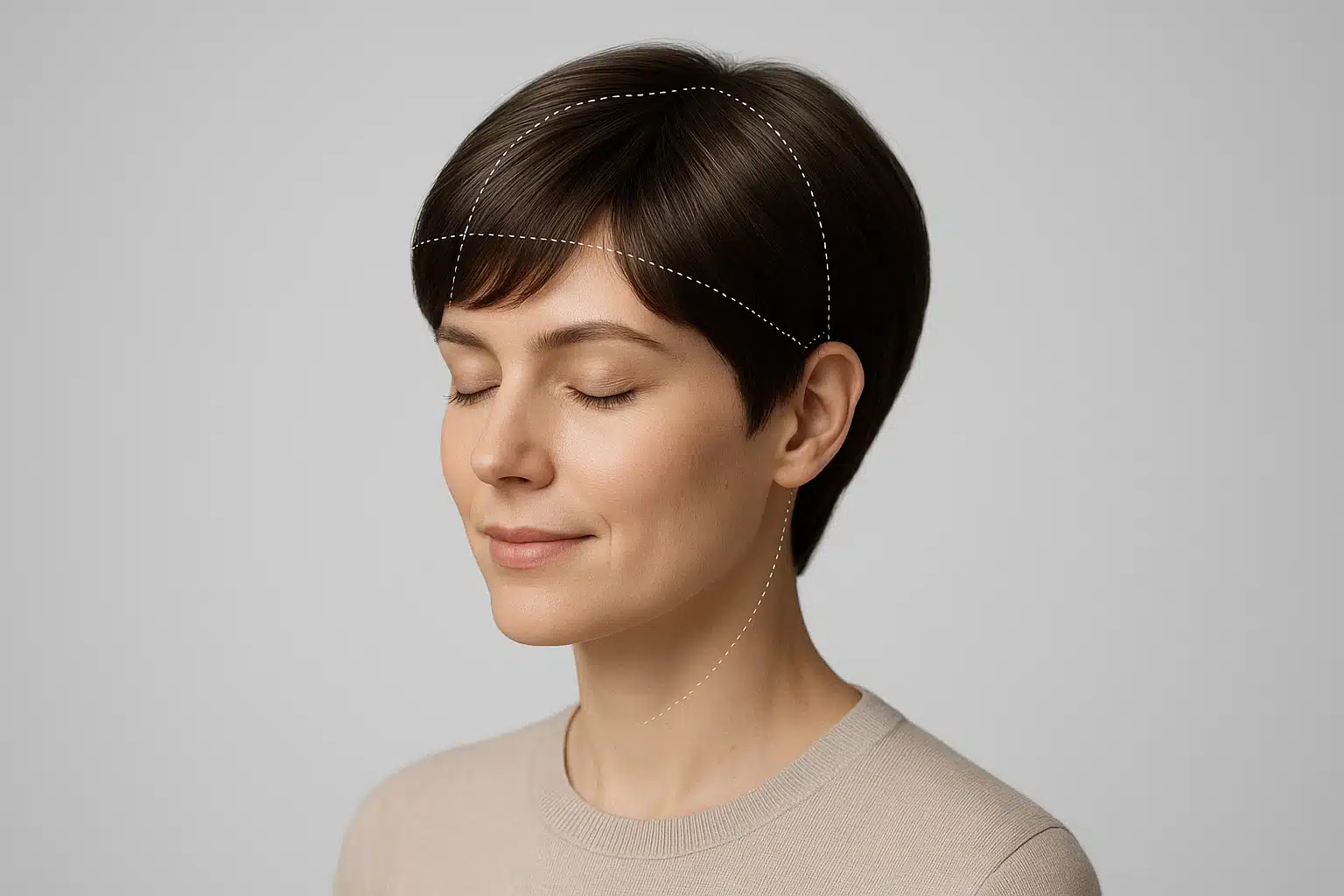
To achieve a “forgot I was wearing it” level of comfort, you need to look beyond simple circumference. Professional stylists utilize three critical measurements to build a 3D understanding of your head shape.
1. The Circumference (The Anchor)
This is the measurement most people know, but it is often taken incorrectly. It traces the hairline, goes behind the ears, and sits at the nape of the neck.
- How to measure: Place the tape measure at the center of your front hairline, guide it behind your ear, down to the nape of your neck, up behind the other ear, and back to the front center.
- Why this matters: This determines the tension band of the wig. If this is off, the wig will either slide up (too loose) or create pressure points (too tight).
2. The Ear-to-Ear (The Frame)
This measurement dictates how the wig sits across the top of your head and aligns with your temples.
- How to measure: Place the tape at the top of one ear (where a pair of glasses would sit), guide it specifically over the crown of the head, and down to the same point on the opposite ear.
- Why this matters: If this measurement is too short, the wig’s ear tabs will sit too high, exposing your biological hair or skin. If it is too long, the ear tabs will push down on your ears, causing significant discomfort and preventing the wig from laying flat against the temples.
3. The Front-to-Nape (The Depth)
This measures the depth of the cap and is crucial for preventing the “conehead” look or the sensation of the wig sliding backward.
- How to measure: Start at the center of your front hairline and measure directly back over the top of your crown to the center of your nape (where your skull meets your neck).
- Why this matters: This ensures the cap contours to the curve of your head. A cap that is too deep for your head will ripple at the top; a cap that is too shallow will constantly pull back, exposing your hairline.
Diagnosing Common Fit Issues (And How to Solve Them)
Even with accurate measurements, you may encounter specific fit “symptoms.” Professional stylists view these symptoms as clues to how the wig needs to be adjusted.
The Problem: The “Rising” Nape
The Symptom: You look down to read a book, and you feel the back of the wig sliding up your neck.The Cause: This usually happens because the wig is too tight, or the wearer has a flat occipital bone, giving the wig nothing to “grip” onto.The Solution: Loosening the adjustable straps at the nape often solves this. For those with a flat back of the head, a velvet wig grip is a game-changer, providing friction that prevents vertical movement.
The Problem: Temple Gapping
The Symptom: The ear tabs flare out away from the face rather than hugging the temples.The Cause: The wig may be too large in the ear-to-ear measurement, or the metal stays inside the ear tabs are not contoured.The Solution: Most high-quality wigs feature bendable stays in the ear tabs. Gently bending these inward toward the temple creates a custom “hug” that secures the front of the wig and eliminates gaps.
The Problem: The Crown Ripple
The Symptom: The wig feels secure at the circumference, but there is empty space or “poofiness” at the very top.The Cause: Your front-to-nape measurement is smaller than the wig’s cap depth.The Solution: While going down a size is one option, sewing a small horizontal dart into the cap (a professional alteration) can reduce this excess material without changing the circumference fit.
Beyond Measurements: Custom Adjustments & Securement
Achieving the perfect fit often involves fine-tuning the securement method based on your lifestyle and hair loss stage.
For Total Hair Loss
If you have total hair loss (Alopecia Totalis or Universalis), the friction against the scalp is different than against hair.
- Silicone Grips: Wigs with silicone-lined caps or separate silicone bands use body heat to create a suction-like grip that is incredibly secure.
- Adhesives: For active lifestyles, roll-on adhesives or tape can be used on the lace front or polyurethane tabs for multi-day wear.
For Biological Hair Underneath
If you are wearing a wig for fashion or thinning hair, your biological hair acts as an anchor.
- Wig Clips: Sewn-in pressure sensitive clips can attach to your biological hair for immovable security.
- Proper Prep: The flatness of your biological hair is critical. Using a wig cap to smooth your own hair prevents bumps that can distort the wig’s fit measurements.
Frequently Asked Questions About Wig Fitting
Can I stretch a wig that is too tight?
Synthetic wigs have “memory” and are difficult to stretch permanently without damaging the cap structure. However, professional styling tools and gentle steam (on heat-friendly fibers) can sometimes relax the fibers slightly. It is always safer to size up and tighten than to size down and attempt to stretch.
How does hair density affect the fit?
If you have thick biological hair, you must account for that bulk in your measurements. You may need to go up a half-size or choose a wig with a stretch-back cap to accommodate the extra volume of your own hair underneath.
What if I am between sizes?
If you fall between an Average and a Large, the general rule of thumb is to choose the larger size. Most wigs come with adjustable Velcro or hook straps at the nape that allow you to tighten the circumference by up to an inch. It is much easier to tighten a loose wig than to endure a tight one.
Does the cap construction change the fit?
Yes. 100% Hand-tied caps generally offer the most stretch and comfort, molding to the head shape like a glove. Traditional wefted caps are more structured and may feel tighter initially until they “break in.”
Your Perfect Fit Blueprint
The journey to finding the right wig is not just about choosing a color or a cut; it is about respecting the geometry of your head. A wig that fits properly is one you don’t have to think about. It allows you to move freely, embrace the wind, and focus on living your life rather than adjusting your hair.
Take the time to measure twice. Analyze how the cap feels against your temples and nape. By prioritizing the mechanics of the fit, you ensure that your investment pays off in confidence, security, and effortless style.