We’ve all had that moment of hesitation. Maybe it’s a windy day, you’re bending down to tie a shoe, or you’re about to step into a yoga class. For wig wearers, the fear of a shifting hairpiece is a universal experience that can quietly erode confidence. You might find yourself checking a mirror constantly or holding your head stiffly, unable to fully relax into the moment.
But here is the truth that often gets lost in the noise of glues and tapes: modern wig security is less about sticky adhesives and more about physics and engineering. Today’s advanced cap constructions utilize materials designed to work with your body’s natural chemistry and contours. Understanding these security features is key to knowing what really makes a premium wig and investing in a piece that offers true peace of mind.
The Science of Security: How It Actually Works
To choose the right cap, you have to move beyond the idea of just “tightness.” A secure wig isn’t one that squeezes; it’s one that grips. There are two primary scientific principles at play in modern anti-slip technology: friction and surface adhesion.
The “Gecko Effect” (Surface Adhesion)
When we talk about silicone in wig caps, we aren’t just talking about a rubbery material. High-quality, medical-grade silicone works similarly to a gecko’s foot. It utilizes weak intermolecular forces—known in physics as van der Waals forces—to create a suction-like bond with the skin.
This is why silicone is often described as “tacky” or “grippy” without actually being sticky. It requires a smooth surface (like a scalp with little to no bio hair) to create that vacuum seal. When body heat warms the silicone, it molds slightly to the skin, enhancing this bond without leaving any residue.
The Friction Factor
For those who have biological hair underneath their wig, the “suction” method doesn’t work because hair creates a barrier. This is where materials like velvet and polyurethane (PU) come into play. Instead of suction, they utilize friction (resistance to motion) or provide a smooth base for double-sided tape, ensuring that the wig moves with you, not against you.
Meeting the Materials: A Guide to Anti-Slip Features
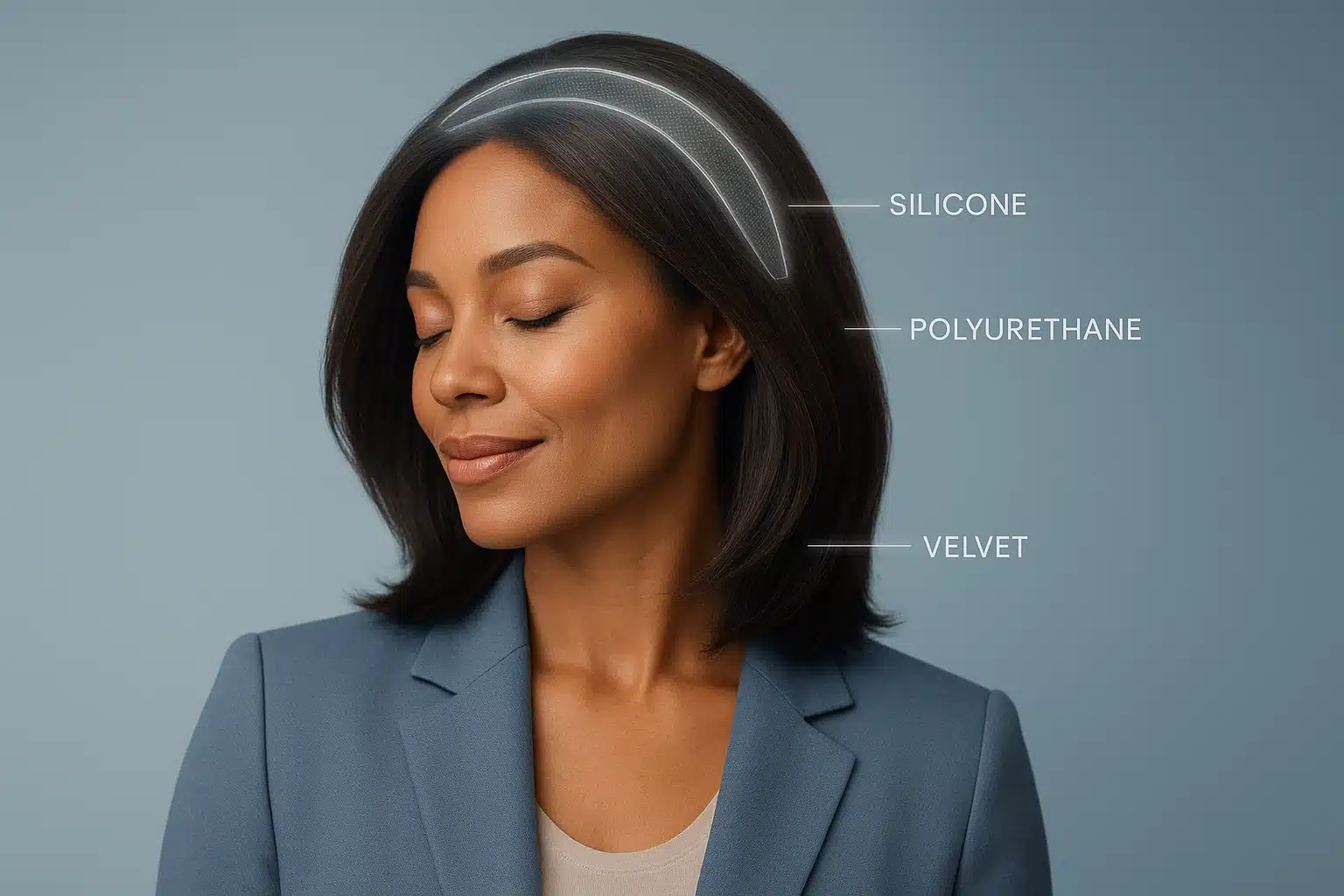
Navigating the terminology of wig caps can feel like learning a new language. Let’s break down the three most common security features you’ll encounter in premium wigs.
1. Medical-Grade Silicone
Silicone strips or patches are often strategically placed at the nape, ear tabs, or across the crown.
- Best for: Individuals with total hair loss (Alopecia Totalis or Universalis).
- The Sensation: A gentle, secure hug. It feels cool to the touch initially but warms to body temperature quickly.
- The Benefit: It eliminates the need for glues, making it a “grab-and-go” solution that is hypoallergenic and gentle on sensitive skin.
2. Polyurethane (PU)
Often referred to as “poly,” this is a clear, skin-like material usually found on the front hairline or ear tabs.
- Best for: Wearers who want the option to use adhesive.
- The Sensation: Smooth and plastic-like.
- The Benefit: PU acts as a durable landing pad. You can apply double-sided tape or liquid adhesive to the PU strip rather than your delicate lace or monofilament, extending the life of your wig.
3. Velvet
Velvet ear tabs and napes are industry standards for a reason.
- Best for: Everyone, but especially those with some biological hair.
- The Sensation: Soft, plush, and non-irritating.
- The Benefit: The texture of the velvet creates friction against hair or a wig cap, preventing the wig from sliding backward. It also covers the internal wiring of ear tabs, preventing pressure points.
Feature Comparison Chart
| Feature | Primary Mechanism | Best Hair Condition | Adhesive Needed? |
|---|---|---|---|
| Silicone | Suction / Grip | Total Hair Loss | No |
| Polyurethane | Adhesive Base | Any (with adhesive) | Yes (Optional) |
| Velvet | Friction | Bio Hair or Thinning | No |
Customizing Your Security Strategy
There is no “one size fits all” when it comes to security. Your choice should depend heavily on your hair status and your daily activities.
For Total Hair Loss
If you have a smooth scalp, you are the ideal candidate for a suction silicone wig cap. Because there is no hair to interrupt the contact between the silicone and the skin, you achieve maximum security. Many women find that a cap with silicone strips allows them to go about their day without ever adjusting their hair, providing a sense of normalcy that is deeply comforting.
For Sensitive Scalps
If you are undergoing chemotherapy or have a scalp condition, texture is everything. You want to avoid scratchy materials. Look for comfortable wigs for sensitive scalp designs that line the silicone with soft mesh or use silicone that is specifically rated as medical-grade. The goal is to minimize friction while maintaining grip, ensuring that your security doesn’t come at the cost of irritation.
For The Active Lifestyle
One of the biggest questions new wearers have is, “Can I exercise in this?” The answer is yes, but you need the right setup. A standard heavy cap might slide once you start sweating. For the gym, hiking, or yoga, you might look for a specialized workout wig or a headband accessory. Silicone is excellent here because it is water-resistant; unlike glues that might break down with sweat, silicone often maintains its tackiness even when damp.
For Bio Hair
If you have biological hair, full silicone caps may pull or tug, causing discomfort. Instead, focus on wigs with velvet-lined ear tabs and napes. You can also utilize a separate “wig grip” band—a velvet headband worn under the wig—which acts as a high-friction anchor for the cap to hold onto.
Common Myths vs. Facts
Myth: The tighter the wig, the more secure it is.Fact: A wig that is too tight will actually slide up and pop off your head, much like a rubber band on a watermelon. Security comes from the contact area (anti-slip features) and proper sizing, not tension.
Myth: Silicone makes your head hot.Fact: While silicone is not breathable, premium caps only use it in thin strips or specific zones (like the nape and ears). This allows heat to escape through the rest of the open-wefted or monofilament cap.
Myth: You always need glue for a secure fit.Fact: With the correct combination of adjustable straps and anti-slip features, the vast majority of daily wearers never need liquid adhesives.
Care and Maintenance for Long-Lasting Grip
Even the best engineering requires maintenance. Silicone relies on a clean surface to grip effectively. Over time, natural oils from your skin, makeup, and sweat can create a film over the silicone strips, rendering them slippery rather than grippy.
To restore the “tack,” simply wipe the silicone areas with a damp cloth and a mild soap or alcohol wipe after wearing. Proper wig maintenance isn’t just about washing the fiber; it’s about keeping the internal cap mechanics clean so they can do their job.
FAQ: Beginner Questions Answered
Q: Can I add silicone to a wig that didn’t come with it?
A: Yes! There are silicone “gripper” bands sold separately that you can sew into your existing wig cap, or you can wear a silicone wig grip headband underneath any wig.
Q: Will silicone pull out my remaining fragile hair?
A: It can if the fit is too tight. If you have sparse, fragile hair, we generally recommend velvet grips or placing silicone only on areas of the scalp where there is no hair to avoid traction alopecia.
Q: Do silicone caps lose their grip over time?
A: High-quality silicone is very durable. However, if it starts to feel slippery, it usually just needs a thorough cleaning to remove oil buildup.
The Next Step in Your Journey
Knowledge is the antidote to anxiety. Now that you understand the mechanics of silicone, polyurethane, and velvet, you can look at wig descriptions with a discerning eye. You aren’t just buying a hairstyle; you are choosing a security system that matches your life.
As you explore different styles, pay close attention to the “Cap Construction” tab in the product details. It is often the hidden features inside the cap that determine whether you will simply wear your wig, or truly live in it.